wayground logo

Free Printable Worksheets

NEW

Font size

S
M
L
XL
Worksheets

REVIEW INTERACTIONS & SUCCESSION

Total questions: 50

Worksheet time: 4hrs 10mins

Name
Class
Date
1.
A relationship between two organisms in which one organism benefits and the other is unharmed
a)
Mutualism 
b)
Competition
c)
Parasitsm 
d)
Commensalism 
2.
A relationship between two organisms in which both organisms benefit. 
a)
Mutualism 
b)
Competition
c)
Parasitsm 
d)
Commensalism 
3.
Barnacles create home sites by attaching themselves to whales. This neither harms nor benefits the whales.  What kind of relationship is this?
a)
Mutualism 
b)
Parasitism 
c)
Commensalism 
4.
How many types of symbiosis are there?
a)
5
b)
7
c)
3
d)
If you pick this you're silly
1000
5.
What best describes the relationship between bees and flowering plants.
a)
mutualism
b)
parasitism
c)
neutralism
d)
commensalism
6.
What type of symbiosis is this?
*
Hermit crabs find shells left by snails that have died and move in.
*
  Snails die and leave behind their shells.
a)
commensalism
b)
mutualism
c)
parasitism
d)
predation
7.
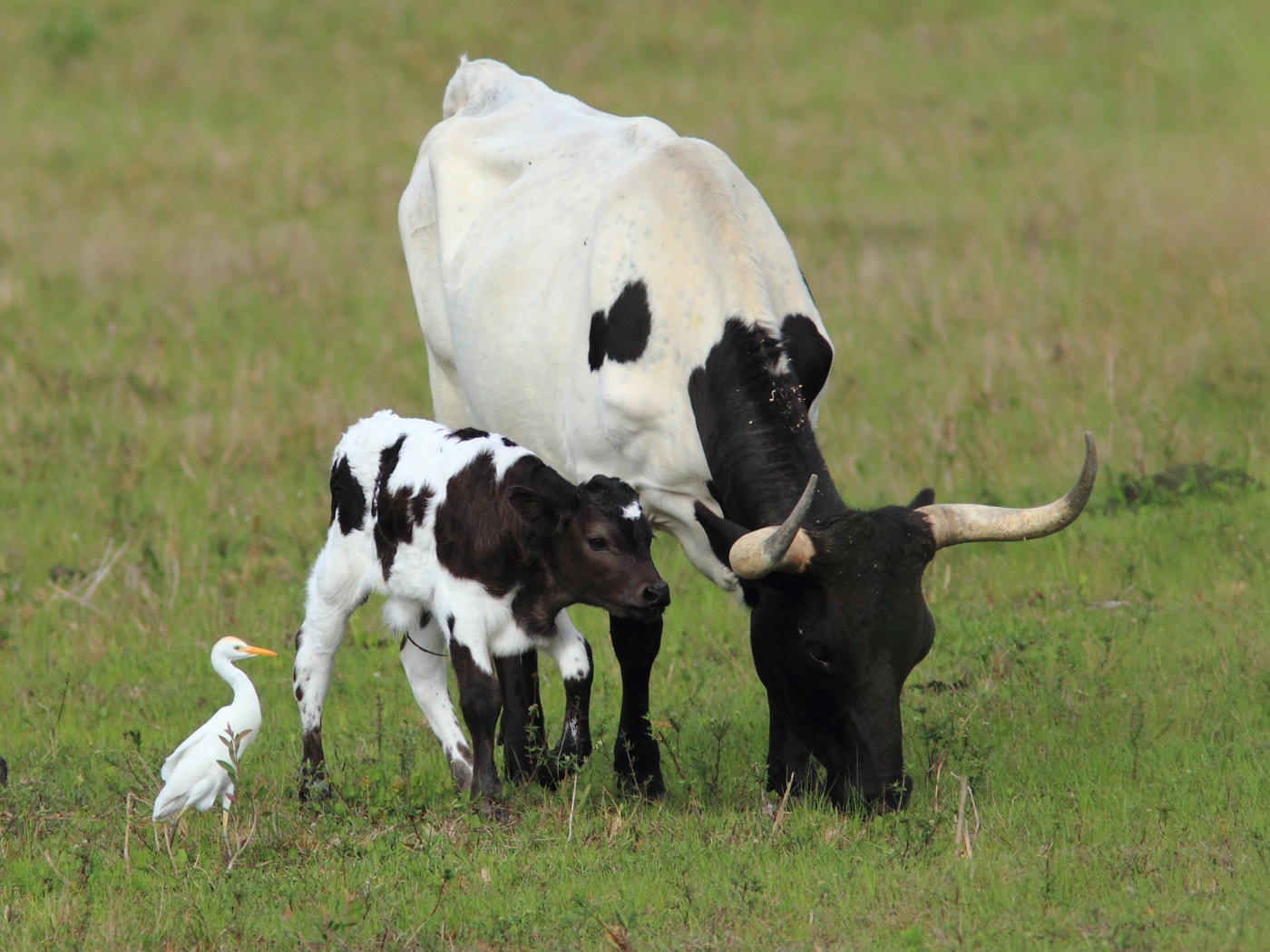
Cattle egrets forage (feed) in fields among cattle. The egret gets easy access to flying insects stirred up by the cattle, and the cattle don't care if they are there or not.
a)
mutualism
b)
commensalism
c)
competition
d)
parasitism
8.
Which symbols best describe parasitism?
a)
+,+
b)
+,-
c)
+,0
d)
-,0
9.
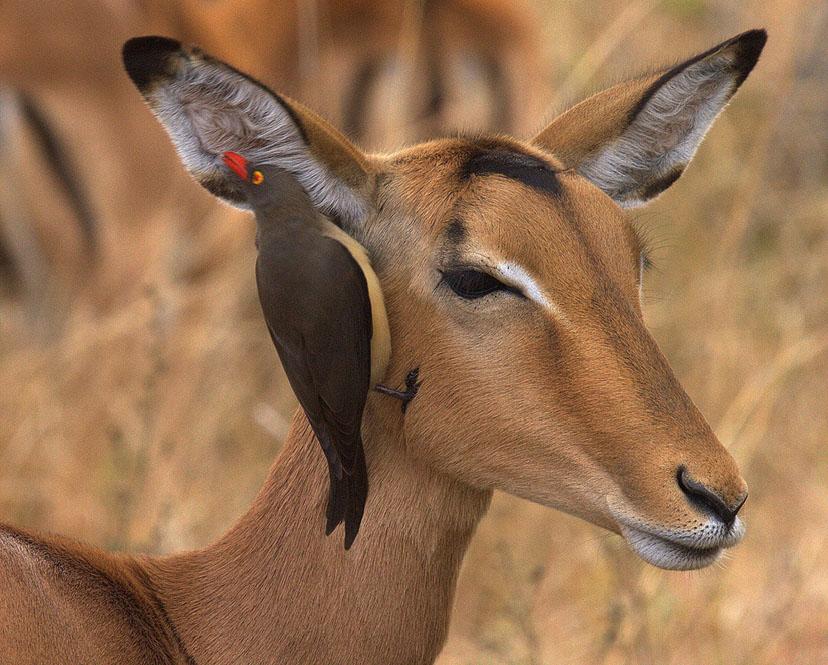
Red-billed oxpeckers are birds that often feed on parasites that infest impala.  This is an example of _______.
a)
commensalism
b)
mutualism
c)
neutralism
d)
competition
10.
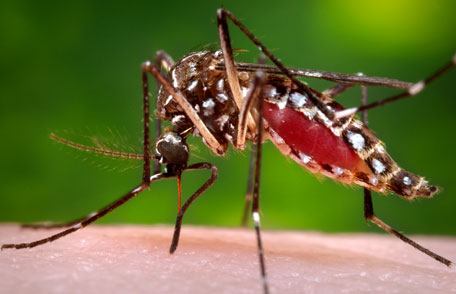
When a mosquito bites you, you are the __________ and the mosquito is the  ____________.
a)
host, hostess
b)
parasite, host
c)
host, parasite
d)
prey, predator
11.
Which symbols best describe mutualism?
a)
+,+
b)
+,-
c)
+,0
d)
-,0
12.
A bird makes a nest  or a HOME in a tree.  The bird gets a house and HELPED, but the tree gets NOTHING.
a)
Commensalism
b)
Mutualism
c)
Parasitism
d)
Animals
13.
Which symbols best describe commensalism?
a)
+,+
b)
+,-
c)
+,0
d)
0,0
14.
A hawk flies down and scopes of a snake, trying to slither into the ground
a)
Predation
b)
Competition
c)
Hungry
d)
Mutualism
15.
Two male Giraffes are fighting over the last green leaf of a tree that is dying.  
a)
Competition
b)
Mutualsim
c)
Predation
d)
Commensalism
16.
Two male elephants are fighting over a cute little elephant at the watering hole.  
a)
Commensalism
b)
Competition
c)
Predation
d)
Mutualism
17.
Ticks feed on deer blood to the deer's detriment (or harm).  
a)
Commensalism
b)
Predation
c)
Parasitism
d)
Mutualsim
18.
The flea feeds on a mouse's blood to the mouse's detriment (or harm).  
a)
Predation
b)
Parasitism
c)
Commensalism
d)
Mutualism
19.
Ostriches and Gazelles feed next to each other.  They both watch for predators and alert each other to danger.  Since the visual abilities of the two species are different, they can each identify threats the other animal would not as readily see.  
a)
Parasitism
b)
Commensalism
c)
 Mutualism 
d)
Competition.  
20.

An animal that is hunted and eaten for food is a _____________________.

a)

predator

b)

prey

c)

population

21.

_______ occurs when two organisms are trying to acquire or get the same resources.

a)

Symbiosis

b)

Competition

c)

Predation

d)

Collaboration

22.

_______ occurs when 1 organisms kills and eats another for food.

a)

Symbiosis

b)

Competition

c)

Predation

d)

Collaboration

23.
An organism's particular role in its habitat, or how it makes its living, is called its
a)
carrying capacity.
b)
ecosystem.
c)
competition.
d)
niche.
24.
The behaviors and physical characteristics of species that allow them to live successfully in their environment are called
a)
habitats.
b)
limiting factors.
c)
biotic factors.
d)
adaptations.
25.
Which of the following is an example of a predator adaptation?
a)
a porcupine's needles
b)
a shark's powerful jaws
c)
a frog's bright colors
d)
a plant's bright flowers
26.
Mutualism, commensalism, and parasitism are the three types of
a)
symbiotic relationships.
b)
predation.
c)
competition.
d)
prey adaptations.
27.
A tapeworm, which is living inside a mouse's body is a predator.
a)
True
b)
False
28.
Individuals with characteristics that are well suited to an environment are ________ likely to survive
a)
less
b)
more
29.

Process by which organisms that adapt best to the environment are most likely to survive

a)

Natural selection

b)

Adaptation

c)

Competition

d)

Predation

30.

Describe the type of interaction between the organisms in the picture.

a)

commensalism

b)

predation

c)

mutualism

d)

competition

31.

Describe the type of interaction between the organisms in the picture.

a)

mutualism

b)

parasitism

c)

commensalism

d)

competition

32.

The first species to live in a land, after destruction, are:

a)

Oregon Trail species

b)

Primary consumers

c)

Pioneer species

33.

A pattern of change after existing ecosystem is destroyed, such as clearing for farming.

a)

Evolution

b)

Secondary Succession

c)

Primary Succession

34.

A new island is formed after a volcano erupts.

What is the order that things would grow?

a)

Tree, grass, moss

b)

Lichen, Grass, Shrub, Tree

c)

Lichen, Shrub, Moss, Tree

d)

Shrub, grass, moss, tree

35.

After an area was cleared for farmland 100 years ago, it has completely regrown large trees. This is an example of:

a)

Evolution

b)

Ecology

c)

Primary Succession

d)

Secondary Succession

36.

What type of organism would typically grow on bare rock?

a)

Moss and lichen

b)

Grass

c)

Oak trees

d)

Shrubs

37.

What are the two types of ecological succession?

a)

Primary and Secondary

b)

Environmental and Natural

c)

Habitat and Community

d)

Population and Community

38.
Natural disasters such as flooding and tornadoes are linked to ________________.
a)
primary
b)
secondary
c)
old field
d)
ecosystem
39.

Primary succession occurs in an area that has:

a)

soil

b)

no soil

c)

some soil

d)

none of these

40.

What is the main difference between primary and secondary ecological succession?

a)

Primary begins WITHOUT soil; Secondary begins WITH soil

b)

Primary is the first state and secondary is the second stage

c)

Primary builds plant community; secondary builds animal community

d)

Primary begins WITH soil; Secondary begins WITHOUT soil

41.
After a forest fire, an ecosystem would start regrowth through -
a)
primary succession
b)
secondary succession
c)
climax community
d)
limiting factors
42.
How do lichens contribute to primary succession?
a)
Lichens decompose organic matter from animals and plants
b)
Lichens begin to break down rock to form soil
c)
Lichens are nitrogen fixing bacteria
d)
Lichens convert carbohydrates into fossil fuels.
43.
What is the order of succession shown in this figure?
a)
A, B, C, D
b)
B, A, D, C
c)
C, D, A, B
d)
D, A, B, C
44.
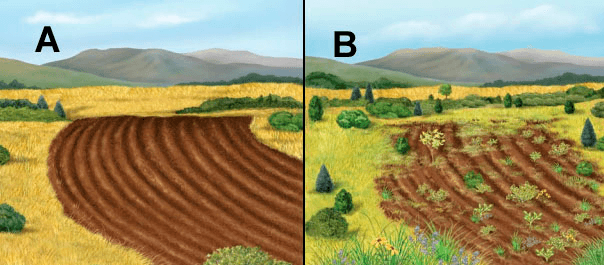
What type of succession is shown going from figure A to figure B?
a)
primary succession
b)
ecological succession
c)
secondary succession
d)
intermediate
45.
What is the name given to lichen or algae after a primary succession?
a)
pioneer species
b)
volunteer species
c)
founder species
d)
conqueror species
46.
After a volcanic eruption, lava covers the land. What is the order that plants grow to repopulate the area?
a)
Lichens → Shrubs → Grasses → Trees
b)
Lichens → tree → shrubs→Grasses
c)
Grasses → Lichens → Shrubs → Trees
d)
Lichens → Grasses → Shrubs → Trees
47.
This is the process that forms a new ecosystem where no organisms lived before.
a)
resource
b)
invasive (non- native) species
c)
primary succession
d)
competition
48.

What is climax community?

a)

the final stage in a succession

b)

first species to begin a succession

49.

What succession is represented in the photo?

a)

Primary Succession

b)

Secondary Succession

50.

When lichens die what happens to them?

a)

They are blown away by the wind

b)

They float down the river

c)

They decompose adding small amounts of organic matter to the rock to make soil

d)

They made flowers and animals