
Font size
 Worksheets
Plate Tectonics
Total questions: 43
Worksheet time: 54mins
The evidence is in ______________________, where coastlines and mountain ranges appear to fit together like a puzzle all over the world
Continental drift
Plate Tectonics
The Rock Cycle
Divergent boundaries
Other evidence include __________________ that plate tectonics does occurr in the crust of the Earth.
Rock formation, weather, fossils
Mountain formation, fossils, climate
Weather, fossils, climate
Valleys, Ocean trenches, climate
The __________________ are chains of undersea mountains.
Mid-Ocean Ridges
Ocean Trench
Divergent boundary
Transform boundary
______________________ continually adds materials to the ocean floor creating ocean floor.
Sea-floor spreading
Ocean trenches
Divergent mid-ocean ridges
Convergent mid-ocean ridges
Oceans plates sink back into the mantle at _______________ zones, keeping the crust the same size.
Mid-ocean ridges
Ocean trenches
Subduction
Transforming
_____________________ are undersea that are the deepest part of the ocean.
Divergent trenches
Ocean trenches
Transform trenches
Mid-ocean trenches
This plate boundary moves land apart, creating a rift valley on land : ________________________
Divergent boundary
Transform boundary
Convergent boundary
Mid-Ocean voundary
This tectonic plate boundary creates mountain ranges: ____________________
Divergent boundary
Convergent boundary
Transform boundary
Mid-oceanic boundary
This tectonic plate slips past each other: _____________
Divergent boundary
Transform boundary
Convergent boundary
Mid-Ocean boundary
A theory explaining the structure of the earth's crust is called _________________
Pangea
Plate Tectonics
The Rock Cycle
Sea-floor spreading
The outermost layer of rock on Earth, especially the part of the earth above the mantle is called ________________
Crust
Rock Cycle
Plate tectonics
Subduction zones
The region of the earth's interior between the crust and the core is called the ________________.
Crust
Mantle
Both the crust and the mantle
Both the mantle and the core
Which tectonic plate boundary SLIDES past each other...
Divergent
Convergent
Transform
Continental
Which tectonic plate moves TOWARDS each other...
Divergent
Convergent
Transform
Continental
Which tectonic plate moves AWAY from each other...
Divergent
Continental
Transform
Covergent
Which of these is NOT causes by the moving of tectonic plates?
Valleys
Mountains
Earthquakes
Hurricanes
Convergent
Plates move together
Divergent
Plates move apart
Transform
Plates slide by
Which of the following are likely to be found at a convergent plate boundary?
Mid ocean ridges and rift valleys
Mountains, volcanoes, ocean trenches
Many earthquakes, faults, and cracks
Which of the following are likely to be found at a divergent plate boundary?
Mid ocean ridges and rift valleys
Mountains, volcanoes, ocean trenches
Many earthquakes, faults, and cracks
Which of the following are likely to be found at a transform plate boundary?
Mid ocean ridges and rift valleys
Mountains, volcanoes, ocean trenches
Many earthquakes, faults, and cracks
(a) happens where an (b) plate is forced (c) another tectonic plate and melted in the (d) .
Which type of tectonic plate boundary created the Himalayan Mountains?
Transform
Divergent
Convergent
Transform boundaries are most likely to produce what phenomenon?
volcanoes
deep sea trenches
underwater mountain ranges
faults
When a continental crust and continental crust collide it produces a......
mid-ocean ridge
deep ocean trench
volcano
folded mountain range


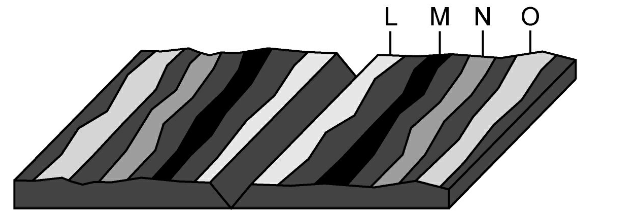


Fault
at every type of plate boundary



