
 Worksheets
Chemistry Q3 Test 1
Total questions: 100
Worksheet time: 1hrs 11mins
(a) is anything that has mass and volume.
(a) is the amount of matter that makes up a substance.
In chemistry, mass is typically measured in (a) .
(a) is the amount of 3-dimensional space an object takes up.
In chemistry, volume is usually measured in cubic centimeters (cm3) or (a) .
A(n) (a) is a pure substance that can't be broken down into simpler substances and is made of only one kind of atom.
A(n) (a) element is manmade, not natural.
A(n) (a) is a single particle of an element that contains subatomic particles.
The (a) is a subatomic particle with positive charge.
The (a) is a subatomic particle with no charge.
The (a) is a subatomic particle with negative charge.
A(n) (a) is formed when two or more atoms come together via covalent bonding.
A(n) (a) is a pure substance made of atoms of different elements that are chemically combined.
A(n) (a) property of matter depends on the amount of matter present in a sample.
A(n) (a) property does NOT depend on the amount of matter present in a sample.
Water boils at 100 degrees Celsius or (a) degrees Fahrenheit.
Water freezes at 0 degrees Celsius or (a) degrees Fahrenheit.
A(n) (a) property can be observed without changing a substance's identity.
A(n) (a) property is one that allows a substance's identity to change.
Which state typically has definite shape and definite volume?
Solid
Liquid
Gas
Louisiana
Which state has indefinite shape but definite volume?
Solid
Liquid
Gas
Kentucky
Which state has indefinite shape and indefinite volume?
Solid
Liquid
Gas
Rhode Island
(a) is electrically charged gas that makes up over 99% of the entire universe (even though it makes up very little of Earth).
A physical (not chemical) combination of two or more substance is a(n) (a) .
In a mixture, the individual substances retain their original (a) .
Hydrogen
H
Hy
Hd
Hg
He
Helium
H
He
Hl
Hi
Hm
Lithium
L
Li
Lt
Lh
Lm
Beryllium
B
Be
Br
Bl
Bm
Boron
B
Bo
Br
Bn
W
Carbon
C
Ca
Cr
Cn
Co
Nitrogen
N
Ni
Nt
Nr
No
Oxygen
O
Ox
Oy
Og
X
Fluorine
F
Fl
Fo
Fr
Fe
Neon
N
Ne
No
Eo
Na is the chemical symbol for (a) .
Magnesium
M
Ma
Mg
Mn
Me
Aluminum
A
Al
Au
Am
An
Silicon
S
Si
Sl
Sc
Sn
Phosphorus
P
Ph
Po
Ps
K
Sulfur
S
Su
Sl
Sf
Fe
Chlorine
C
Ch
Cl
Co
Ce
Argon
A
Ar
Ag
Ao
An
Calcium
C
Ca
Cl
Cu
Cm
The chemical symbol for potassium is (a) .
Titanium
T
Ti
Ta
Tn
Tm
Chromium
C
Ch
Cr
Co
Manganese
M
Ma
Mn
Mg
Me
The chemical symbol for iron is (a) .
Cobalt
C
Co
Cb
Ca
Cl
Nickel
N
Ni
Nc
Nk
Ne
Cu is the chemical symbol for (a) .
Zinc
Z
Zi
Zn
Zc
Selenium
S
Se
Sl
Si
Bromine
B
Br
Bo
Bi
Be
A(n) (a) , or family, is a vertical column in the periodic table.
There are __ groups in the periodic table.
4
7
18
118
There are __ periods in the periodic table.
4
7
18
118
A(n) (a) is a horizontal row in the periodic table.
Each column in the periodic table contains elements with
the same number of electrons.
similar chemical properties.
identical appearances.
elements that can react chemically with each other.
a defined number of energy levels around the nucleus of the atom.

The highlighted elements are the __.
other metals
transition metals
alkaline-earth metals
alkali metals
halogens
The elements in the second column in the periodic table -- Be, Mg, Ca, Sr, Ba, and Ra -- are the __.
alkali metals
halogens
alkaline-earth metals
transition metals
other metals
Titanium, iron, cobalt, nickel, copper, zinc, silver, tungsten, and platinum are all examples of (a) .
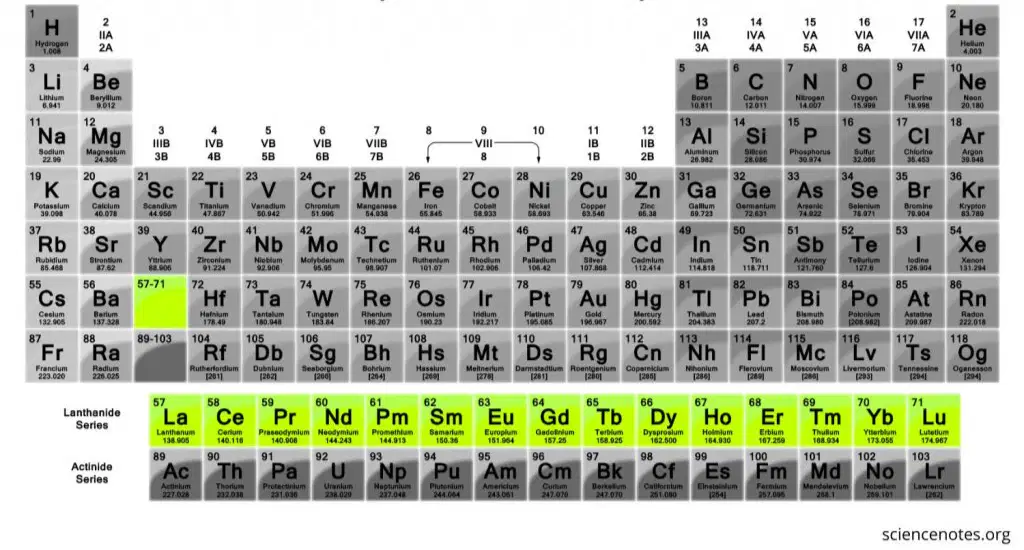
The highlighted elements are the __.
other metals
lanthanides
actinides
alkalis
alkalines
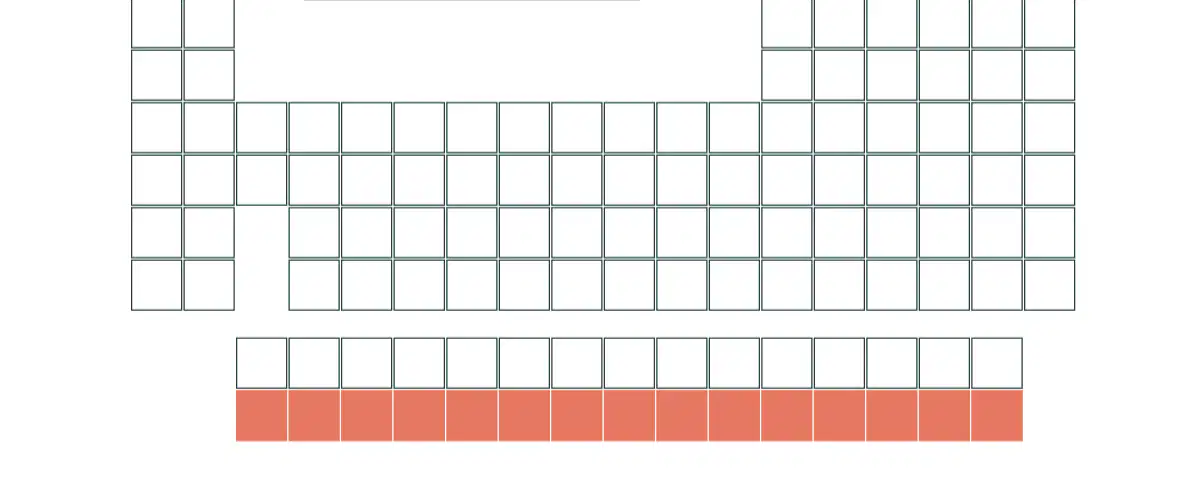
The highlighted elements are the __.
other metals
lanthanides
actinides
alkalis
alkalines
Which elements fall under the "other nonmetals" category?
F, Cl, Br, I, At
H, C, N, O, P, S, Se
He, Ne, Ar, Kr, Xe, Rn
Al, Ga, In, Sn, Tl, Pb, Bi
Metals are typically recognizable by their shininess, or metallic (a) .
A(n) (a) is a good conductor of heat and electricity.
Most metals are (a) , meaning they can be hammered or rolled into thin sheets.
Metals are typically (a) , which means they can be drawn into thin wires.
Metals have a high (a) strength, or ability to resist breaking when pulled.
(a) is the only metal that is liquid at room temperature.
Copper typically turns __ when it reacts with oxygen.
blue
green
yellow
orange
purple
Solid nonmetals tend to be __.
brittle
malleable
ductile
good conductors
liquids
A(n) (a) has some characteristics of metals and some characteristics of nonmetals.
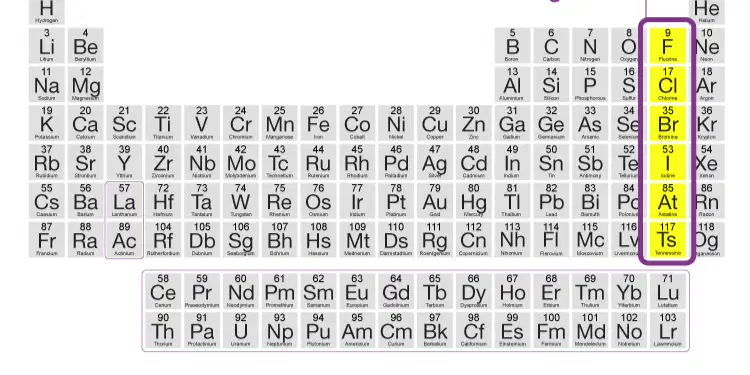
The highlighted elements are the __.
actinides
lanthanides
noble gases
halogens
chalcogens
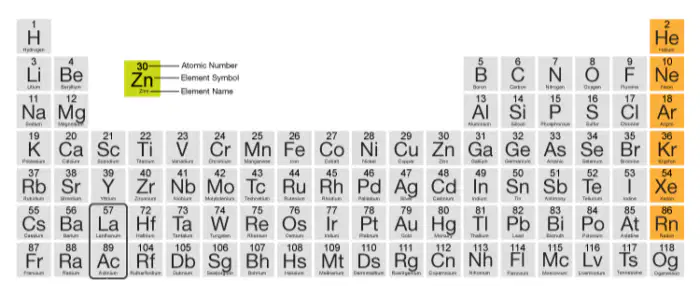
The highlighted elements are __.
quick to bond with other elements.
unreactive.
liquids at room temperature.
metals.
solids at room temperature.
Metalloids are used in __.
computers, watches, and TVs
party balloons and weather balloons
light bulb filaments
cereals and high-fiber foods
A repeating pattern is referred to as (a) .
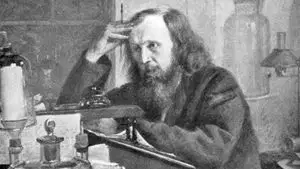
Which scientist is typically recognized for publishing the first periodic table?
Stanislao Cannizzaro
Dmitri Mendeleev
Henry Moseley
Ernest Rutherford
Albert Einstein
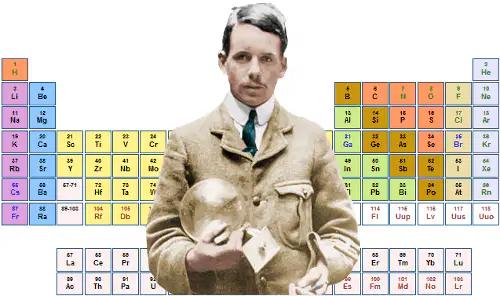
Which scientist is recognized for rearranging the periodic table to the way it is today?
Stanislao Cannizzaro
Dmitri Mendeleev
Henry Moseley
Ernest Rutherford
Albert Einstein
The first published periodic table (1869) arranged elements in order of increasing __.
atomic number
size
atomic mass
magnetism
density
The current periodic table arranges elements in order of increasing __.
atomic number
size
atomic mass
magnetism
density
The (a) states that the physical and chemical properties of the elements are periodic functions of their atomic numbers.
The (a) is an arrangement of the elements in order of their atomic numbers so that elements with similar properties fall in the same column.
Which of the following is NOT a chemical change?
Melting ice
Burning paper
Rusting iron
Digesting food
Which of the following is NOT a compound?
Water
Sugar
Salt
Saltwater
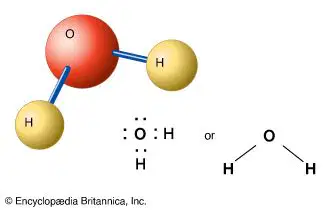
What does this image depict?
A molecule of an element
A molecule of a compound
A molecule of a mixture
An atom of an element
An atom of a compound
Which of the following is a noble gas?
Oxygen
Fluorine
Neon
Hydrogen
Carbon
Which group of metals is the most chemically active?
Alkalis
Alkaline-earths
Transitions
Others
Which group of nonmetals is the most chemically active?
Others
Halogens
Noble gases
Chalcogens
The modern periodic table contains (a) elements.
NaOH, Fe2O3, H2O, NaCl, and C6H12O6 are all __.
mixtures
elements
molecules
compounds
atoms
Which of the following are homogeneous mixtures? (There are TWO answers.)
Cereal with milk
Chocolate chip cookie dough ice cream
Saltwater
Pizza
Mouthwash
Adam brews a cup of coffee and adds a spoonful of sugar to it. The sugar dissolves completely. What has Adam made?
A homogeneous mixture
A heterogeneous mixture
A compound
A synthesis reaction
A single-displacement reaction
Which pairing is NOT correct?
Krypton = Kr
Rubidium = Rb
Strontium = Sr
Silver = Si
Tin = Sn
Which pairing is NOT correct?
Iodine = I
Zenon = Ze
Cesium = Cs
Barium = Ba
Tungsten = W
Which pairing is NOT correct?
Platinum = Pt
Gold = Ag
Mercury = Hg
Lead = Pb
Uranium = U
The most fundamental building block of matter is the __.
atom
molecule
electron
proton
cell
The original (1869) periodic table had several gaps to account for __.
elements that are neither metals, nonmetals, nor metalloids
elements that do not react with other elements
elements that had not yet been discovered
elements that are radioctive
elements that are invisible to the human eye

