
Font size
 Worksheets
Classification of Life
Total questions: 95
Worksheet time: 1hrs 11mins
Scientists use eight major classification levels to group and name organisms. After domain, which level is the broadest (most general) classification level listed below?
What time period was Carl Von Linned actively classifying plants and animals?
mid 1600s
mid 1700s
mid 1800s
mid 1900s
What was Linnaeus the founding father of:
1st taxonomist/Greek
Aristotle
King Phillip
Carl Linneaus
Charles Darwin
scientist that classifies and names organisms
taxonomist
zoologist
ornithologist
cardiologist
a set of paired statements used to identify an organism
dichotomous key
binomial nomenclature
kingdom
classification
group or level of organization used in classification
taxon
dichotomous key
binomial nomenclature
the smallest/most specific taxonomic group
species
genus
kingdom
phylum
What is the name given to the system that Carl Linnaeus developed to name all plants and animals?
Multinominal naming
Quadnominal naming
Trinominal naming
Binominal naming

What is the binomial nomenclature of the gopher?
Thomomysus bottoe
Animalia chordata
Geomidyae thomomysus

What is the binomial nomenclature of the dog?
Canis familiaris
Canis lupus
Carnivora canidae
What is the most specific classification?
domain
phyla
order
species
What is the broadest classification?
domain
phyla
order
species
What kingdom to humans belong to?
animal
plant
protist
fungi
What phylum do humans belong to?
nematoda
platyhelminthes
chordata
echinodermata
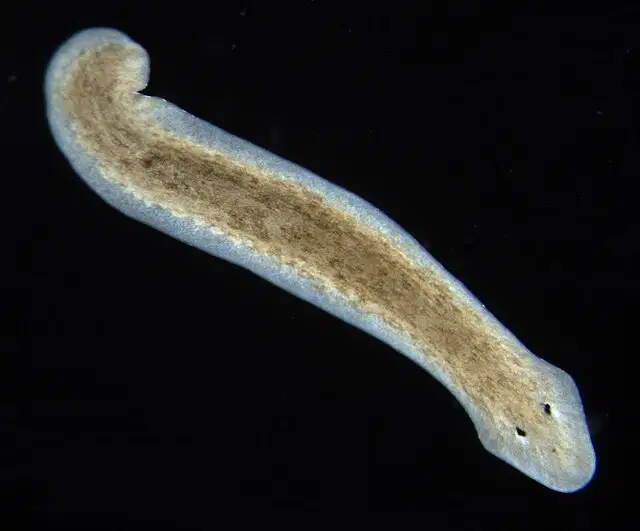
What phylum do planaria and tapeworms belong to?
nematoda
platyhelminthes
chordata
echinodermata

What phylum do these organisms belong to?
nematoda
platyhelminthes
porifera
cnidaria

What phylum do these organisms belong to?
nematoda
platyhelminthes
porifera
cnidaria
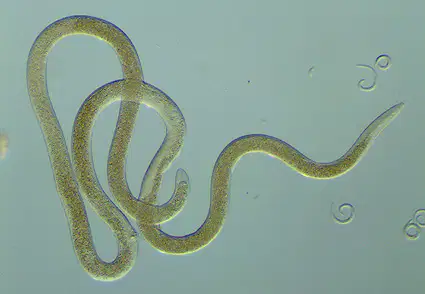
What phylum do these organisms belong to?
nematoda
platyhelminthes
porifera
cnidaria
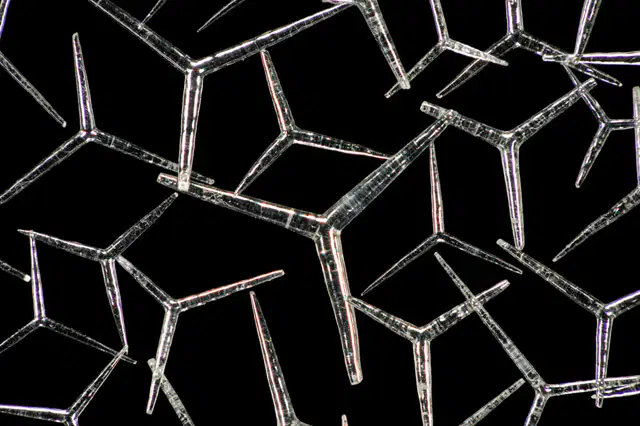
What organism has these structures?
nematoda; nematocysts
platyhelminthes; proglottids
porifera; spicules
cnidaria; nematocysts
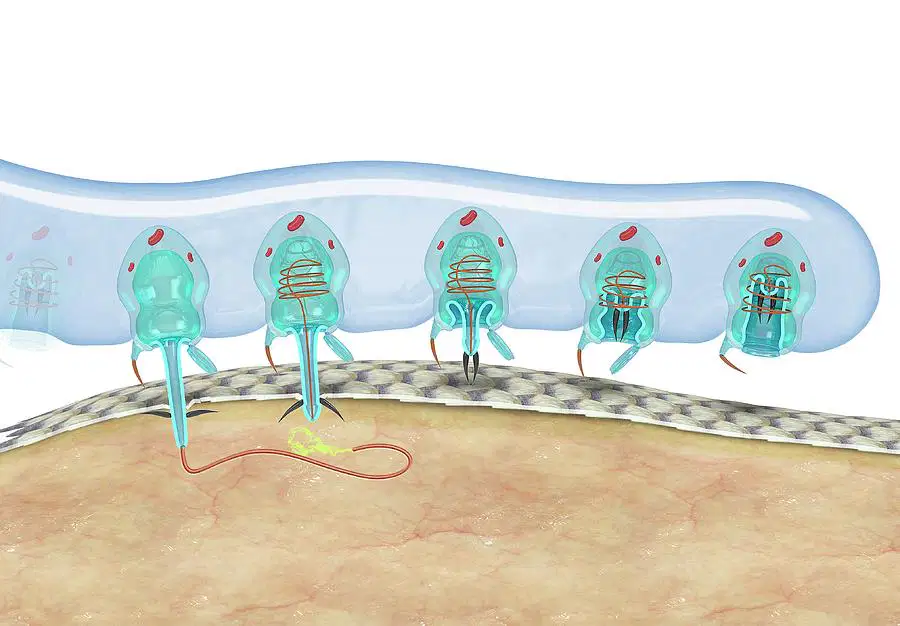
What organism has these structures?
Ascaris roundworm
tapeworm
sponge
hydra
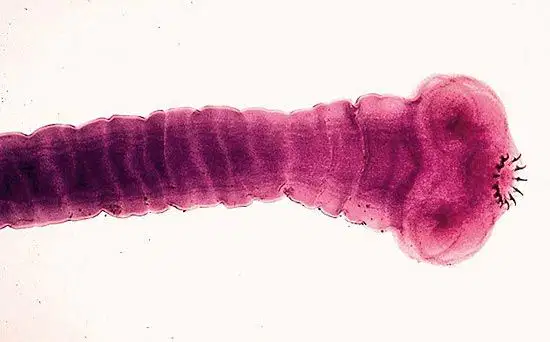
What structure belongs to this organism?
nematocyst
scolex
spicules
pseudocoelom

This organism is commonly called a bald eagle. Its scientific name is Haliaeetus leucocephalus. Which is the bald eagle's species?
leucocephalus
Haliaeetus
Bald eagle
Bird
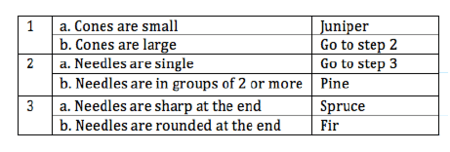
A tool used to classify organisms using a 2 choice step system for narrowing down and identifying organisms.
Taxonomy
Classification
binomial nomenclature
Dichotomous Key
Select all the organisms that are in the same
genus.
Macropus giganteus
Caprimulgus europaeus
Spirobranchus giganteus
Caprimulgus macrurus
The great gray slug is one of the largest slugs in the world. Its scientific name refers to its large size.
Great gray slug
Limax dacampi
Limax maximus

This organism is a nurse shark. It is also called Ginglymostoma cirratum. Which is this organism's scientific name?
Ginglymostoma cirratum
Cirratum ginglymostoma
nurse shark
Reorder the following taxonomic Categories from least related to most related
Class
Order
Family
Genus
Species
What are the kingdoms?
birds, reptiles, mammals, fish, amphibians
kingdom, phylum, class, order, family, genus, species
archaebacteria, eubacteria, protista, plantae, animalia, fungi
insects, crustaceans, arachnids, centipedes
There are how many kingdoms?
3
5
6
7

Use the table to determine the scientific name of a rattlesnake written in the proper scientific format.
Crotalus Viridis
Crotalus Viridis
Crotalus viridis
Crotalus viridis
Viperidae viridis

Use the table to determine the scientific name of a giant panda written in the proper format
Ursidae ailuropoda
Ursidae Ailuropoda
Ursidae Ailuropoda
Ursidae ailuropoda
Ailuropoda melanoleuca

Which of these big cats are more closely related to one another
A. Lions (Panthera leo)
B. Cheetahs (Acinonyx jubatus)
C. Snow Leopard (Panthera uncia)
D. Cougar (Puma concolor)
Lions and Cheetahs
Snow Leopards and Cougars
Lions and Snow Leopards
Cheetahs and Cougars

If two organisms belong to the same order, then they must also belong to the same...
Species
Class
Family
Genus


What do scientists use today to analyze to classify organisms?
DNA
physical features
habitat
diet
Why is it important to have a taxonomic system?
in order to avoid confusion with identifying organisms
so latin names can be used
to place organisms in different groups
because Linnaeus established the system

Which level is the most specific in the classification of living organisms?
family
genus
species
kingdom


I am eukaryotic, heterotrophic with cell walls. I decompose organisms. What kingdom do I belong to?
Archebacteria
Eubacteria
Fungi
Protista

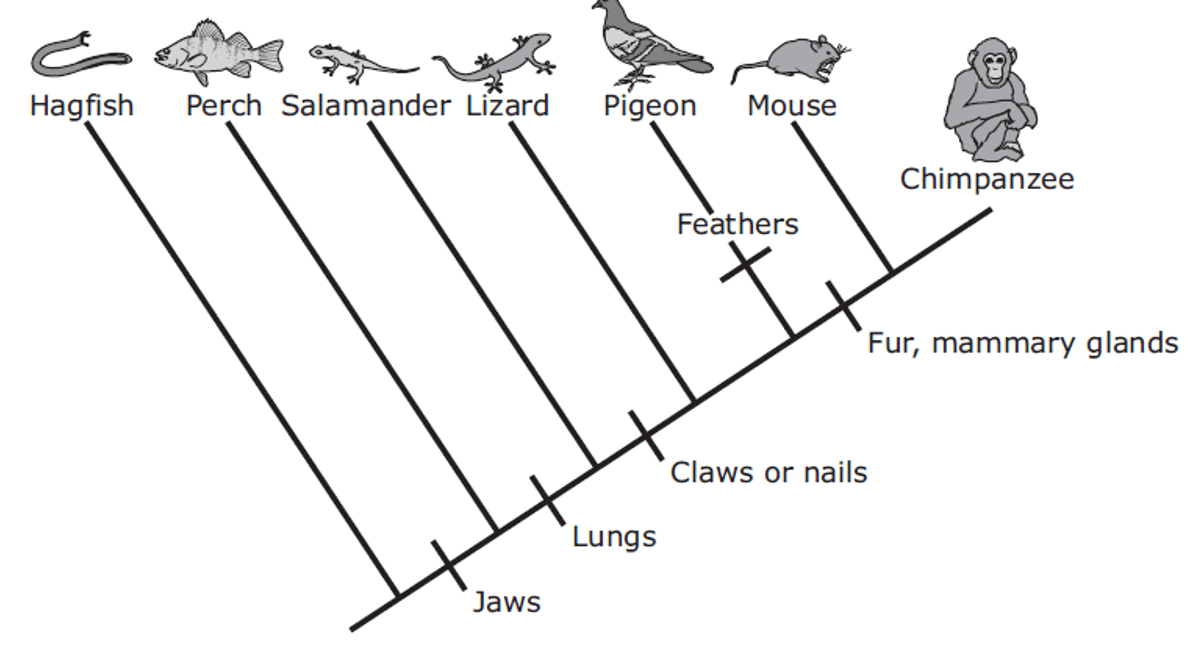
Which Domain is characterised by the organisms ability to survive in extreme environments?
Archaea
Bacteria
Eukarya
Which Domain is has organisms that are multicellular?
Archaea
Bacteria
Eukarya
Which Domain is has organisms that have a nucleus?
Archaea
Bacteria
Eukarya
Which Domain has unicellular organisms with peptidoglycan in their cell walls?
Archaea
Bacteria
Eukarya
Which 2 Domains are made of ONLY unicellular organisms?
Archaea
Bacteria
Eukarya
The Taxa groupings we use are based on what type of criteria? (Select all that apply)
Evolutionary Relationships
DNA
Morphology or the Physical Characteristics
Habitat
The taxa, or groups of Classification, that Linnaeus came up with is still used today?
True
or False
Linnaeus' taxonomic system was based on
Morphology or the Physical Structure.
genetic inheritance.
geographical distribution or where organisms lived at.
behavioral characteristics.
What kingdom is a mushroom in?
PLANT
FUNGI
PROTIST
MUSHROOM
Which kingdom is mostly motile?
PLANT
ANIMAL
FUNGI
ALL OF THESE
Which kingdom is almost always unicellular?
PLANT
ANIMAL
PROTIST
FUNGI
Which kingdom includes a starfish?
PROTIST
FISH
ANIMAL
NONE OF THESE
What language is used in naming stuff with scientific names?
LATIN
GREEK
ENGLISH
SPANISH
Which two kingdoms were named first?
Animal and Fungus
Archaebacteria and Eubacteria
Protist and Fungus
Plant and Animal
What invention led to new kingdoms being discovered?
X-rays
Radios
Telescopes
Microscopes
Which is correct biggest groups to smallest?
KCPFGOS
KPCFGSO
PKFOCGS
KPCOFGS
Which is a plant? (more than 1?)
MOTILE
AUTOTROPH
MULTICELLULAR
PROKARYOTIC
ANIMALS are which? (more than 1?)
Heterotroph
Multicellular
Motile
Eukaryotic
Where is a dorsal fin located on a fish?
Head
Tail
Back
Belly
This kingdom has organisms that get energy(food) through the process of photosynthesis.
Kingdom Plantae
Domain Eukarya
Kingdom Animalia
Kingdom Protista
Insects, rodents, and bugs are listed under this kingdom
Animalia
Plantae
Eubacteria
Fungi
Which of the following answer choices correctly describes Kingdom Fungi?
Multicellular (except yeast) , decomposers, consumers,
Multicellular or unicellular, autotrophs
Unicellular, decomposers, heterotrophs
Unicellular, autotroph or heterotroph, example slime mold,
Name the only Kingdom listed under Domain Archaea
Fungi
Eubacteria
Archaeabacteria
Protista
An organism that cannot make its own food is called
omnivore
autotroph
heterotroph
carnivore
Which of the following answer choices correct lists the similarities of Domain Archaea and Domain Bacteria?
Prokaryotic, unicellular, autotroph only
Prokaryotic, unicellular, autotroph and heterotroph
Eukaryotic, unicellular, autotroph and heterotroph
Eukaryotic, multicellular, heterotroph
Organism that creates its own food is called
autotroph
heterotroph
photosynthesis
chloroplast
Name the kingdoms listed under Domain Eukarya
Protista, Fungi, Animalia, Plantae
Fungi, Eubacteria, Animalia, Plantae
Plantae, Fungi, Archaeabacteria, Protista
Protista, Fungi, Animalia, Bacteria
Which of the following is not an organism listed under Kingdom Archaeabacteria?
slime mold
extremophiles
methanogens
thermophiles

