
 Worksheets
ADV9: Photosynthesis Review
Total questions: 76
Worksheet time: 4hrs 30mins
Which organelle stores water for use in photosynthesis?
Chloroplast
Cell Membrane
Vacuole
Nucleus
Select all that are products of Photosynthesis.
Water
Carbon Dioxide
Oxygen
Sunlight (Light Energy)
Glucose (Sugar/food)
Exit: Carbon dioxide
Exit: Glucose
Exit: Oxygen
Exit: Water vapor

How does most of the water needed by the plant get into its leaves?
It enters through the stomata
The roots absorb it and then it travels up the stem
It's made during a chemical reaction in the leaf
The flowers capture water and deliver it to the leaves

Which organelle is responsible making food (Glucose) using sunlight?
Cell Membrane
Nucleus
Chloroplast
Mitochondria
Which of the following is the correct equation for PHOTOSYNTHESIS?
light + carbon dioxide + water --> glucose + oxygen
carbon dioxide + sugar + water --> oxygen + light
oxygen + light + water --> carbon dioxide + sugar
carbon dioxide + oxygen + water --> Light+ Sugar
What is the source of energy for plants to make food?
other plants
the sun
the moon
animals
What do plants need to make food?
water & oxygen
water & carbon dioxide
oxygen & dirt
carbon dioxide & oxygen
What is the food that plants make called?
glucose
oxygen
leaves
carbon dioxide
Glucose is a kind of --
meat
air
sugar
leaf
Which shows the REACTANTS for photosynthesis?
oxygen & carbon dioxide
dirt & oxygen
water & carbon dioxide
carbon dioxide & leaves
How many molecules of oxygen are produced when a molecule of glucose is created?
1
100
6
none
How many molecules of water does a plant need to make one molecule of glucose?
1,000
6
10
5
What is the chemical in plants' leaves that performs photosynthesis and causes plants to be a green color?
stomata
chlorophyll
carbon dioxide
glucose

What needs to be placed where the X is in the formula?
oxygen
glucose
carbon
sunlight
Which of the following is NOT a product of the light reactions?
Oxygen
NADPH
ATP
Glucose (Sugar)

What part of the plant cell performs photosynthesis?
The Mitochondrion
The Nucleus
The Chloroplast
The Cell Wall

Where does the oxygen released by the light dependent reaction come from?
NADPH
ATP
Water
Carbon Dioxide
A green molecule in chloroplasts that absorbs some energy in visible light. This molecule has two forms, a and b, which absorb blue and red light from the visible light.
ATP synthase
chlorphyll
stroma
thylakoid
Pancake shaped compartments filled with chlorophyll, that form stacks called grana inside the chloroplast.
chloroplast
stroma
grana
thylakoids
A reaction that requires light, occurs in the thylakoids , and breaks down water to produce oxygen.
light-independent reactions
chemosynthesis
light-dependent reactions
photosynthesis

Cell that contain chloroplasts include
bacteria cells
algae cells
plant cells
animal cells

Pigments in the chloroplast absorb ________________
heat
sunlight
carbon dioxide
water
"Endosymbiosis" means
Living together
Entering together
Living separately
Joining together
____________ & _________________ are organelles that definitely arose from endosymbiosis.
Nucleus and cell membrane
Chloroplast and mitochondria
Mitochondria and nucleus
Cell wall and chloroplast
Which of the following is evidence to support the endosymbiotic theory?
Prokaryotes have the same number and types of enzymes as eukaryotes.
Mitochondria and chloroplasts have their own DNA, which is similar to prokaryotic DNA.
All eukaryotic cells have a double-layered membran composed of phosplipids and proteins.
Fossil evidence shows that the first forms of life were prokaryotic cells.
Which of the following characteristics make mitochondria and chloroplasts different from other organelles?
They are much bigger
The are found in both prokaryotic and eukaryotic cells.
They both make ATP
They were once free-living prokaryotes
The theory of Endosymbiosis explains
The origin of eukaryotes
How species develop
How bacteria live
The origin of multi-cellular life
The mitochondria in yours cells have DNA that matches yours.
true
false
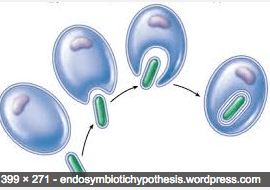
In this diagram, the endosymbiont (prokaryote being engulfed) is
blue
green
purple


Where does light reactions take place?
Stroma
Thylakoid
Cytoplasm
Which of the following is produced in the light dependent reactions?
Select all that apply.
oxygen
ATP
sugar
NADPH
Choose the statement that best describes light reaction.
It converts CO2 to sugar molecule
It converts light energy to chemical energy of ATP and NADPH
It takes place in the stroma
What is the waste-product of light-dependent reaction?
oxygen
water
carbon dioxide
NADPH
What is the unit of light?
Wavelength
Photon
Photosystem
Electrons
Main products of the Calvin Cycle
Oxygen, NADP+, ADP
Glucose, CO2, ADP
ADP, NADP+, Glucose
ATP, NADPH, Oxygen
5 carbon sugar that combines with CO2 in the Calvin Cycle
3-PGA
G3P
RuBP
Glucose
Which of the following is true of the Calvin Cycle?
carbon dioxide and energy (ATP and NADPH) are used to make organic compounds
energy is absorbed from sunlight and converted to chemical energy stored in ATP and NADPH
Occurs in the thylakoid
Occurs in the cytoplasm
Increasing carbon dioxide can increase photosynthesis, but only to a maximum rate because
There are not enough RuBP molecules
Oxygen cannot leave fast enough
Large amounts of CO2 cannot fit in the chloroplast
Calvin cycle can only go as fast as the light reactions

What does the Calvin Cycle begins with?
Glucose
The input of CO2
Water
ATP synthase
Calvin Cycle can occur without ATP
True
False
Energy for the Calvin cycle is supplied by which of the following from the light reactions?
Carbon dioxide and water
ATP and water
ATP and NADPH
Carbon dioxide and ATP
Carbon dioxide fixation occurs when CO2 combines with which among the choices below?
ATP
G3P
NADPH
RuBP
What is the function of the ATP and NADPH from the light reactions?
Split water
Cause RuBP carboxylase to fix CO2
Cause electrons to move along their pathways
Convert 3 PGA to G3P
The colors of the visible light spectrum can be remembered by using the acronym,
ROY G BIV
LAZIC
ROY B GIV
CO2
Light that is made up of a mixture of all colors in the visible spectrum would appear to be...
black
blue
white
a rainbow
A prism can be used to...
separate visible light into colors
make a beam of light brighter
measure the speed of light
make UV light visible
99% of the electromagnetic waves that the Sun emits can be found in which wave frequencies?
Radio, microwave, and infrared
visible, ultraviolet, and x-rays
infrared, visible, and ultraviolet
ultraviolet, x-ray, and gamma ray
Why does ordinary window glass appear colorless?
because it is made of glass
because it blocks UV light
because it transmits all frequencies of visible light
because it absorbs all frequencies of visible light
Which of the following best describes why sunsets look red in color?
The Sun's rays have to travel farther through the atmosphere before they reach your eyes.
There is more oxygen in the air at night
The Sun's rays are reflected by molecules with higher frequencies and scattering them in all directions.
The Sun is reflecting off of the carbon dioxide molecules in the air.
A blue dish appears blue because it
absorbs blue light
absorbs white light
reflects white light
reflects blue light

