
 Worksheets
Tides, Seasons and the Solar System
Total questions: 90
Worksheet time: 1hrs 18mins
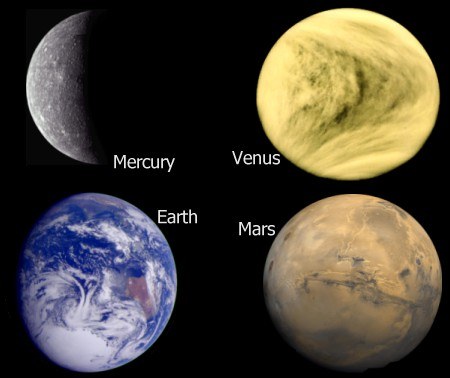
Earth and the other planets closest to the Sun are made mostly of _______
gas
metal
water
rock

a small rocky body orbiting the sun, ranging from the size of a small house to dust particles
nebula
terrestrial planets
collision
asteroids

A name for the large planets composed mostly of gases, including Jupiter, Saturn, Uranus and Neptune
terrestrial planets
inner planets
nebula
gas giants
Put the objects in order from the sun.
Sun, Mercury, Asteroid Belt, Venus, Mars, Earth, Jupiter, Saturn, Uranus, Neptune
Mars, Venus, Earth, Mercury, Asteroid Belt, Jupiter, Saturn, Neptune, Uranus
Sun, Mercury, Venus, Earth, Mars, Asteroid Belt, Jupiter, Saturn, Uranus, Neptune
Mercury, Venus, Earth, Mars, Saturn, Jupiter, Neptune, Asteroid Belt, Uranus, Sun
Select all that apply to the outer planets
Small
Made of gas
Behind the asteroid belt
Has rings
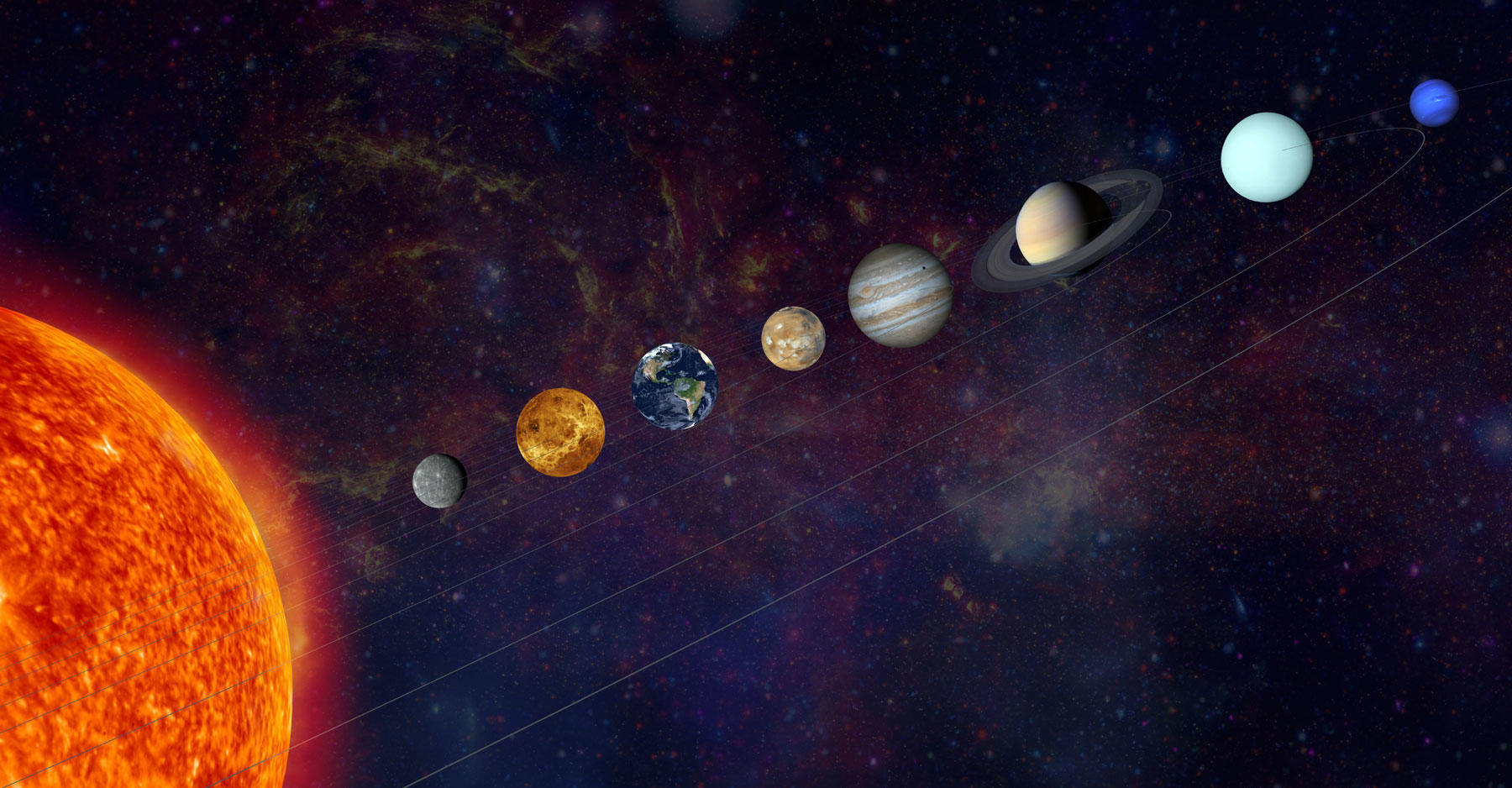
The planets are all equally distanced from each other.
The sun is
a planet
an asteroid
an enormous meteor
a star
Where is the asteroid belt located?
In between Mars and Jupiter
In between Uranus and Neptune
Beyond the Oort Cloud
In between Mercury and Venus
Which of these causes tides on Earth?
The revolution of the Earth around the Sun
The gravitational pull of the moon
Differences in wind speed around the Earth
The tilt of the Earth's axis

What is/are caused by the tilt of the Earth on its axis?
The water cycle
Seasons
Moon phases
Gravity
How long does it take the Earth to make one rotation?
1 year/365 days
1 week/7 days
1 day/24 hours
1 hour/60 minutes
How long does it take the Earth to make one revolution?
1 year/365 days
1 week/7 days
1 day/24 hours
1 hour/60 minutes

According to this diagram, when does a lunar eclipse occur?
When the moon is in the new moon phase
When the moon is between the sun and the earth
When the sun's rays are directly overhead
When the Earth is between the sun and the moon
Which characteristic does Earth share with all the other planets in our solar system?
They all have oceans.
They all have one moon.
They all orbit the sun.
They all have rocky surfaces.

The center of the solar system is...( Pusat sistem tata surya adalah... )
planet
moon
sun
star

When Earth spins ( Saat bumi berputar ), it turns around ( bumi bergerak berputar mengelilingi ) an imaginary line called a(n) ( sebuah garis bayangan yang disebut.... )
rotation
axis
orbit
ellipse


How many days does it take the Earth to revolve around the Sun? ( Berapa lama waktu yang diperlukan oleh bumi untuk mengelilingi matahari ? )
30 days
365 days
100 days
40 days
A meteor is also known as a "shooting star."
True
False
The tail of comets point towards the Sun.
True
False
The inner planets and the dwarf planets are solid, terrestrial planets.
True
False
Earth is the only planet with liquid water on it.
True
False
What is a meteorite?
small particle of debris in the Solar System
particle that burns up in the Earth's atmosphere
shooting star
a meteor that lands on the Earth's surface
What is the force that holds our whole solar system together?
action force
gravity
friction
reaction force
What are mostly found in the Kuiper Belt and orbit around the Sun?
asteroids
comets
meteorites
meteors
Which planet has an atmosphere made up of 77% nitrogen and 21% oxygen?
Earth
Venus
Mercury
Mars
What is a small particle of debris that is burned up in the Earth's atmosphere?
asteroid
meteor
star
comet
Composed of gases and is a star
Sun
Earth
Venus
Mars
Mercury
Separates the inner and outer planets
Uranus
24 hours
Asteroid Belt
365 days
December 21
June 23
June 21
October 10
September 23
December 21
March 21
June 21
In summer, the northern hemisphere experiences...
more direct sunlight
less direct sunlight
equal amounts of sunlight
no sunlight
In winter, the northern hemisphere experiences...
More direct sunlight
less direct sunlight
equal sunlight
no sunlight


At position A, what season is the Northern hemisphere experiencing?
Summer
Winter
Spring
Fall


What season is the Northern Hemisphere in for letter D?

During summer, the sun's rays are ____________________________.
Direct
Indirect

During winter, the sun's rays are ____________________________.
Direct
Indirect
When the Northern Hemisphere is pointing towards the Sun, what season is the Southern Hemisphere experiencing?
Summer
Spring
Winter
Fall
If the Earth suddenly stopped having seasons, what could be the likely causes?
The Moon disappeared.
The Earth is no longer tilted.
The Earth's rotation has increased.
The Earth moved farther away from the Sun.

Is more of the left side or the right side of Earth experiencing night time in this picture?
Left side
Right side
They both are experiencing night time.
They both are experiencing day time.
The imaginary line that separates the northern and southern hemispheres is called the....
At position C, in the Northern hemisphere it would be _____?
If it is winter in the Northern Hemisphere, it is ________ in the Southern Hemisphere.
Daily changes in the level of ocean water.
tides
currents
gravity
moon
What causes tides?
Differences in gravitational force between the Sun and moon.
The solar energy generated by the Sun.
The rotation of Earth.
The ________ is mostly responsible for tides on Earth.
the Sun
the moon
Earth's iron core
Why does the moon have a greater effect on Earth's tides than the sun?
It is closer.
It is bigger.
The Sun has a greater effect.
These tides happen during full moons.
Spring
Neap
These tides happen during first quarter moons.
Spring
Neap
These tides happen when the Earth, moon, and Sun are in a straight line.
Spring
Neap
What tides happen when the moon and Sun are at a 90 degree angle?
Spring
Neap
Approximately how many times a day do high tides and low tides occur?
two
three
one
When tides are higher or lower than average.
Spring tides
Neap tides
When tides are not higher or lower than average.
Spring tides
Neap tides
What is tidal range?
rise and fall of the ocean levels due to gravity of the moon and sun
the difference in levels of ocean water at high tide and low tide
a rise in ocean levels on the side of Earth nearest the moon
a tide of minimum range that takes place twice a month
Neap tides take place during _________________ and ________________ moons.
first quarter moon, third quarter moon
new moon, full moon
new moon, first quarter moon
third quarter moon, full moon

The type of tide shown here:
low tide
high tide
tidal force
spring tide

This is a model of a ________________.
neap tide
low tide
spring tide
gravity tide

This is a model of a __________________?
high tide
solar eclipse
spring tide
neap tide

The type of tide shown here:
high tide
neap tide
low tide
silly tide
Since the sun is far away, its gravitational pull is so small that it doesn't affect Earth's tides.
True
False
How often are each Spring and Neap Tides occurring?
Once a day
Once a month
Twice a day
Twice a month

