
Font size
 Worksheets
Unit 4 Practice Test
Total questions: 88
Worksheet time: 2hrs 52mins
DNA is what kind of Macromolecule?
Protein
Lipid
Carbohydrates
Nucleic Acid

DNA is an acronym for _____
Diphosphorus Nucleic Acid
Ribose Nucleic Acid
Deoxyribonucleic Acid
Deoxyribonucleic Acetate

The sugar in DNA is called
glucose
deoxyribose
ribose
phosphate
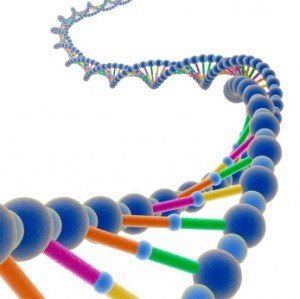


A nucleotide is composed of
A phosphate, sugar and nitrogenous base
A protein, protein and Guanine
A phosphate, Adenine, and nitrogenous base
A protein, Adenine and nitrogenous base

What are the 4 nitrogenous bases?
Adenine, Thymine, Amine, Guanine
Adenine, Thymine, Cytosine, Guanine
Amine, Thymine, Phosphine, Guanine
Amine, Thytosine, Cytosine, Phosphine
Adenine bonds with ______________. ( A bonds with _ )
Guanine bonds with ______________. ( G bonds with _ )
Which of these are purines (larger nitrogenous bases?) CHOOSE 2
Adenine
Thymine
Cytosine
Guanine
Which of these are pyrimidines (smaller nitrogenous bases?) CHOOSE 2
Adenine
Thymine
Cytosine
Guanine
The process in which DNA has the unique ability to make an exact copy of itself is called ____________.

Replication is called semi-conservative because
Each new molecule contains part of the original DNA
sometimes it conserves fuel
Each new molecule contains all of the original DNA

If one strand of a DNA molecule has the following order of bases, what will be the correct order of bases on the complementary (matching) strand?
CCATGCATTGGTTAG
GGTAGTACTAGCTAC
GGTACGGCTATGCATC
GGTACGTAACCTC
CGTATGACTAGCTAC


Where does Transcription occur?
Nucleus
Ribosome
Cytoplasm
Mitochondria
transfers the amino acids to the ribosomes
Provides and sends a message from DNA to ribosomes
Using the DNA strand below, what will be the correct order of bases on the mRNA strand?
TAC-GCA-ACT-GCT-AAT
GCT-TAC-TGA-GCT-TTA
CGA-AUG-GAC-TAC-CCG
AUG-CGU- UGA-GCT-UUA
AUG-CGU-UGA-CGA-UUA
What is the correct order to make a protein? (ie. Central Dogma)
Protein, DNA, RNA
RNA, DNA, Protein
DNA, RNA, Protein
Protein, RNA, DNA
What is translation?
the process in which DNA is copied to make another molecule of DNA
the process in which DNA is coded into mRNA
the process in which mRNA is decoded into a protein
the process in which enzymes break down mRNA

Use the mRNA below to select the correct amino acid sequence:
AUG-UCA-ACA-CGA-UAG
MET-LEU-SER-
CYS-STOP
MET-THR-LYS-
TYR-STOP
MET-SER-THR-
ARG-STOP
MET-ILE-LYS-
SER-STOP

Match the following
UAG
Stop
AUG
Methionine (Start)
GUG
Valine
UGG
Tryptophan
A diploid cell...
has 1/2 the amount of chromosomes
has the normal amount of chromosomes (46)
is represented by (n) in meiosis
A haploid cell...
has the complete amount of chromosomes (46)
is represented by (2n)
has 1/2 the amount of chromosomes
What does homologous chromosomes mean?
having 46 chromosomes (23 pairs)
programmed cell death
Pair of chromosomes that have the same information
Pair of chromosomes that have different information
Which phrase best describes MEIOSIS?
cell division of somatic cells (normal body cells)
cell division of prokaryotic cells
cell division of gametic cells (sex cells)
Meiosis occurs in the _________________ of organisms.
digestive organs (stomach, intestines)
reproductive organs (testes, ovaries)
sensory organs
(eyes, ears, nose)
In which phase of Meiosis does crossing-over occur?
Prophase I
Metaphase I
Anaphase I
Telophase I

What is happening during crossing over in Meiosis?
chromatids are replicating
chromatids are exchanging genetic information
chromatids are changing color
chromatids are being deleted
What effect does crossing over has in terms of traits of offspring?
Results in identical traits of offsprings.
Causes variation in the traits of offsprings.
It really does nothing to the traits of offspring.
The four cells that are produced after Meiosis are _______.
haploid because they contain just half the number of chromosomes as the parent cell.
diploid because they contain as many chromosomes as the parent cell.
diploid because they contain twice as many chromosomes as the parent cell.
The phase of Meiosis in which chromatids separate:
Prophase II
Metaphase II
Telophase II
Anaphase II
Occurs in Somatic cells (Body)
Occurs in Gametes (Sex Cells)
Only 1 cell division
2 Cell division's
2 Diploid cells are produced
4 Haploid cells are produced
Chromosome number is halved in each daughter cell
Chromosome number remains the cells
Purpose is Growth & Repair
Purpose is Reproduction
Goes through PMAT once
Goes through PMAT twice


Sea turtles have 56 chromosome in their somatic cells. How many chromosomes are in their gametes?
28
56
112
46

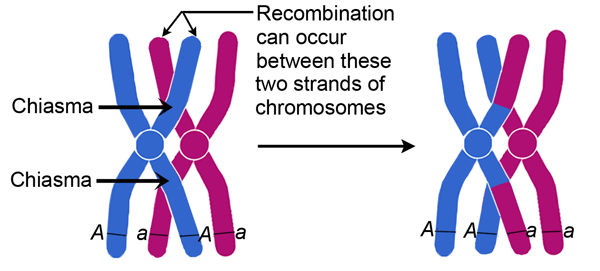
segregation of sister chromatids
condensation and segregation of alleles
mutationin which the DNA content of the gene is altered
crossing - over in which genes are exchanged

G G C

How many nucleotides equal 1 amino acid?
1
2
3
4

What brings the amino acids to the ribosome to assemble a protein?
DNA

Anaphase 2
Metaphase 2
Telophase 2
Prophase 2

Anaphase 2
Metaphase 2
Telophase 2
Prophase 2
sex chromosomes
sister chromatids
a karyotype
autosomes

Is this individual male or female?
Male
Female

What is an organized picture of all of an organism’s homologous chromosome pairs lined up with each other?
Pedigree
Karyotype
Which of the following is used to determine genetic defects or if an extra or missing chromosome exist in an organism?
Pedigree
Punnett Square
Karyotype
Which type of chromosome determines if someone will be male or female?
autosomes
sex chromosomes
Which set of chromosomes represents a male?
XX
XY
Which set of chromosomes represents a female?
XX
XY

What is the biological gender of this individual?
Male
Female
Cannot be determined

How many TOTAL CHROMOSOMES does this spiny rat have?
16
23
32

How many CHROMOSOME PAIRS does this karyotype have?
10
13
16
What is a karyotype?
An image that shows all of the DNA within an organism
An image that shows the chromosomes from a single cell within a single organism
The entire genetic sequence of humans


What are the "X" shaped things in the drawing.
PMATs
Chromosomes
Ribosomes
Telophase
PMAT helps us remember the correct order of the phases of Mitosis. Which of the following has the phases of Mitosis in the correct Order
Interphase, Mitosis, Cytokinesis
Prophase, Metaphase, Anaphase, Prophase
Anaphase, Telophase, Prophase, Telophase
Prophase, Metaphase, Anaphase, Telophase
When the cells completely split it is call what?
Telophase
Cytokinesis
Anaphase

Reorder the following amino acids if given this mRNA strand:
AUG UCC CCA CUC UAA
Methionine
Serine
Proline
Leucine
Stop

Where is DNA found?
the cytoplasm
the nucleus
the ribosomes
the membrane
What type of helix is DNA
Double
Single
Triple
Jagger

Which is the start codon?
CGU/Arg
GGA/Gly
AUG/Met

What is the monomer of Protein?
Chromosomes
Nucleotides

Amino Acids

What protein does the codon GTC make?
Met
Gly
Val
Trp

What's the difference between DNA and RNA
RNA performs photosythesis
RNA contains W instead of G
RNA has three helixes
RNA has U instead of T
RNA has one helix
Transcribe this DNA segment into mRNA. AATCGCTAG
(a)
What are the two steps involved in reading the DNA to make proteins?
Copying and translation.
Transcription and translation.
Copying and reading.
Reading and transcription.


What amino acid does the mRNA codon AGG code for?
Arg
Lys
Ser
Met

What is "A"?
Nucleotide
Deoxyribose Sugar
Nitrogenous base
Phosphate
What is "B"?
Nucleotide
Deoxyribose Sugar
Nitrogenous base
Phosphate
What is "C"?
Nucleotide
Deoxyribose Sugar
Nitrogenous base
Phosphate
What determines the specific traits in an organism?
The number of carbons in the DNA molecule.
The number of hydrogen bonds that hold the strands of DNA together.
The sequence of nucleotide bases in the DNA molecule.
The sequence of phosphates along each DNA strand.
Match the Base Pairs
Adenine
Thymine
Cytosine
Guanine
Guanine
Cytosine
Thymine
Adenine

