
Font size
 Worksheets
Chemistry knowledge KS3-KS4
Total questions: 114
Worksheet time: 2hrs 40mins
Gas to liquid is
melting
freezing
evaporation
condensation
Solid to gas is
melting
freezing
evaporation
sublimation
Liquid to solid is
evaporation
freezing
sublimation
condensation
Solid to liquid is
evaporation
condensation
melting
sublimation
Liquid to gas is
condensation
freezing
evaporation
melting
How close together particles are is called
mass
weight
density
volume
How much space particles take up is called
mass
weight
density
volume
In which state of matter can the particles only vibrate?
solid
liquid
gas
Which state of matter takes the shape of the bottom of the container?
solid
liquid
gas
Which state of matter takes the shape of the whole container?
solid
liquid
gas
As temperature increases particles
move faster
move slower
get smaller
get bigger

Elements
are made of two or more types of atoms chemically bonded together
are made of one type of atom
are made of two or more types of molecules combined in the same space
are always individual atoms
Compounds
are made of two or more types of atoms chemically bonded together
are made of one type of atom
are found on the periodic table
can be separated into their individual parts through physical means
Mixtures
are made of two different types of atoms chemically bonded together
Are only liquids
Cannot be separated
Can be separated using physical properties
Which is the smallest particle of an element that has the same properties as that element?
atom
molecule
electron
neutron
Which of the following are examples of ELEMENTS?
Oxygen
Water
F2
Lemonade
Sulfur Dioxide (SO2)
Which of the following are examples of Compounds?
Salt
Salt Water
N2 + O2
C6H12O6
Co
Which substance can have ratios of atoms that change
element
mixture
compound
molecule
The subscript 2 in H2O tells us
There are 2 atoms of oxygen in one molecule of water
There are 2 atoms of hydrogen in one molecule of water
There are 2 molecules of water present
The 2 tells me nothing, you wizard!
Is salt (NaCI) a compound or an element?
Compound
element


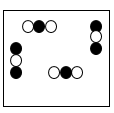
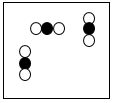
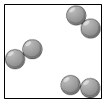

Subatomic particles with a negative charge
Electrons
Neutrons
Protons
Quarks

The smallest particle of an element.
Element
Molecule
Atom

What is the atomic number?
35
18
17
52

How many protons and electrons does this element have?
35
18
17
52

How many neutrons does Chlorine have?
18
17
35
52

What is the atomic mass of Neon?
10
20
30

How many neutrons does calcium have?
20
40
60
0
Where are electrons found?
In neutrons
In shells
In the nucleus
In protons
What particles have a charge of -1 and a very small mass?
protons
neutrons
electrons
shells
Elements in group 7 have how many electrons in their outer shell?
1
3
5
7
The period (row) number determines the
number of electrons
number of neutrons
number of shells
number of protons in the nucleus
Why are atoms neutrally charged?
Balanced numbers of protons and neutrons
Equal numbers of electrons and protons
The neutrons have no charge
Atoms always have a positive charge
What element has the symbol N?
Neon
Nitrogen
Nickel
Sodium
What element has the symbol Ca?
Cobalt
Carbon
Copper
Calcium
Isotopes are atoms that have ...
same number of protons but different number of electrons
same number of neutrons but different number of protons
same number of protons but different number of neutrons
same number of electrons but different number of protons
__ Al + __ FeO → Al2O2 + __ Fe
1, 1, 2
2,1,2
2, 2, 2
2,4,2
H2SO4
The Law of Conservation of Mass says that matter can neither be __________ or __________.
created; destroyed
recycled; renewed
subtracted; added
joined; separated
What is the correct order for obtaining salt from a mixture of sand and salt?
Dissolving in water - filtration - evaporation
Evaporation - filtration - dissolving in water
Filtration - dissolving in water - evaporation
Which method is usually used to separate coloured substances from each other?
Simple distillation
Evaporation
Chromatography
How could you separate iron filings from a mixture of iron and sulfur?
Using a magnet
By adding water and filtering
By distillation
In filtration, what name is used to describe the solid left in the filter paper?
Filtrate
Residue
Distillate
Crude oil can be separated into several liquids that have different boiling points. What is the name of this process?
Simple distillation
Chromatography
Fractional distillation
Sn
tin
sulfur
iron
sodium
Zinc
Z
Zi
ZN
Zn
Sulfur
Sf
Su
Sr
S
Neon
N
No
Ne
Nn
Copper
CU
Cp
Cu
Cr
Helium
He
Hl
HE
Hm
Gold
Go
Gl
AU
Au
Pb
Gold
Lead
peanut butter
Paribium
Iron
Ir
In
Fe
FE
Nickel
Ni
N
Nl
Nc
Mercury
Me
Hg
HG
ME
Potassium
P
K
Pt
k
Aluminum
A
Al
Am
Au
When burning a fire, if I remove Oxygen, then the fire will...
no longer burn
keep burning
EXPLODE
What does the "thermal" in thermal decomposition mean?
sulfur
catalyst
heat
oven
copper(II)carbonate → ___________ + carbon dioxide
copper(I) oxide
copper(II) oxide
copper oxide
copper(III) oxide
What happens when CO2 is bubbled through limewater
It changes from pink to blue
It goes pop
It goes cloudy
It gets hot
The reaction between an acid and an alkali
produces salt and water. This reaction is called
acidication
neutralisation
alkalisation
What colour is Universal indicator when the solution is neutral?
Red
Green
Blue
Purple
Complete the word equation below:
Acid + alkali --> ............... + water
water
salt
gold
metal
Which element has been oxidised?
iron oxide + lithium → iron + lithium oxide
iron
lithium
oxide
lithium oxide
What are the Group 1 elements also known as?
Non-metals
Alkaline
Alkali metals
Where are Group 1 elements on the Periodic Table?
Far right
Far left
In the middle
Top, horizontal row
Group 1 elements form alkaline solutions that will turn universal indicator what colour?
orange
blue
green
purple
red
Group 1 elements consist of: lithium, potassium, caesium, rubidium, and francium. Which element have we missed out?
hydrogen
sulfur
manganese
sodium
What group on the periodic table are the Halogens found?
7
5
1
P
Halogens are metals?
True
False
Halogens are good conductors of heat and electricity.
True
False
Which Halogen is the most reactive?
Bromine
Fluorine
Iodine
Chlorine
6.15: Which of these is not a property of noble gases?
Colourless
Odourless
Flammable
Gas at room temperature


Elements in a .................. have similar chemical properties.
period
group
row
Who arranged the known elements into horizontal rows of increasing atomic mass leaving gaps for as yet undiscovered elements?
Mendeleev
Meyer
Newlands
Moseley


Able to be beaten or hammered into shapes
luster
malleable
brittle
insulator
Allows heat or electricity to go through
insulator
conductor
luster
ductile
Which properties of metal makes it a good choice to make a cooking pot out of? Choose TWO
it has luster - it is shiny
it is a good conductor of heat
it is ductile - able to be made into a wire
it has a high melting point
Heat and ____________ can change sedimentary rock into metamorphic rock.
Pressure
Melting
Coolig

How do animals get carbon?
Photosynthesis
They absorb it from the atmosphere
The sun
They eat other plants and animals

