
 Worksheets
Nucleus and The Central Dogma of Molecular Biology
Total questions: 93
Worksheet time: 2hrs 33mins
Forms the outer boundary of the nucleus
(a)
Parts of Nuclear Envelope
(a)
How are molecules exchanged between nucleus and cytoplasm?
(a)
Does the density of nuclear pores embedded in the envelope varies considerably?
(a)
Each nuclear pore consists of ___ that has ___ symmetry, appearing similar in size and architecture throughout the plant and animal kingdoms.
(a)
Family of 30 nuclear proteins
(a)
A specific amino acid sequence that is required for a protein to gain entry into the nucleus.
(a)
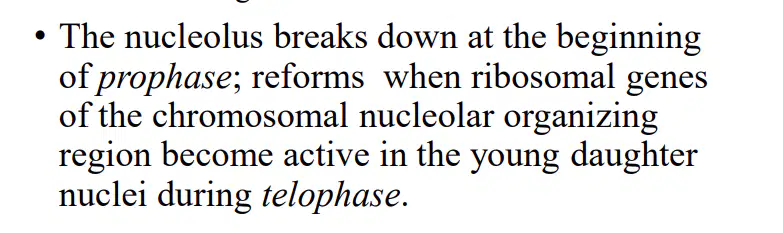
A distinct organelle within the nucleus that functions to assemble rRNAs.
(a)
Subdomains of Nucleolus
(a)
(a)
The remainder of the genetic information of the cell is contained in the two semiautonomous organelles: __ and __.
(a)
Building blocks of nucleic acids
(a)
What are the four components/parts of a nucleotide?
(a)
What are the two types of nitrogenous bases?
(a)
Purine rings include ___ and ___.
(a)
Pyrimidine includes ____, ____, and ____.
(a)
Sugar - RNA: ____; DNA: ____
(a)
3 examples of Phosphate Groups
(a)
3 Chemical Bonds
(a)
Nucleoside Composition
(a)
Nucleotide Composition
(a)
[A] = [T], [G] = [C]
(a)
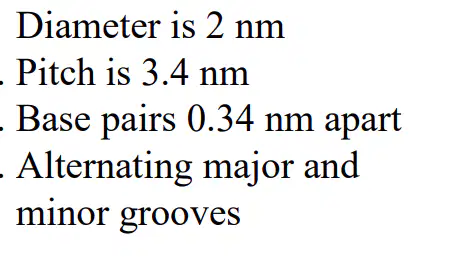
characteristics of dna
(a)
The nucleus is composed of DNA and its associated proteins which is collectively known as (a) .
The segments of DNA are coiled twice around a solid cylinder of histone protein molecules, forming a (a) .
During mitosis, the chromatin condenses, first by coiling tightly into a 30 nm chromatin fiber, with six nucleosomes per turn, followed by further folding and packing.
(a)
A form of chromatin that is highly compact/condensed; less active in transcription; gene-poor
(a)
A form of chromatin that is dispersed; more active in transcription; gene-rich
(a)
DNA replication happens during the (a) .
Three goals of DNA replication
(a)
Three DNA replication schemes
(a)
Parental DNA strands are used as (a) to initiate polymerization reactions.
Stages of DNA replication
(a)
Specific locations found in the DNA where replication occurs
(a)
A site where (1) the parental double helix undergoes strand separation, and (2) nucleotides are incorporated into the newly synthesized complementary strands.
(a)
Enzyme that unwind/unzips the helix at the replication fork
(a)
A protein that binds selectively to single-stranded DNA, keeping it in an extended state and preventing it from becoming rewound or damaged.
(a)
Relieves/prevents DNA supercoiling
(a)
A polymerase that constructs short RNA primer
(a)
An enzyme that synthesizes new DNA strands
(a)
Strand that grows continuously as the fork advances; 5' - 3'
(a)
Strand that is synthesized discontinuously; 3' - 5'
(a)
The DNA segments in the lagging strand are called (a) .
An enzyme that joins the fragments into a continuous strand
(a)
Tethers DNA polymerase: δ & ε
(a)
Cleaves RNA primer and new DNA strand
(a)
Degrades RNA primer
(a)
Process of synthesizing mRNA
(a)
DNA strand: used as template ~ to initiate polymerization reaction
(a)
DNA helix: ____ and ____
(a)
Non-template/coding strand; 5’-3’
(a)
template/non-coding strand; 3’-5’
(a)
Three phases of Transcription
(a)
The site on the DNA to which an RNA polymerase binds prior to initiating transcription; it is also known as (a) .
the enzyme that can incorporate nucleotides into a strand of RNA whose sequence is complementary to one of the DNA strand; produce bases
(a)
Proteins that aid the RNA polymerase to recognize the promoter.
(a)

(a)
What RNA polymerase synthesizes all eukaryotic mRNA precursors?
(a)
Most eukaryotic promoters lack a recognizable TATA box. True or False?
(a)

(a)
A protein that recognizes the TATA box of promoters; present in large sub-units called TFIID
(a)
What sets the stage for the assembly of the complete PIC?
(a)

(a)
The only known GTF to possess enzymatic activities:
▪ Function as protein kinase, phosphorylate RNA polymerase
▪ Function as helicase, unwinding the DNA strands
(a)
TFIIH functions as both ____ and ____.
(a)
As long as TFIID remains bound to the promoter, additional RNA poly molecules may be able to attach to the promoter site and initiate additional rounds of transcription w/o delay.
(a)
They contain a continuous sequence of nucleotides encoding a specific polypeptide; found in the cytoplasm; attached to ribosomes when they are translated.
(a)
Noncoding segment found in most mRNAs
(a)
Coding part in mRNAs that encodes AA
(a)
Eukaryotic mRNAs have special modifications at their 5’ or ____ and 3’ ___ termini.
(a)
The process of removing introns is called (a) .
The process of synthesizing proteins where AA is the functional product.
(a)
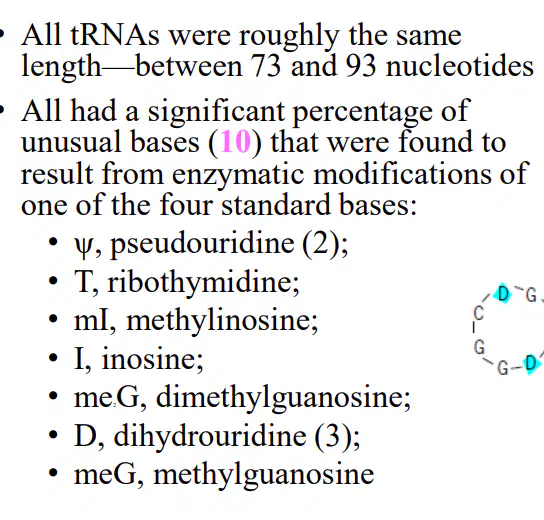
tRNA structure
(a)
Protein synthesis has two processes: ___ and ___.
(a)
A process in translation wherein RNA sequence determine the AA sequence.
(a)
A process in translation wherein AAs are linked together.
(a)
What are the four requirements for protein synthesis?
(a)
This component needed in translation brings the ribosomal subunits together and provides the coding sequence.
(a)
This is the site of translation; move along an mRNA sequence and align successive tRNAs
(a)
This component/requirement in translation binds to the codon by its anticodon, bringing the attached AA into the growing polypeptide chain
(a)
Catalyzes the attachment of a particular AA to its corresponding tRNA in translation
(a)
Initiation in translation requires (a) .
For eukaryotes, (a) (at least 12 types) bind to 40S.
The first aa-tRNA in translation
(a)
Initiation codon
(a)
Bring of aa-tRNA into the line; Forming the new peptide bond to elongate the polypeptid; Moving the ribosome to the next codon along the mRNA
(a)
Elongation produces a long chain of (a) .
Peptide bond formation is catalyzed by a ribozyme called (a) .
The binding of eEF-2 and the hydrolysis of its GTP results in the (a) of the ribosome relative to the mRNA.
In the final step of elongation, the deacylated tRNA leaves the ribosome, emptying the E site.
(a)
(a) /64 trinucleotide codons function as stop codons.
Termination requires (a) .
Eukaryotes have a single class I RF: ___, which recognizes all three stop codons, and ___, which is a GTP-binding proteins.
(a)

