
 Worksheets
AP Unit 3 Review
Total questions: 155
Worksheet time: 2hrs 41mins

What Supreme Court case ruled "separate but equal" was legal?
Texas vs. Johnson
Tinker vs. DesMoines
Brown vs. Board of Education
Plessy vs. Ferguson

Which of the following BEST explains the purpose of the Jim Crow system?
Keep public facilities cleaner
keep African-Americans as second-class citizens
keep the races pure
keep African-Americans from voting

Tests given to African Americans at the voting polls.
Literacy Tests
Voting tests
Government Tests
Poll tests

What areas were racially segregated?
Schools
Housing
Public Transportation
All of these answers

You are eligible to vote if you grandfather was eligible to vote under this clause.
Grandfather clause
Father Clause
Grandmother Clause
Santa Clause
Which amendment granted African American males ( no females) the right to vote?
15th
19th
1st
14th
Which word means "The Right To Vote"
Democracy
Elections
Suffrage
Rights
Where Were Jim Crow Laws Mainly Used?
Eastern Shore
South
North
How did the ruling in Plessy vs. Ferguson relate to the 14th amendment?
It said that separate but equal was unfair
It created laws that separated blacks and whites.
It created laws that desegregated blacks and whites forever
It created laws to unify America


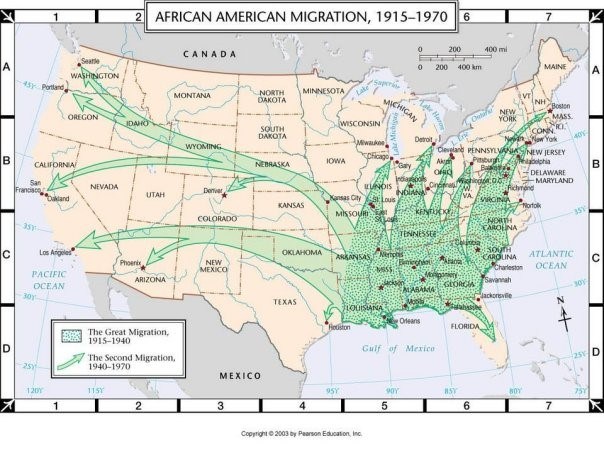
By 1910 where did the majority of African-Americans live?
The South
The North
The East
The West
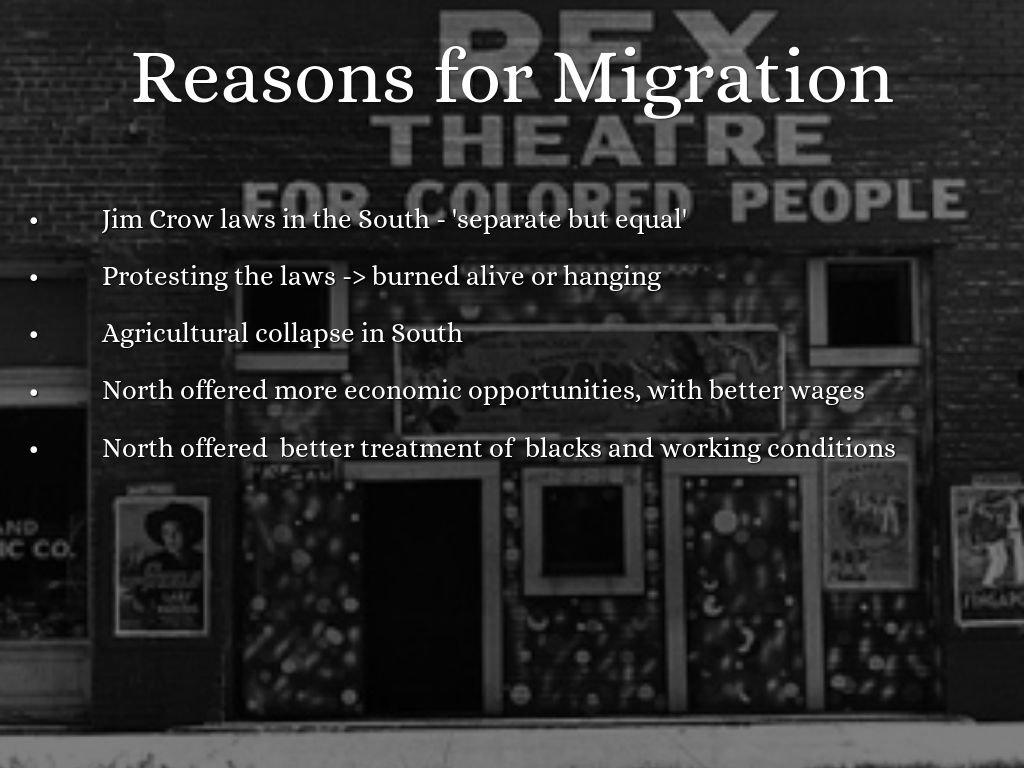
What two (2) things were African-Americans looking for when they did move?
Segregation and a Better Life
Lost Family and A Better Life
Discrimination and More Opportunities
More Opportunities and a Better Life
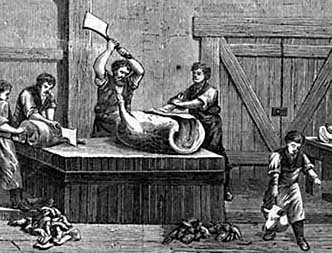
Which of the following was NOT an area where African-Americans were able to get jobs in the North.
Sharecropping
Steel Industry
Automotive Factories
Meatpacking Plants
What were Northern whites trying to keep new Northern African-Americans from owning?
Houses
Businesses
Cars
Education
Which of the following was a pull factor that led to African-Americans migrating out of the South during the Great Migration?
Job opportunities in factories
Social terror
Lack of voting opportunities
A decrease in wages
Which global event had a direct influence on the beginning of the Great Migration?
WWII
Russian Revolution
WWI
Civil War
The Great Migration resulted in the spread of black culture to other areas of the country. One notable place that became a major platform for black culture and achievement was
Savannah
Nashville
Atlanta
Harlem
What was the Red Summer of 1919?
A series of racial violence incidents in the United States
A military conflict that occurred after World War I
A social movement advocating for civil rights
A mass migration of African Americans to the North
What caused racial tensions to increase in the U.S. after World War I?
Competition for opportunities in postwar America
The discharge of millions of military personnel
The Great Migration of African Americans
All of the above
Why did many White working community members resent Black veterans?
They believed Black veterans were Bolsheviks and anarchists
They feared Black veterans would challenge traditional social subjugation
They thought Black veterans took their jobs
All of the above
What did W.E.B. Du Bois encourage Black veterans to do?
Return from fighting
Return fighting for their rights
Return to their homes and families
Return to military service
Who formed most of the mobs during the Red Summer of 1919?
Fringe white supremacist terror groups
Ordinary white civilians and veterans
Ku Klux Klan members
Federal officials
Which city experienced a four-day riot during the Red Summer of 1919?
Washington, D.C.
Chicago
Norfolk, Va.
Elaine, Ark.
What triggered the riot in Chicago during the Red Summer of 1919?
A Black teenager drowning near a whites-only beach
A rumor of Black men assaulting a white woman
A parade celebrating African American troops
A shootout between white law officers and Black sharecroppers
Which incident during the Red Summer of 1919 resulted in the highest number of casualties?
The riot in Washington, D.C.
The riot in Chicago
The massacre in Elaine, Ark.
The parade in Norfolk, Va.
How did African Americans respond to the racial violence of the Red Summer?
They submitted to their tormentors
They fought back aggressively
They sought refuge in other countries
They organized peaceful protests
What legacy did the Red Summer of 1919 leave for African American communities?
A sense of fear and submission
A greater sense of shared purpose and pride
A desire to leave the United States
A loss of hope for civil rights
What year was the Tulsa Race Massacre?
1921
1920
1900
2001
What area was attacked during the massacre?
Greenwood
Greenville
Greenwich
Greenland
What was the nickname given to the area hit by the massacre?
Black Wall Street
Wall Street
Oiland
Beezer's
What event caused the massacre?
A black man was accused of assaulting a white woman
There was no cause
White Tulsans didn't like Black Wall Street
Jealousy
What was unique about Greenwood?
It was the wealthiest black community in the country
There was nothing unique about Greenwood
They had a great sports team
Booker T Washington's Job
educator
Fireman
Officer
Pilot


Booker T Washington and WEB DuBois both agreed
white people are superior
the telephone is the best invention
Education for African-Americans is important
Equal rights for all
Booker T Washington
was born rich
equality for all
believed education was not important
was principal of the Tuskegee Institute
WEB DuBois
founded the NAACP
worked in a salt mine at age 9
was born in Tennessee
taught job skills to African-Americans
In 1909, who helped found the NAACP?
Booker T Washington
Alexander Graham Bell
WEB DuBois
Thomas Edison

What southern state was Plessy in?
Louisiana
Texas
Georgia
What did Homer Plessy do that got him arrested?
Sat in the white only part of the bus.
Took a seat in the white only car of a train.
Sat at a white only section of a lunch counter.
Plessy and the other members of his organization were trying to challenge
the Brown v. Board of Education case
Segregation and the Jim Crow laws
Reconstruction
equal pay for equal work
What famous phrase came out of the Plessy case?
"Separate but equal"
"Give me liberty or give me death."
"By any means necessary"
In the Dred Scott case, the Supreme Court said that African Americans ______________
had no rights
could vote
were citizens
What is the dissenting opinion of the Supreme Court?
The winning opinion of a Supreme Court ruling.
The opinion of the Supreme Court law clerks (secretaries).
The losing opinion of a Supreme Court ruling.
Which court case overturned (changed) Plessy v. Ferguson and the idea of segregation?
Dred Scott v. Sanford
Tinker v. Des Moines
Roe v. Wade
Brown v. Board of Education
Which famous black woman was known for creating hair products for women? She was said to be the first female self-made millionaire in America.
Ida B. Wells
Mary McLeod Bethune
Madam C. J. Walker
Bessie Coleman
Which famous black woman was born a slave in 1862 and became a civil rights an women's rights activist?
Oprah Winfrey
Ida B. Wells
Mary McLeod Bethune
Ella Fitzgerald

Court decision that created “separate but equal”?
Plessy v Ferguson
Texas v Hernandez
Brown v Board
Sanford v Dole

Court decision that ended segregation of schools?
Brown v Board
Plessy v Ferguson

Pushed for education of blacks after the end of slavery? Vocational Skills
Booker T Washington
Ida Wells
WEB Dubouis
What does the speaker compare oppressors to?
pigs
mad dogs
wolves
tigers
What event inspired McKay to write this poem?
The Red Summer of 1919
The Tulsa Riot of 1932
The Watts Riots of 1965
The LA Riots of 1992


What is the Harlem Renaissance?
A travelling basketball team
A rebirth of African American culture in art, music, and literature
A medieval game
Time period of around 1210 a.d. when the games of jousting and art became popular
During which decades did the Harlem Renaissance occur?
1900-1910
1920s and 1930s
1940s and 1950s
late 1800s
How did the Harlem Renaissance influence the world? Click all that apply
it only had an impact on the immediate area of New York
it spread from the area of Harlem to other parts of the nation
it not only influenced African Americans, but other cultures as well


The Great Migration was the movement of millions of African Americans from the rural ______ to the cities of the North, Midwest and West from about 1916 to 1970.
South
East
West
North

One of the earliest innovators of jazz poetry, poetry that "demonstrates jazz-like rhythm." Significant works include "I, Too," "Let America be America Again", and "The Negro Artist and the Racial Mountain"
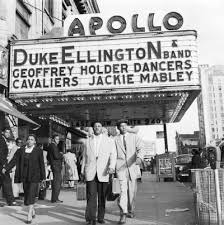
Duke Ellington
Aaron Douglas
W. E. B. Du Bois

This poet wrote a poem called "We Wear the Mask," about not being able to express himself because of the way others perceived his race.
Robert Frost
Paul Laurence Dunbar
Maya Angelou
Langston Hughes
First African American to gain national eminence (recognition) as a poet
Countee Cullen
Paul Laurence Dunbar
Langston Hughes
Zora Neale Hurston
We wear the mask that grins and lies is an example of what type of literary element?
imagery
allusion
metaphor
personification
What does the mask symbolize in the poem "We Wear the Mask"?
(a)
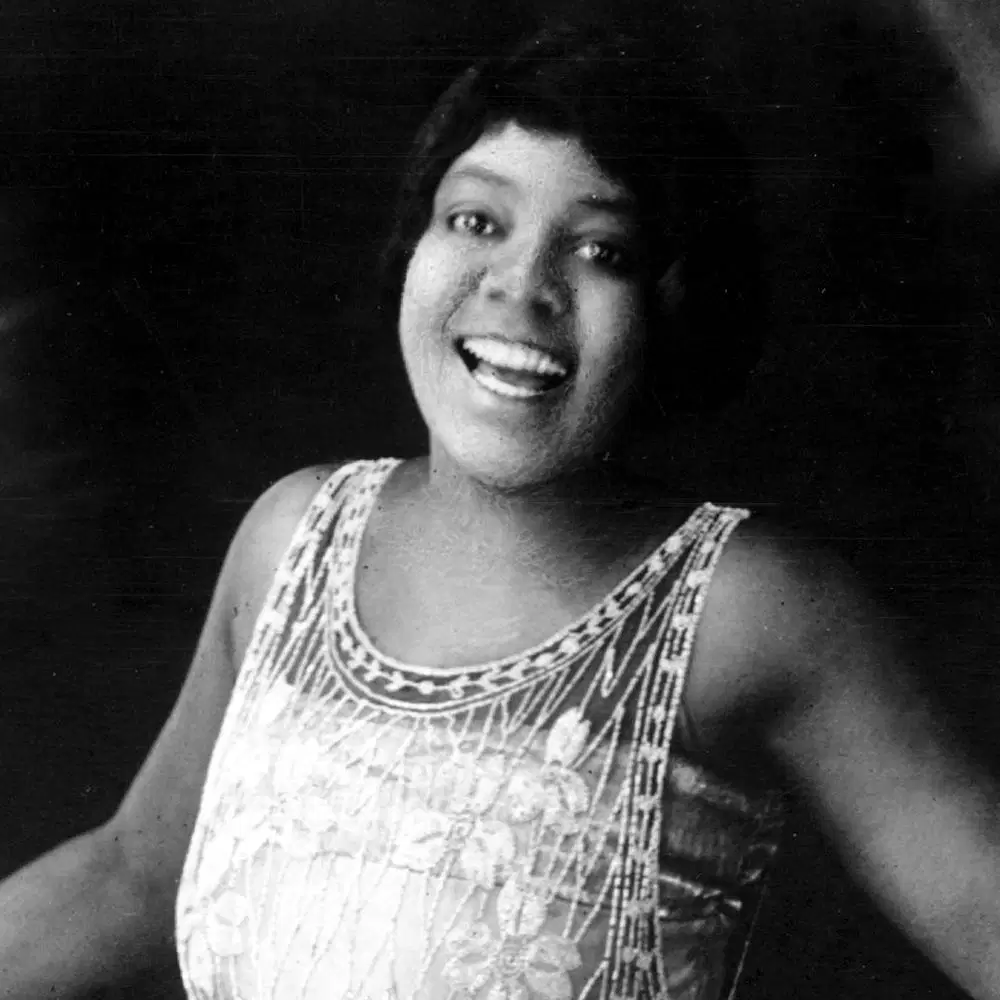
Blues singer; called Empress of the Blues
Duke Ellington
Bessie Smith
Zora Neale Hurston
Louis Armstrong
Novelist and anthropologist of the Harlem Renaissance; one of her most famous novels There Eyes Were Watching God
Jessie Redmon Fauset
Bessie Smith
Zora Neale Hurston
Josephine Baker
Famous jazz pianist, composer, conductor during the Harlem Renaissance; Known for big band jazz
Duke Ellington
Bessie Smith
Aaron Douglas
Louis Armstrong
Famous jazz trumpeter and conductor during the Harlem Renaissance; nicknamed Satchmo.
Duke Ellington
George Gershwin
Aaron Copland
Louis Armstrong
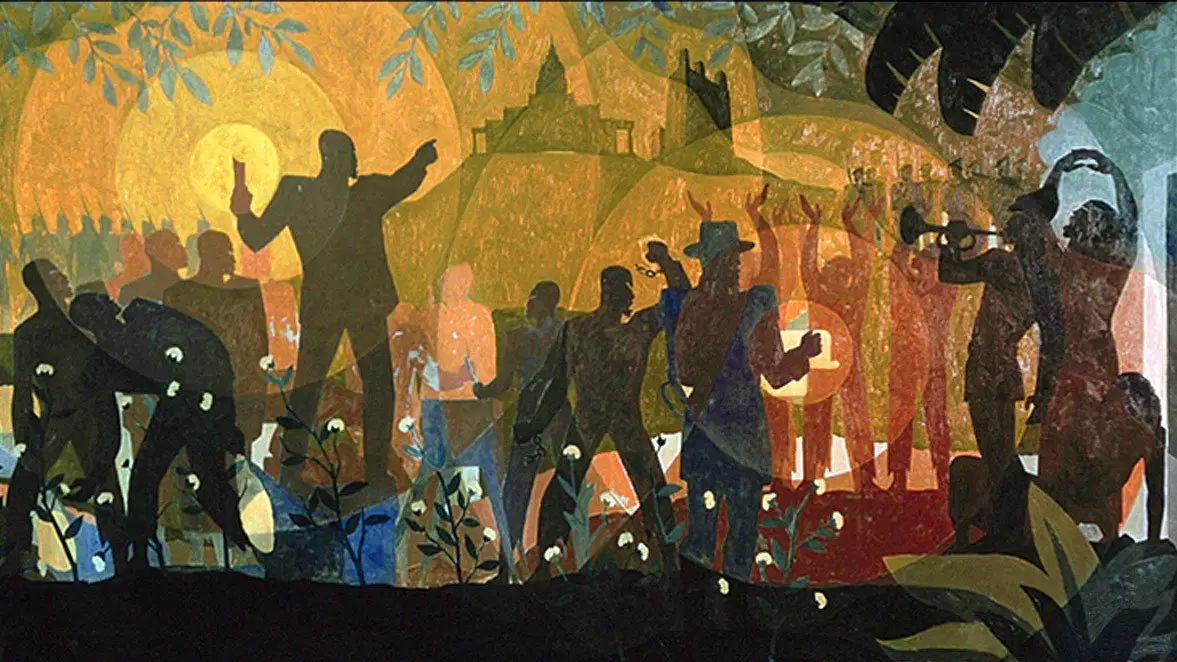
Famous artist during the Harlem Renaissance that used his art to bring attention to racism and segregation
Georgia O'Keeffe
Jacob Lawrence
Aaron Douglas
James Van der Zee
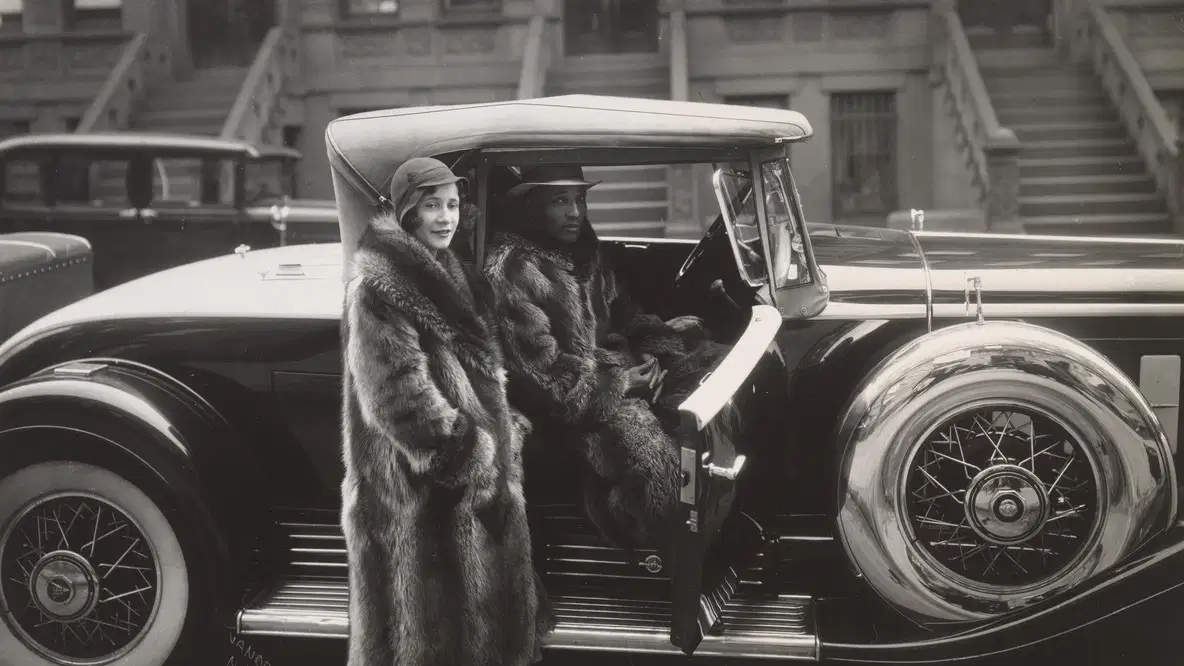
Most photographs taken of African American life in NYC during the Harlem Renaissance were by him
Oscar Micheaux
Langston Hughes
Aaron Douglas
James Van der Zee
Produced over 40 movies during the 1920s that had all African American casts. His movies discussed critical topics from an African American point of view.
Oscar Micheaux
Jacob Lawrence
Aaron Douglas
James Van der Zee
Harlem Renaissance poet; preferred to write positively about racial topics and urged others to write poems in standard, traditional styles on standard topics.
Countee Cullen
Jessie Redmon Fauset
F. Scott Fitzgerald
Langston Hughes
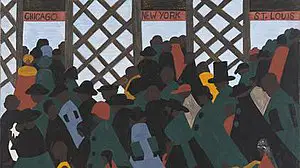
Artist first known for his paintings about the Great Migration painted in 1940-1941
Oscar Micheaux
Jacob Lawrence
Aaron Douglas
Langston Hughes
What was the primary objective of the 13th Amendment to the U.S. Constitution?
Equal Protection
Right to vote
Granting citizenship
Abolition of slavery
What was the primary objective of the 13th Amendment to the U.S. Constitution?
Equal Protection
Right to vote
Granting citizenship
Abolition of slavery
When first ratified in 1870, what did the 15th Amendment guarantee?
Equal protection under the law
The abolition of slavery
The right to vote for all male citizens of the United States
The right to vote for all citizens of the United States
What was the ultimate aspiration of the Reconstruction Era?
Reestablishe and reintegrate Southern states into the Union and protect formerly enslaved
Furtherance of slavery practices
Immediate universal suffrage implementation
Penalizing southern states for secession
Why were Black Codes enacted during the Reconstruction Era?
To help African Americans vote
To provide legal support for freed slaves
To restore the social controls of earlier slave codes
To promote racial equality
What was the long-term effect of the revocation of General William T. Sherman’s Special Order No. 15?
Immediate integration of African-Americans
African Americans were evicted from confiscated lands or shifted into sharecropping contracts
Swift rebuilding of Southern infrastructure
Immediate economic boom caused by the return of southern democratic rule
Who profited most from convict leasing in the Southern United States?
Northern industries
southern plantations
Churches
Southern prisons
What was accomplished by instituting Jim Crow laws?
They created separate public spheres for divert races
They ended slavery
They eliminated racism
They established equal rights for all American citizens
Which of the following is considered a major impact of the Election of 1876?
Restored Civil Rights to all US citizens
It initiated the Progressive Era
It led directly to the Gilded Age
It ended Reconstruction in the South
Which Supreme Court ruling legally validated racial segregation policies?
Marbury v. Madison
Dred Scott v. Sandford
Plessy v. Ferguson
Brown v. Board of Education
The Great Migration of African Americans is the early to mid-20th century was largely a response to which factor?
Jim Crow laws and racial violence in the South
The completion of the transcontinental railroad
The spread of the Ku Klux Klan in the North
Industrial expansion in the South
African American Studies scholars refer to the period between the end of Reconstruction and the beginning of World War II as the_________________
Nadir
the Plessy Period
Jim Crow Era
Klan Era
How did Ida B. Wells seek to combat racism and discrimination?
By running for political office
By founding a college
Through journalism and advocacy
Through military action
Why was the summer of 1919 nicknamed “Red Summer”?
Red was associated with communism
Due to the Bloodshed during a proliferation of racial violence
It was extremely hot
A poet named it because of the intense heat that caused increased social tension
In which of the following writings does poet Claude McKay, in response to the Tulsa Race Massacre, encourage African Americans to preserve their dignity and fight back against anti-Black violence and discrimination?
"If We Must Die"
"The Lynching"
"America"
"Harlem Shadows"
What terrible act that occurred in 1955, demonstrates the longevity of lynching as a tactic of white supremacist violence well beyond the 1921 Tulsa Race Massacre?
The arrest of Rosa Parks
The murder of Emmett Till
The bombing of the 14th Street Baptist Church
The assassination of Dr. Martin Luther King
What is the “Veil” concept as argued by Dr. W. E. B. DuBois in the ‘The Souls of
Black Folks’?
Symbol of how religious worship helped African American survive the discrimination of the Jim Crow South
symbol of African Americans separation from full participation in American society and struggle for self-improvement due to discrimination
symbol of wealth in the Greenwood community before the events of the Tulsa Race Massacre
African tribal symbol for forced separation between African kingdoms.
What did Dr. W.E.B. DuBois argue is the ‘double-consciousness’ for African-Americans in ‘The Souls of Black Folks?’
The internal conflict experienced by subordinated groups in an oppressive society
Only identifying as African without accepting the assimilation forced upon Africans in America
Feeling neither American nor African in a country that never fully accepted Blacks as Americans
Only feeling American; forgetting the origin of a people
Each chapter of The Souls of Black Folk opens with verses of spirituals, which Dr. W. E.B. DuBois calls
Freedom Verses
Sorrow Songs
Spirtuals
Soulful Somj
Who is the author of the poem “We Wear the Mask,” which represents the false emotions a person might “wear” in front of other people?
Maya Angelou
Robert Frost
Paul Laurence Dunbar
Langston Hughes
What did educators and activists call for to promote greater inclusion of Black women in American society?
Women's education and suffrage
For women to accept their primary role as wife and mother
Women's pursuit of career in service industries
For women to become leaders in local communities before entering politics
Which of the following writings was produced by Nannie Helen Burroughs in 1900 to encourage church leaders to accept the idea of leadership roles for women in the church?
"How the Sisters Are Hindered from Helping"
"The Feminine Mystic"
"A Vindication of the Rights of Woman"
"The Women They Could Not Silence"
What did African American literature, poetry, and music, such as the song “Lift Every Voice and Sing,” encourage African Americans to do?
Protest racial injustice everywhere it existed
Join the NAACP and support non-violent direct
action efforts
Take pride in their heritage and cultural
achievements
Run for political office to directly affect changes
in American laws
Which of the following does Booker T. Washington suggest in "The Atlanta
Exposition Address," at the Atlanta Cotton Exposition in 1895, that led Ida B. Wells to label him an "accommodationist"?
Armed rebellion against white supremacy in the
South
Blacks should remain in the South and focus on
industrial education and training before seeking
equal rights
Blacks should protest and boycott for immediate
political equality in America
Civil disobedience is the only way African
Americans can achieve equality
Which establishment is regarded as the pioneering Black Christian denomination in U.S history?
Baptists Convention
African Methodist Episcopal Church
African Roman Catholic Church
Black Pentecostal Church
Describe at least two ways that Black women promoted the advancement of African Americans.
Describe two ways in which African Americans promoted the economic stability and well-being of their communities in the early 20th century, that was spurred on by discriminatory policies like Redlining?
Why did the Black Church become a political and social center for African Americans in United States history?
Only religious events were held
It provided a safe space for Black organizing,
and cultural expression
Black people were not allowed elsewhere so
they created their own churches
It was mandated by the government that black
churches existed as a result of the Plessy v.
Ferguson decision
Identify at least one unique historical accomplishment of Madame C.J. Walker.
Which of the following HBCUs, founded by the African Methodist Episcopal Church, was the first university fully owned and operated by African Americans?
Howard University
Fisk University`
Bethune-Cookman College
Wilberforce University
When were the majority of Historically Black Colleges and University's established?
Following the Emancipation Proclamation
Immediately after African Americans returned
from serving in France during World War I
After the American Civil War
During the Antebellum period to educate
enslaved Africans who escaped the South
In the late 19th and early 20th centuries, HBCUs emphasized two education models for learning and professional training across a range of careers; list them both?
In which of the following ways did the creation of HBCUs in the United States impact the educational and professional lives of African Americans nationally and
internationally? Select all that apply.
It guaranteed admission to African American
students regardless of academic performance at
the secondary school level
Transformed African Americans’ access to higher
education and professional training
Allowed African Americans to rise out of poverty
and become leaders in all sectors of society
Required all members of the United Nations to
accept the academic credentials of African
American students
What was the name of the HBCU student choir that introduced the religious and musical tradition of African American spirituals to the global stage during their international tours?
Fisk Jubilee Singers
The Morehouse College Glee Club
The Howard University Gospel Choir
The Tuskegee University Golden Voices Choir
What was a primary goal of the New Negro Movement?
To Boycott South African goods due to the
practice of Apartheid
To get African Americans to support repatriation
to Africa
To define their own identity and to advocate for
themselves politically
Freedom from United States rule
In which of the following ways did African Americans use visual media in the 20th century to enact social change?
To attack politicians who failed to support their
cause
To counter racist representations of African
Americans
To show the benefits of segregation to protect
Black interest in the North
To attract more African Americans to migrate
South to keep cultural traditions alive
Describe the 1900 Paris Exposition titled "The Exhibit of American Negros"; you must include the name of the person who created the exhibit and at least one important aspect of the exhibit.
Name one major contributor to the Harlem Renaissance from each of the following categories (Literature, Art, and Music)…you must name three people and which of the Categories they represent.
Which of the following explains why New Negro renaissance writers, artists, and educators strove to research and disseminate Black history to Black students?
To increase the percentage of Black students
who stay in school and graduate
They believed U.S. schools reinforced the idea
that Black people had made no meaningful
cultural contributions and were thus inferior
To strengthen the academic curriculum during
Black History Month observances
To increase the coverage of women of color in
history classrooms
Which of the following African American educators became the founder of what is now the Association for the Study of African American Life and History (ASALH), and is credited with creating what is now called Black History Month?
Booker T. Washington
W.E.B. Du Bois
Mary McCloud Bethune
Carter G. Woodson
What school, that began in the late 18th century, provided an education to the children of enslaved and free Black people in New York, and helped prepare early Black abolitionists for leadership?
The Carlisle School
The Penn Center
Tuskegee Institute
The African Free School
What sociologist and activist's research and writings produced some of the earliest sociological surveys of African Americans?
Arturo Schomburg
Booker T. Washington
W.E.B. Du Bois
Mary McCloud Bethune
What book by Zora Neale Hurston is considered an example of the use of
Colloquialisms in writing?
Moses, Man of the Mountain
Seraph on the Suwanee
Barracoon
Their Eyes Were Watching God
Which of the following were key motivation factors behind the Great Migration? Select all that apply.
Low cost of living made the north a more
affordable place for poor African Americans
Environmental factors, such as floods, boll
weevils, and spoiled crops, had left many Black
Southerners impoverished
The Labor Strike of 1917
Labor shortages in the North during World War I
and World War II increased job opportunities
Which of the following was the most influential African American newspaper in the United States during the period of the Great Migration?
Chicago Defender
The Liberator
New York Post
Wall Street Journal
Which of the following was a major impact of the Great Migration on the cities that
received a large influx of African Americans?
Unemployment rates in major factories
increased
The frequency of Labor Strikes increased in
industrial areas
Racial tensions increased
More money was spend on housing
developments in the poorer areas of the state
Describe at least two ways southern whites took drastic steps to keep their Black labor force in the face of massive departures during the Great Migration periods.
What African American artist created a series of art titled "The Migration Series," chronicles African Americans’ hopes and challenges during the Great Migration?
Langston Hughes
Jacob Lawrence
Bob Ross
William Johnson
Which of the following describes the reasons for the increase in Black Caribbean migration to the United States during the first half of the 20th century? Select all that apply.
.
Decline of Caribbean economies during World
War I
Desire for American industrialist to procure
cheap sources of human labor
Expansion of U.S. political and economic
interests in the region
They came to the United States to escape
communism
How did Afro-Caribbean intellectuals contribute to the radicalization of Black thought in the 20th century?
By bringing recipes unique to Caribbean culture
By teaching American scholars how to
successfully communicate with white European
scholarly communities
By sharing the practices of civil rights protests
learned from centuries a fighting European
colonialists
By infusing their experiences of Black
empowerment and autonomy into the radical
Black social movements of the time
According to Marcus Garvey, what was a major goal of the Universal Negro
Improvement Association?
To achieve Black unity and Black liberation from
colonialism across the African diaspora
To inspire all African Americans to unify forces
against the United States government
To convince African Americans to embrace
segregation as a way to focus on Black unity
To cause a global rebellion of all people of
African Descent
What was the name of the UNIA’s newspaper cofounded by Garvey’s wife, Amy Ashwood, and circulated in over 40 countries?
Chicago Defender
Negro World
Black Star
North Star

