
 Worksheets
APHY 101 Final Exam Part 2
Total questions: 117
Worksheet time: 1hrs 21mins

What is the name of the labyrinth structure(s) in the inner ear that works to control balance and equilibrium?
the semicircular canals
the ossicles
the cochlea
the eustachian tube

cornea, aqueous humor, pupil, lens, vitreous humor, retina, optic nerve, brain
aqueous humor, lens,cornea, pupil, retina, vitreous humor, optic nerve, brain
cornea, vitreous humor, pupil, lens, aqueous humor, retina, optic nerve, brain
Sensory receptors are special cells that responsible for our senses. There are four main types of sensory receptors.
Chemoreceptors sense chemicals, they allow us to taste and smell the particles in the air and in our food/drink.
Thermoreceptors sense temperature, they allow us to feel when things are hot and cold.
Mechanoreceptors sense pressure, they allow us to know when we are being touched or touching. They also sense vibrations and allow our ears to hear.
Photoreceptors or electromagnetic receptors sense light, they allow us to see.
I don't get it.
GOT IT!
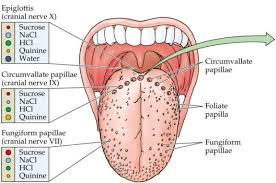
Taste receptors are _______________ because they detect chemicals.
chemoreceptors
mechanoreceptors
electroreceptors
photoreceptors

Thermoreceptors respond to
physical forces
body position
temperature
taste and smell
The sensory receptors that allow you to feel PAIN are called ________________.
Pain Receptors (nociceptors)
sensory neurons
Mechanoreceptors
motor neurons
gel that fills space and maintains eye pressure.

Which of the following is not part of the middle eye layer?
conjunctiva
ciliary body
choroid
iris
What type of receptor detects and responds to pressure
Thermoreceptors
Baroreceptors
Chemoreceptors
Photoreceptors
What type of receptor senses movement, action and location?
Baroreceptors
Proprioceptors
Nociceptors
mechanoreceptors
Which of the following structures is not considered an accessory structure of the eye?
conjunctiva
lacrimal apparatus
lens
eyelids
Which eye muscle is responsible for moving the eye down?
lateral rectus
medial rectus
superior rectus
inferior rectus
Which eye muscle is responsible for moving the eye up?
lateral rectus
medial rectus
superior rectus
inferior rectus
What does the ciliary body do?
holds the lens in place
refracts light
contains pigment
contains vitreous fluid
Stretch receptors are examples of what type of receptor?
Nociceptors
Thermoreceptors
Mechanoreceptors
Chemoreceptors
What structure is part of the inner tunic of the eye?
Choroid coat
Sclera
Cornea
Retina
What is the most abundant inorganic substance in the body?
Glucose
DNA
Lipids
Water
Which organelles function is to store genetic information?
Rough ER
Smooth ER
Golgi apparatus
nucleus
Mitosis order of events are prophase > metaphase > anaphase > telophase
True
False
Mitosis order of events are prophase > anaphase > telophase > metaphase
True
False
What particles orbit the nucleus of an atom?
protons
electrons
neutrons
none of these
What particles are located in the nucleus of an atom?
protons, electrons
electrons, neutrons
neutrons, protons
proton, neutron, and electrons
What is the chemical formula H2O2 referring to?
An atom with two hydrogen molecules and two oxygen molecules
A molecule that contains one hydrogen atom and one oxygem atom
A molecule that contains two hydrogen atoms and two oxygen atoms
An atoms of water
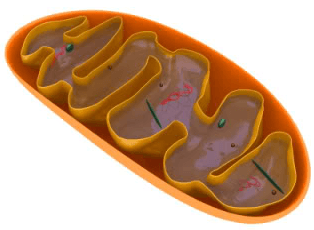
This is the jelly-like substance that holds and protects the cell's organelles.
nucleus
cytoplasm
endoplasmic reticulum
ribosomes
A thin, flexible layer that is found in all cells and separates the inside of the cell from the outside environment.
protein coat
protein membrane
cell membrane
nucleolus

What organelle acts as a clean up crew and breaks down waste products?
Nucleus
Lysosome
Mitochondria
Golgi Apparatus

Where are proteins made?
Cell membrane
Mitochondria
Ribosomes
Golgi Apparatus
Where in the cell does translation occur?
cell membrane
mitochondria
nucleus
ribosome
What happens during translation?
a new strand of DNA is made
a mRNA strand is made from a DNA template
an amino acid chain is made from a mRNA strand
The protein structure that results from a sequence of amino acids is:
primary structure
secondary structure
tertiary structure
quaternary structure
What statement describes proteins?
Proteins provide most of the energy used by cells.
The shape of proteins molecules are critical to their functions.
Protein are built of long carbon chains with specialized chemicals groups at either end of the chains.
Proteins are not water soluble.
Tonicity in cells refers to the concentration of solute in a solution outside of a cell, relative to
the permeability of the cell membrane
the presence of a cell wall
the solute concentration of the cytoplasm inside the cell
the selling of the cell
What are the three general functions of the nervous system?
Sensory, motor, and predictive
Reflexive, sensory, and predictive
Integrative, motor, and sensory
Predictive, manipulative, and integrative
Which cranial nerves are primarily motor nerves innervating the muscles that move the eyes?
Oculomotor nerves (CN III), trochlear nerves (CN IV), and abducens nerves (VI)
Optic nerves (CN II), oculomotor nerves (CN III), and facial (CN VII)
Facial nerves (CN VII), trochlear nerves (CN IV), and trigeminal nerves (CN V)
Optic nerves (CN II), trochlear nerves (CN IV), and accessory nerves (CN XI)
What is a functions of the association areas of the frontal lobes?
Higher intellectual processes, including planning and problem solving
Stimulate of movement of arms and legs
Analysis and interpretation of auditory input
Analysis and interpretation of visual input
What would be the effect of damage to Broca's area
Memory loss
Loss of motor control needed for speech
Impaired moto control of the left side of the body
vision loss
Glial cell that form myelin sheath in the PNS
Microglial cells
Satellite cells
Astrocytes
Schwann cells
oligodendrocytes
Glial cells that line cavities and produce cerebrospinal fluid (CSF)
ependymal cells
satellite cells
astrocyte
oligodendrocyte
Glial cells that form myelin sheath in the CNS
Microglial cells
Satellite cells
Astrocytes
Schwann cells
oligodendrocytes
Glial cells that surround and support neuron cell bodies in the CNS
astrocyte
microglial cell
satellite
ependymal
Depolarization occurs when
sodium channels open
potassium channels open
sodium channels close
potassium channels close

Returning back to the resting phase is called -
polarization
conductivity
depolarization
repolarization
What is a dermatome?
Region of skin innervated by a single spinal nerve
Branch of spinal nerve that travels towards the posterior part of the body.
Cluster of nerve cell bodies within the peripheral nervous system.
Groups of muscles innervated by a single spinal nerve.
Relays sensory impulses to cerebral cortex and involved in memory.
Thalamus
Hypothalamus
Limbic system
Midbrain
What part of the brain regulates the sleep/wake cycles, blood pressure, and body temperature.
Hypothalamus
thalamus
pons
cerebrum
The embryonic forebrain will give rise to what part(s) of the mature brain?
Pons and cerebellum
Midbrain
Medulla oblongata and spinal cord
Cerebrum and diencephalon
Skin cells play an important role in producing what vitamin?
Vitamin A
Vitamin B
Vitamin D
Vitamin K
In the genetic disease called inchthyosis, the skin is rough brown, and scaly because the uppermost layer cannot peel off as easily as it should. What layer of the skin is affected in this disorder.
Subcutaneous layer
Dermis
Basement membrane
Epidermis
Which of the following is not one of the four basic types of body tissues
Nervous tissue
Epithelial tissue
Muscle tissue
Eye tissue
Skeletal muscle tissue is
voluntary
involuntary
non-striated
uni-nucleated
Arrector pili muscles are attached to what feature of the skin?
Sebaceous glands
Hair follicles
Nail beds
Pacinian corpuscle
Which muscle tissues are under involuntary control?
Smooth, skeletal, and cardiac
Smooth and Skeletal
Cardia and Skeletal
Smooth and Cardiac
What is the function of intercalated discs?
To hold skeletal muscles cells together
To hold smooth muscle cells together
To anchor neuron cells to neuroglial cells
To hold cardiac muscle cells together
Which type of bone joint would be found in your hip and shoulder?
Gliding joint
Hinge joint
Ball and socket joint
Where would you find a fixed joint at in the human body?
Skull
Feet
Hands
Ribs
Is smooth muscle voluntary or involuntary?
Voluntary
Involuntary
What part of the muscular system attaches bones to muscles?
Tendons
Ligaments
Cartilage
Muscles
What is a tough tight fitting membrane that covers the surface of bone?
cartilage
tendon
periosteum
spandex
What is the pigment that protects your skin from sunlight and gives your skin color?
periosteum
calcium
melanin
copper tone
What is the layer of skin beneath the epidermis?
epidermis
dermis
underdermis
subdermis

Which of the following is NOT a function of bones?
hematopoiesis
storage
maintenance of body temperature
protection
Which of the following is an example of a flat bone?
Tarsals
Sternum
Femur
Vertebrae
It is located in the epiphysis and stores the growth cartilage...
Bone Marrow
Compact Bone Tissue
Epiphyseal Line
Spongy Bone Tissue
What is the name for the formation of blood cells?
Leukemia
Red Marrow
Lymphocyte
Hematopoiesis
A hinge joint allows
A wide range of movements
Circumduction
Rotation
Movement in only one direction (ie. backwards & forwards)
An example of a Saddle joint is in the
Knee
Hip
Thumb
Vertebral column


Bones that originate within sheetlike layers of connective tissue.
partial bones
chondritic bones
intramembranous bones
endochondral bones

Name the cartilage filled cavity structure shown in green.
Ischium
Pubis
Acetabulum
Ilium

Name the outside portion of the tibia shown in blue.
Patella
Lesser acetabulum
Greater trochanter
Greater talus
Causes lengthwise growth of a long bone
Periosteum
Red Bone Marrow
Medullary Cavity
Compact bone
Epiphyseal plate
The cells that produce bone cells are called
osteocytes
osteoclasts
osteoblasts
lacunae
Mature bone cells are called _________________
osteoblasts
osteoclasts
osteocytes
canaliculi
The cells that dissolve bone tissue in the resorption process are called
Osteocytes
Osteoclasts
Osteoblasts
Cartilaginous
The following is NOT one of the 3 Joint Classifications..
Cartilaginous
Cartilage
Fibrous
Synovial
The joints that allow the most movement are called
Fixed
Fibrous
Cartilaginous
Synovial

Which is one of the functional ways a joint is classified
Fibrous—tend to be immovable
Amphiarthroses—slightly movable joints
Synovial –tend to be freely movable

Which is one of the structural ways a joint is classified?
Cartilaginous—both immovable and slightly
movable
Synarthroses—immovable joints
Diarthroses—freely movable joints

The red line is the ____________border.
superior
inferior
medial
lateral

The black line is the _________border.
superior
inferior
medial
lateral

The royal blue line is the ________border.
superior
inferior
medial
lateral
Homeostasis mechanisms...
keep everything exactly the same.
usually operate by positive feedback systems.
act to keep the internal environmental conditions outside the normal range
is the ability to maintain a relatively stable internal environment
What is the function of creatine phosphate?
It supplies energy for the breakdown of ATP to ADP
It supplies energy for the synthesis at ATP
It catalyzes the decomposition of ATP
What is a function of transvers tubules
To connect actin to the myosin filaments
To transmit action potentials (impulse) into the cell interior
To store calcium ions needed for activating tropomyosin
To store sodium ions needed to initiate an action potential at the cell surface
The epimysium covers
the entire muscle
the fascicle
the muscle fiber
the myofibril
Which connective tissue surrounds the fascicle?
epimysium
perimysium
sarcolemma
endomysium
Put steps of contraction in order.
rest, nerve action, ACh released, transmitted, Ca released
ACh released, Ca released, nerve action, transmitted, rest
rest, nerve action, Ca released, ACh released, transmitted
ACh released, Ca released, transmitted, nerve action, rest
____________ attaches to actin to form the cross bridge.
Troponin
Tropomyosin
Myosin
Calcium
What does calcium attach in a muscle contraction?
Myosin
Tropomyosin
Troponin
Actin
What is released from the sarcoplasmic reticulum?
Inorganic phosphate
ADP
Calcium
ATP

