
 Worksheets
MEA 101 Exam 2 Practice
Total questions: 90
Worksheet time: 1hrs 20mins
Gabbro can be found __________
below the ocean floor
below mountains along active continential margins
below passive continental margins
A and B
Which example best explains what a rock endures during physical weathering in a cold, snowy environment such as a northern state like New York?
The water from the snow melting dissolves parts of the rock
The snow causes the rock to break off from its parent source
Minerals react with the water
The water freezes and thaws, breaking up the rock and minerals
What is the texture of an igneous rock referring to?
Types of minerals present
The size, shape and arrangement of mineral grains
The color of the rock
What type of rock is sandstone?
Sedimentary (chemical)
Sedimentary (clastic)
Sedimentary (bioclastic)
Sedimentary (biochemical)
How does water get into a subduction zone?
Heating by magma allows crust to melt and allow water to get through
Water seeps through ocean floor
Hot water circulates in ridge, added in pores and in minerals
All of the above
If granite was transported from the mountains to the ocean, what mineral would most likely remain at the end of the journey?
Andesite
Feldspar
Quartz
Basalt
Which of the following would you increase to lower the melting point of a rock?
Temperature
Amount of water
Pressure
All of the above
What happens to sediment as it moves further from its source?
They become more angular
They become better sorted
They form together to form bigger rocks
A and B
Large faults, like the San Andreas Fault, are hundreds of kilometers long. During a large earthquake, where do movements of 1-10 meters occur on the fault?
all along the fault
along a segment of the fault 10’s of kilometers in length
along a segment of the fault a few meters in length
What type of plate boundary is associated with the largest earthquakes?
aseismic
divergent
transform
convergent
The description of damage that follows represents a measure of earthquake ________________ measured with a value of approximately ________ .
Slight damage in buildings designed to withstand earthquakes; heavy damage in poorly constructed structures. Chimneys, columns, walls may fall.
intensity; 7
magnitude; 7
intensity; VIII
magnitude; VIII
Which of the following occurred BEFORE Mount St. Helens erupted?
lava flowed from small flank eruptions
earthquake activity increased
pyroclastic flows became more frequent
waters in Spirit Lake became more acidic
Which statement is most accurate?
The largest earthquakes only occur in the shallow crust where stresses are greater
The largest earthquakes occur at depths of more than 500 km where lithosphere pushes against mantle rocks
The largest earthquakes can occur at all depths, especially in association with subduction zones
Tsunamis are associated with which type of plate boundary features?
oceanic ridges
hot spots
subduction zones
fracture zones
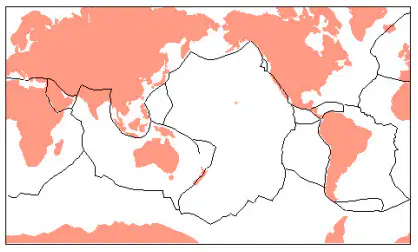
Examine the following pairs of regions. Which pair is most likely to have locations that would BOTH have active volcanoes?
Hawaii, Australia
East coast of South America, Indonesia
Iceland, Indonesia
West margin of Pacific Ocean, northern Europe
Eastern margin of Atlantic Ocean, Iceland
Identify each of the following as either a mineral or not a mineral.
Wood (a)
Type question here including a Identify each of the following as either a mineral or not a mineral.
Quartz (a)
Identify each of the following as either a mineral or not a mineral.
basalt
mineral
not a mineral
Identify each of the following as either a mineral or not a mineral.
Diamond
mineral
not a mineral
Identify each of the following as either a mineral or not a mineral.
glass
mineral
not a mineral
Identify each of the following as either a mineral or not a mineral.
rock candy
mineral
not a mineral
Identify each of the following as either a mineral or not a mineral.
kidney stone
mineral
not a mineral
Identify each of the following as either a mineral or not a mineral.
salt water
mineral
not a mineral
Identify each of the following as either a mineral or not a mineral.
pyrite
mineral
not a mineral
Rhyolite is (a) and _ (b)
Gabbro is (a) and (b)
Granite is (a) and (b)
Andesite is (a) and (b)
Volcanic igneous rocks may form from magma (a)
Plutonic rocks may form from magma (b)
Volcanic rocks form at earth's surface (a)
Plutonic rocks form at earth's surface (b)
Volcanic rocks have texture (a)
Plutonic rocks have texture (b)
Volcanic rocks are made of small grains (a)
Plutonic rocks are made of small grains (b)
Granite is volcanic (a)
Granite is plutonic (b)
Volcanic may solidify in the presence of water (a)
Plutonic may solidify in the presence of water (b) _
Volcanic may solidify in the presence of water (a)
Plutonic may solidify in the presence of water (b)
Volcanic is present at the Earth's surface only after erosion (a)
Plutonic is present at the Earth's surface only after erosion (b)
Volcanic rocks contain minerals (a)
Plutonic rocks contain minerals (b)
Andesite is _ (a) but is not (b)
(a) has visible grains while (b) does not.
High silica rocks are (a) in silica while light colored rocks are (b) in silica.
Molten rock material found underground, which is the parent substance of all igneous rock, is called
basalt
mantle
lava
magma
granite
The rate of crystallization of an igneous rock will greatly influence its.....
grain size
chemical composition
density
color
If a body of magma is subjected to fractional crystallization by cooling, the rock that forms is expected to be ___________, in comparison to the residual magma.
identical in chemical composition
more mafic
more silicic
What is the effect of water on rock melting?
water raises the melting temperature
water lowers the melting temperature
water does not change the melting temperature
Which of the following properties of magma increase with increasing silica content?
melting temperature
magnesium content
viscosity
density
In what tectonic setting would you expect to find intermediate igneous rocks?
mid-ocean ridges
hot spots
subduction zones
continental rifts
Which of the following is not involved in classifying igneous rocks.
texture
group of minerals that make up the rock
chemical composition
all of the above
Igneous rocks with crystals too small to be seen without a microscope are:
coarse grained
fine grained
glassy
vesicular
Pyroclastic rocks are a variety of:
intrusive igneous
extrusive volcanic flows
extrusive explosive volcanics
metamorphic rocks
The presence of _________ in subduction zones lowers the melting temperature and viscosity of resulting magmas over subduction zones.
water
sand
rocks
Felsic, intermediate, and mafic igneous rock all are dominantly made up of _____________ minerals
carbonate
sulfide
oxide
silicate
The dominant rock of Earth's mantle is:
peridotite
granite
basalt
andesite
Which of the following causes a decrease in melting temperature of rocks? (a) (b) (c)
Almost all of the entire ocean floor is comprised of which igneous rock?
granite
diorite
rhyolite
basalt

What is a clastic rock?
consisting of pieces from other rocks
rock made of fine compressed sand
volcanic rock
rock only made of minerals
What mineral makes rocks dark?
iron
mica
silica
copper
What is the most important factor controlling the grain size of igneous rocks?
weathering
how quickly they cooled
mineral makeup
What effect does pressure have on melting temperature
melting temperature increases as pressure decreases
melting temperature decreases as pressure decreases
How does transport affect clast shape?
Rocks don't change
Rocks are more rounded
rocks are more jagged
What does limestone become when under high heat and pressure?
marble
granite
basalt
slate
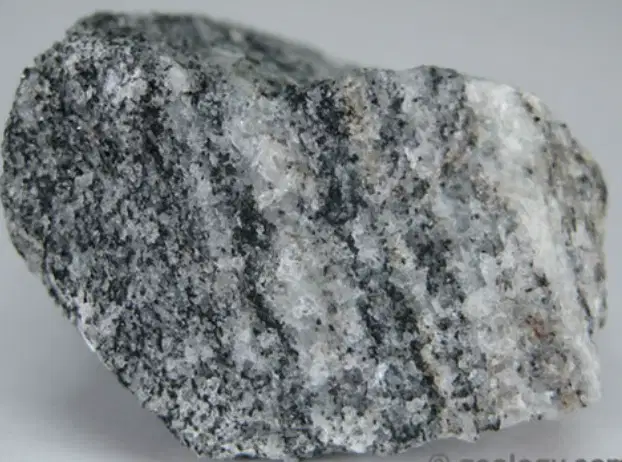
What is this a picture of?
granite
gneiss
limestone
basalt
Where does major metamorphism occur?
divergent boundary
transform boundary
convergent boundary
This happens when sediments become a solid rock (a) (b)
These two geological forces change other rock types into metamorphic rock. (a) (b)
What is the most important factor controlling the grain size of igneous rocks?
pressure
how quickly they cooled
water
how deep uner the earth they are
The most common elements in the whole Earth and crust are (a) (b) (c) (d)
Oxygen and silicon make up (a) %
What are the biggest volcanoes? (a) (b)
Taller buildings will shake when:
(a)
Shorter buildings will shake more violently when the shaking is (a)
What causes the ground to shake slower?
muddy ground
bedrock
concrete
clay
What ground causes faster shaking?
muddy
bedrock
sand
grass
What type of volcanoes can be found in Hawaii?
dome
shield
composite
cinder cone
Thin lava is associated with the formation of what type of volcano?
cinder cone
composite
shield
domes
What volcano has violent eruptions?
cinder cone
composite
lava dome
shield
What causes volcanoes to have a more violent erruption
viscous lava
thinner lava
liquefaction
scoria

What caused this truck to sink?
earthquake
flood
liquefaction
landslide
(a) If lava is viscous then it is silica rich.
What rocks have foli (a) ation? (b)
Metamorphic rocks have foliation. (a)
What temperature do metamorphic rocks form?
100C to 200C
200C to 400C
200C to 800C
800 C and above
Under high pressure and temperature, limestone becomes....
granite
marble
basalt
diamond
Metamorphic rocks form when rocks......
undergo chemical change to form a new rock
undergo pressure
undergo breaking
undergo erosion
Match the following
clay
shale
sand
sandstone
gravel
conglomerate
limestone
marble
slate
gneiss
Rocks can form from:
clastic
lithification
chemical
rain and evaporation
biochemical
organisms

The blue piece is called a (a)

The green piec (a) e is called:
Match the following
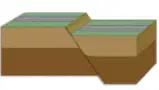
dip-slip normal fault

dip-slip reverse fault
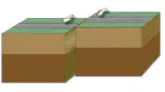
strike slip
Match the following
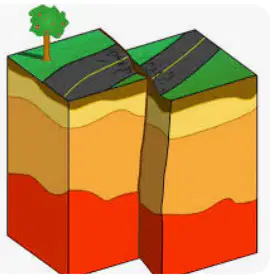
left strike-slip
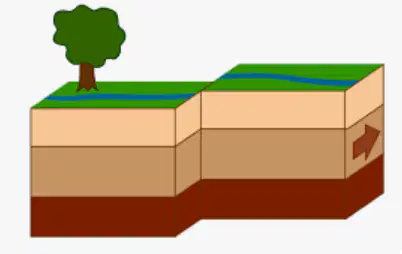
right strike-slip
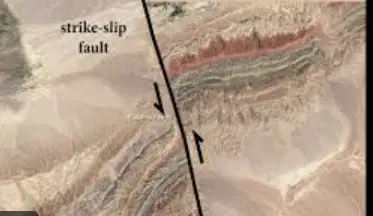
left strike-slip
Volcanic and plutonic rocks are two types of ____________ rocks.
igneous
volcanic
clastic
scoria

