
 Worksheets
Oceanography Unit 3 Waves and Tides Plus Review
Total questions: 75
Worksheet time: 1hrs 2mins
High and low tides are caused by:
the Moon's gravitational pull
periodic powerful tsunami waves
water sloshing around due do Earth's elliptical orbit
powerful thunderstorm winds
The Moon's gravitational pull generates the (a)
Identify the type of tide associated with each current:
flood current
ebb current
The tidal force causes Earth, and its water, to (a) on the side closest to the Moon and the side farthest from the moon.
Most coastlines around the world experience (a) high tides a day on most days.
____________ is what you call an area with ONE HIGH and ONE LOW tide each day.
Diurnal Tide
Semi Diurnal Tide
Mixed Tide
Rip Tide
____________ is what you call an area with TWO HIGH and TWO LOW tides each day.
Diurnal Tide
Semi Diurnal Tide
Mixed Tide
Rip Tide
What is needed to form a tidal bore?
SELECT ALL THAT APPLY!
High Tide moving in
Low Tide moving in
Fast Flowing, Narrow Rivers
Sand bars to stop water
Which tide results in the LARGEST movement of water?
Spring Tide
Neap Tide
Rip TIde
Ebb Tide
Which of the following has the GREATEST gravitational effect on the tides?
Earth
Moon
Sun

BONUS: Which of the following is NOT a reindeer on Santa's Sleigh?
Comet
Dasher
Vixen
Dixon

Which type of tide occurs on the side of the Earth closest to the moon?
High Tide
Low Tide
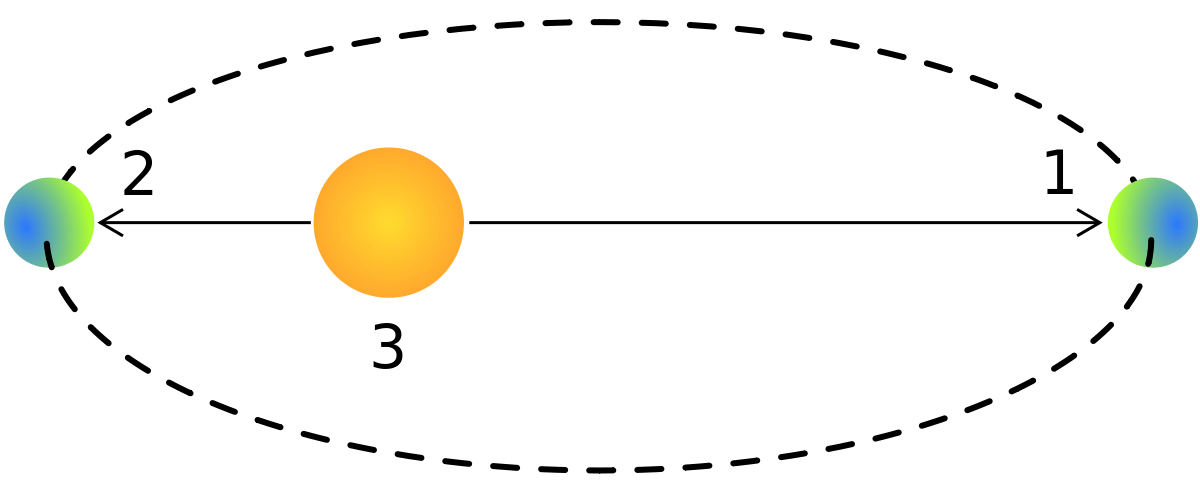
Especially weak tides; occur when the Moon and the Sun are perpendicular to one another
Spring Tide
Neap Tide
Perigee
Apogee
Closest point in the Moon’s orbit to Earth
Perigee
Apogee
Regolith
Umbra
Farthest point in the Moon’s orbit to Earth
Perigee
Apogee
Mare
Regolith
Follows a New moon; an increase in the visible sunlit surface of the moon
Waxing Phase
Waning Phase
New Moon
Penumbra
The alternating rise and fall in sea level
Tides
Penumbra
Apogee
Umbra
Follows a Full moon; a decrease in the visible sunlit surface of the Moon
Waxing Phase
Waning Phase
New Moon
Umbra
Waves transfer (a)
Which waves require a medium (matter) to travel?
x-ray
microwave
sound
water
8. The lowest part of a wave is known as a (a) .

What does point C represent? (a)
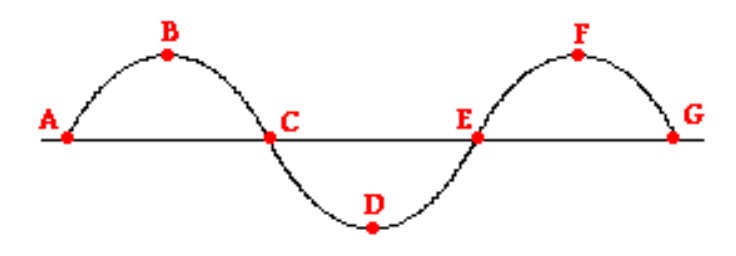
Which letter(s) represent the trough of the wave? (a)

The distance between Points A and B?
wavelength
wave frequency
wave
diffraction
_____ measures the amount of time it takes a wave to pass a fixed point.
Salinity
Frequency
Temperature
Period

The amount of open water over which the wind blows is called the:
wavelength
period
fetch
amplitude
Which of these states is NOT a high risk state for Tsunamis
Florida
Hawaii
California
Washington

Rolling waves that move steadily across the ocean
breaker
surf
whitecap
swell
In which direction do most warm currents move?
Away from the Earth’s poles
Away from Earth’s equator
Away from cold currents
In the same direction as waves

Climate
The weather conditions prevailing in an area in general or over a long period.
Currents
Moving masses of water
Waves
A long body of water curling into an arched form and breaking on the shore.
Tides
The alternate rising and falling of the sea, usually twice in each lunar day at a particular place,
Coriolis Effect
The deflection of a mass moving over Earth’s
surface due to Earth’s rotation
Ebb Tide
The movement water level away from land
Diurnal Tidal Pattern
Locations that experience one high and one low tide every lunar day (Gulf Coast)
Neap Tide
Tide with the least difference between high and low tide, or least tidal range
Flood Tide
The movement of the water level toward the land
Semidiurnal Tidal Pattern
Locations that experience two nearly equal high tides, and two nearly equal low tides every LUNAR

The _____ _____ is the difference between the levels of ocean water at high tides and low tides. That range depends on the sun-Earth-moon;s position.
ocean waves
mountain level
sea level
tidal range
The majority of the volcanoes on earth are found where?
In japan
The United States
China
The Pacific Ring of Fire
Match the following
Lithogenous
Derived from the breakdown of rocks
Biogenous
Derived from the remains of living organisms
Cosmogenous
Derived from outer space
Hydrogenous
Derived from water chemistry
Foraminifera (calcium based) shells are likely to be deposited and form
calcerous ooze
silaceous ooze
heavy metal deposits
uranium deposits
BONUS: Which of the following is NOT a reindeer on Santa's Sleigh?
Comet
Dasher
Vixen
Dixon
Farthest point in the Moon’s orbit to Earth
Perigee
Apogee
Mare
Regolith

_______ are the producers of Antarctic food webs.
Zooplankton
Phytoplankton
Whales
Upwellings
The main difference between photosynthesis and chemosynthesis is:
Photosynthesis gives off carbon doxide, while chemosynthesis gives off oxygen
photosynthesis happens in the dark, while chemosynthesis happens in light
photosynthesis uses chemicals (hydrogen sulfide) to make food, while chemosynthesis uses light
chemosynthesis uses chemicals (hydrogen sulfide) to make food, while photosynthesis uses sunlight
What is La Niña?
A phenomenon that occurs after El Niño
A type of ocean current
A process in which deep, cold water rises toward the surface
A periodic cooling of surface waters in the tropical eastern Pacific Ocean
When waves reach shallow water, they are often bent and tend to become parallel to the shore. This process is termed ________.
oscillation
refraction
reflection
translation
A long, narrow structure (often times piles of large rocks) built out into the water, perpendicular, from a beach in order to prevent beach erosion or to trap and accumulate sand that would otherwise drift along the beach face.
breakwater
seawall
groin
spit

