
Font size
 Worksheets
DC circuit
Total questions: 62
Worksheet time: 5hrs 10mins

What is the equivalent or total resistance (Re) across this circuit?
3 kΩ
10 kΩ
13 kΩ
18 kΩ
Power outlets in your home are arranged ...
In series so that it's simpler
In parallel so that they all receive the same current
In parallel so that they all receive the same voltage

resistance?
1/rtot = (1/5) + (1/8) + (1/3) Ω
120 Ω
2.5189873 Ω
1/rtot = (1/5) * (1/8) * (1/3) Ω


What is the purpose of a resistor?
allow current flow
control current flow
prevent current flow
allow heat to build up
The unit to measure the resistivity of a wire is
ohms
Volt
ohms.m
ohms.s

The total current through this circuit is
0.02 amps
0.09 amps
50 amps
9 amps
As the resistance of a circuit increases, the current will...
increase
decrease
stay the same

These are...
Capacitors
Diodes
Resistors
Transistors
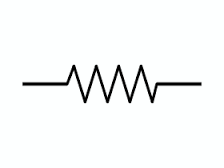
Resistor
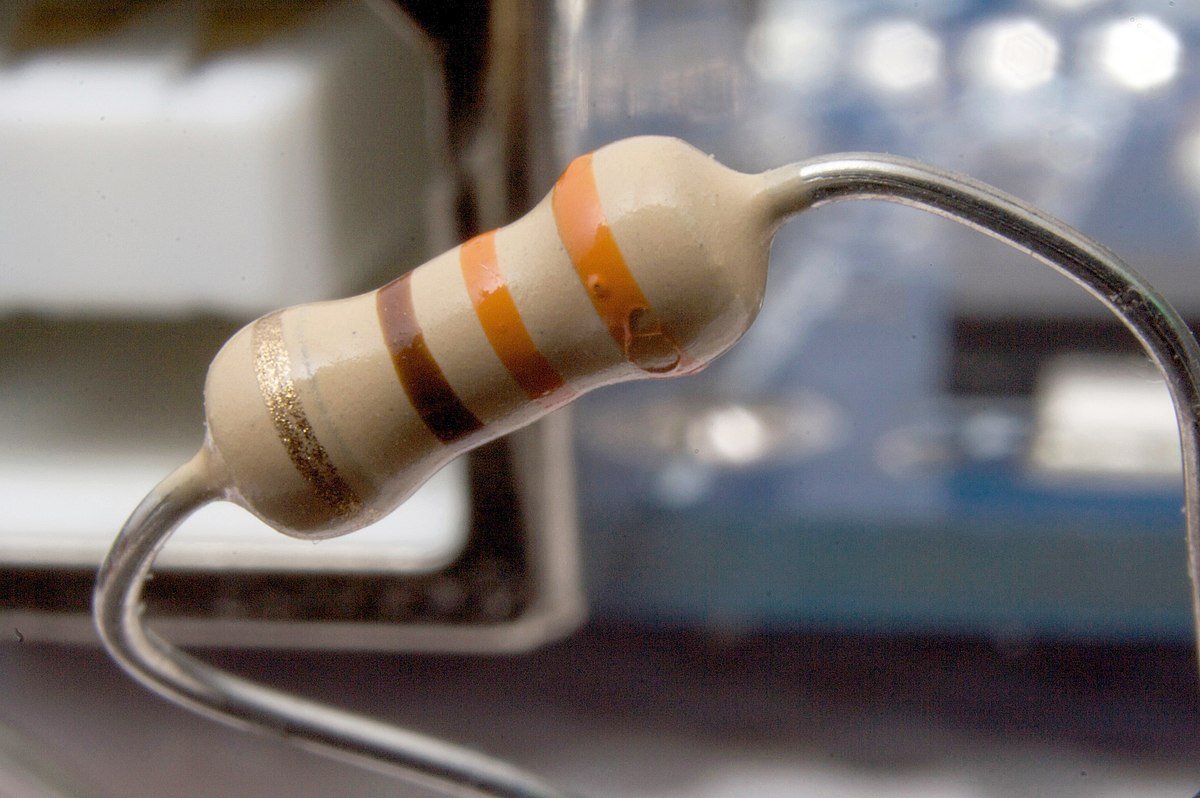
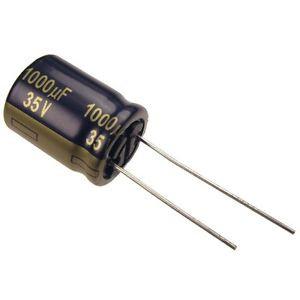

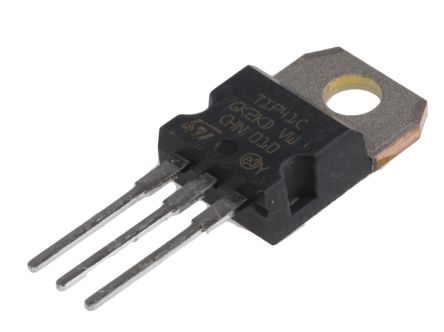
Ohms

What is the name of an object that opposes to electrity?
Circuit
Resistance
Electron
Current

The circuit diagram shows a 4.0 Ω resistor and an 8.0 Ω resistor connected to a 6.0V battery. What is the current in the battery?
0.50A
0.75A
1.50A
2.00A
A 3.0 Ω resistor and a 6.0 Ω resistor are connected in parallel.What is their combined resistance?
0.50Ω
2.0Ω
4.5Ω
9.0Ω

The circuit diagram shows a 4.0 Ω resistor and an 8.0 Ω resistor connected to a 6.0V battery.What is the current in the 8.0 Ωresistor?
0 A
0.50A
0.75A
1.0A

A 30 Ω resistor is connected in series with another resistor and a 6.0 V battery. The current in the circuit is 0.12 A. A voltmeter is connected across the other resistor. What is the reading on the voltmeter?
2.4 V
3.6 V
6.0 V
9.6 V

A circuit contains four ammeters A, B, C and D, and three resistors with different values. Which ammeter shows the largest reading?
A
B
C
D
Which one of the following resistors connected in parallel with a 24 Ω would give a total resistance of 8 Ω
16 Ω
12 Ω
8 Ω
6 Ω
40 lamps, each of resistance 8 are connected in series with a 240 V supply, in order to decorate a tree. The current in each lamp is
2.0 A
0.75 A
1.0 A
1.33 A

¿Cuál es la expresión correcta para las corrientes del siguiente nudo? (1ª Ley de Kirchhoff)
I1+I2=I3+I4
I1=I2+I3-I4
I1+I3=I2+I4
I1-I3=I2-I4
"The sum of all voltage drops in a series circuit equals the total applied voltage." This is know as what?
Ohm's Law
Kirchhoff's Voltage Law
Kirchhoff's Current Law
Bolen's Law
"The total current in a parallel circuit equals the sum of the individual branch currents."
Ohm's Law
Kirchhoff's Voltage Law
Kirchhoff's Current Law
Bolen's Law
Three resistances 20 Ω, 30 Ω and 60 Ω are connected in parallel, their
combined resistance is given by
110 Ω
50 Ω
20Ω
10 Ω
Combined resistance of 5 Ω and 10 Ω are connected in series is equal to
10 Ω
15 Ω
20 Ω
25 Ω
Two 10 Ω resistors are connected in parallel, their equivalent resistance is
5 Ω
10 Ω
15 Ω
0.5 Ω

In the following formula, what represents the charge?
Fe
q
E
Does friction cause heat?
Yes
No
Ammeters should always be connected in (a) .
In a series circuit, if one component breaks the others will remain on.
True
False
Voltmeters should always be connected in (a) around a component.
Potential difference is another word for (a) .
Factors increasing resistance
the length of the wire
the thickness of the wire
the temperature of the wire
What does a voltmeter measure?
Current
Voltage
Resistance
What does an ammeter measure?
Current
Voltage
Resistance
How does an ammeter is added in the circuit?
Series
Parallel
How does a voltmeter meter is added in the circuit?
Series
Parallel

Which component has the highest resistance?
1
2

The reading on the voltmeter is
3 V
6 V
12 V
Can not answer as need to know the resistance of the bulb.

Choose right option



