wayground logo

Free Printable Worksheets

Font size

S
M
L
XL
Worksheets

Unit 7 Review

Total questions: 83

Worksheet time: 1hrs 17mins

Name
Class
Date
1.
Nucleotides are made up of a sugar, phosphate, and..?
a)
nitrogenous base
b)
nucleic acid
c)
cholesterol
d)
fatty acid
2.
What 3 things make up a nucleotide?
a)
Sugar, Phosphate, Nitrogen Base
b)
Sugar, Hydrogen, Carbon
c)
Carbon, Phosphate, Nitrogen
d)
mRNA, tRNA and rRNA
3.

The backbone or sides of a DNA strand are made up of alternating____________molecules.

a)

Base and Sugar

b)

Sugar and Phosphate

c)

Sugar and Acid

d)

Base and Base

4.

Label the nucleotide

5.

Carries genetic information from the nucleus to the ribosome

a)

DNA

b)

RNA

c)

Both DNA and RNA

6.

Made of nucleotides

a)

DNA

b)

RNA

c)

Both DNA and RNA

7.

Contains the sugar ribose

a)

DNA

b)

RNA

c)

Both DNA and RNA

8.

Contains the sugar deoxyribose

a)

DNA

b)

RNA

c)

Both DNA and RNA

9.

matches cytosine with guanine

a)

DNA

b)

RNA

c)

Both DNA and RNA

10.

has a double helix shape

a)

DNA

b)

RNA

c)

Both DNA and RNA

11.

Organize these options into the right categories

Categorize the following

made of nucleotides

match cytosine with guanine

type of nucleic acid

stays in the nucleus

transfers information from the nucleus to the ribosome

double stranded

single stranded

matches adenine with thymine

matches adenine with uracil

contains the sugar deoxyribose

contains the sugar ribose

has a backbone made of sugars and phosphates

DNA
RNA
Both DNA and RNA
12.

What is the process that makes a complementary mRNA strand from a DNA strand?

a)

protein synthesis

b)

transcription

c)

translation

d)

DNA Polymerase

13.

Through the process of transcription, DNA makes a complimentary strand of

a)

DNA

b)

RNA

c)

CNA

d)

PLB

14.

After transcription mRNA goes from the nucleus to the _________.

a)

Ribosome

b)

Mitochondria

c)

Endoplasmic Reticulum

d)

Vacuoles

15.

Where is the information in DNA converted to RNA? Where does transcription happen?

a)

Cytoplasm

b)

Nucleus

c)

Ribosome

d)

Cell Membrane

16.

Match the DNA code to its RNA complement

a)

CAT

1.

GUA

b)

GTC

2.

CAG

c)

ATA

3.

UAU

d)

TAG

4.

AUC

17.
Which phrase best describes translation?
a)

decodes mRNA to make an amino acid chain (protein)

b)

catalyzes bonds between amino acids

c)

produces RNA from DNA molecules

d)

recycles tRNA molecules for reuse

18.

Where is RNA decoded and used to make proteins?

a)

Cytoplasm

b)

Nucleus

c)

Ribosome

d)

Cell Membrane

19.

RNA goes to the ribosome where it is used as a guide to attach amino acids together. Amino acids in a chain is a protein

a)

This is Transcription.

b)

This is Translation.

20.
Question Image

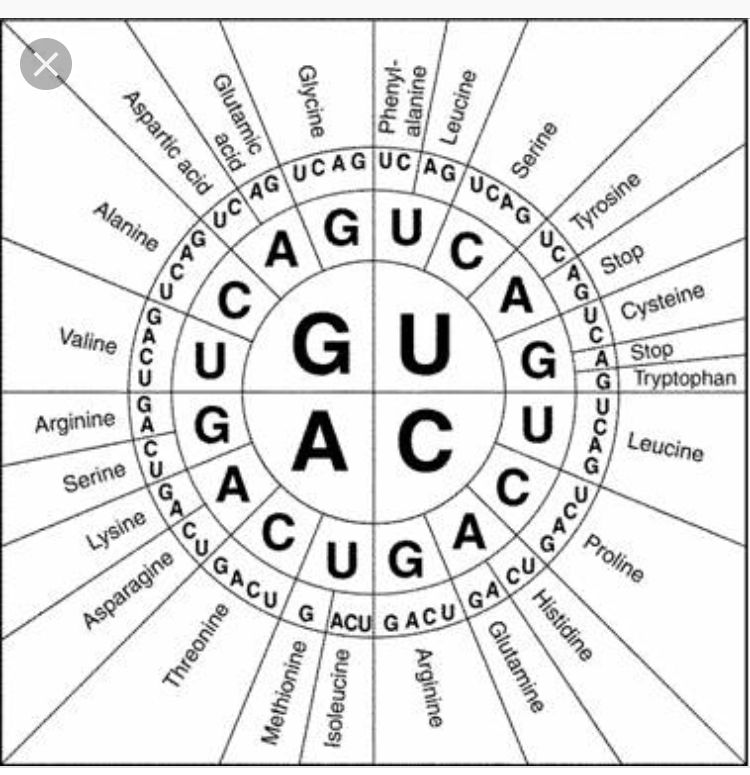
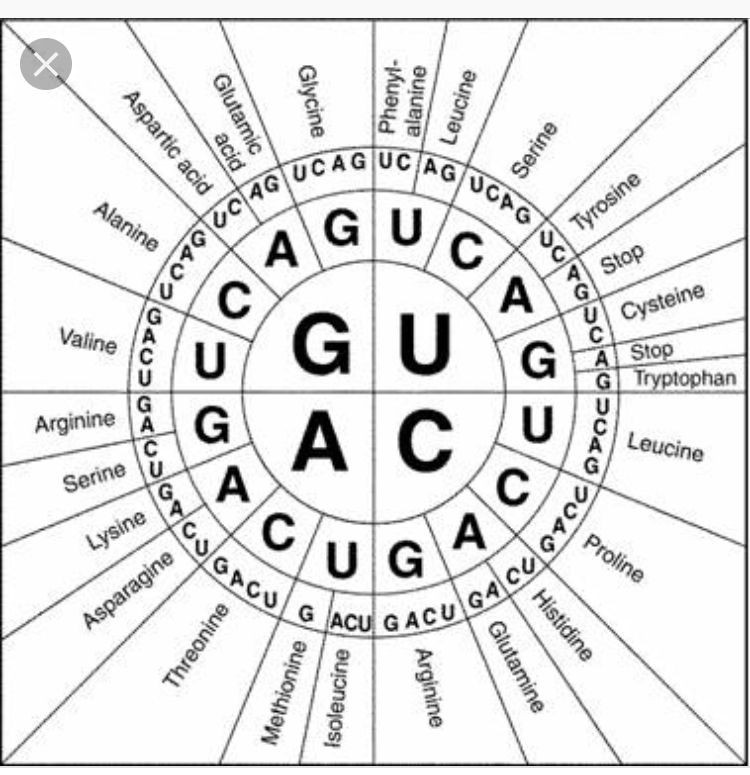
Match the following RNA codes to their Amino Acids.

a)

AUG

1.

Methionine

b)

UGA

2.

Stop

c)

GAG

3.

Glutamic Acid

d)

CAU

4.

Histidine

21.
Where do mutations occur?
a)

DNA and RNA

b)

DNA 

c)

RNA

d)

mRNA and tRNA

22.

What are considered "negative" mutations?

a)

mutations in the DNA sequence that changes the resulting protein and harms the organism

b)

mutations in the DNA sequence that changes the resulting protein and benefits the organism

c)

mutations in the DNA sequence that produces the same protein

d)

all mutations are considered bad and harm the organisms

23.

Mutations can be...

a)

Harmful

b)

Beneficial

c)

Neutral

d)

All of the Above

24.

Match each descriptor to its process

Categorize the following

makes mRNA

makes protein

happens in the nucleus

happens in the ribosome

1st step of protein synthesis

2nd step of protein synthesis

involves RNA polymerase reading DNA

involves tRNA bringing over amino acids

Transcription
Translation
25.

Match the following

a)

Mutation

1.

a change in the DNA sequence

b)

Substitution mutation

2.

a type of mutation where one to few bases are substituted with different bases

c)

Frameshift mutation

3.

a type of mutation caused by adding or deleting bases, affecting all the codons after the change

d)

Silent mutation

4.

a type of mutation that doesn't result in a change in the amino acid sequence (same protein)

e)

Chromosomal mutation

5.

a type of mutation where large sections of the chromosome are affected

26.

What mutation has occurred here?

T-G-A-C-C-A

T-G-A-G-C-A

a)

Substitution

b)

Deletion

c)

Insertion

d)

Frameshift

27.

Original: ATC CAT

Mutation: ATC GCAT

What mutation occurred?

a)

deletion

b)

insertion

c)

silent

d)

transverse

28.

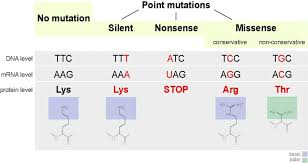
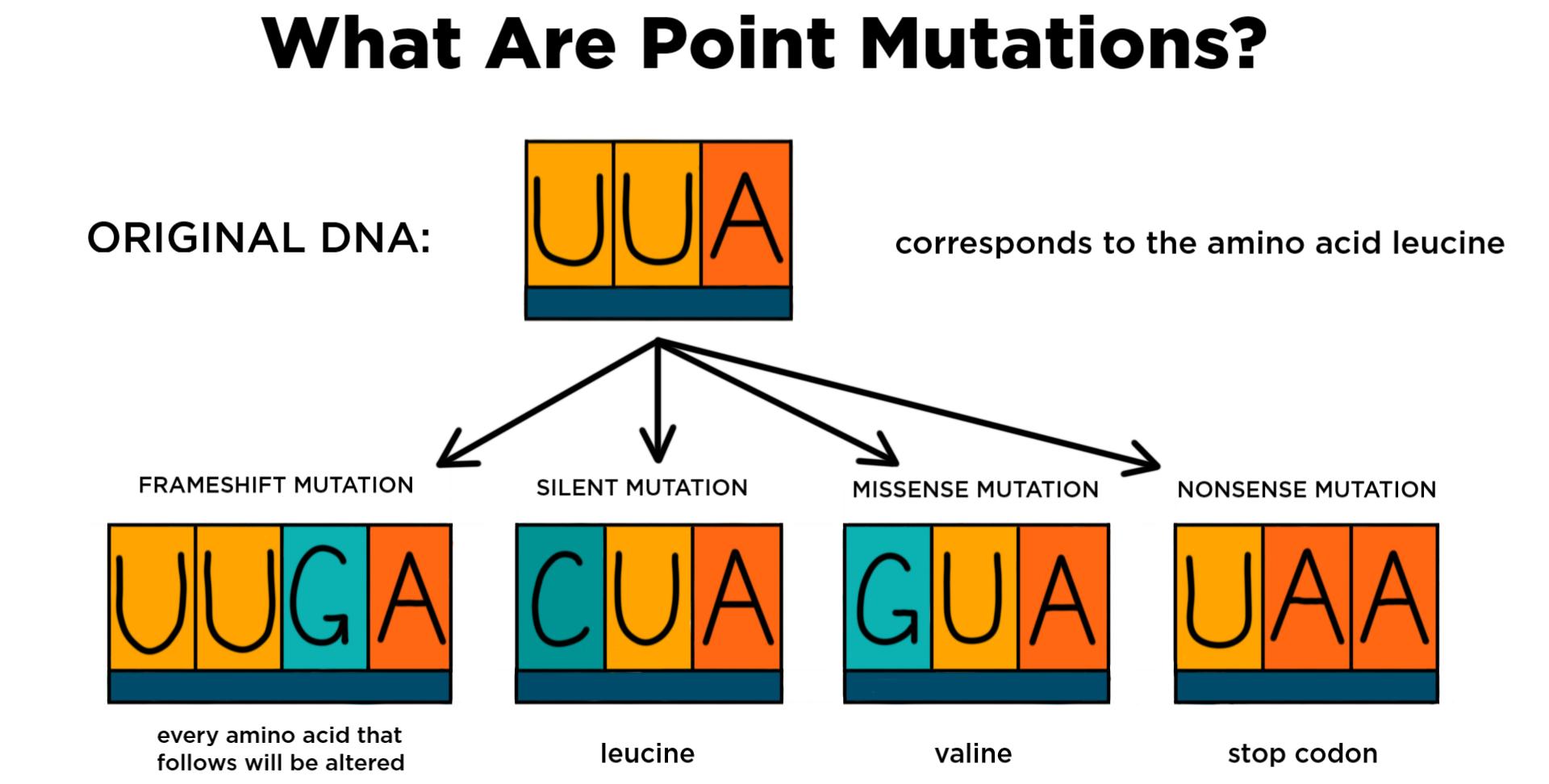
If a point mutation does not change the order of the amino acid sequence, this is called a:

a)

nonsense mutation

b)

silent mutation

c)

missense mutation

d)

frameshift mutation

29.

Insertions and deletions are also known as:

a)

frameshift mutations

b)

chromosomal mutations

c)

silent mutations

d)

polyploidy

30.

If a mutation codes for "stop" in the amino acid chain, this is called a:

a)

nonsense mutation

b)

missense mutation

c)

silent mutation

d)

frameshift mutation

31.

If UCU is changed to UCC, this is a _______________________________.

a)

silent mutation

b)

missense mutation

c)

nonsense mutation

d)

frameshift mutation

32.

Mutations that change the amino acid specified by the codon, affecting the amino acid sequence, are called:

a)

nonsense mutations

b)

missense mutations

c)

silent mutations

d)

all of the above

33.

DNA molecule segment is : TTA-CGC-AAG

The mutated DNA segment is TTC-GCA-AG. This is an example of ___ mutation.

a)

Substitution

b)

Deletion

c)

Insertion

d)

Inversion

34.

Mutations are...

a)

Changes in the sequence of DNA

b)

Broken chromosomes

c)

Bad genes

35.

What type of gene mutation has occurred here?

T-G-A-C-C-A

T-G-A-C-C-A-A

a)

Substitution

b)

Deletion

c)

Insertion

36.

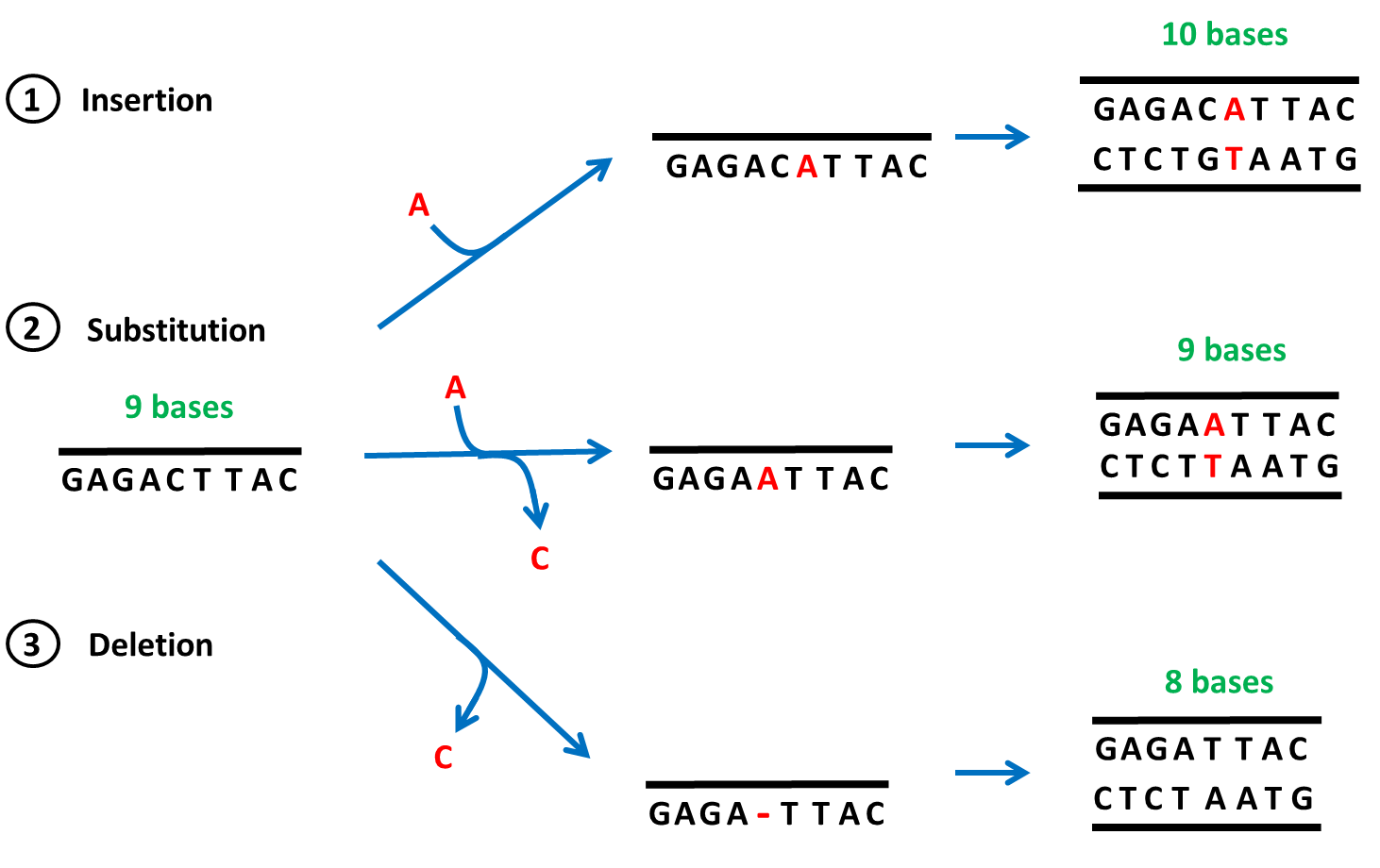
Deletion

a)

A

b)

B

c)

C

37.

Substitution

a)

A

b)

B

c)

C

38.

Insertion

a)

A

b)

B

c)

C

39.
Who is credited for discovering the shape of DNA?
a)
James Lebron and Francis Oneill
b)
James Watson and Francis Crick
c)
Henry Ford
d)
Rosalind Franklin
40.
What 3 things make up a nucleotide?
a)
Sugar, Phosphate, Nitrogen Base
b)
Sugar, Hydrogen, Carbon
c)
Carbon, Phosphate, Nitrogen
d)
mRNA, tRNA and rRNA
41.
How many base pairs would be needed to chain together 3 amino acids?
a)
3
b)
6
c)
9
d)
12
42.
What is assembled during transcription?
a)
transfer RNA
b)
messenger RNA
c)
DNA replication
d)
court proceedings
43.
What is made during translation?
a)
transfer RNA
b)
messenger RNA
c)
Proteins
d)
Spanish Rice
44.
What stores the code for making an individual protein?
a)
DNA
b)
a gene
c)
a chromosome
d)
transfer RNA
45.

What makes DNA different from RNA?

a)

they type of phosphate

b)

having T's

c)

having C pair with G

d)

Having A's

46.
What is another name for a protein?
a)
a chain of amino acids
b)
polypeptide
c)
codon
d)
anticodon
47.
A 3 nucleotide sequence of mRNA
a)
codon
b)
anticodon
48.
Which of the following is the process of reading mRNA code to produce a protein?
a)
replication
b)
translation
c)
transcription
49.

Deoxyribose is the sugar in DNA

a)

True

b)

False

50.
The site of protein synthesis?
a)
nucleus
b)
ER
c)
Ribosome
d)
Golgi Body
51.

There are 3 types of RNA. What are they? (Select all that apply)

a)

tRNA

b)

rRNA

c)

mRNA

d)

xRNA

52.
RNA contains the sugar
a)
ribose
b)
deoxyribose
c)
glucose
d)
lactose
53.
Which of the following statements is true?
a)
DNA is single-stranded
b)
RNA is single-stranded
c)
DNA contains uracil
d)
RNA contains deoxyribose
54.
What is the product of translation?
a)
DNA
b)
mRNA
c)
tRNA
d)
proteins
55.

The Process of creating RNA from DNA

a)

Transcription

b)

Translation

c)

Replication

56.

In RNA the base T is replaced with

a)

U

b)

G

c)

C

d)

A

57.

What combines together to make a protein?

a)

Amino Acid

b)

RNA

c)

Ribosome

d)

DNA

58.

What organelle is the site of translation?

a)

Nucleus

b)

Ribosome

c)

Mitochondria

d)

Chloroplast

59.
What is the product of transcription?
a)
DNA
b)
mRNA
c)
tRNA
d)
proteins
60.
What is the template for mRNA?
a)
DNA
b)
tRNA
c)
rRNA
d)
proteins
61.

Factory for making a protein

a)

mRNA

b)

rRNA

c)

tRNA

62.

What type of RNA is shown in this image?

a)

rRNA

b)

mRNA

c)

tRNA

63.

Which of the following tells the Ribosome to START?

a)

AUG

b)

UGG

c)

UGA

d)

UCA

64.
A portion of mRNA is coded CUG. The corresponding DNA is coded
a)
GAC
b)
GTC
c)
CTG
d)
CAG
65.
A portion of DNA reads GAG. The corresponding mRNA would be
a)
GUG
b)
GTG
c)
CTC
d)
CUC
66.
The process of creating RNA using DNA as the template is
a)
translation
b)
transcription
c)
translocation
d)
Transylvania
67.
In RNA, uracil takes the place of the DNA nitrogen base called
a)
guanine
b)
cytosine
c)
thymine
d)
adenine
68.
In eukaryotes, molecule 1 is found in
a)
ribosomes
b)
chloroplasts
c)
cytoplasm
d)
the nucleus
69.
Molecule 3 is synthesized in 
a)
ribosomes
b)
chloroplasts
c)
the cell membrane
d)
the nucleus
70.
What is a codon?
a)
a sequence of 3 amino acids
b)
a sequence of three nitrogen bases
c)
a sequence of 3 enzymes
d)
a sequence of 3 proteins
71.
Which nucleotide is complementary to adenine?
a)
adenine
b)
thymine
c)
cytosine
d)
guanine
72.
Which of these is part of the description of protein?
a)
a folded chain of amino acids
b)
a folded chain of carbohydrates
c)
a branched chain of fatty acids
d)
a branched chain of nucleic acids
73.
How many amino acids can be represented by a single 3-base DNA sequence?
a)
1
b)
3
c)
6
d)
8
74.
The drawing shows the structure of what molecule?
a)
A DNA molecule
b)
A lipid molecule
c)
A carbohydrate molecule
d)
A protein molecule
75.
Which of the following best defines a gene?
a)
A diploid cell containing two sets of chromosomes
b)
A unit made up of chromosomes that control for a specific trait
c)
A segment of DNA that codes for a particular protein
d)
All the other answers are correct.
76.
What is the difference between DNA and RNA
a)
DNA has uracil and RNA has thymine
b)
DNA is involved in transcription and RNA is involved in translation
c)
DNA contains thymine and RNA contains uracil
d)
DNA is made of nucleotides and RNA is not
77.
What will be the resulting mRNA from this DNA sequence:
GAT-TAC-AGA-TTA-CAT?
a)
CTA-ATG-TCT-AAT-GTA
b)
GAU-UAG-UGA-UUA-GUT
c)
CUA-AUG-UCU-AAU-GUA
d)
CAT-ACA-TAC-ATA-TAG
78.
DNA molecule segment is : TTACGCAAG
The mutated DNA segment is TTCGCAAG. This is an example of ___ mutation.
a)
Substitution
b)
Deletion
c)
Insertion
d)
Inversion
79.
mRNA is read in chunks of three, called...
a)
quadralets
b)
anticodons
c)
codons
d)
capsids
80.
Normal-
GAG-CTC-GAC-AGA
Mutant
GAG CTC-CAC-AGA
a)
no mutation
b)
substitution
c)
insertion
d)
deletion
81.
What mutation has occurred here? 
T-G-A-C-C-A
T-G-A-G-C-A
a)
Substitution
b)
Deletion
c)
Insertion
d)
Frameshift 
82.
Original: ATC CAT
Mutation: ATC GCAT
What mutation occurred?
a)
deletion
b)
insertion
c)
silent
d)
transverse
83.
Are all mutations bad?
a)
Yes
b)
No