
NEW
Font size
 Worksheets
CUA 8 Ecology Test Review
Total questions: 62
Worksheet time: 48mins


Which experiences the least change over time?
Pioneer Species
Primary Succession
Aquatic Succession
Climax Community
Which of the following best describes primary succession?
Volcano wipes out ecosystem that gradually grows back from ash covered soil
Volcano creates a new island of rock that must break down to form an ecosystem
Forest fire burns down forest that must bounce back over time
Tornado destroys a crop that must slowly grow back over time.
If farmers use a controlled burn to prevent forest fires, what would most likely be the first plants to return?
trees
shrubs
mosses
grasses
Which would most likely result in primary succession?
old forest growing
undisturbed prairie
pollution kills mountain lake species
a Newly formed volcanic island
Primary succession occurs in areas with:
very little soil
lots of soil
no soil
soil that has been disturbed

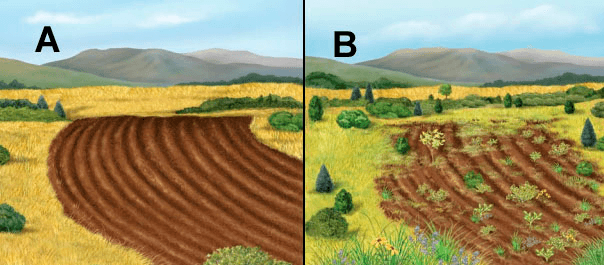


What is an example of a disturbance that could bring about secondary succession?
Humans cut down many trees in a small region
A volcanic eruption covers a village in lava.
What type of disturbance can be beneficial to ecosystems and communities?
Volcanic Eruption
Fire
Invasive Species
Flood
Producers are ...
plants
able to do photosynthesis
also called autotrophs
all of these are true
Arrows in a food web represent...
eating
sunlight
energy
matter
Photosynthesis is important because...
it makes carbon dioxide
it makes food for the food webs
it makes water
it's not important


Which of the following organisms is a primary consumer?
grass
rabbit
fox
snake
Which of the following organisms uses photosynthesis to get the energy it needs to survive?
grass
rabbit
fox
snake

What would happen to the rabbit population if the fox population moved out of the area represented by the food web?
The rabbit population would increase
The rabbit population would decrease
The rabbit population would neither increase nor decrease
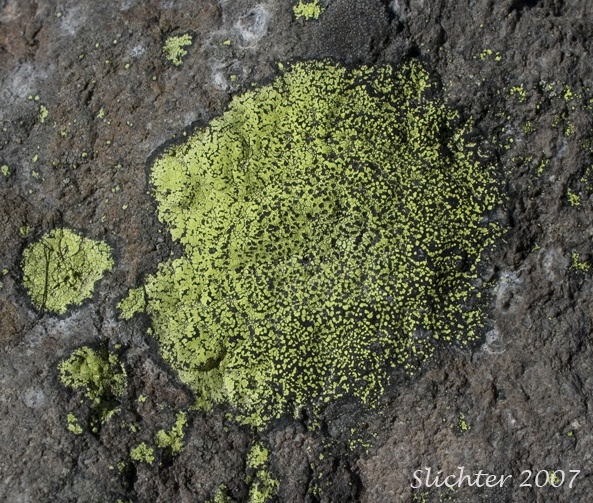
A lichen is composed of two organisms, a fungus and a cyanobacterium. The fungus provides a growing surface, moisture, and nutrients to the cyanobacterium. The cyanobacterium provides food to the fungus. This relationship is considered to be an example of which of the following?
commensalism
mutualism
neutralism
parasitism

The acacia ant (Pseudomyrmex ferruginea) lives in the bullshorn acacia plant, as shown below. The acacia ant nests and feeds in the plants hollow thorns. The ant helps protect the bullshorn acacia by attacking insects and grazing animals that come near the plant. The relationship between the acacia ant and the bullshorn acacia is an example of which of the following?
commensalism
mutalism
neutralism
parasitism
A native species and a non native species are competing for resources within the same ecosystem. The non native species is more likely to survive than the native species in which of the following situations?
both the native species and the non native species thrive on the same food source
the native species is immune to certain pathogens in the ecosystem
predators prey on both native and non native species
the non native species has no natural enemies in the ecosystem

In any environment or ecosystem, organisms can have several different types of relationships. Three types of relationships are described above. Which of these correctly describes the relationships between the organisms?
x - mutualism, y - parasitism, z - commensalism
x - commensalism, y - mutualism, z - parasitisn
x - parasitism, y - commensalism, z - mutualism
x - commensalism, y - parasitism, z - mutualism

Brazil nuts (Bertholletia excelsa) are tall canopy trees that make up a large portion of the Amazon rain forest. They produce large grapefruit sized seed pods. The agouti, a ground dwelling rodent, has teeth strong enough to open the touch seed pods. While the agouti eats some of the trees seeds, it also buries caches in various spots on the rain forest floor. Why is the agouti important to the rain forest ecosystem?
it eats and disperses the trees seeds
it eats the trees excess seeds and prevents other animals from doing so
it cleans the rainforest floor of debris, allowing for easier motility
it prevents the trees seeds from rotting on the rain forest floor
Parrotfish are herbivores that are found in coral refs. To escape predation, a parrotfish will graze with a rabbitfish, which has venomous spines at the end of its pelvic fins. The rabbitfish does not benefit from this relationship. Which type of relationship do the parrotfish and the rabbitfish have in the coral reef environment?
commensal
mutualistic
predator-prey
parasitic
Bats eat insects that damage crops and mosquitoes that are vectors for disease. One million bats can eat several tons of insects per night, saving billions of dollars in pesticides yearly. Agricultural and public health scientists are concerned about the spread of white nose syndrome (WNS). WNS is a result of a fungus that can infect cave dwelling bats. While bats hibernate during winter months, the fungus covers the bats face and wings. WNS has a near 100% mortaility rate, and 5.7 million bats have died since the discovery of the fungus in 2006. Many scientists are searching for ways to protect these bats. The relationship between this fungus and bats can be be defined as -
commensal, because the bats provide a surface for the fungus to grow
parasitic, because the fungus obtains nutrients and shelter from the bats
competitive, because both organisms use caves as shelter during the winter
mutualistic, because the relationship involves two distinct species living together

Some relationships between different organisms are shown in the table. Which table correctly identifies each type of interaction described?
A
B
C
D
A student performed an investigation in which two ivy plants were planted in two separate containers. One of the containers had earthworms mixed in with the soil, and the other container had soil and no earthworms. The plants were given the same amount of water and exposed to the same amount of sunlight. The student observed that after several weeks of growth, the plant exposed to the earthworms appeared to be healthier and exhibited more growth. To conclude that the relationship between the plant and the earthworm is an example of mutualism, the student must perform follow up investigations that do which of the following?
determine whether the earthworms damage the soil in any way
determine whether the earthworms benefit from being with the plant
determine whether the water given to the plant is unpolluted
determine whether the other plant in the investigation suffers as a result of not being exposed to earthworms

A remora is a fish that has an adhesive disk on the back of its head that it uses to attach itself to a large shark. When food floats away from the shark's mouth as it feeds, the remora collects the scraps. Drawings of a shark with a remora attached and a remora's adhesive disk are shown below. The relationship between the remora and the shark is an example of -
predation
parasitism
commensalism
competition

Four common relationships between organisms are listed in the box. Which statements best describe these relationships?
relationships 1 and 4 are examples of mutualism
relationship 2 is an example of commensalism
relationship 3 is an example of parasitism
relationships 1 and 2 are examples of commensalism
relationships 3 and 4 are examples of mutualism
relationship 1 is an example of commensalism
relationships 2 and 4 are examples of mutualism
relationship 3 is an example of predation
relationships 1, 2, and 4 are examples of mutualism
relationship 3 is an example of parasitism
Which of these best demonstrates mutualism between certain types of bacteria and humans?
intestinal bacteria obtain nutrients from the gut and produce vitamin K used by humans
bacteria become resistant to antibacterial medication that humans use for treatment
invasive bacteria at an area of injury produce toxins that damage healthy tissues of the human body
bacteria in improperly prepared food is consumed by humans, causing food poisoning
In North American forests, two species of birds, nuthatches and brown creepers, forage on the same trees for insects. Brown creepers feed on insects found near the bottom of the tree trunk, while nuthatches feed on insects in the top part of the tree. The difference in foraging behavior most likely affects the nuthatches and brown creepers by -
allowing the birds to avoid many types of predators
reducing competition between the birds for resources
preventing the birds from interbreeding with each other
establishing dominance between the birds for nesting sites

The diagrams show a partial food web containing the Glyptapanteles wasp and the life cycle of this wasp. Based on the two diagrams, which list correctly identifies the relationships Glyptapanteles wasp larvae have with other organisms?


The ocean sunfish (Mola mola) is a large, flat fish that spends most of its time in deep water feeding mainly on jellyfish. Sunfish often have many species of copepods, small crustaceans, that bury their heads into the soft tissue of the sunfish. Sunfish will swim to the surface of the water and lie sideways, allowing seabirds to eat the copepods from their skin. Which list describes the types of relationships the sunfish has with other marine organisms?
Seabirds: mutualism
Jellyfish: predation
Copepods: parasitism
Seabirds: parasitism
Jellyfish: commensalism
Copepods: predation
Seabirds: predation
Jellyfish: mutualism
Copepods: commensalism
Seabirds: commensalism
Jellyfish: parasitism
Copepods: mutualism

