
NEW
Font size
 Worksheets
Benchmark Review
Total questions: 70
Worksheet time: 1hrs 7mins
Which of the following statements is TRUE of enzymes?.
Enzymes are not found in living organisms
Enzymes help to speed up chemical reactions
Enzymes are made carbohydrates
Enzymes increase the activation energy of a chemical reaction
requiring


CH4 and O2

CH4 and O2
What term is used to describe the process of an enzyme changing shape due to extreme heat or pH levels?
catalyze


Which of the following is most likely to cause the greatest decrease in the snake population?
an increase in the grasshopper population
a decrease in the mouse population
a decrease in the vulture population
a decrease in the hawk population
Phytoplankton --> Krill --> Fish --> Sea Gull
Which organism in this food chain is the primary consumer?
phytoplankton
krill
fish
sea gull

In which level are producers found?
A
B
C
D

Energy flows into an ecosystem through producers and is ultimately lost as...
food
carbon dioxide
light
heat

In which level are secondary consumers found?
A
B
C
D

What is the producer in this food web?
anchovy
shrimp
algae
snail

In this energy pyramid, which organisms have the most energy available?
Producers
Carnivores
Herbivores
Top Predator


In this energy pyramid, which organism has the least amount of energy available?
Producers
Herbivores
Carnivores
Top Predator

What is the arrow pointing at?
carrying capacity
biotic potential
density-independent
density dependent
When you step out into the cold, your body shivers in order to keep its temperature at 98.6F. Which characteristic of life does this represent?
All living things use energy
All living things contain cells
All living things maintain homeostasis
All living things grow

Which characteristic is shown: A plant switches position and follows the sunlight throughout the day.
Grow and develop
Respond to a stimulus
Acquire and use energy
Reproduce

Maintaining a stable internal
environment is called
homeostasis
equilibrium
balance
evenness
A virus is considered non-living because...
They do not have DNA
It does not have all the characteristics of life
They can't evolve
They make you sick
What converts nitrogen gas into a usable form for plants and animals?
bacteria
rain
fungi
car exhaust
What is the process of combining nitrogen gas with other elements to make nitrogen into usable compounds?
nitrogen composition
nitrogen fixation
ammonia
denitrification
What process occurs when dead plant and animal matter decomposes and nitrogen is released back into the atmosphere?
Assimilation
Fixation
Ammonification
Denitrification
Bacteria fix nitrogen from the atmosphere into a form plants can use.
True
False
What is made in the mitochondria?
protein
energy
nucleotides
waste
Which organelle is found in plant cells, but not in animal cells?
nucleus
ribosome
lysosome
chloroplast
Which process happens in the mitochondria?
photosynthesis
protein synthesis
DNA replication
cellular respiration
Where are proteins made?
nucleus
ribosome
Golgi Apparatus
vacuole
Which organelle puts the finishing touches on proteins and ships them around the cell or out of the cell?
Lysosomes
Ribosomes
Endoplasmic Reticulum
Golgi Apparatus
Which organelle is like the trash processing center for the cell?
Lysosome
Vacuole
Vesicle
Nucleus

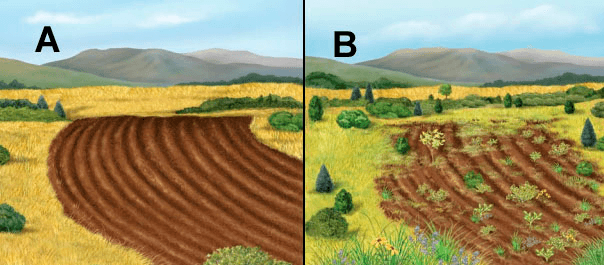
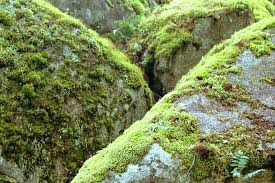
Which of the following best describes primary succession?
Volcano wipes out ecosystem that gradually grows back from ash covered soil
Volcano creates a new island of rock that must break down to form an ecosystem
Forest fire burns down forest that must bounce back over time
Tornado destroys a crop that must slowly grow back over time.
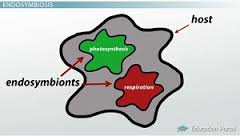
The Endosymbiotic Theory explains
the origin of prokaryotes
how bacteria lives
the origin of eukaryotes
how species develop

Bacteria are an example of a ____ cell.
prokaryotic
eukaryotic
plant
animal
_____ and _____ are organelles that arose from endosymbiosis
nucleus and cell membrane
mitochondria and chloroplasts
cell wall and chloroplasts
mitochondria and nucleus
A relationship where two organisms help each other and benefit?
parasitism
mutualism
commensalism
predation
A relationship were one organism benefits and the other is unaffected
mutualism
predation
commensalism
competition
A relationship were one organism uses another to survive; often harming it in the process
parasitism
mutualism
commensalism
competition


The first organisms to reappear after an ecosystem is damaged.
Abiotic Community
Pioneer species
Succession
Biomass
What did the bacteria that used oxygen to produce their own energy evolve into?
Mitochondria
Chloroplasts
Nucleus
Ribosomes
What did the bacteria that used sunlight energy to produce their own food evolve into?
Mitochondria
Chloroplasts
Nucleus
Ribosomes
Nitrogen fixation...
animals eat the plants and other animals that contain nitrogen and release it through their waste
Bacteria in the soil and lightning in the atmosphere “fix” the nitrogen
Once in the ground, bacteria in the soil also nitrify the nitrogen
plants absorb nitrogen through their roots and return it back to the atmosphere
Nitrification...
animals eat the plants and other animals that contain nitrogen and release it through their waste
Bacteria in the soil and lightning in the atmosphere “fix” the nitrogen
Once in the ground, bacteria in the soil also nitrify the nitrogen
plants absorb nitrogen through their roots and return it back to the atmosphere
Denitrification...
animals eat the plants and other animals that contain nitrogen and release it through their waste
Bacteria in the soil and lightning in the atmosphere “fix” the nitrogen
nitrogen is released back into the atmosphere from the animal’s waste or decomposers
plants absorb nitrogen through their roots and return it back to the atmosphere

