
 Worksheets
Bones and Joints Practice
Total questions: 99
Worksheet time: 1hrs 23mins
The amount of movement permitted by a joint is its structural classification.
True
False
Extension involves decreasing the angle between the two articulating bones.
True
False
Gomphoses are cartilaginous joints.
True
False
The axial skeleton includes the sternum.
True
False
Spongy bone contains trabeculae that have spicules.
True
False
Joint stability increases when bone ends do not fit together well.
True
False
Sutures, syndesmoses, and gomphoses are all structurally what kind of joint?
Cartlaginous
Synovial
A joint between skull bones is called a (a) .
Pointing your toes towards the floor is an example of what type of movement?
Supination
Plantar flexion
Dorsiflexion
Abduction
Flexion
__________ refers to lateral movement of the radius around the ulna wherein the palm of the hand is rotated so that the palms are facing upward at the end of the movement.
pronation
retraction
supination
opposition
Which of the following is NOT an example of a synovial joint?
ball and socket joint
suture joint
pivot joint
saddle joint
Rickets can be caused by ________.
_____ fill the gaps between forming osteons or are remnants of osteons that have been cut through by bone remodeling.
Concentric lamella
Interstitial lamella
Circumferential lamella
None of the above
Which of the following is a part of synovial joints?
Articular cartilage
Joint capsule
Reinforcing ligaments
All of the above
This condition is an autoimmune condition that affects the joints among other parts of the body:
gout
bursitis
osteoarthritis
rheumatoid arthritis
Which of the following is classified as a long bone?
vertebra
scapula
wrist bone
humerus
ankle bones
A flattened, fibrous sac lined with synovial membranes and containing synovial fluid is called a ________.
Tendon sheath
Epiphyseal plate
Bursa
Ligament
What cells resorb (break down) the bony matrix?
osteoblasts
osteocytes
chondroblasts
osteoclasts
mesenchymal cells
Which of the following structures anchor(s) the periosteum to underlying bone?
perforating Sharpey's fibers
a nutrient foramen
diploe
yellow bone barrow
Volkmann’s canals
Shaking the head left then right, as in saying "no" nonverbally, demonstrates which of the following movements?
Flexion
Supination
Rotation
Inversion
What is the name of the dense irregular connective tissue that acts like a girdle around cartilage and contains blood vessels for nutrient delivery to cartilage cells?
Osteocyte
Perichondrium
Lacunae
Periosteum
Appendicular
Ligaments connect bone to ________.
Muscle
Bone
Neurons
Cartilage
Which of the following demonstrate gliding motions between short bones?
Bending the knee
Rotating the hip outward
Waving the hand
Lowering the mandible (jawbone)
Looking up at the ceiling
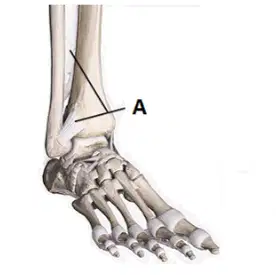
For the joint labeled A, identify the functional classification.
Amphiarthrotic
Diarthrotic
Synarthrotic
For the joint labeled A, identify the structural classification.
Cartilaginous
Fibrous
Synovial
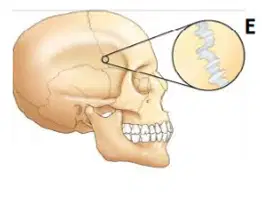
For the joint labeled E, identify the structural classification.
Synovial
Fibrous
Cartilaginous
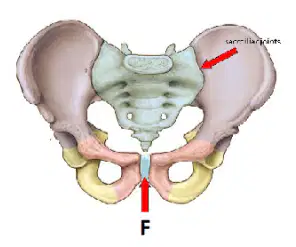
For the joint labeled F, identify the the type of joint.
Synchondroses
Synovial
Symphyses
fibrous
The following is NOT one of the 3 Joint Classifications..
Cartilaginous
Cartilage
Fibrous
Synovial
The joints that allow the most movement are called
Fixed
Fibrous
Cartilaginous
Synovial
Examples of a Ball & Socket Joint are found in the
Shoulder
Knee
Hip
Ankle
A hinge joint allows
A wide range of movements
Circumduction
Rotation
Movement in only one direction (ie. backwards & forwards)
An example of a Saddle joint is in the
Knee
Hip
Thumb
Vertebral column
When kicking a football the knee
Flexes
Extends
Abducts
Adducts


What joint is displayed in picture
Hinge Joint
Saddle joint
Ball and socket joint

What type of joint is displayed in the picture?
Pivot joint
Ellipsoid joint
Hinge joint

Where is the hinge joint located
neck
elbow
knee

Where is the pivot joint located ?
Neck
Knee
Thumb
All synovial joints are
amphiartroses.
diarthroses.
synartroses.
synchondroses.
inner layer of synovial capsule; loose areolar connective tissue only (no epithelial tisue); produces synovial fluid
cutaneous membrane
fibrous layer
synovial membrane
bursae


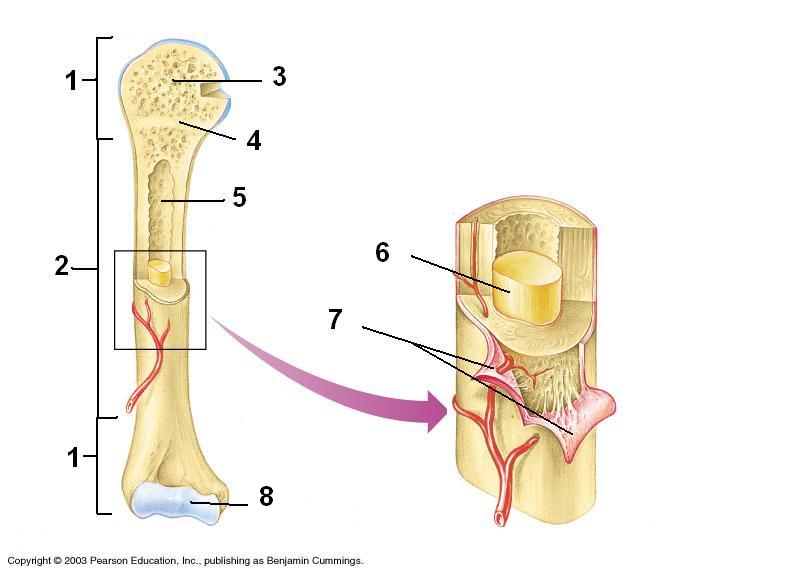
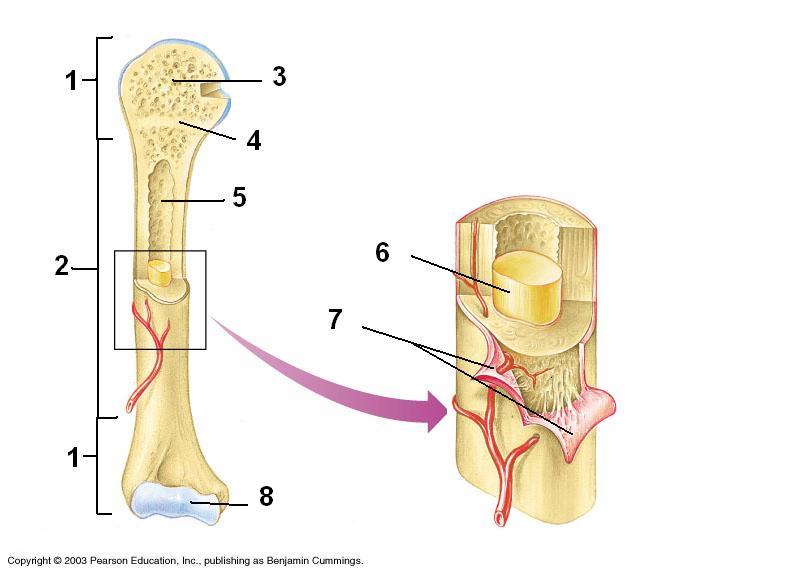
Fibrous, superficial covering that protects diaphysis
Periosteum
Red Bone Marrow
Medullary Cavity
Compact Bone
Epiphyseal plate
Produce red blood cells
Periosteum
Red Bone Marrow
Medullary Cavity
Compact Bone
Epiphyseal plate
Covers the external surface of the epiphyses and decreases friction at joint surfaces
Periosteum
Red Bone Marrow
Medullary Cavity
Articular Cartilage
Epiphyseal plate
Causes lengthwise growth of a long bone
Periosteum
Red Bone Marrow
Medullary Cavity
Compact bone
Epiphyseal plate
Secures the periosteum to the underlying bone.
Compact Bone
Perforating (Sharpey’s) fibers
Medullary Cavity
Endosteum
Epiphyseal plate

What is happening in this stage of bone healing?
Bone is fractured
Hard callus forms, osteoblast cells create new bone
Remodeling, osteoclasts remove extra bone until its completely healed
Soft callus forms, chondroblast and fibroblasts produce the fibrocartilaginous calus

This cell lays down new bone and helps repair damage.
Osteoblast
Osteoclast
Osteocyte
Osteobuddies

What type of fracture is this?
Compound
Hairline
Simple
Spiral

What type of fracture is this?
Compound
Comminuted
Simple
Spiral

What is the name of the incomplete fracture usually seen in children?
Linear
Transverse
Fibial
Greenstick
Bones with abnormal shapes, an example are vertebrae
Long Bones
Short Bones
Flat Bones
Irregular Bones
The process of bone forming from cartilage is called
ossification
callus zone
growth
fracture repair
How many bones does an adult have?
602
206
300
307
Which type of cell breaks down bone tissue
osteoblast
osteoclast
osteocyte
osteon


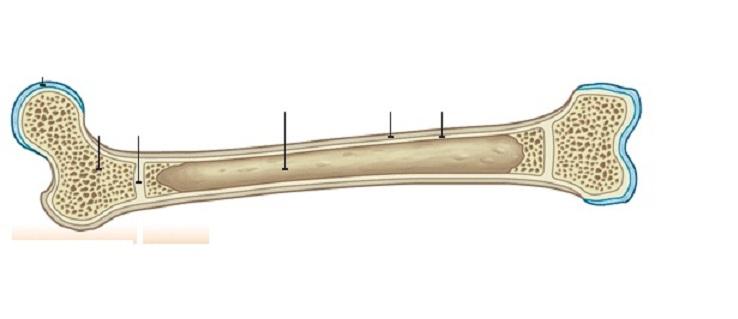
What bone shape is the frontal bone of the skull?
Flat
Long
Short
Irregular
What bone shape are the ribs?
Flat
Long
Short
Irregular
What bone shape are the carpals?
Flat
Long
Short
Irregular
What bone shape is the femur?
Flat
Long
Short
Irregular
What bone shape is the sternum?
Flat
Long
Short
Irregular
Where is yellow bone barrow found?
Spongy Bone
Medullary Cavity
Epiphyses
Compact Bone
What is the function of red bone marrow?
Produce red blood cells
Store energy
Resist compression
Provide strength
What are the expanded ends of a long bone called?
Diaphysis
Epiphyses
Spongy Bone
Compact Bone
Generally cube-shaped
Long Bone
Short Bone
Irregular Bone
Flat Bone
In long bones, bone tissue begins to replace hyaline cartilage in the center of the diaphysis or the_____
secondary ossification center
primary ossification center
medullary ossification center
transverse ossification center
What is the primary ossification site in long bones?
periosteum
the epiphysis
medullary cavity
the diaphysis
Multinucleated cells that break down the calcified matrix of bone.
osteoblasts
osteoclasts
osteons
Where can hyaline cartilage be found at the end of endochondral ossification?
medullary cavity
epiphyseal plate growth
diaphysis
articular cartilage
You know when someone has stopped growing when you look at their long bones and see this.
epiphyseal line
epiphyseal growth plate
epiphyseal plate
medullary cavity
Most bones of the skeleton are formed by____
endochondral ossification
gender specific ossification
intramembranous ossification
hyaline ossification
Why is the yellow membrane of the spongy bone yellow?
Because it stores fat
Osteocytes are yellow in general
Calcium is yellow
Because trabeculae has no blood vessels
This hormone raises the concentration of calcium in the blood.
glucagon
calcitonin
estrogen
parathyroid hormone

Calcitonin is an important hormone secreted in response to high plasma levels of calcium, and in turn will reduce the plasma level of calcium by increasing its deposition in bone.
True
False
During this phase of bone healing the blood vessels in and around the bone are torn and bleeding occurs
Hematoma formation
Fibrocartilaginous callus formation
Bony callus formation
Remodeling
This is the stage in which collagen fibers start to span the break and connect the broken bones.
Hematoma formation
Fibrocartilaginous callus formation
Bony callus formation
Remodeling

