
 Worksheets
Quiz on Ch. 9 Joints Pt. 1
Total questions: 113
Worksheet time: 1hrs 11mins
What do the rigid elements of the skeleton meet at?
Muscles
Ligaments
Joints or articulations
Tendons
What is the Greek root that means "joint"?
Arthro
Osteo
Chondro
Myo
What does the structure of joints enable?
Flexibility for movement
Resistance to crushing, tearing, and other forces
Connection of muscle to bone
Production of red blood cells
How are joints functionally classified?
By their function or structure
By the amount of movement they allow
By the type of tissue that comprises the joint
By the number of bones connected
What type of joint is immovable and commonly found in the axial skeleton?
Diarthroses
Amphiarthroses
Synarthroses
Biaxial joints
Spell the name of the joint movement that is immovable and is common in the Axial Skeleton
(a)
Which type of joint is slightly movable and commonly found in the axial skeleton?
Synarthroses
Diarthroses
Amphiarthroses
Multiaxial joints
Spell the name of the joint movement that is slightly movable and is common in the Axial Skeleton
(a)
What type of joint is freely movable and commonly found in the appendicular skeleton?
Synarthroses
Amphiarthroses
Diarthroses
Fixed joints
Spell the name of the joint movement that is freely movable and is common in the Appendicular Skeleton (All Synovial joints)
(a)
On what two criteria is the structural classification of joints based?
The type of movement they allow
The presence of cartilage or ligaments
The material that binds bones together and the presence or absence of a joint cavity
The number of bones involved
Which of the following are types of structural classification of joints?
Fibrous
Cartilaginous
Synovial
Elastic
Spell the structural classification of joints that joins bones united by cartilage
(a)
Spell the structural classification of joints that joins bones separated by a joint cavity, covered with articular cartilage, and enclosed within an articular capsule lined with (the word) membrane
(a)
Which structural class of joints is characterized by adjoining bones united by collagenic fibers?
Synovial
Cartilaginous
Fibrous
Elastic
What are the types of Fibrous Joints?
Suture
Syndesmosis
Gomphosis
Synchondrosis
Which type of fibrous joint is connected by shorter fibers and that is immobile (Synarthrosis)?
Suture
Syndesmosis
Gomphosis
Which type of fibrous joint is connected by longer fibers and allows for slight mobility (Amphiarthrosis) ?
Suture
Syndesmosis
Gomphosis
Synchondrosis
Spell the type of fibrous joint is connected by longer fibers and allows for slight mobility (Amphiarthrosis) ?
(a)
Which type of fibrous joint is connected by periodontal ligaments and that is immobile (Synarthrosis)?
Suture
Syndesmosis
Gomphosis
Spell the type of fibrous joint is connected by periodontal ligaments and that is immobile (Synarthrosis)?
(a)
What are the types of Cartilaginous joints?
Synchondrosis
Symphysis
Suture
Syndesmosis
Which type of cartilaginous joint is connected by hyaline cartilage and that is immobile (Synarthrosis)?
Synchondrosis
Symphysis
Syndesmosis
Suture
Spell the type of cartilaginous joint is connected by hyaline cartilage and that is immobile (Synarthrosis)?
(a)
Which type of cartilaginous joint is connected by fibrocartilage and that is slightly movable (Amphiarthrosis)?
Synchondrosis
Symphysis
Syndesmosis
Suture
Spell the type of cartilaginous joint is connected by fibrocartilage and that is slightly movable (Amphiarthrosis)?
(a)
what are the 6 types of Synovial Joints?
(a)
What type of mobility is associated with synovial joints?
Movements also depend on the design of the joint.
Synarthroses (Immovable)
Amphiarthroses (Slightly movable)
Diarthroses (Freely movable)
What connects bones in fibrous joints?
Cartilage
Synovial fluid
Fibrous connective tissue
Hyaline tissue
Do fibrous joints have a joint cavity?
Yes, they have a large joint cavity
Yes, but it's a very small joint cavity
No, they do not have a joint cavity
It depends on the type of fibrous joint
How movable are most fibrous joints?
Highly movable
Not movable at all
Immovable or slightly movable
Only movable during physical activity
Which of the following is NOT a type of fibrous joint?
Sutures
Syndesmoses
Gomphoses
Synovial joints
What are sutures made of?
Cartilaginous tissue
Muscular tissue
minimal amount of Fibrous tissue
Nervous tissue
Where do sutures occur?
Between the bones of the skull
Between the bones of the chest
Between the bones of the spine
Between the bones of the arm
What is the purpose of sutures in childhood?
To prevent bone growth
To allow bone growth so the skull can expand with the brain
To ossify fibrous tissue
To close sutures
What happens to fibrous tissue in sutures during middle age?
It becomes more flexible
It expands
It ossifies
It disintegrates
What are closed sutures referred to as?
Synapses
Synovial joints
Synostoses
Synarthroses
What type of joint is the tibiofibular joint?
Freely movable diarthrosis
Immovable synarthrosis
Slightly movable amphiarthrosis
Hinge joint
Spell the Syndesmosis joint that is immovable (synarthrosis)
(a)
On what does the amount of movement in syndesmoses depend?
The type of muscle attached
The length of fibers
The size of the bones
The flexibility of the ligaments
What connects the bones in syndesmoses?
Cartilage
Tendons
Ligaments
Muscles
Which structure is found between the radius and ulna?
Tibiofibular joint
Interosseous membrane
Synovial membrane
Meniscus
Spell the structure is found between the radius and ulna
(a)
How would you describe the movement in the Interosseous membrane?
(Freely movable) Diarthrosis
(immovable) Synarthroses
(slightly movable) Diarthroses
What is a gomphosis?
A type of muscle attachment
A tooth in a socket
A bone fracture
A type of cartilage
What connects a tooth to its socket?
Synovial fluid
The periodontal ligament
Tendons
Bursae
Spell the connecting ligament
(a)
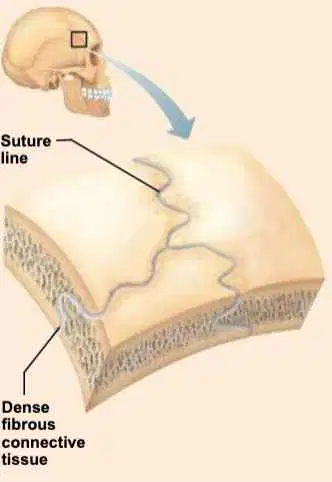
What type of fibrous joint is found only in the skull and is held together with very short, interconnecting fibers?
Syndesmosis
Gomphosis
Suture
Pivot joint
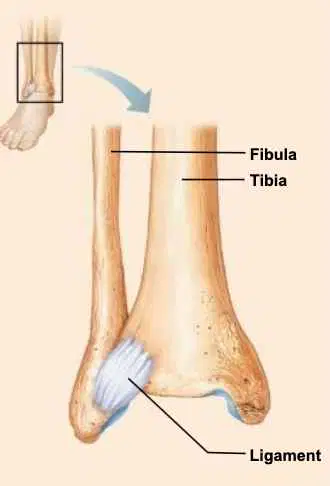
Which fibrous joint is held together by a ligament and can vary in length but is longer than in sutures?
Suture
Gomphosis
Syndesmosis
Hinge joint
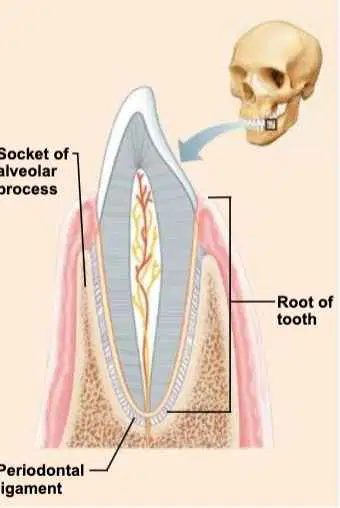
What is the name of the fibrous joint where a peg-in-socket arrangement holds a tooth in its socket?
Suture
Syndesmosis
Gomphosis
Ball-and-socket joint
What unites bones in cartilaginous joints?
Ligaments
Tendons
Cartilage
Synovial fluid
Cartilaginous joints lack which of the following?
A joint cavity
Cartilage
The ability to move
Bones
How many types of cartilaginous joints are there?
One
Two
Three
Four
Which of the following is a type of cartilaginous joint?
Saddle joint
Synchondroses
Hinge joint
Pivot joint
Which other type of cartilaginous joint?
Ball and socket joint
Synovial joint
Symphyses
Ellipsoid joint
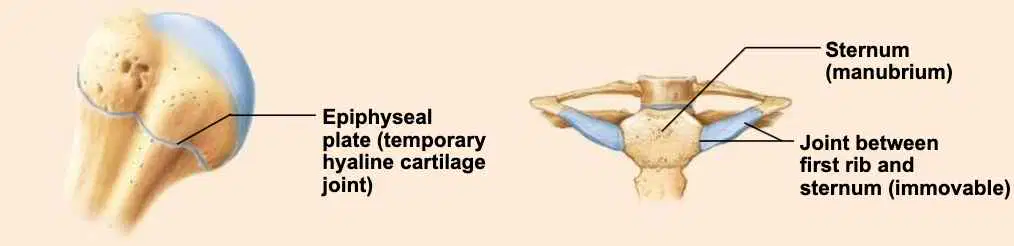
What type of cartilage unites bones in synchondroses?
Fibrocartilage
Elastic cartilage
Hyaline cartilage
None of the above
Which of the following are examples of a synchondrosis?
Joint between the femur and tibia
Epiphyseal plates
Joint between first rib and manubrium
Intervertebral discs
Spell the plates that are Synchondrosis
(a)
Is the joint between the first rib and sternum movable or immovable?
Movable
Slightly movable
Immovable
Highly movable
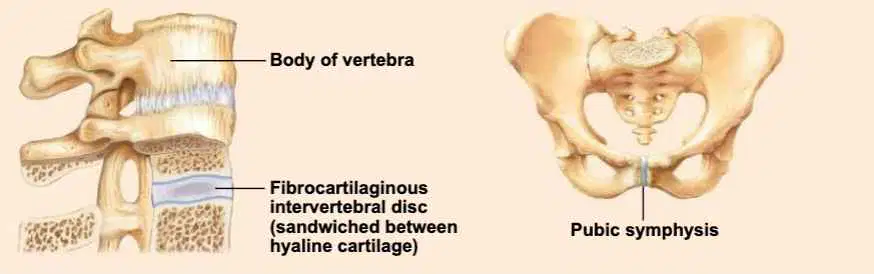
What type of cartilage unites bones in symphyses and resists tension & compression?
Elastic cartilage
Hyaline cartilage
Fibrocartilage
Calcified cartilage
Which of the following is a characteristic of symphyses?
They are immovable joints
They allow no flexibility
They are slightly movable joints that provide strength with flexibility
They are freely movable joints
Which of the following is an example of a symphysis?
Knee joint
Pubic symphysis
Intervertebral discs
Shoulder joint
What type of cartilage is present as articular cartilage?
Elastic cartilage
Hyaline cartilage
Fibrocartilage
Calcified cartilage
Which structure is labeled as "Pubic symphysis" in the diagram?
The cartilaginous joint between two pubic bones
The fibrocartilaginous intervertebral disc
The body of vertebra
The joint between a rib and the sternum
What is the fibrocartilaginous intervertebral disc sandwiched between?
Elastic cartilage
Hyaline cartilage
Bones
Ligaments
What type of joint is the most movable?
Synovial Joints
Fibrous Joints
Cartilaginous Joints
Fixed Joints
What do all synovial joints contain?
A fluid-filled joint cavity
A solid bone connection
A cartilage layer
A fibrous joint capsule
What movement to describes synovial joints?
Amphiarthroses
Diarthroses
Synarthroses
Biaxial Joints
What type of cartilage covers the ends of opposing bones with hyaline cartilage and absorbs compression in synovial joints?
Elastic cartilage
Fibrocartilage
Articular cartilage
Calcified cartilage
What is the function of articular cartilage in synovial joints?
Produces synovial fluid
Connects bones together
Absorbs compression
Provides blood supply to the joint
Why is the joint (articular) cavity unique in synovial joints?
It is filled with air
It contains a large amount of synovial fluid
The cavity is a potential space that holds a small
amount of synovial fluid
It is lined with fibrocartilage
What is the Articular capsule?
The joint cavity is enclosed in a
two-layered capsule
dense irregular connective
tissue, which strengthens joint
Lines joint capsule and covers internal joint
surfaces
What type of tissue is in the Fibrous layer of the Articular capsule that strengthens Synovial Joints?
muscle tissue
dense irregular connective
dense irregular connective tissue
nervous tissue
What type of tissue is in the Synovial membrane that lines the Articular capsule and covers internal Synovial joint surfaces?
dense irregular connective tissue
muscle tissue
nervous tissue
loose connective tissue
What is the function of the synovial membrane in synovial joints?
It connects bones together.
It functions to make synovial fluid.
It provides a smooth surface for bones to move against.
It encloses the joint cavity.
What type of tissue makes up the fibrous layer of the articular capsule in synovial joints?
Loose connective tissue
Dense irregular connective tissue
Cartilage
Bone
What does the articular capsule of a synovial joint enclose?
Synovial fluid
Joint cavity
Bones
Synovial membrane
What is the consistency of synovial fluid similar to?
Water
Olive oil
Raw egg white
Honey
What is synovial fluid a filtrate of?
Lymph
Urine
Blood
Saliva
Where does synovial fluid arise from within the synovial membrane?
Adipose tissue
Capillaries
Nerve endings
Muscle fibers
What type of molecules does synovial fluid contain that are secreted by fibroblasts?
Lipoproteins
Glycoproteins
Nucleoproteins
Phosphoproteins
What is the process called where pressure on joints squeezes synovial fluid into and out of articular cartilage?
Osmotic lubrication
Hydrostatic lubrication
Weeping lubrication
Boundary lubrication
What are reinforcing ligaments often are?
Specialized muscle tissue
Thickened parts of the fibrous layer
Bone extensions
Elastic cartilage
Where are extracapsular ligaments located in relation to the capsule?
Inside the capsule
Outside the capsule
Within the synovial fluid
In the fibrous layer
Where are intracapsular ligaments found?
Outside the capsule
Within the synovial fluid
Internal to the capsule
In the fibrous layer
What is the function of the sensory nerves in the general structure of synovial joints?
To produce synovial fluid
To detect pain and monitor the stretching of the capsule
To connect muscle to bone
To provide nutrients to the joint
Where does most of the rich blood supply of Synovial Joints go to?
Synovial membrane
Synovial fluid
Blood vessels
Nerves
What produces the basis of synovial fluid?
Nerves only
Blood only
Extensive capillary beds
Blood and nerves
What does the blood supply of Synovial Joints branch off to?
major nerves
blood viens
major blood vessels
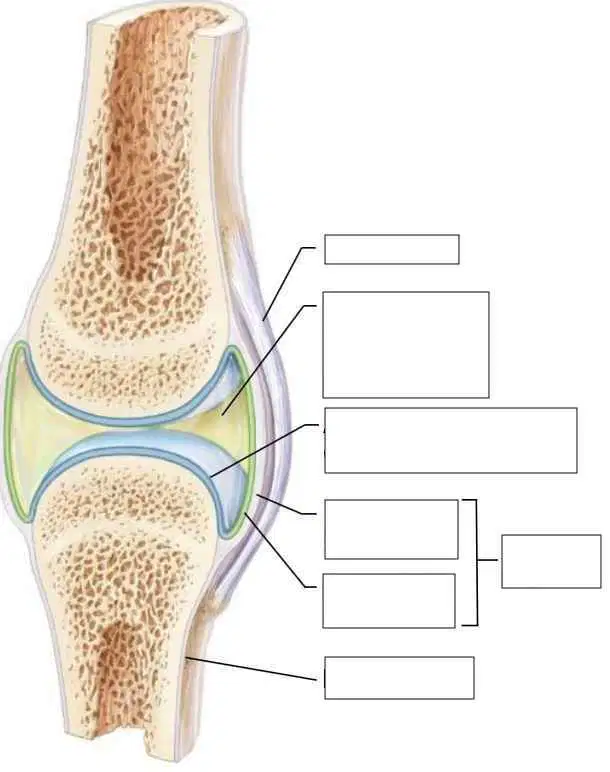
Label the typical synovial joint
A: Fibrous Layer
B: Periosteum
C: Joint cavity (contains synovial fluid)
D: Synovial membrane
E: Ligament
F: Articular capsule
What type of Synovial joints contain articular discs?
temporomandibular joint
elbow joint
knee joint
Joints whose articulating bones have
somewhat different shapes
What joints are lubricating devices?
Fibrous joints
Synovial joints
Cartilaginous joints
What does friction in the synovial joints do?
Overheat
nothing
Destroy joint tissue
produce energy
What is the outermost layer of the articular capsule in a synovial joint called?
Synovial membrane
Fibrous layer
Periosteum
Ligament
Where do some synovial joints containing an articular disc occur?
In the elbow and ankle joints
In the temporomandibular joint and at the knee joint
In the shoulder and hip joints
In the wrist and vertebral joints
What is a characteristic of joints that contain an articular disc?
They occur in joints where articulating bones have identical shapes
They occur in joints where articulating bones are fused together
They occur in joints where articulating bones have somewhat different shapes
They occur in joints where articulating bones are not in contact
What is the primary function of synovial joints?
To connect muscles to bones
To serve as lubricating devices
To produce red blood cells
To store minerals
What could happen if there is too much friction in synovial joints?
They can generate electricity
They can become more flexible
They can overheat and destroy joint tissue
They can produce additional synovial fluid
What happens to the synovial fluid when compressive forces are applied to synovial joints?
The fluid becomes more viscous
The fluid is squeezed out as opposing cartilages touch
The fluid evaporates
The fluid changes color
How do cartilages in synovial joints move?
They move independently of each other
They shrink and expand
They ride on the slippery film
They fuse together
What are bursae and tendon sheaths NOT classified as?
Synovial joints
Closed bags of lubricant
Friction-reducing structures
Fibrous sacs
What is the primary function of bursae and tendon sheaths?
To wrap around tendons
They are not synovial joints instead they are closed bags of lubricant that reduce friction between body elements
To line synovial membranes
To enclose synovial fluid
What is a bursa?
An elongated tendon
A type of synovial joint
A flattened fibrous sac lined by a synovial membrane
A muscle attachment
What is a tendon sheath?
A type of muscle
A flattened fibrous sac
An elongated bursa that wraps around a tendon
A synovial joint
Label the Frontal section through the right
shoulder joint (Bursae and tendon sheaths)
A: Joint cavity containing synovial fluid
B: Fibrous layer of articular capsule
C: Synovial membrane
D: Tendon sheath
E: Humerus
F: Fibrous layer
G: Subacromial bursa
H: Articular cartilage
I: Tendon of long head of biceps brachii muscle
J: Acromion of scapula

What does the "Synovial membrane" do in the shoulder joint as shown in the diagram?
It connects the humerus to the scapula
It secretes synovial fluid to lubricate the joint
It provides structural support to the shoulder
It contracts to move the arm
What type of movement at synovial joints involves one bone sliding across the surface of another?
Rotation
Angular movement
Gliding
Flexion
Which movement at synovial joints is characterized by a change in the angle between bones?
Rotation
Angular movement
Gliding
Extension
What is the movement called when it occurs around a bone's long axis at synovial joints?
Gliding
Angular movement
Rotation
Circumduction
What type of surfaces do bones have at gliding joints?
Rounded surfaces
Flat surfaces
Hinged surfaces
Spherical surfaces
Between which of the following does gliding occur?
Femur and Tibia
Humerus and Ulna
Carpals and Tarsals
Radius and Scapula
Gliding joints allow bones to slip across each other. Which of the following is an example of where this occurs?
Between the articular processes of vertebrae
Between the skull and the atlas
Between the ribs and the sternum
Between the patella and the femur
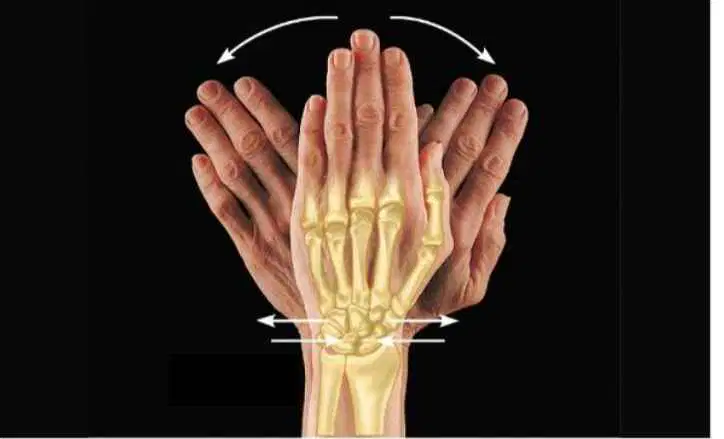
Which type of movement is shown by the synovial joints at the wrist in Figure 9.6a?
Rotation
Flexion
Extension
Gliding

