

wayground logo

Free Printable Worksheets

Font size

S
M
L
XL
Worksheets

Cell Cycle Photosynthesis Cellular Respiration Review

Total questions: 87

Worksheet time: 1hrs 3mins

Name
Class
Date
1.
A weightlifter is using heavy weights in short bursts for a competition. Because his muscle cells are not able to take in enough oxygen to make very much ATP the weightlifter begins to get fatigue in his muscles. Which of the following processes is most likely going on in the muscles of the weightlifter as he competes in his event?
a)
As the cells run out of oxygen they switch to anaerobic respiration, which allows the cell to make small amounts of ATP in the absence of oxygen.
b)
As the cells run out of oxygen, they die off gradually and the weightlifter's muscles have fewer contracting muscle cells.
c)
The cells will never run out of oxygen if the weightlifter is breathing.
d)
As the cells run out of oxygen, they will continue to make the same amount of ATP, since oxygen is not required to make ATP.
2.
Which process takes place in the presence of oxygen and produces nearly 20 times as much as ATP as glycolysis alone?
a)
photosynthesis
b)
lactic acid fermentation
c)
aerobic respiration
d)
alcoholic fermentation
3.
Two different species of bacteria are examined. Scientists find that species X always produces CO2 and H2O during cellular respiration. Species Y always produces ethyl alcohol and CO2. Which conclusion can be made from these observations?
a)
Only species Y is aerobic.
b)
Only species Y is anaerobic
c)
Both species X and Y are aerobic.
d)
Both species X and Y are anaerobic.
4.
What are the reactants in the equation for cellular respiration?
a)
oxygen and lactic acid
b)
carbon dioxide and water
c)
glucose and oxygen
d)
water and glucose
5.
Where does glycolysis occur?
a)
Inner mitochondrial membrane
b)
Mitochondrial Matrix
c)

Cytoplasm

d)
At a ribosome
6.
Glycolysis is a _______ process
a)
Anabolic
b)
Catabolic
c)
Single Step
d)
Strictly Eukaryotic
7.
Which molecule enters Kreb's Cycle?
a)
Pyruvate
b)
Glucose
c)
Acetyl CoA
d)
reducing powers
8.
What enzyme in the ETC is responsible for generating the ATP molecules?
a)
ATPase
b)
ATP synthase
c)
Hexokinase
d)
none of the above
9.
Where does ETC occur?
a)
Mitochondrial matrix
b)
Outer mitochondrial membrane
c)
Inner mitochondrial membrane
d)
Cytosol
10.
After strenuous exercise, a muscle cell would contain decreased amounts of ______ and increased amounts of ______ ____
a)
glucose ATP
b)
ATP glucose
c)
oxygen lactic acid
d)
lactic acid ATP
11.
Location of ATP synthase
a)
1
b)
2
c)
3
d)
4
12.
Site of the krebs cycle
a)
1
b)
2
c)
3
d)
4
13.
Which process in eukaryotic cells will proceed normally whether oxygen (O2) is present or absent?
a)
electron transport
b)
glycolysis
c)
the citric acid cycle (Krebs)
d)
oxidative phosphorylation
14.

During cellular respiration, acetyl CoA (precursor is pyruvate) accumulates in which location?

a)
Mitochondrial Matrix
b)
mitochondrial outer membrane
c)
mitochondrial inner membrane
d)
mitochondrial intermembrane space
15.
Which of the following occurs in the cytosol of a eukaryotic cell?
a)
glycolysis and fermentation
b)
citric acid cycle
c)
fermentation and chemiosmosis
d)
oxidative phosphorylation
16.
The ATP made during fermentation (including glycolysis) is generated by which of the following?
a)
the electron transport chain
b)
substrate-level phosphorylation
c)
chemiosmosis
d)
oxidative phosphorylation
17.
At what point in cellular respiration is the majority of the NADH produced?
a)
Glycolysis
b)
Pyruvate Oxidation
c)
Citric Acid (Krebs) Cycle
d)
Electron Transport Chain
18.
Which of the following statements are false?
a)
Glycolysis can occur with or without oxygen
b)
Glycolysis is the first step in both anaerobic and aerobic respiration
c)
Glycolysis occurs in the mitochondria
d)
Glycolysis produces 2 ATP, 2 Pyruvates, and 2 NADH
19.
At the end of the Kreb's cycle, where is most of the energy from the original glucose stored?
a)
in CO2
b)
in ATP
c)
in NADH
d)
in pyruvate
20.
What are the stages of cellular respiration in order?
"citric acid cycle" = Krebs Cycle
a)
glycolysis, oxidative phosphorylation, the citric acid cycle
b)
oxidative phosphorylation, glycolysis, the citric acid cycle
c)
glycolysis, the citric acid cycle, oxidative phosphorylation
d)
the citric acid cycle, oxidative phosphorylation, glycolysis
21.
What is the main purpose of the Krebs cycle?
a)
to produce ATP
b)

to produce electron carriers

c)
to produce water
d)
to produce carbon dioxide
22.
Use the diagram to answer the question. Between which parts of the molecule must the bonds be broken to form an ADP molecule?
a)
A and B
b)
A and C
c)
B and C
d)
C and D
23.
The main purpose of anaerobic respiration is to
a)
produce oxygen
b)
replenish NAD+ for glycolysis
c)
replenish oxaloacetic acid for the Krebs cycle
d)
produce ATP
24.
Which of the following is not an end product of the Kreb's cycle?
a)
FADH2
b)
CO2
c)
pyruvate
d)
ATP
25.
In the instances we have investigated, when a phosphate is added to a molecule, either by substrate-level phosphorylation or oxidative phosphorylation, that molecule now has
a)
less free energy
b)
more free energy
c)
the ability to transport electrons
d)
the ability to act as a final electron acceptor
26.
The primary role of oxygen in cellular respiration is to
a)
yield energy in the form of ATP as it is passed down the respiratory chain.
b)
act as an acceptor for electrons and hydrogen, forming water.
c)
combine with carbon, forming CO2.
d)
combine with lactate, forming pyruvate.
27.

ATP is a more stable molecule than ADP

a)

True

b)

False

28.

ATP is a more stable molecule than ADP

a)

True

b)

False

29.

Chemiosmosis is the use of energy to _______________________

a)

set up a hydrogen ion gradient

b)

to produce water

c)

oxidize glucose

d)

remove electrons from the ETC using oxygen gas

30.

What is FALSE about ATP synthase

a)

it can be found in the mitochodrion and chloroplast

b)

it is an enzyme with two substrates, ADP and a phosphate

c)

it is a transport protein

d)

it actively transports H+ across membranes
31.
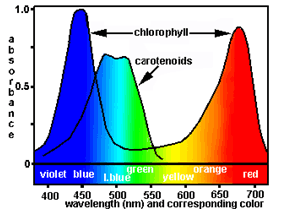
What is one function of the other pigments  besides chlorophyll, in the chloroplast?
a)
to block damaging wavelengths of light
b)
to absorb different wavelengths than the chloroplasts
c)
to provide different colors to the leaves
d)
to transfer energy to a separate photosystem beside the one using chlorophyll a and b.
32.
What is the primary function of the light reactions of photosynthesis?
a)
To produce glucose
b)
To produce NADPH and ATP
c)
To use ATP
d)
To produce RuBP
33.
What supplies the electrons that are lost in PS I?
a)
the electrons from PS II
b)
water
c)
glucose
d)
oxygen
34.
What is the function of NADP+?
a)
It absorbs light
b)
It is an electron carrier
c)
It is a light-reflecting pigment
d)
It acts as long-term energy storage
35.
Which of the following molecules is not needed for the Calvin Cycle?
a)
CO2
b)
ATP
c)
NADPH
d)
H2O
36.
Green plants reflect ________ light.
a)
Red
b)
Green
c)
All
d)
Red and Violet
37.
The light reactions occur in the ________ and the dark reactions take place in the ________.
a)
Chloroplast / thylakoid membrane
b)
stroma / thylakoid
c)
mesophyl / stomata
d)
thylakoid membrane / stroma
38.
Where does the carbon come from that is used to form glucose?
a)
The soil
b)
CO2 in the air
c)
From other carbohydrates
d)
Calvin Cycle
39.
When oxygen is released as a result of photosynthesis, it is a direct by-product of
a)
reducing NADP+
b)
splitting water molecules
c)
chemiosmosis
d)
electron transfer in photosystem II and I
40.
What is the primary function of the Calvin cycle?
a)
regenerate ATP for use in the light reactions of photosynthesis
b)
produce carbon dioxide for use in the light reactions of photosynthesis
c)
produce oxygen by oxidizing water
d)
produce simple sugars from carbon dioxide
41.
Plants with the largest amount of which pigment will be best suited for growing conditions where light has a green hue.
a)
Chlorophyll A
b)
Chlorophyll B
c)
Carotenoids
d)
A combination of all 3
42.
The H+ concentration gradient is used to 
a)
make NADPH
b)
split a water molecule
c)
generate ATP
d)
form water
43.
The main source of energy for all life comes from ____.
a)
the Earth
b)
the moon
c)
the sun
d)
the food we eat/make
44.
Which of the following is the correct equation for PHOTOSYNTHESIS?
a)
6CO2 + 6H2O --> 6O+ C6H12O6
b)
6CO+ C6H12O6 + 6H2O --> O
c)
6O2 + 6H2O --> 6CO+ C6H12O6
d)
C6H12O6 + 6O2 ---> 6H2O + 6CO2 
45.
How can photosynthesis be related to cellular respiration?
a)
What's produced (made) by one is needed (the reactants) for the other
b)
They both produce the same products
c)
They both have the same reactants (need the same things)
d)
These 2 processes have nothing in common
46.

Where does carbon dioxide enter plants?

a)

The leaves

b)

Stomata

c)

Roots

d)

Stem

47.
Where does a plant absorb the water that it uses during photosynthesis?
a)
Leaves
b)
Stem
c)
Roots
d)
Petals
48.
Which of the following are products of the light reactions of photosynthesis that are utilized in the Calvin cycle?
a)
CO2 and glucose
b)
H2O and O2
c)
electrons and H+
d)
ATP and NADPH
49.
Which of the following is directly associated with Photosystem I?
a)
harvesting light energy to make ATP
b)
receiving electrons from the thylakoid membrane ETC
c)
generation of molecular oxygen
d)
extraction of hydrogen electrons from the splitting of water
50.
Which of the following events occurs in the light reactions of photosynthesis?
a)
NADP+ is produced
b)
ATP is consumed to yield ADP
c)
carbon dioxide is fixed in organic molecules
d)
light is absorbed and funneled to reaction-center chlorophyll a
51.
What is the primary function of cyclic electron flow?
a)
to produce additional NADPH
b)
to produce additional ATP
c)
to produce additional oxygen
d)
to produce additional carbon dioxide
52.

Which of the following statements best represents the relationships between the light reactions and the Calvin cycle?

a)

The light reactions provide ATP and NADPH to the Calvin cycle, and the Calvin cycle returns ADP, ℗i, and NADP+ to the light reactions.

b)

The light reactions provide ATP and NADPH to the carbon fixation step of the Calvin cycle, and the Calvin cycle provides water and electrons to the light reactions.

c)

The light reactions supply the Calvin cycle with CO2 to produce sugars, and the Calvin cycle supplies the light reactions with sugars to produce ATP.

d)

The light reactions provide the Calvin cycle with oxygen for carbon fixation, and the Calvin cycle provides the light reactions with sugars to produce ATP.

53.
Which of the following is NOT a product of the light reactions?
a)
ATP
b)
NADPH
c)
Oxygen
d)
Glucose
54.
What does ATP synthase do?
a)
Create ATP in chemiosmosis.
b)
Break down ATP in chemiosmosis.
c)
Break down NADPH. 
d)
Create NADPH.
55.

Carbon fixation

a)

is part of the Krebs Cycle

b)

is part of the Calvin Cycle

c)

is part of the ETC

d)

is part of the Light Reactions

56.

Electrons become energized during photosynthesis when

a)

they are absorbed by water

b)

they undergo carbon fixation

c)

they are struck with light energy

d)

they are incorporated into oxygen

57.
__________ is a stack of thylakoids
a)
Granum
b)
Stomata
c)
Stroma
d)
Chloroplast
58.
Since we're building a carbohydrate in the Calvin Cycle, is the process endergonic or exergonic and why?
a)
Endergonic because carbohydrate production is catabolic
b)
Exergonic because carbohydrate production is anabolic
c)
Endergonic because carbohydrate production is anabolic.
d)
Exergonic because carbohydrate production is catabolic
59.

The molecule that comes out of the Calvin Cycle to produce glucose, and polymers like cellulose is:

a)

RuBP

b)

Rubisco

c)

acetyl CoA

d)

G3P

60.
The basket in the Z-Scheme diagram is an anaolgy for:
a)
NADP+
b)
ETC
c)
Photosystem I
d)
Photosystem II
61.
The electrons for the Light Reactions come from
a)
NADP+
b)
Water
c)
NADPH
d)
Glucose
62.
The Z-Scheme reactions take place in the:
a)
Stroma
b)
Thylakoid Membrane
c)
Mitochondrion
d)
Chitinous Folds
63.
What supplies the electrons that are lost in PS I?
a)
the electrons from PS II
b)
water
c)
glucose
d)
oxygen
64.
What does NOT happen during interphase?
a)
growth
b)
DNA replication 
c)
obtaining nutrients
d)
cell divison
65.
Cytokinesis is a phase of mitosis. 
a)
True
b)
False 
66.
Cells spend the majority of their lives in
a)
Interphase
b)
Mitosis
c)
Synthesis 
d)
Gap 2
67.

Cells of organisms must go through cell division for?

a)

growth

b)

repair of damaged cells

c)

replacement of dying cells.

d)

All of these

68.

DNA is replicated during ______ of the cell cycle.

a)

Gap 1

b)

Synthesis (S phase)

c)

Gap 2

d)

Gap 0

69.
What is cytokinesis?
a)
This is when two cells merge together to make one giant cell.
b)
The stage where chromosomes migrate to the opposite ends of the cell. 
c)
The stage of the cell cycle where the rest of the cell divides after mitosis is complete.
d)
The stage in which DNA condenses into chromosomes.
70.
What occurs during G1?
a)
Checkpoint after S phase
b)
Chromosomes line up at the equator.
c)
The cell grows and develops.
d)
Spindle fibers separate chromosomes to opposite poles of the cell. 
71.
True or False:
Normal cells grow and divide continuously.
a)
True
b)
False
72.

During most of interphase, DNA is found in a relaxed form called

a)

chromosome

b)

centromere

c)

centriole

d)

chromatin

73.

During mitosis, DNA is found in the condensed form called a

a)

chromosome

b)

centromere

c)

centriole

d)

chromatin

74.

In prophase of mitosis, chromosomes

a)

form and the nuclear envelope disappears.

b)

are pulled toward opposite ends of the cell.

c)

chromosomes line up along the equator of the cell

d)

chromosomes begin to decondense and the two new nuclei begin to form.

75.

In metaphase of mitosis, chromosomes

a)

form and the nuclear envelope disappears.

b)

are pulled toward opposite ends of the cell.

c)

chromosomes line up along the equator of the cell

d)

chromosomes begin to decondense and the two new nuclei begin to form.

76.

In anaphase of mitosis, chromosomes

a)

form and the nuclear envelope disappears.

b)

are pulled toward opposite ends of the cell.

c)

chromosomes line up along the equator of the cell

d)

chromosomes begin to decondense and the two new nuclei begin to form.

77.

In telophase of mitosis, chromosomes

a)

form and the nuclear envelope disappears.

b)

are pulled toward opposite ends of the cell.

c)

chromosomes line up along the equator of the cell

d)

chromosomes begin to decondense and the two new nuclei begin to form.

78.

This process is the programmed death of a cell

a)

stem cell

b)

regulation

c)

apoptosis

d)

cytocide

79.

When cells go through mitosis repeatedly without entering interphase, this results

a)

arthritis

b)

cancer

c)

mutation

d)

diabetes

80.
Put the following actions in order: DNA replicates, cell grows, cell divides, cell prepares for mitosis. 
a)
DNA replicates, cell grows, cell prepares for mitosis, cell divides
b)
cell grows, cell prepares for mitosis, DNA replicates, cell divides
c)
cell grows, DNA replicates, cell prepares for mitosis, cell divides
d)
DNA replicates, cell prepares for mitosis, cell grows, cell divides
81.
When cancer spreads to other tissues of the body, it is called...
a)
Metastasis
b)
Invasiveness
c)
Angiogenesis
d)
Chemotherapy
82.
The causes of cancer may include which of the following?
a)
environmental influences
b)
UV radiation
c)
viruses
d)
all of these
83.

A student places four small snails in a test tube containing bromothymol blue. The solution will change color from blue to yellow if the CO2 level increases. The student seals the test tube and notes that the solution is blue. After a few hours, the student observes that the solution is yellow. What process did the snails go through?

a)

Cellular respiration

b)

Chemical Digestion

c)

Photosynthesis

84.
Glycolysis converts
a)
glucose into ATP
b)
glucose into pyruvate (pyruvic acid)
c)
glucose into oxygen
d)
glucose into ADP
85.

Which process directly produces the most ATP during cellular respiration?

a)

Fermentation

b)

Glycolysis

c)

Krebs Cycle

d)

Electron Transport Chain

86.

What is the role of oxygen in the electron transport chain?

a)

It donates electrons to the chain.

b)

It acts as the final electron acceptor.

c)

It breaks down glucose.

d)

It synthesizes ATP directly.

87.

During which phase of the cell cycle does DNA replication occur?

a)

M phase

b)

G1 phase

c)

G2 phase

d)

S phase
