
 Worksheets
Human Body Systems
Total questions: 95
Worksheet time: 48mins
The function of this system filters blood and removes waste?
Respiratory
Nervous
Urinary
Integumentary
The function of this system sends messages throughout the body?
Respiratory
Nervous
Urinary
Integumentary
The function of this system supplies the blood with oxygen and removes carbon dioxide waste from the body?
Respiratory
Nervous
Urinary
Integumentary
Choose the BEST answer for the following question: Which of the following is the largest organ?
Small intestine
Stomach
Skin
Large intestine
Choose the BEST answer that shows the path of air as it enters the body:
Mouth – larynx – trachea – bronchi – bronchiole – alveoli
Mouth – bronchiole – larynx – bronchi – trachea – alveoli
Mouth – bronchi – trachea – alveoli – larynx – bronchiole
Mouth – trachea – larynx – alveoli – bronchi – bronchiole
Urine is stored here until you’re ready to expel (release) it:
Kidneys
Bladder
Ureters
Urethra
The main function of the urinary system is to
Get rid of wastes and extra fluid
Keep waste in the body
Get rid of nutrients
Make you pass stool
Urine is carried from the kidneys to the bladder by two thin tubes called:
Tubulars
Capillaries
Ureters
Uterus
The respiratory system is made up of the trachea, the lungs, and the:
Liver
Diaphragm
Small intestine
Pancreas
When you breathe in air, you bring oxygen into your lungs and blow out:
Nitrogen
Oxygen
Carbon monoxide
Carbon dioxide
What is the name of the tiny air sacs in your lungs?
Bronchioles
Alveoli
Ravioli
Bronchi
The trachea is also called the:
Lung
Diaphragm
Windpipe
Bronchus
The voice box is also known as the:
Alveoli
Larynx
Trachea
Mouth
As you breathe, this contracts and flattens to give your lungs room to fill up with air
Larynx
Lung balloon
Bronchiole
Diaphragm
Bones are held together by strong tissues called ________.
Joints
Tendons
Cartilage
The places where two bones meet are called ________.
Ligaments
Joints
Tendons
Cartilage
The three main kinds of muscle tissue are:
Fixed, moveable, partially moveable
Voluntary, involuntary, semi-voluntary
Skeletal, smooth, cardiac
Short, long, medium
________ is the structure that carries messages between the brain and other parts of the body.
Cerebrum
Cerebellum
Medulla
Spinal cord
The dome-shaped muscle found under the rib cage which assists during inhalation and exhalation is called the ________.
Trachea
Diaphragm
Blood vessel
Stimulus
Carries blood to the heart
Veins
Arteries
Atrium
Ventricle
Nerve cells which carry messages through the body
Veins
Arteries
Nephrons
Neurons
Carries blood away from the heart to other organs?
Veins
Arteries
Neurons
Nephrons
Stores and digests food?
Small Intestines
Large Intestines
Stomach
Esophagus
Absorbs water from previously digested food?
Small Intestines
Large Intestines
Stomach
Esophagus
Tube which connects the throat to the stomach?
Small intestines
Large intestines
Esophagus
Trachea
How many chambers are in the human heart?
1
2
3
4
5
In the lungs, gas exchange occurs in the ________.
Bronchi
Bronchioles
Trachea
Alveoli
What system moves gas into and out of the body?
Cardiovascular
Nervous
Respiratory
Integumentary
Which system is the heart a part of?
Circulatory
Respiratory
Digestive
Immune
Which system are the lungs a part of?
Respiratory
Digestive
Lymphatic
Integumentary
Which system is the liver a part of?
Respiratory
Digestive
Immune
Integumentary
Which system is the esophagus a part of?
Circulatory
Respiratory
Digestive
Immune
Which system is the trachea a part of?
Respiratory
Circulatory
Immune
Nervous
Where does digestion begin?
Stomach
Esophagus
Mouth
Pancreas
Which organ produces bile?
Liver
Pancreas
Spleen
Stomach
Which muscles are found inside organs such as the stomach?
Skeletal
Smooth
Cardiac
Tendons
Which two systems work together to ensure oxygen reaches the bloodstream and carbon dioxide is removed from the bloodstream?
Digestive and cardiovascular
Cardiovascular and immune
Immune and respiratory
Respiratory and Cardiovascular
One important function of bones is to produce
Blood cells
Cartilage
Ligaments
Tendons
Neurons
Cardiac muscle can be found in your
Liver
Stomach
Heart
Brain
Which system’s primary function is support and protection of the body?
Skeletal
Digestive
Respiratory
Muscular
What term describes finger-like projections in the small intestine that “soak up” nutrients?
Alveoli
Phalanges
Villi
Clavicles
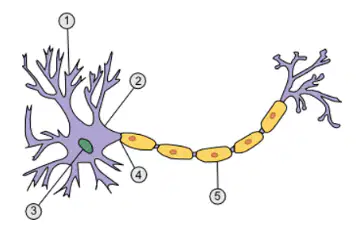
In the above picture, what type of cell is pictured?
Cardiac muscle
Nerve
Ligament
Liver
How many bones are in the human body?
208
602
206
802
What is a synonym for “breathing out”?
exhale
inhale
Diaphragm
inspire
Which of the following is NOT a part of the integumentary system?
Hair
Lungs
Skin
Nails
The purpose of the ventricles are to
hold blood
pump blood
clot blood
cool blood
Which of the following is the best example of the function/purpose of the nervous system?
To absorb and distribute nutrients to the brain
To be able to think, hear, and communicate
Receiving and responding to information and maintaining homeostasis
Filter blood and remove waste
The kidneys help maintain homeostasis by regulating blood pressure and pH
True
False
The shoulder is considered a ball-and-socket joint
True
False
The elbow is considered a pivot joint
True
False
Pulmonary circulation involves blood flow to and from the lungs.
True
False
The purpose of the large intestine is water absorption
True
False
The pharynx is the voicebox
True
False
The humerus is located in the arm
True
False
The spinal cord and the brain make up the peripheral nervous system
True
False
Neurons are the tiny structures in the kidneys that filter
True
False
Nephrons are nerve cells that carry impulses
True
False
The lymphatic system helps to fight off disease
True
False
The radius is the arm bone on the same side as the pinky
True
False
The neuron is made up of dendrites, axon and a cell body
True
False
What are the four types of tissue?
Nervous, skin, muscle, epithelial
Nervous, muscle, epithelial, connective
Connective, skin, epithelial, nervous
Muscle, connective, epithelial, fat
The trachea splits into these two tubes
Alveoli
Bronchioles
Bronchi
Lungs
This is the tube where urine is released to the outside of the body.
Ureter
Kidney
Bladder
Urethra
Fat is considered this kind of tissue.
Respiratory
Nervous
Skin
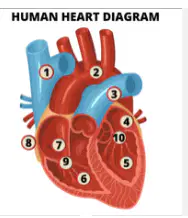
#5 is pointing to ________.
Left ventricle
Left atrium
Aorta
Pulmonary artery
Right ventricle
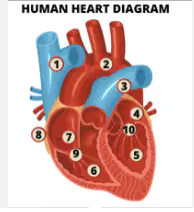
#4 is pointing to ________.
Left ventricle
Left atrium
Aorta
Right ventricle
Right atrium
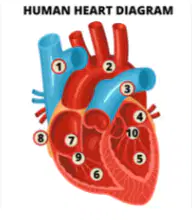
#2 is pointing to the ________.
Right ventricle
Aorta
Pulmonary artery
Left ventricle
Left atrium
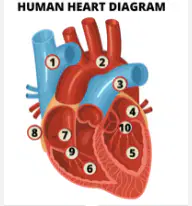
#6 is pointing to the ________.
Aorta
Pulmonary artery
Left ventricle
Left atrium
Right ventricle
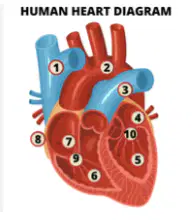
#3 is pointing to the ________.
Right ventricle
Pulmonary artery
Aorta
Left ventricle
Left atrium
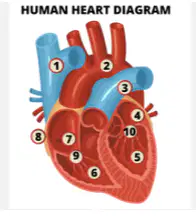
#7 is pointing to the ________.
Right atrium
Right ventricle
Left ventricle
Aorta
Left atrium
The ________ System involves 4 body systems: Digestive, Respiratory, Integumentary & Urinary.
Muscular
Circulatory
Urinary
Skeletal
When blood is filtered as it passes through the kidneys, a fluid called ________ is produced.
Plasma
carbon dioxide
urine
water
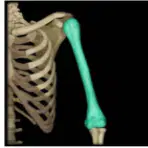
What bone is highlighted?
Humerus
Tibia
Femur
Fibula
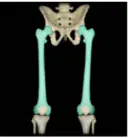
What bone is highlighted?
Humerus
Tibia
Femur
Fibula
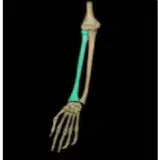
What bone is highlighted?
Ulna
Radius
Fibula
Humerus
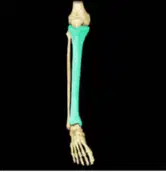
What bone is highlighted?
Humerus
Tibia
Femur
Fibula
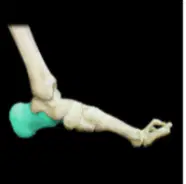
What bone is highlighted?
Tarsals
Metatarsals
Carpals
Calcaneus
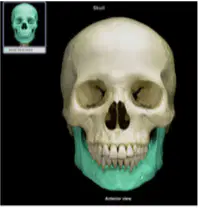
What bone is highlighted?
Nasal bone
Maxilla
Frontal bone
Mandible
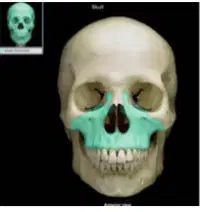
What bone is highlighted?
Mandible
Maxilla
Frontal Bone
Clavicle
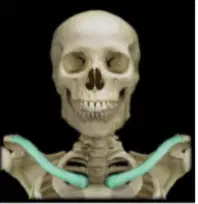
What bone is highlighted?
Scapula
Clavicle
Sternum
Fibula
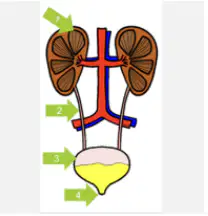
Number 2 represents what?
Bladder
Ureters
Urethra
Kidneys
The kidneys filter waste using tiny structures called?
Ureters
Bladder
Urethra
Nephrons
The product of food in the mouth just BEFORE it enters the esophagus?
Chyme
Bolus
Saliva
Villi
The end-product of the stomach is?
Chyme
Bolus
Saliva
Villi
Which of the following systems is responsible for filtering fluid and helping to fight disease?
Circulatory
Muscular
Skeletal
Lymphatic
Part of Blood: Made in the bone marrow, these cells carry oxygen to body cells using an iron-containing protein called hemoglobin.
White blood cells
Plasma
Red blood cells
Platelets
Part of Blood: Made in bone marrow, these cells fight bacteria and viruses.
White blood cells
Plasma
Red blood cells
Platelets
Part of Blood: The “watery” part of blood that carries nutrients, minerals, oxygen to cells and carries waste away.
White blood cells
Plasma
Red blood cells
Platelets
Part of Blood: Cell fragments that help in the process of clotting.
White blood cells
Plasma
Red blood cells
Platelets
The ________ is the largest lymphatic organ, filtering the blood and detecting foreign invaders.
Pancreas
Liver
Spleen
Lymph nodes
________ produced by the white blood cells that match with specific antigens, like a lock and key.
Inflammation
Immunity
Antibodies
Hormone
________ can be developed through different processes. If you have this to a particular pathogen, you will experience little or no effect from exposure to that pathogen.
Inflammation
Immunity
Antibodies
Hormone
________ may cause an injury to become warmer than the surrounding area due to increased blood flow to the area.
Inflammation
Immunity
Antibodies
Hormone
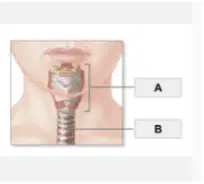
Which labels correctly identify the parts A and B?
A Larynx B Esophagus
A. Pharynx B. Esophagus
A. Pharynx B. Larynx
A. Larynx B. Trachea
How would you know if you touch a cold object?
Neurons in your skin send a chemical signal to the central nervous system.
Neurons in your skin send an electrical message to the peripheral nervous system.
Neurons in your skin send an electrical message to the central nervous system.
Neurons in your skin send a chemical message to the peripheral nervous system.

