
 Worksheets
Science Week 2025
Total questions: 96
Worksheet time: 48mins

The longest under-sea tunnel in the world is about 40km long. How long would it take to run through this tunnel at a speed of 5m/s?
2 hours
133 minutes
8 hours
8000 minutes

Amy Johnson was the first woman to fly solo from England to Australia. Which of these animals is NOT native to Australia:
kookaburra
platypus
koala
kiwi bird

On which ship did Darwin famously journey in 1831?
HMS Beagle
HMS Galapagos
HMS Evolution
HMS Giant Turtle

Ideas about atoms have changed over the centuries. Who proposed that elements consisted of atoms that were identical.
Isaac Newton
John Dalton
Albert Einstein
Ernest Rutherford

The only person to have received the Nobel Prize for Physics and also the Nobel Prize for Chemistry.
Albert Einstein
Linus Pauling
John Bardeen
Marie Curie

ALbert EInstein won the Nobel Prize for Physics for his work on:
Quantum theory
Photoelectric effect
General relativity
Special relativity

What would a 5kg rock weigh on the Moon?
5kg
50N
8N
Nothing

Distillation involves
solidifcation and evaporation
sublimation and evaporation
evaporation and condensation
solidification and condensation
NOT a unit of temperature
watt
celsius
fahrenheit
kelvin
How many cm3 in one m2?
1
100
1000
10000
Which energy source does not produce CO2 emissions?
oil
gas
nuclear
coal
A superconductor is...
a material with no electrical resistance
a material which is not a good thermal insulator
really important in an orchestra
The theory of plate tectonics / continental drift was proposed in 1915 by:
Charles Darwin
Alfred Wegener
Isaac Newton
Albert Einstein
Which is not a process involved in the carbon cycle?
respiration
photosynthesis
decomposition
fermentation
Earth's atmosphere has evolved over millions of years. Which gases made up the early atmosphere?
oxygen, carbon dioxide, methane, nitrogen
carbon dioxide, methane, ammonia
oxygen, nitrogen, water vapour
chlorine, nitrogen, oxygen
When motion is relative, it means...
things seem not to be moving
everything seems to be moving
nothing moves in space
Sir Isaac Newton...
invented physics
was a science college teacher
invented 3 laws of motion
What stops motion? (pick 2)
air
gravity
heat
friction
When a force hits an object, it will travel...
in the opposite direction
in the same direction
in the upwards direction
For every reaction, there is an ___ and opposite reaction.
equal
different
weightless
True or False:
Potential Energy is energy with movement
True
False
What is the 1st law of motion?
To every action, there is an equal and opposite reaction
When a force hits an object, it will move in the direction of the force
Everything is at rest until a force moves it
What is the 2nd law of motion?
When a force hits an object, it will move in the direction of the force
To every action, there is an equal and opposite reaction
Everything is at rest until a force moves it
True or False:
Isaac Newton was from England
True
False
What is the most abundant gas in the atmosphere?
Oxygen
Nitrogen
Carbon dioxide
Ozone
Approximately how much of available water on Earth is fresh water?
1%
11%
53%
97%
A species survives better than another because it has better adaptations. This is an example of what?
Replication
Evolution
Natural selection
Selective breeding
Who is Charles Darwin?
First man to go to the moon in 1969
First man to discover DNA and the human genome
First man to discover adaptations to support his theory of evolution by natural selection
In which state of matter is ice cube?
solid
liquid
gas
water
Which of the following animal give birth to its young alive?
shark
whale
grasshopper
butterflies
Living things need water, food and __________.
schools
air
animals
plants
Which part of plant makes food?
stem
leaf
roots
flower
Plants breathe in __________ and breathe out oxygen.
carbon dioxide
nitrogen
hydrogen
oxygen
What is the name of the Earth's natural satellite?
star
Sun
Moon
Cloud
What is the name of the biggest planet in the our solar system?
Saturn
Jupiter
Earth
Mars
What is star pattern called?
dragon
moon phase
telescope
constellation
Which of the followings are two names of star pattern?
Orion
Mars
Venus
Scorpius
What is the largest animal on earth?
elephant
whale
rhinocerus
shark
What is the name of the closest planet to Sun?
Mercury
Venus
Jupiter
Saturn
Which part of sea turtle helps it move?
fins
flippers
legs
hands
Which of the two plants below are carnivorous plants?
Venus Fly Trap
Pitcher Plant
Coconut tree
Corn plant
Which of the following are the names of Moon phases?
Crescent Moon
Half Moon
Full Moon
New Moon
Which animal is NOT plant eater?
giraffe
praying mantis
cow
grasshopper
The measurable or observable results of the change that is made in an experiment. “The result”.
dependent variable
constant
control group
data
The measurable or observable results of the change that is made in an experiment. “The result”.
dependent variable
constant
control group
data
A type of guess or prediction to explain what is happening in the universe around us. It can be tested through an experiment.
making models
evaluating
hypothesis
scientific investigation (scientific method)
independent variable
The set of things in an experiment that isn't changed in some way. It is compared to an experimental type of this.
dependent variable
constant
control group
data
Forming an idea about something.
making models
evaluating
hypothesis
scientific investigation (scientific method)
independent variable
Information that is shown with numbers or visually.
dependent variable
constant
control group
data
Something that lets you talk about and describe something that you cannot directly see, touch, or use your other senses on.
making models
evaluating
hypothesis
scientific investigation (scientific method)
independent variable
An organized procedure that involves using measurable observations to plan, test or modify a hypothesis.
making models
evaluating
hypothesis
scientific investigation (scientific method)
independent variable
Anything in the experiment that stays the same.
dependent variable
constant
control group
data
The factor in an experiment that the experimenter changes. “The change”.
making models
evaluating
hypothesis
scientific investigation (scientific method)
independent variable
What are Microgreens?
Small stage of plants
A group of nutritious plants

Which Microgreen variety is displayed in the picture?
Radish
Beetroot
Arugula
Sunflower
How many bones are there in the human skeleton
3000
2100
811
206
Which one of these foods are carbohydrates
Herbs
Rice
Apple
Mango
Tick the box that has microgreens


Which is the 3rd planet from the sun?
Mars
Jupiter
Earth
Venus
What do you call people who explore space?
Biologist
Teachers
Astronauts
Sailors
Where can humans live?
Mars
Moon
Mercury
Earth
Who was the first astronaut to step on the moon?
Mr. L
Kyle Clegg
Neil Armstrong
JJ Watt
What is our sun?
A sun
A planet
A banana
A star
What would a scientist use to protect his/her eyes?
Apron
Goggles
Gloves
Lab Coat
Who invented the phonograph?
Albert Eisten
Charles Darwin
Isaac Newton
Thomas Edison
How many bones are there in the human skeleton
3000
2100
811
206
Which is the 3rd planet from the sun?
Mars
Jupiter
Earth
Venus
NOT a unit of temperature
watt
celsius
fahrenheit
kelvin
Which of the following is the worlds largest living organism?
Blue Whale
Elephant
Fungus - Armillaria ostoyae
quaking aspen tree
What season is it in the Southern Hemisphere when it is Autumn in the Northern Hemisphere?
Winter
Summer
Autumn
Spring

Electrons are smaller than atoms.
True
False
Name the waste products secreted by Plants?
Carbon Dioxide
Oxygen
Water Vapour
All are correct.
What kind of tree can fit into your hand?
a banana tree
a mango tree
a palm treee
What is the most common element in the universe?
helium
hydrogen
oxygen
love
Which of the following is furthest from the sun?
Pluto
Jupiter
Mercury
Uranus
True or false:
It take 365 days for the Earth to orbit the sun
True
False
What two materials make a ‘Non-Newtonian’ fluid,
Water and flour
Lemonade and sugar
Cornflour and water
Baking soda and water

What is missing?
Light reflects off an object in a wavy line
Light reflects off an object in a straight line
Light refracts
Light reflects into the eye
True or false:
Sound travels faster than light.
false
true

This is used to measure...
cyclones
atmospheric pressure
rain
wind speed
The hottest planet in our solar system is...
Venus
Earth
Mars
Mercury
Material through which energy (heat or electrical) can be transferred is a __________
Conductor
Element
Sock
Insulator
What is the biggest source of energy for producing electricity?
wind
solar
coal
hydropower
Photosynthesis is the process by which plants use energy from sunlight to turn carbon dioxide and water into
Sugar and oxygen
Sugar and spice
Sugar and hydrogen
Sugar and helium
Earthquakes release seismic waves from the centre of Earth.
true
false

WHO IS THIS FAMOUS SCIENTIST?
ALBERT EINSTEIN
ISAAC NEWTON
THOMAS EDISON
CHARLES DARWIN
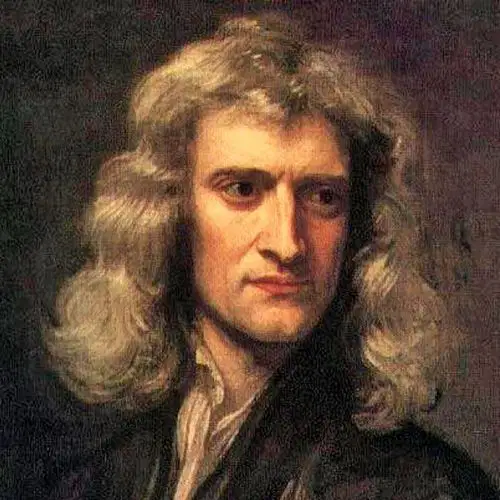
WHO IS THIS FAMOUS SCIENTIST?
ALBERT EINSTEIN
ISAAC NEWTON
THOMAS EDISON
CHARLES DARWIN

What percent of the Earth is covered by water?
17%
50%
71%
85%

What percent of the human body is water?
20%
50%
70%
100%
The majority of Earth's oxygen is produced by
Marine Plants in Oceans
Trees on Land
Comets that hit Earth
Machines in Factories

Sound travels fastest in...
Solids
Liquids
Gases
Outer Space
What is the fastest land animal on Earth?
Rabbit
Cheetah
Lion
Horse

