
 Worksheets
Plant Kingdom Test Review
Total questions: 140
Worksheet time: 2hrs 55mins

Vascular plants without seeds spread with (a)
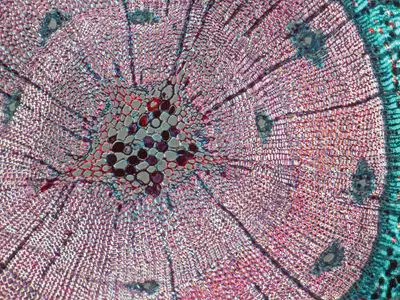
Plant tissue that transports water is called (a)

Non-flowering plant with seeds are called (a)

Flowering plant with seeds are called (a)
Which came first to last! Geologically speaking!


All plants are...
Multicellular
Heterotrophs
Autotrophs
Terrestrial and Aquatic
In taxonomy "true plants" are all about this.....
standing upright
Photosynthesis
Containing chloroplasts
Growing
True or False...many plant species can be both male and female.
True
False
Match the following plant adaptation to life on land.

Roots & Rhiziods

Stomata

Xylem & Phloem

Pollen

Cuticle
Bryophytes all considered plants but they lack...
Phloem & Xylem
Chloroplasts
Stomata
Rhizoids
Unlike Bryophytes, ferns and clubmosses have
chloroplasts
rhizoids
phloem
xylem

Select ALL functions of roots.
Absorb water and nutrients from the soil
Hold the plant in the soil
Release plant wastes into the soil
Some plants store food in them
Produce food for the plant
The flowers from plants turn into _________.
Fruits
Trees
Leaves
Vegtables
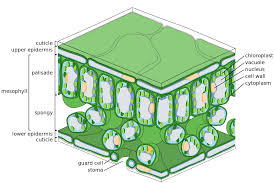
What is the primary function of photosynthesis in plants?
To produce oxygen as a byproduct
To convert light energy into chemical energy
To absorb water from the soil
To release carbon dioxide into the atmosphere
Which of the following is considered a major evolutionary milestone in plant biology?
The development of vascular tissue
The invention of the wheel
The first use of pesticides
The creation of synthetic fertilizers
Which group of plants produces seeds but not flowers?
Angiosperms
Gynosperms
Bryophytes
Algae
What distinguishes angiosperms from gynosperms?
Angiosperms have vascular tissue, while gynosperms do not.
Angiosperms produce seeds without a protective covering, while gynosperms produce seeds with a protective covering.
Angiosperms produce flowers, while gynosperms do not.
Angiosperms are primarily aquatic, while gynosperms are terrestrial.
What evolutionary advantage do vascular plants have over non-vascular plants?
They can grow in drier environments.
They do not require sunlight for photosynthesis.
They can reproduce without water.
They have a shorter lifecycle.
What is the name of the strengthening tissue found in the cell wall of ALL plants?
lignin
chlorophyll
cellulose
chitin
Match the following.
the diploid stage
sporophyte
the haploid stage
gametophyte
female part
archegonium
male part
antheridium
eukaryotic
cells with a nucleus
The term used to describe plant life cycle that includes both sexual and asexual phases of reproduction.
alternation of generations
gametophyte generation
sporophyte generation

Term for mosses and liverworts
lichen
saprophytes
bryophytes
rhizoids

Which of the following do bryophytes have?
Cuticle
Chloroplasts
Roots
Vascular Tissue
Which statement is true?
Rhizoids anchor some bryophytes to rocks
All plants have rhizoids
Rhizoids are always multicellular
Rhizoids are found in soil only
What type of environment must a bryophyte live in?
Dry
Windy
Moist
Airy
All plants, nonvascular and vascular, have a two phase life cycle.
True
False
Select the terms which describe bryophytes?
aquatic
terrestrial
nonvascular
vascular
seedless
Rhizoids are _____ like structures that anchor bryophytes and absorb water.
leaf
flower
stem
root
This plant cellular organelle is responsible for photosynthesis.
chloroplast
nucleus
mitochondrion
endoplasmic chromoplast
mosses, nonvascular
hepatophyta
anthrophyta
bryophytes
angiophyta
What are the four main classification of plants
Seedless vascular plants
gymnosperms
angiosperms
nonvascular
bryophytes
All plants produce spores and gametes
true
false
What kind of plants do not have vascular tissues?
nonvascular
vascular
What kind of plants have tissues capable of transporting water and other materials?
nonvascular
vascular
The haploid form of the life cycle of a plant, characterized by ‘alternation of generation’ is called
seed
embryo
sporophyte
gametophyte
liverworts
antheridium
cryptophobic
gametophytes

Bryophytes have true leaves
true
false
The flask-shaped structure that encloses the moss egg is known as...
Archegonium
Antheridium
zygote
capsule
Bryophytes are
First evolved vascular land plants
First evolved land plants
First evolved aquatic plants
First evolved epiphytic plants
Which of the following structures holds the male gamete?
Antheridium
Oogonium
Gynoecium
Archegonium
Which of the following part of sporophyte contains spores?
Foot
Capsule
Seta
Protonema
The zygote is...
haploid
diploid
Sporophytes are...
haploid
diploid
Sporophytes can live separately without the gametophyte.
True
False
Gametophytes can live separately without the sporophyte.
True
False
Which of the following is true about nonvascular plant reproduction?
The sporophyte generation is absent.
The gametophyte generation is absent.
The sporophyte is large while the gametophyte is reduced in size.
The gametophyte is large while the sporophyte is reduced in size.
All of the following statements are true about the mosses except...
No vascular tissue
No alternation of generations
No true roots, stems, or leaves
No seeds
The female reproductive organ in bryophytes is..........
Antheridium
Sporophyte
Archegonium
Antherozoid
The haploid form of the life cycle of a plant, characterized by ‘alternation of generation’ is called
seed
embryo
sporophyte
gametophyte
In Bryophytes the spores are non-motile and haploid.
True
False
Label the moss life cycle.
sporophyte
capsule
1n
2n
rhizoids
spores
Label the moss life cycle.

Match the liverwort diagram
1
thallus
2
gemmae cup
3
antheridial ray
4
archegonial ray
5
archegonium
Match the liverwort diagram
6
egg
7
antheridium
8
sperm
9
sporophyte plant
10
old archegonium

What is 11?
eggs
sporophytes
sperms
spores
What is the name of this organism?
moss
angiosperm
liverwort
fern
To what group does this plant belong?
bryophytes
angiosperm
ferns
gymnosperms
What is the dominant generation of this plant?
sporophyte
gametophyte

Drag the labels to the appropriate spot.
Roman Numeral I
sporophyte generation
Roman number II
gametophyte generation
type of plant
moss
Drag the labels to the appropriate spot.
f
antheridium
g
sperm
h
archegonium
i
egg
j
zygote
Drag the labels to the appropriate spot.
a
capsule
b
seta
c
rhizoids
d
spores
e
protonema
Where are ferns usually found?
in hot dry places
in shady wet places
on the tops of trees
in deserts
What are the spots sometimes found on the underside of a fern frond called?
age spots
lenticels
acne
Sori
What is the name of the structure that contains both the male and the female parts of the fern?
prothalus
archegonia
antheridia
sporangia
What is the male part of the fern called?
prothalus
archegonia
antheridia
sporangia
What is the female part of the fern called?
prothalus
archegonia
antheridia
sporangia
Are ferns vascular plants?
yes
no
Do ferns have seeds?
yes
no
Are ferns gymnosperms?
yes
no
Ferns have strong stems, roots, and leaves
True
False
Their leaves have a wavy layer which helps to reduce water loss
False
True
Ferns' spores are carried by the wind to form new plants
True
False

what is r?
fern
feddlehead
prothallus
zigot
what is s?
sporophyte
rhizome
protallus
sori
what is t?
fern
feddlehead
protalium
zygote

what is that?
sporangium
annulus
lip cell
frond
Ferns have xylem and phloem.
True
False
Ferns need a lot of water due to having... (two words)
(a)
The dominant generation of ferns are
sporophyte
gametophyte
Spores germinate to make the
prothallus
sori
sporophyte
gametes
The young sporophyte forms from spores
True
False
What is the chromosome number of the gametophyte generation?
Diploid (2N)
Haploid (1N)
Sporangium produces
prothallus
spores
gametes
gametophytes
When spores fall on moist soil, they germinate into
sori
sporangium
prothallus
eggs and sperm
The gametophyte produces egg and sperm.
True
False
The prothallus is the first stage in the gametophyte generation.
True
False
The zygote is the first stage of the sporophyte generation.
True
False
Stems, roots, and leaves are all above ground in ferns.
True
False

Match the following for the fern reproductive cycle.
a
prothallus
b
rhizoids
c
archegonium
d
antheridium
e
egg
Match the following for the fern reproductive cycle.
f
sperm
g
zygote
h
roots
i
gametophyte plant
j
sporophyte plant
Match the following for the fern reproductive cycle.
k
sporophyte plant
l
roots
m
roots
n
frond
o
sori
Match the following for the plants reproductive cycle.
p
sporangium
q
sporangium
r
spores
s
young gametophyte
Name of this organism
fern
To what group(s) does this plant type belong?
bryophytes
tracheophytes
vascular
nonvascular
angiosperms
What is the dominant generation of this plant?
gametophyte
sporophyte
What generation is labeled Roman Numeral I?
gametophyte
sporophyte
What generation is labeled Roman Numeral II?
gametophyte
sporophyte
What process occurs at Roman Numeral III?
mitosis
meiosis
What process occurs at Roman Numeral IV?
fertilization
meiosis
Bryophytes and ferns both rely on reproduction mainly by
(a)

This is a(n) ...
Angiosperm
Gymnosperm
How do we call plants that have seeds, but no flowers or fruit?
Nonvascular plants
Seedless vascular plants
Gymnosperms
Angiosperms
How do we call plants that have seeds, flowers and fruit?
Nonvascular plants
Seedless vascular plants
Gymnosperms
Angiosperms
"Evergreen plants" is a common name for ...
Nonvascular plants
Seedless vascular plants
Gymnosperms
Angiosperms
"Flowering plants" is a common name for ...
Nonvascular plants
Seedless vascular plants
Gymnosperms
Angiosperms
Select ALL examples that are matched correctly.
Nonvascular plants >> moss
Seedless vascular plants >> fern
Gymnosperms >> cherry tree
Angiosperms >> rose
An oak tree is an example of a (an)
angiosperm
gymnosperm
Both angiosperms and gymnosperms have leaves, stems, and seeds
true
false
Angiosperms produce from
rhizoids
cones
fruit and flowers


Select ALL that are true about angiosperms.
Vascular plants
Reproduce by spores
Reproduce by seeds
Seeds are enclosed in fruit
Live only in moist areas
Flower parts in dicots are in multiples of?
4 or 5
7
3
2


Select the gymnosperm


Circle the seed of the gymnosperm


Is this plant a gymnosperm
Yes.
No.

Is this plant a gymnosperm?
Yes.
No.

Choose the right answer.
This is a
Angiosperm
Gymnosperm
Select the angiosperm


Plants that make seeds include
ferns
bryophytes
gymnosperms
angiosperms
All seed plants have vascular tissue with true roots, stems, and leaves.
True
False
The dominant generation in vascular plants:
gametophyte
sporophyte

