Worksheets
review Quarter 4 test 1
Total questions: 164
Worksheet time: 3hrs 30mins
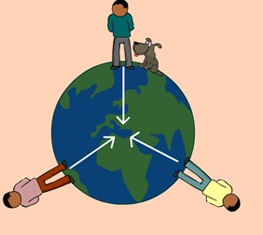

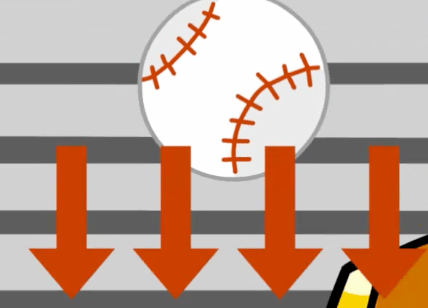



Describes the movements of tectonic plates over long periods of time
Continental drift
Mantle
Plate tectonics
Convection Currents
Layer where convection currents occur
Crust
Mantle
Outer Core
Inner Core
Circular movements through the mantle
Convection Currents
Continental Drift
Plate Tectonics
Sea-Floor Spreading
The theory that the outer layer of Earth is divided and moves across Earth’s surface
Plate Tectonics
Continental Drift
Sea-Floor Spreading
Mantle
The pieces of Earth’s crust and uppermost mantle are referred to as _____________________________ or lithosphere.
Continental Drift
Crust
Sea-Floor Spreading
Tectonic Plates
Place where one heavier (more dense) tectonic plate, slides under the lighter (less dense) tectonic plate
Ring of Fire
Subduction Zone
Continental Drift
Convection Currents
Any location where two tectonic plates interact (touch)
Sea-Floor Spreading
Plate Boundaries
Tectonic Plates
Subduction Zone
How many ways can tectonic plates interact
1
2
3
4
Large moving pieces that make up the Earth's crust
Continental Drift
Sea-Floor Spreading
Tectonic Plates
Convection Currents
When magma from the mantle rises in between two oceanic plates and pushes them away from each other.
Subduction Zone
Tectonic Plates
Sea-Floor Spreading
Convection Currents
The attractive force between objects is called....
force
Gravity
inertia
The scientific law that states that every object in the universe attracts every other object is called...
Gravity
Inertia
Universal Law of Gravitation
The amount of matter in an object is called....
inertia
Gravtity
mass
A measure of the force of gravity on an object is called...
weight
mass
gravity
WHAT 2 FACTORS affect the force of gravity?
Mass and inertia
Mass and Distance
Mass and Gravity
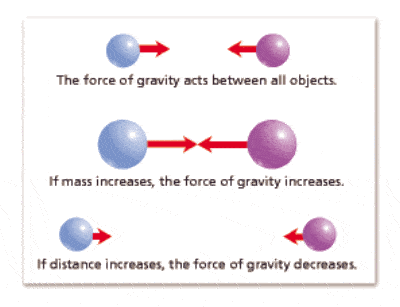
As the mass of interacting objects increases, gravity.....
increases
decreases
As the mass of interacting objects decreases, gravity.....
increases
decreases
As the distance of interacting objects increases, gravity.....
increases
decreases
The greater the pull of gravity on an object, the greater the ............. of that object.
mass
weight
gravity
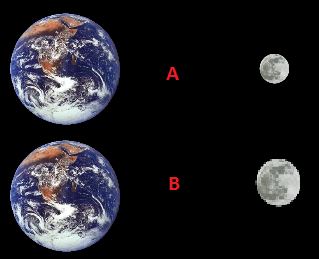
When will the forces of gravity between two objects be the GREATEST?
when the masses of both objects are small and the objects are far apart
when the masses of both objects are large and the objects are close together
when the masses of both objects are small and the objects are close together
The name of our galaxy is the
Andromeda
Milky Way
Whirlpool

What type of galaxy is this?
Spiral
Elliptical
Irregular

What type of galaxy is this?
Spiral
Elliptical
Irregular

What type of galaxy is this?
Spiral
Elliptical
Irregular

What type of galaxy is this?
Spiral
Elliptical
Irregular

What type of galaxy is this?
Spiral
Elliptical
Irregular
The force of gravitational attraction between the Sun and Venus could be increased by reducing which of the following?
The distance between the Sun and Venus
The period of rotation of the Sun
The mass of the Sun and Venus
The speed of the orbit of Venus
Which of the following is a complete list of the inner planets?
Venus, Earth, Mars, Jupiter
Mercury, Venus, Earth, Mars
Jupiter, Saturn, Uranus, Neptune
Mercury, Venus, Earth, Jupiter
If someone is building a scale model of our solar system which characteristic would be the most difficult to build into the model?
The number of objects
The colors of the objects
The distances between objects
The composition of the objects
The orbital motions of the objects in the solar system are the direct result of which of the following features of the Sun?
Its magnetic field
Its brightness
Its gravitational pull
Its chemical composition

Students are planning to build a scale model of the outer planets of the solar system. The table here shows some of the objects the students will use for their scale model.
Based on the information in the table provided, which of the following representative objects and scaled diameters should they choose for the planet Saturn?
Basketball, 24 cm
Softball, 10 cm
Tennis ball, 5.2 cm
Baseball, 7.5 cm
What characteristics distinguish the inner planets in the solar system from the outer planets?
smaller than outer planets
more colorful than outer planets
more terrestrial (rocky)
less atmosphere than outer planets
What makes up the solar system?
sun
moon
asteroids
black hole
Which of the following BEST describes the shape of each planets orbit?
circle
elliptical
sphere
rectangular
Why is a year on the outer planets much longer than a year on the inner planets?
they are larger
they are closer to the sun
they have a larger orbit since they are further from the sun
a year is the same amount of time on all planets

Why do all planets orbit the sun?
The sun is very large and has a weak gravitational pull, so the planets stay close to it
The sun is smaller than the planets and has a large gravitational pull that attracts the planets
The sun is large and has a large gravitational pull that makes the planets orbit it
The sun orbits the planets because it needs to keep them warm
Two factors affecting the strength of the force of gravity between 2 objects are...
mass and distance
mass and matter
distance and weight
weight and mass
Jackson and Maya are comparing two objects, one with a greater mass than the other. They observe that the object with greater mass has
less gravitational force
stronger gravitational force
no clue
a way to break apart
Aria and Rohan are comparing two objects with different masses. What happens to the gravitational force between the objects as one object's mass increases?
increases
decreases
stays the same
i don't know
Isla, Elijah, and Abigail are discussing the force that keeps objects in our solar system orbiting our Sun. Which force are they talking about?
push
gravity
motion
pull
Which celestial body has the smallest amount of gravity?
Mercury
Uranus
Pluto
Venus
Which describes the inner planets?
the inner planets are small, gaseous and have rings
the inner planets are large, solid and have many moons
the inner planets are solid, rocky, and smaller
the inner planets are solid, have many moons and rings

Which of these choices explains why this model of the solar system cannot be correct?
Earth does not have enough gravitational pull to be located in the center of the Solar System.
Venus is larger than the Moon so it would be located closer to the center.
Saturn has as much mass as Earth so it would be located in the center.
Mars and Mercury have an equal amount of gravitational pull so should be on the same orbital pathway.
What does orbit mean?
A measurement of how much something weighs.
The repeating path that an object takes in space when it moves around a star, planet or moon.
How much matter takes up space.
The push or pull on a planet.
Elijah, Sophia, and Abigail are on a school trip to a planetarium. The guide asks them, 'Which group of planets are known as the rocky planets?'
Jupiter, Saturn, Venus, and Mars.
Earth, Mars, Pluto and Venus
Saturn, Jupiter, Venus and Earth
Mercury, Venus, Earth and Mars.
Kai, James, and Ethan are planning a trip to the outer planets. Which planets will they be visiting?
Mercury, Venus, Earth, and Mars
Pluto, Saturn, Mercury, and Mars
Saturn, Jupiter, Uranus, and Neptune.
Mercury, Venus, Earth, and Saturn
Which of the following is true?
The farther a planet is from the sun, the
longer it takes for the planet to move around
the sun.
The closer a planet is to the sun, the longer it
takes for the planet to move around the sun.
The smaller a planet is, the longer it takes for
the planet to move around the sun.
The larger a planet is, the longer it takes for
the planet to move around the sun.
Henry, Isla, and Daniel are discussing about the universe. They are trying to figure out which of these astronomical objects is the largest. Can you help them?
A Star
A Spiral Galaxy
A Planet
A Solar System
A student made a model of how the planets orbit the sun. She used a tennis ball to represent the sun. She used ping-pong balls to represent each planet, and painted each one a different color. Then, she placed all the ping-pong balls equal distances apart in a line extending out from the sun. What are two limitations of the student's model?
She used the same size balls to represent the planets.
She made planets orbit the sun.
The planets are not the correct distances from the sun.
The solar system can't be modeled using actual objects.
Why do scientists use scale to study the Solar System?
The solar system is too large to study without using scale models
The solar system is too small to study without using scale models
Scientists don't need to use scale because we have satellites
All of the above
Why is making a model of the solar system difficult?
Don't have the right materials
The solar system is so big and the objects in it are so small in comparison
There are too many parts in a model
Because the science concepts are too difficult

Which planet in the Solar system has the shortest orbital period?

If you were going to make a scale model of the Solar system what planet should be the second largest in diameter?
Jupiter
Saturn
Earth
Uranus

If you were to make a scale model of the Solar system what planets in the solar system should be most similar in size?
Earth and Venus
Mars and Mercury
Uranus and Neptune
Jupiter and Saturn
Which planet the solar system has the greatest mass?
Earth
Venus
Saturn
Jupiter
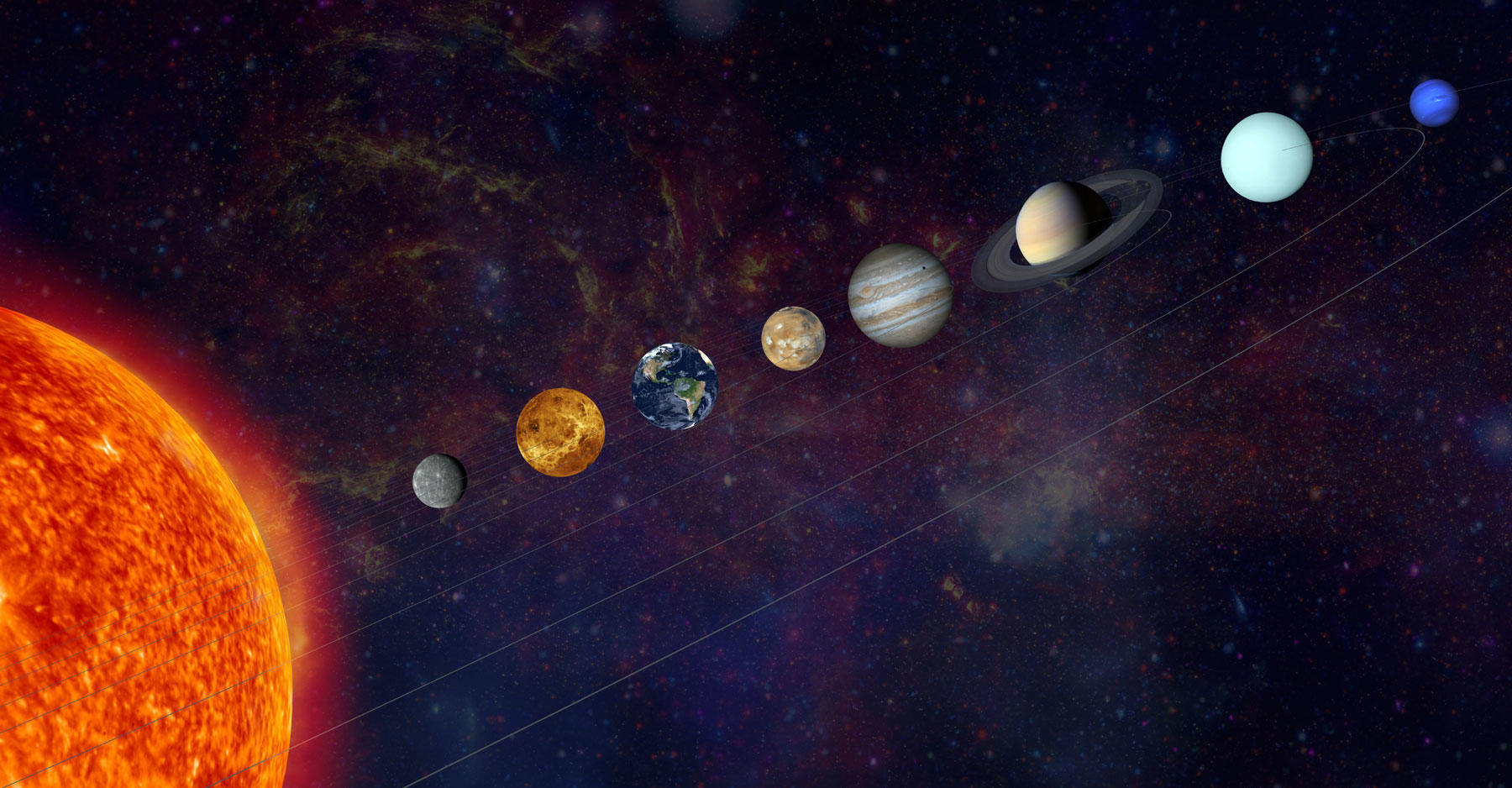
The planets are all equally distanced from each other.

A tool that can be on Earth or orbiting Earth that helps scientists to see far into space is called...
orbiter
lander
rover
telescope

Which space tool is shown here?
satellite
telescope
space probe
observatory
All of space and everything in it including stars, planets, galaxies, etc.
Universe
Galaxy
Planetary System
Milky Way
A collection of stars, dust, and gas held together by gravity.
Universe
Galaxy
Planetary System
Astronomical Unit (AU)
A large spiral galaxy that is home to Earth and the rest of our solar system, and about a trillion stars. .
Milky Way
Galaxy
Planetary System
Astronomical Unit (AU)
A star with planets and other celestial bodies orbiting around it, held together by gravity.
Light year
Galaxy
Planetary System
Astronomical Unit (AU)
Our sun, planets, and all the other objects that revolve around the sun.
Light year
Galaxy
Solar System
Astronomical Unit (AU)
The average distance between Earth and the sun
Light year
Galaxy
Distance
Astronomical Unit (AU)
The distance light travels in one year
Light year
Celestial body
Distance
Astronomical Unit (AU)
A natural object in space such as a star , moon, planet, asteroid, planetoid, comet.
Planet
Celestial body
Star
Astronomical Unit (AU)
An exploding ball of burning gas held together by gravity, creates its own heat and light.
Planet
Celestial body
Star
Planetoid
An object that orbits a star, is large enough to have become rounded by its own gravity, and has cleared the area of its orbit.
Planet
Celestial body
Star
Planetoid
A celestial object that orbits the sun but is not a planet or a comet, not always rounded, has not cleared the area of its orbit.
Comet
Celestial body
Moon
Planetoid
A small, rocky object that orbits the Sun.
Comet
Asteroid
Moon
Planetoid
A natural object that revolves around a planet.
Comet
Orbit
Moon
Planetoid
A loose collection of ice and dust that orbits the sun, typically in a long, narrow orbit.
Comet
Asteroid
Orbital Motion
Planetoid
The path of an object as it revolves around another object in space.
Orbit
Asteroid
Orbital Motion
Planetoid
Motion that results from the combination of the objects forward movement and the pull of gravity on the object.
Mass
Asteroid
Orbital Motion
Planetoid
An elongated circle, or oval shape, the shape of the planets orbit.
Mass
Asteroid
Ellipse
Planetoid
The force of attraction between objects with mass.
Mass
Gravity
Ellipse
Distance
The amount of matter in an object. (Greater mass = stronger gravity)
Mass
Gravity
Ellipse
Distance
An amount of space between two things or people. (Greater distance = weaker gravity)
Mass
Gravity
Ellipse
Distance
Objects made of ice, gas and dust and orbit the sun are called:
Asteroids
Comets
Meteoroids
Meteors
Chunks of rock and metal and are believed to be left over pieces of planets and moons are called:
Comets
Meteors
Asteroids
Meteoroids
The inner planets are called...
rocky planets
gas planets
The furthest planet from the sun...
Mercury
Venus
Neptune
Jupiter
The outer planets are called...
gas planets
rocky planets
Jovian planets
The inner planets are made up of...
solid rock and metal
ice and gas
What separates the inner planets from the outer planets in the solar system?
Asteroid Belt
Asteroids
Comets
Kuiper Belt
The outer planets all have
rings
moons
water
suns
What is the largest planet in the solar system?
Uranus
Jupiter
Saturn
Neptune
How many planets are there in our solar system?
8
9
10
7
Uranus is the only planet that...
lays on its side
orbits rocks
have 8 moons
The four planets closest to the sun...
Jupiter, Saturn, Uranus, Neptune
Mars, Neptune, Earth, Venus
Mercury, Venus, Earth, Mars
Planets made up mainly of hydrogen, helium, and other gasses are called...
gas giants/ ice giants
rocky planets
A large space rock orbiting the Sun
Asteroid
Meteor
Meteorite
Comet
A region beyond Neptune containing many meteoroids and comets
Kuiper Belt
Solar System
Oort Cloud
Asteroid Belt
A space rock that enters the Earth's Atmosphere but does not hit the surface
Meteor
Comet
Meteoroid
Meteorite