
 Worksheets
Sem 2 Test 1 Review
Total questions: 80
Worksheet time: 2hrs 49mins


The graph shows the cooling curve of a substance.
Identify between which points heat is released.
CD and EF

What is the temperature of the metal cube when thermal equilibrium is achieved between the cube and the liquid?
Do molecules generally move faster at 45 C or 106 C?
45 C because molecules have more energy than in 106C
106 C because molecules have more energy than in 45C
106 C because molecules have less energy than in 45C
45C because molecules have less energy than in 106 C
When you place the metal in boiling water, heat flows from the _________ to the _______.
metal to the boiling water
bottom of the metal to the top half of the metal
bottom of the water to the top of the water
boiling water to the metal
Define ΔH
Change in Specific Heat; Heat by one Degree Celsius
Change in Temperature; the energy we calculate; Degree Celsius
Change in Enthalpy; the energy/heat we calculate
Change in Time; time travel
Specific Heat is..
the temperature initial minus temperature final
the amount of heat/energy required to raise 1 gram of a substance by 1°C (or K) aka "C"
the temperature final minus temperature initial
the item in a system with given weight in grams
Gold cools more quickly than aluminum. This means …
gold has a larger heat capacity
aluminum has a larger heat capacity
they have the same heat capacity
What is heat capacity?


To freeze water …
energy must be added to the water
energy must be removed from the water

An electric stove top works primarily through
thermal conduction
thermal convection
thermal radiation
According to the First Law of Thermodynamics, which of the following statements is true?
Heat is a form of energy that can be created and destroyed.
Heat can be transferred from a cold object to a hot object without external energy.
Heat is a form of energy that can neither be created nor destroyed, only transferred.
Heat is not a form of energy and does not follow the law of conservation.

What is the term used to describe the transfer of thermal energy through empty space, as shown in the second diagram?
Convection
Conduction
Radiation
Insulation
Match the following
Zeroth Law of Thermodynamics
Law of Thermal Equilibrium
First Law of Thermodynamics
Law of Conservation of Energy
Second Law of Thermodynamics
Law of Disorder
O2(g) + 2 H2 (g) → 2 H2O (g) + Energy
endothermic
exothermic
6 CO2+ 6 H2O + Energy → C6H12O6 + 6 O2
endothermic reaction
exothermic reaction
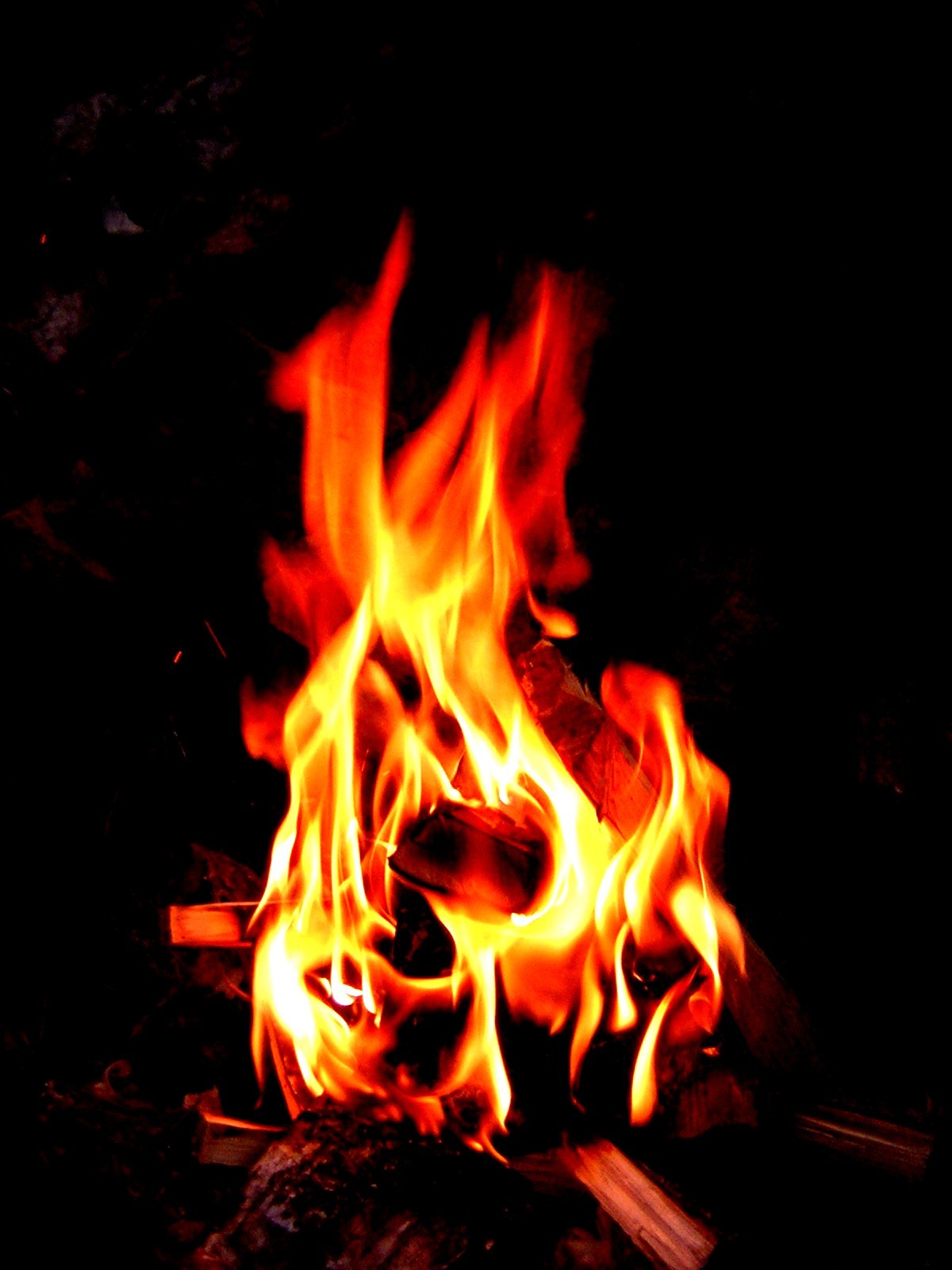
_____ reactions usually feel hot!
endothermic
exothermic
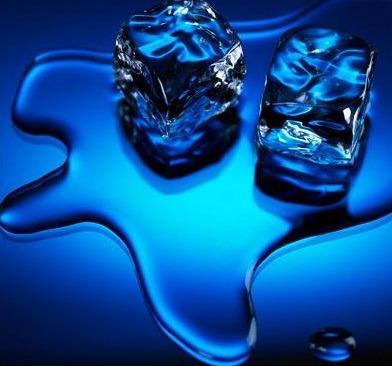
____ reactions usually feel cold.
endothermic
exothermic
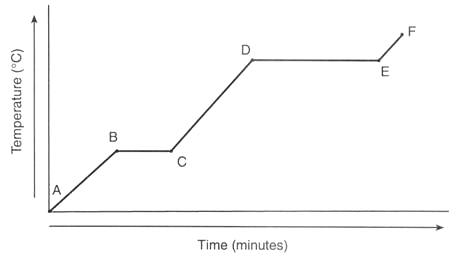
Are the particles moving faster or slower as time goes on?
Faster
Slower
Is the substance gaining or losing energy as time goes on?
Gaining
Losing
What state/phase is the object likely from points A to B?
Solid
Liquid
Gas
Plasma
What is happening to the particles in the substance between points A and B?
Melting
Freezing
Speeding Up
Slowing Down
What is happening to the particles in the substance between points D and E?
Melting
Freezing
Vaporizing
Sublimating

Is the substance gaining or losing energy over time?
Gaining
Losing

Where on the graph are phase changes taking place?
1
2
3
4
5

The graph above is from which type of reaction?
Endothermic reaction
Exothermic Reaction

The graph above is from which type of reaction?
Endothermic reaction
Exothermic reaction
What is the sign of ΔH for an endothermic reaction?
ΔH is +
ΔH is -
What is the sign of ΔH for an exothermic reaction?
ΔH is +
ΔH is -
A reaction that causes an increase in temperature is
endothermic
exothermic

The vertical axis of this graph represents the:
kinetic energy
potential energy
free energy
heat energy

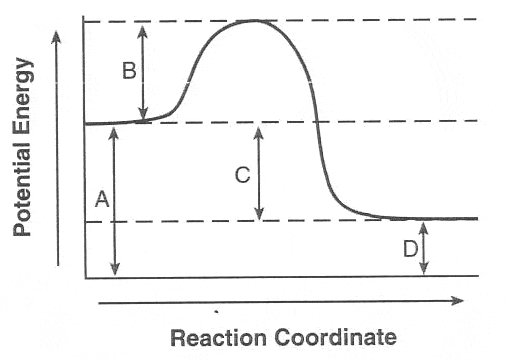
Which letter shows the enthalpy change (delta H) of this reaction?
A
B
C
D

Melting
Vaporization
Sublimation
Endothermic Reactions
Freezing
Condensation
Deposition
Exothermic Reactions

The following statements are true for entropy EXCEPT
entropy is the measure of molecular disorder
entropy is greater if matter is more dispersed
gases have more entropy than liquids of the same substance and temperature
lowering the temperature causes entropy to increase.
Which one of the following processes produces a decrease in the entropy of the system?
dissolution of solid KCl in water
mixing of two gases into one container
freezing water to form ice
melting ice to form water
A reaction that is not spontaneous at low temperature can become spontaneous at high temperature if ΔH is __________ and ΔS is __________.
+, +
-, -
+, -
-, +
+, 0
For a reaction to be spontaneous under standard conditions at all temperatures, the signs of ΔHΟ and ΔSΟ must be __________ and __________, respectively.
+, +
+, -
-, +
-, -
+, 0
A reaction has a negative ΔH and a positive ΔS. Which of the following is true?
A reaction has a positive ΔH and a negative ΔS. Which of the following is true?
A reaction has a negative ΔH and a negative ΔS. Which of the following is true?
If a reaction has a - Δ H then it is
endothermic
exothermic
If a reaction has a + Δ H then it is
endothermic
exothermic
Match the following
-ΔH, -ΔS
Likely Spontaneous at Low temperatures
-ΔH, +ΔS
Always Spontaneous
+ΔH, -ΔS
Never Spontaneous
+ΔH, +ΔS
Likely Spontaneous at High temperatures
Temperature & Pressure
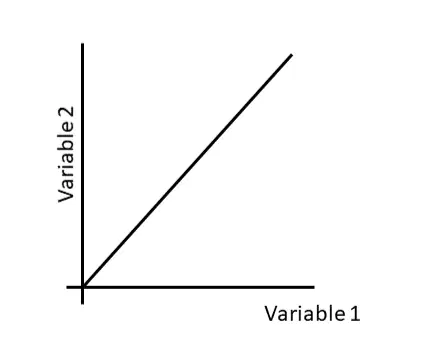
Volume & Pressure
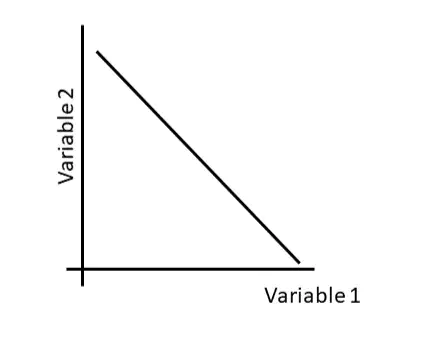
Temperature and Volume
A hypothetical gas that perfectly fits all the assumptions of the kinetic molecular theory is known as
real gas
ideal gas
imaginary gas
perfect gas
If a gas has the same temperature throughout, which gas molecule has the highest average velocity?
O2
H2O
H2
Xe
For a fixed amount of gas at a constant temperature, the volume increases as the pressure...
remains steady.
increases.
decreases.
fluctuates.
The pressure exerted by a gas does not depend on
temperature.
volume.
number of moles present.
the identity of the gas.
Reorder from LOWEST (left) kinetic energy to HIGHEST (energy) kinetic energy
solid
liquid
gas
How is temperature related to the movement of particles?
directly
indirectly
If a hairspray can is heated, what can be expected of the pressure of the gas inside the can?
The pressure will increase
The pressure will decrease
The pressure will remain constant
The pressure will equalize
SLOW DOWN FOR MATH
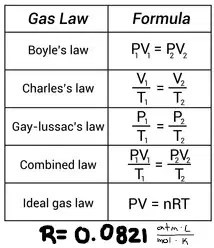
A sample of 0.010 mole of oxygen gas is confined at 127°C and 0.80 atm. What would be the pressure of this sample at 27°C and the same volume?
0.10 atm
0.20 atm
0.60 atm
0.80 atm
Match the following units to their names.
Volume
L
Temperature
K
Pressure
atm
Moles
mol

SLOW DOWN FOR MATH
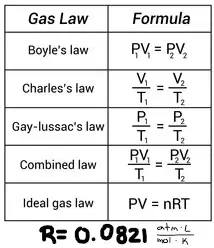
You have a gas that has a pressure of 2 ATM and a volume of 10L. What would be the new volume if the pressure was changed to 1 ATM?
0.2 L
20 L
It would stay at 10L
15 L
SLOW DOWN FOR MATH
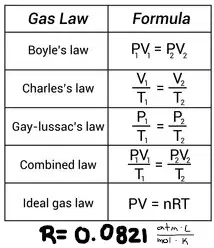
If I have 4 moles of a gas at a pressure of 5.6 atm and a volume of 12 liters, what is the temperature?
205 K
200 K
2046 K
2000 K
SLOW DOWN FOR MATH
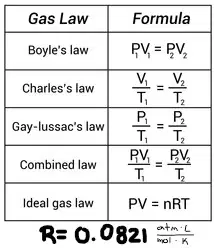
Consider a sample of oxygen gas at 27° C with a volume of 9.55L at a pressure if 2.97 atm. The pressure is changed to 8.25 atm and the gas is heated to 125° C. What’s the new volume?
___ L
Round to 3 significant figures and use 273 K = 0 C
4.56 L
15.9 L
16.0 L
5.00 L
SLOW DOWN FOR MATH
If I have 5.6 liters of gas in a piston at a pressure of 1.5 atm and compress the gas until its volume is 4.8 L, what will the new pressure inside the piston be?
1.75 atm
1.8 atm
1.3 atm
1.29 atm
What is 50 °C in Kelvin?
223
323
100
50
Match the following

Combined
Gas Law

Gay-Lussac's Law

Boyle's Law

Ideal Gas Law

Charles' Law
How many graphs of Carbon Dioxide are present in a 4 liter balloon at .75atm and 290K
.134g
5.9g
7.5g
.003g

