
 Worksheets
.2 Optional Test 6 Review
Total questions: 145
Worksheet time: 4hrs 14mins

What is the name of AlPO4?
Aluminum phosphoxie
Monoaluminum tetraphosphate
Aluminum (III) phosphate
Aluminum phosphate
What is the correct IUPAC name for Cu2O ?
Copper oxide
Copper oxalate
Copper (II) oxide
Copper (I) oxide
What is the correct chemical formula for magnesium iodide?
MgI2
Mg2I
MgI
Mg2I2
What is the proper IUPAC name of the compound P3O5?
Triphosphorus pentoxide
Phosphorus pentoxide
Triphosphorus oxide
Phosphorus oxide
What is the correct IUPAC formula for aluminum sulfide?
Al3S2
Al2S
AlS2
Al2S3

Na2S


What is the correct Lewis Dot Structure for ammonia NH3


Which is the correct molecular structure for carbon dioxide?


Is this the correct structure for CH2O?
Yes
No


Which of the following compounds has only single bonds?
I only
II only
III only
I and III
III and IV
NH3 has how many lone pairs?
0
1
2
3
CCl4 has how many double bonds?
0
1
2
3
In HCN (Carbon is usually the central atom) what kind of bond is between the C and N
Single
Double
Triple


What is the name for when more than one valid Lewis structure can be drawn for a molecule?
coordinate covalent bond
resonance
endothermic
structural formula


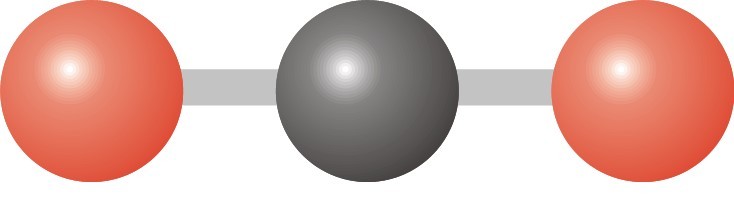
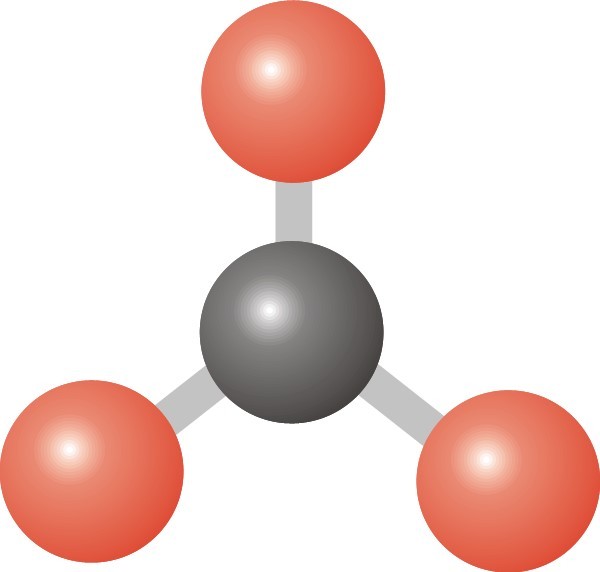
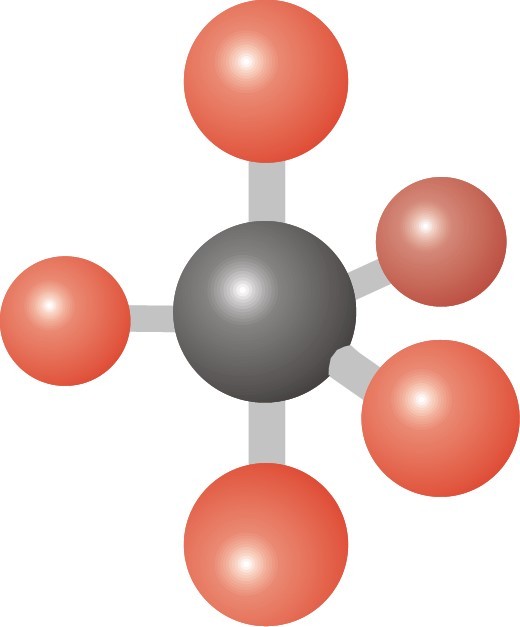
What molecular geometry would PH3 have?
Trigonal Pyramidal
Trigonal Bipyramidal
Bent
Linear

Is this molecule polar?
Yes
No
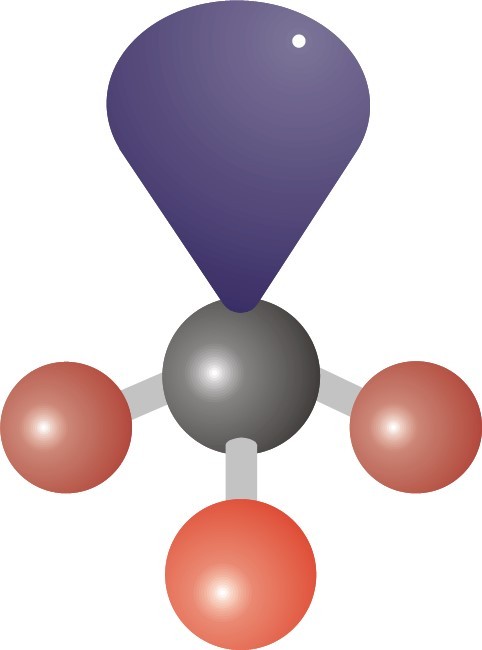
Is this molecule polar?
No
Yes


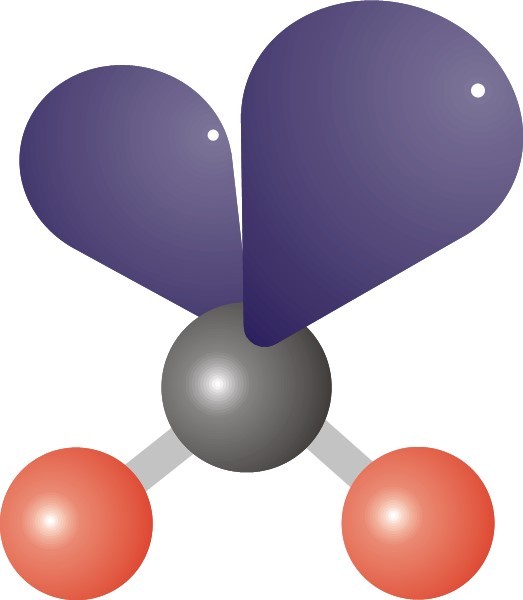

What molecular geometry is shown?
linear
bent
trigonal planar
pyramidal

What molecular geometry is shown?
linear
bent
trigonal planar
pyramidal
What is the molecular geometry if the central atom has:
3 bonding and 1 nonbonding domains
trigonal pyramidal
trigonal planar
tetrahedral
bent
What is the molecular geometry if the central atom has:
2 bonding and 2 nonbonding domains
trigonal pyramidal
trigonal planar
tetrahedral
bent
What is the molecular geometry if the central atom has:
5 bonding and 0 nonbonding domains
trigonal pyramidal
trigonal planar
tetrahedral
trigonal bipyramidal
What is the molecular geometry if the central atom has:
4 bonding and 1 nonbonding domains
seesaw
trigonal planar
tetrahedral
trigonal bipyramidal
What is the molecular geometry if the central atom has:
6 bonding and 0 nonbonding domains
square pyramidal
trigonal planar
tetrahedral
octahedral
What is the molecular geometry if the central atom has:
4 bonding and 2 nonbonding domains
square planar
trigonal planar
tetrahedral
bent
What is the molecular geometry if the central atom has:
2 bonding and 0 nonbonding domains
linear
bent
tetrahedral
seesaw
What is the molecular geometry if the central atom has:
3 bonding and 0 nonbonding domains
linear
trigonal planar
tetrahedral
seesaw
What is the molecular geometry if the central atom has:
4 bonding and 0 nonbonding domains
linear
trigonal planar
tetrahedral
bent
What is the molecular geometry if the central atom has:
2 bonding and 1 nonbonding domains
linear
trigonal planar
tetrahedral
bent
What is the molecular geometry if the central atom has:
3 bonding and 1 nonbonding domains
trigonal pyramidal
trigonal planar
tetrahedral
bent

Which of the following is octahedral?
SCl6
XeI4
NBr5
CH4

Is this molecule polar or non-polar?
Polar
Non-polar

Is this molecule polar or non-polar?
Polar
Non-polar


Why is the molecule polar?
There is a non bonding pair electrons on the central atom.
There are different types of elements bonded to the central atom.
There are no non bonding pairs on the central atom and all of the atoms bonded to the central atom are the same.

Is this molecule polar or non-polar?
Non-polar
Polar

--->
<---
polar, pointing straight up

--->
<---
polar, pointing straight down

--->
<---
polar, pointing straight up

Which type of IMF is responsible for the attraction pictured above?
Dipole-Dipole Interaction
Ion-Dipole Interaction
Hydrogen Bonds
Covalent Bond
Ionic Bond
A weak IMF will result in a
high melting point
high viscosity
high surface tension
low surface tension
A strong IMF increases
boiling point
solubility
flammability
malleability
List the strongest to weakest IMFs.
Hydrogen Bond, London Dispersion, Dipole-dipole
London Dispersion, Dipole-dipole,
Hydrogen Bond
Hydrogen Bond, Dipole-dipole, London Dispersion
Dipole-dipole, Hydrogen Bond, London Dispersion

Intermolecular forces for: NH3
Dispersion Force
Dipole dipole
Hydrogen bonding

Intermolecular forces for: CO2
Dispersion Force
Dipole dipole
Hydrogen bonding
________________________ have the strongest intermolecular forces of attraction.
Dipole- Dipole
Dispersion
Hydrogen Bonds

Which type of IMF is responsible for the attraction pictured above?
Dipole-Dipole Interaction
Ion-Dipole Interaction
Hydrogen Bonds
Covalent Bond
Ionic Bond

Which type of IMF is responsible for the attraction pictured above?
Dipole-Dipole Interaction
Ion-Dipole Interaction
Hydrogen Bonds
Covalent Bond
Ionic Bond
Intermolecular forces are attractions between ______.
Cations and anions
Atoms within a molecule
Neighboring molecules
Protons and electrons
Intramolecular forces are the forces
within molecules
between molecules
Intermolecular forces for: CO2
Dispersion Force
Dipole dipole
Hydrogen bonding
Which substance would have the weakest intermolecular forces of attraction?
CH4
NaCl
H2O
MgF2
A substance with weak intermolecular attractions are most likely (a) at room temperature
Attractions between molecules are
covalent bonds
intramolecular attractions
intermolecular attractions
ionic bonds
Which is NOT true about hydrogen bonding?
occurs between two molecules
occurs as a special covalent bond
occurs when one of the molecules has a hydrogen directly bonded to a N, F or O
Is stronger than a dipole-dipole attraction
Match the following molecules to the type of intermolecular attractions
Weak force, low boiling point
Dipole-Dipole attraction
Stronger because it is a "real" bond. Conducts electricity as a liquid or solution
Ionic bonds
Weakest force, lowest boiling points
Dispersion Forces
Conducts electricity always, malleable, ductile
Metallic bonding
Strongest force for covalent bonded molecules, soluble in water. Has H with F, O, or N
Hydrogen bond

Which type of intermolecular attraction is shown (#1 in the diagram)?
Hydrogen bond
Dipole-dipole
Ionic bond
Metallic bond
Which type of bonding does this molecule have (careful - not the intermolecular attractions)
Hydrogen bond
Covalent bond
Ionic bond
Metallic bond
Which of these will NOT conduct electricity?
Ag (silver)
Brass (an alloy)
NaCl dissolved in water
Solid NaCl
Which of these will NOT conduct electricity?
Mg (Magnesium)
Steel (an alloy)
Liquid (melted) CaCl2
Solid CaCl2

