wayground logo

Free Printable Worksheets

NEW

Font size

S
M
L
XL
Worksheets

EOC Review 1

Total questions: 66

Worksheet time: 37mins

Name
Class
Date
1.
What is number 17?
a)
body tube
b)
arm/neck
c)
stage
d)
base
2.
Who was the person who used his microscope to observe a thin slice of cork, and concluded that the cork was made up of cells?
a)
Robert Hooke
b)
Bill Nye
c)
Matthias Schleiden
d)
Rudolf Virchow
3.

Which of the following scientist did NOT contribute to the cell theory

a)

Matthias Schleiden

b)

Robert Hooke

c)

Charles Darwin

d)

Rudolph Virchow

4.

Which of these is NOT a part of cell theory?

a)

The cell is the most BASIC unit of all living things

b)

CELLS are formed spontaneously

c)

CELLS come from pre-existing cells

d)

ALL living things are made up of one or more cells

5.

Which Scientist used his own homemade microscope to look at dental scrapings and discover "animalocules?"

a)

Rudolph Virchow

b)

Robert Hooke

c)

Matthias Schleiden

d)

Anton Van Leeuwenhoek

e)

Theodore Schwann

6.

The first part of cell theory states

a)

Not all living things are made of cells

b)

All living things are made of one or more cells

c)

Only animals have cells

d)

All living things are made up of more than one cell

7.

Which of these scientist discovered that all plants are made of cells?

a)

Rudolph Virchow

b)

Matthias Schleiden

c)

Theodore Schwann

d)

Robert Hooke

e)

Anton Van Leeuwenhoek

8.

The third part of Cell Theory states

a)

Cells are not formed at all, they either exist or the don't

b)

Cells form spontaneously

c)

Cells come from pre-existing cells

d)

Cells were created by Doofenshmirtz and accidentally released in to the wild when Phineas and Ferb built a roller coaster through his lab.

9.

Which German Zoologist discovered that all animals were made of cells?

a)

Anton Van Leeuwenhoek

b)

Theodore Schwann

c)

Robert Hooke

d)

Matthias Schleiden

e)

Rudolph Virchow

10.
Every living organism is made up of one or more cells
a)
True
b)
False
11.
A cell is...
a)
the basic unit of structure and function in living organism
b)
an organism
c)
a basic part of everything that we see
d)
found only in animals, not plants
12.
Which of the following are NOT found in animal cells
a)
chloroplasts and cytoplasm
b)
chloroplasts and cell wall
c)
cell wall and cell membrane
d)
mitochondria and nucleus
13.
The nucleus is like the ____________ of the cell.
a)
foot
b)
hand
c)
stomach
d)
brain
14.

Which of the following converts food into energy for the cell?

a)

vacuole

b)

mitochondria

c)

cytoplasm

d)

cell membrane

15.

The fluid that surrounds the organelles is... (hint... "Try to pull a fast one and..."

a)

chloroplast

b)

cytoplasm

c)

vacuole

d)

cell wall

16.
What do vacuoles do? 
a)
They actually do not have an important role
b)
They protect the cell
c)
They are the brain of the cell
d)
storage area for cells; water storage in plants 
17.

Which organelle takes in "sun showers" and helps plants with the process or photosynthesis?

a)

Vacuole

b)

Mitochondria

c)

Cytoplasm

d)

Chloroplast

18.
If you were some bad guy trying to sneak into an animal cell, who would be there to stop you?
a)
nucleus
b)
mitochondria
c)
cell membrane
d)
cell wall
19.
Which of the following, found ONLY in plant cells, provides structure?
a)
cell wall
b)
chloroplast
c)
mitochondria
d)
vacuole
20.
What is the function of the cell nucleus found in both plant and animal cells?
a)
to produce energy
b)
to control cell activity
c)
to remove waste products
d)
to allow molecules to enter the cell
21.
Cell organelles that are responsible for digesting food, worn out organelles and other cellular wastes are called ___________________.
a)
Mitochondria
b)
Vacuoles
c)
Lysosomes
d)
Chlororplasts
22.
What is one basic function of the vacuoles?
a)
circulating oxygen
b)
producing food
c)
controlling cell processes
d)
storing water
23.
Chloroplasts in plant cells allow the plant to perform a function that animal cells cannot do.  What is the main function of the chloroplasts found in plant cells?
a)
to absorb light energy and manufacture food
b)
to remove waste materials by active transport
c)
to manufacture chemical energy from food
d)
to control the shape of the cell
24.
All cells need energy to function.  Which cell organelle is responsible for producing energy in the cell?
a)
chloroplasts
b)
mitochondria
c)
nucleus
d)
vacuoles
25.
Cells with a nucleus and membrane-bound organelles are called ____________________.
a)
prokaryotes
b)
eukaryotes
c)
bacteria
d)
protists
26.
_ are organelles responsible for digesting certain materials within the cell.
a)
vacuoles
b)
chloroplasts
c)
lysosomes
d)
cell membrane
27.
Who was the first  person to see cells under the microscope and give them their name?
a)
Mattias Schleiden
b)
Robert Hooke
c)
Theordor Schwann
d)
Anton van Leeuwenhoek
28.

Animals cells and plant cells are exactly the same.

a)

True

b)

False

29.

All plant and animal cells contain chromosomes with DNA.

a)

True

b)

False

30.
A fireplace put out heat (energy) in a house. Which part of the cell is this most like?
a)
Nucelus
b)
Mitochondria
c)
Cell Membrane
d)
Rhibosome
31.

Cells that do not have a true nucleus or most other cell

organelles are called

a)

skin cell

b)

plant cell

c)

Prokaryote Cell

32.

the semipermeable membrane surrounding the cytoplasm of a cell.

a)

nucleus

b)

cell wall

c)

cell membrane

33.

An instrument that makes small objects look bigger is a

a)

telescope

b)

microscope

c)

binoculars

d)

periscope

34.

The diagram shows a caterpillar, mold and a fern. What do these organisms have in common?

a)

they are made of cells

b)

they produce their own food

c)

they decompose other organisms

d)

they are disease causing organisms

35.
Which of the following is an abiotic factor that could possibly decrease a population if it drastically changes?
a)
Competition
b)
Predator-prey relationships
c)
Temperature
d)
Disease
36.
What happens to abiotic factors when biotic populations increase?
a)
increase
b)
decrease
37.
Temperature, light, air, water, and soil are all  _____  parts of the environment
a)
alive
b)
biotic 
c)
abiotic
d)
living
38.

Which organism represents a multicellular organism?

a)
b)
c)
39.

What does mitochondria do for the cell?

a)

provides the cells energy

b)

is the cell's control center

c)

fills and supports the cell

40.

What does cytoplasm do for the cell?

a)

provides energy

b)

stores water, food, and wast

c)

fills and supports the cell structure

41.

Which structure represents the mitochondria?

a)

A

b)

B

c)

C

d)

D

e)

E

42.

Which of the following is a plant cell?

a)
b)
c)
43.

An organism with only one cell is known best as...

a)

a disease

b)

plankton

c)

multicellular organism

d)

unicellular organism

44.

Which level of organization is missing?


  1. organism
  2. organ system
  3. organs
  4. __________
  5. cell
  6. organelle
a)

tissue

b)

prokaryotic

c)

multicellular

d)

eukaryotic

45.

There are no membrane-bound organelles

inside _______, means that there will not

be any _________ found inside of them.

a)

eukaryotes; nucleus

b)

eukaryotes; ribosomes

c)

prokaryotes; mitochondria

d)

prokaryotes; ribosomes

46.

Which of the following represents the same

level of organization in plants as blood is

for animals?

a)

chloroplast

b)

water

c)

leaf

47.

Identify structures T and V.

a)

nucleus, nucleolus

b)

chloroplast, mitochondrion

c)

smooth ER, rough ER

d)

ribosomes, Golgi apparatus

48.
Which sentence correctly describes photosynthesis. (assume there is enough sunlight)
a)
CO2 and water combine and make O2 and glucose
b)
O2 and water combine to make glucose and CO2
c)
O2 and CO2 combine to make water and glucose
d)
CO2 and glucose combine to make O2 and water
49.
What is the end product of photosynthesis ?
a)
carbon dioxide
b)
water
c)
glucose
d)
methane
50.

If energy is needed to move materials into or out of a cell, what is most likely occurring?

a)

active transport

b)

passive transport

c)

osmosis

d)

diffusion

51.

Which would be the best evidence that a cell is using active transport to move a substance across its cell membrane?

a)

Substances are moving rapidly across the cell membrane.

b)

ATP is being rapidly consumed near the cellular membrane.

c)

Substances are moving from high to low concentrations.

d)

Substances are moving through channels in the cell membrane.

52.

Marine scientists monitor atmospheric levels of carbon dioxide. As atmospheric levels rise, more of the gas dissolves in the oceans. Calcium carbonate (CaCO3) dissolves as more carbon dioxide enters the oceans. Marine organisms such as clams need CaCO3 to build their exoskeletons.


Based on this information, which change is most likely to be a direct result of these increasing levels of oceanic carbon dioxide?

a)

Frequent rainfall will dilute the effect of the carbon dioxide in the water

b)

There will be an overpopulation of oysters and other shelled marine species.

c)

The water level will rise and cause floods, damaging coastal ecosystems with contaminated water.

d)

Many species of marine organisms will be weakened, making them unable to produce and maintain their shells

53.

As birds prepare for their migration, they go through many changes. Which equation shows the cellular process that occurs more as a bird prepares to fly thousands of kilometers?

a)

6 H2O + 6 CO2 → C6H12O6 +6O2

b)

C6H12O6 +6O2 → 6 H2O + 6 CO2

c)

6 H2O+2O2 + 6 CO → C6 H12O6+ 10 CO2

d)

C6H12O6 + 10 CO2 → 6 H2O+2O2+ 16 CO

54.
An experiment is performed on plants to see how different liquids affect plant growth. Each plant in the experiment is given a different liquid; water, apple juice, or milk. Each plant has the same amount of soil, sunlight, and listens to the same music. In this investigation, the independent variable is ...
a)
The type of plant
b)
The amount of sunlight
c)
The type of music
d)
The type of liquid
55.
The amount of energy that usually transfers from one trophic level to the next...
a)
10%
b)
20%
c)
80%
d)
50%
56.

Which of the following converts food into energy for the cell?

a)

vacuole

b)

mitochondria

c)

cytoplasm

d)

cell membrane

57.
What is something that prokaryotic and eukaryotic cells have in common?
a)
They have a nucleus. 
b)
They are multi-cellular. 
c)
They have DNA. 
d)
They have organelles that are membrane-bound.
58.
Active transport does not require energy.
a)
True 
b)
False 
59.
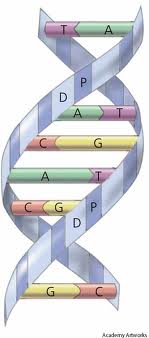
Which 2 molecules forms the sides (backbone) of the DNA ladder?
a)
deoxyribose and adenine
b)
deoxyribose and a hydrogen bond
c)
sugar and the nucleus
d)
deoxyribose (sugar) and phosphate
60.
In this image, the cell is using which type of molecular transport?
a)
Osmosis
b)
Diffusion 
c)
Endocytosis
d)
Exocytosis 
61.
What are the two reactants of cellular respiration?
a)
C6H12O6 & 6CO2
b)
6 CO2 & 6H2O
c)
C6H12O& 6O2
d)
6CO2 & 6O2
62.
Name structure #5.
a)
rough ER
b)
nucleus
c)
vesicle
d)
cytoplasm
63.
This diagram shows a plant cell. Which structure is found in a plant cell but is absent in an animal cell? 
a)
1
b)
2
c)
3
d)
4
64.
During which phase of the cell cycle is the cell growing and preparing for cellular division? 
a)
cytokinesis
b)
anaphase
c)
prophase
d)
interphase
65.
The males of a bird species do a “dance” and “sing a song” each spring. What is the main purpose of these behaviors? 
a)
to scare off young birds
b)
to imprint young birds
c)
to clean their feathers
d)
to attract female birds
66.
The yucca plant releases a strong scent at night when the yucca moth is active. The yucca moth, attracted by the scent, gathers pollen from the yucca flower. The yucca moth then deposits her eggs and the pollen on another plant. This ensures that the plant will be cross-pollinated and that the yucca moth larvae have a steady food supply. Which relationship does this BEST illustrate?
a)
commensalism
b)
mutualism
c)
parasitism
d)
predation