
 Worksheets
QUARTER EXAM 4_GENERAL PHYSICS 2
Total questions: 60
Worksheet time: 32mins
Which action can demagnetize a magnet?
Cooling
Heating
Compression
Expansion
What is the angle between geographic north and magnetic north called?
Magnetic declination
Magnetic inclination
Magnetic deviation
Magnetic variation
What does the density of magnetic field lines represent?
Flux density
Charge density
Energy density
Field intensity
Which of the following magnets can be easily demagnetized?
Electromagnets
Permanent magnets
Neodymium magnets
Soft Ferromagnetic materials
What happens if you break a permanent magnet?
It becomes weaker
It becomes stronger
It creates two weaker magnets
It remains unchanged
Which of the following materials is NOT a ferromagnetic element?
Iron
Cobalt
Nickel
Aluminum
What creates magnetism according to classical physics?
Proton spin
Neutron spin
Electron spin
Positron spin
What term describes ferromagnetic materials that easily lose magnetism?
Soft
Hard
Semi-hard
Non-magnetic
How are magnetic field lines represented?
Solid lines
Dotted lines
Arrows
Dashed lines
Which direction do magnetic field lines point?
North to south
South to north
East to west
West to east
What happens when opposite poles of magnets are brought close together?
Attraction
Repulsion
Neutralization
No effect
What are ferromagnetic materials characterized by?
Dipoles with aligned poles
Dipoles with reversed poles
Randomly aligned dipoles
Absence of dipoles
What is the Earth's magnetic field believed to be caused by?
Electron spin
Earth's inner core
Moon's gravitational pull
Solar winds
Which of the following materials has the highest magnetic flux?
Air
Iron
Copper
Plastic
What is the strongest known type of permanent magnet?
Ferrite magnet
Neodymium magnet
Alnico magnet
Samarium-cobalt magnet
Which of the following materials is commonly used as a permanent magnet due to its durability?
Aluminum
Copper
Steel
Silver
Where is the magnetic field strongest around a bar magnet?
At the center
Along its length
At the poles
Along its width
What is magnetic flux a measure of?
Magnetic field strength
Electrical resistance
Magnetic field lines
Magnetic permeability
What happens when the north pole of one magnet is brought close to the south pole of another magnet?
Attraction
Repulsion
Neutralization
Annihilation
What does a compass align with in a magnetic field?
True north
Geographic north
Magnetic north
South pole
What term describes the phenomenon where a magnetic field varies with time?
Magnetic declination
Magnetic deviation
Magnetic flux
Magnetic induction
Which type of ferromagnetic materials retain their magnetism after the removal of a magnetic field?
Soft
Hard
Semi-hard
None of the above
What property of magnetic field lines determines the strength of the magnetic field?
Density
Length
Curvature
Thickness
What does the interaction between magnetic field lines around magnets and ferromagnetic materials depend on?
Magnetic declination
Magnetic flux
Magnetic inclination
Magnetic saturation
How are stronger magnetic fields represented in magnetic field lines?
Fewer lines drawn
More lines drawn
Longer lines drawn
Shorter lines drawn
What type of materials can significantly alter the direction of magnetic field lines?
Ferromagnetic materials
Diamagnetic materials
Paramagnetic materials
Superconducting materials
What causes a compass needle to spin?
Gravitational force
Electric field
Magnetic field
Nuclear force
What type of magnets are created by moving charge?
Permanent magnets only
Electromagnets only
Both permanent magnets and electromagnets
None of the above
What happens to magnetism in a "soft" ferromagnetic material when the external magnetic field is removed?
It becomes stronger
It becomes weaker
It is retained
It is lost
What creates magnetic fields?
Stationary Charges
Moving Charges
Static Electric Field
Neutrinos
What is electromagnetism primarily a result of?
Moving mechanical objects
Moving electrical charge or current
Stationary electrical charge
Static magnetic fields
Which of the following is a common variable associated with electromagnetism?
Voltage (V)
Resistance (R)
Capacitance (C)
Inductance (L)
What is the purpose of the Right Hand Rule in electromagnetism?
To determine the direction of magnetic field
To calculate the resistance of a wire
To find the voltage drop across a circuit
To measure the capacitance of a capacitor
When using the Right Hand Rule for current through a straight wire, what does the thumb represent?
Direction of current
Direction of magnetic field
Direction of voltage
Direction of resistance
When current flows towards you in a straight wire, what is the direction of the resulting magnetic field?
Clockwise
Counterclockwise
Upwards
Downwards
How is the direction of the magnetic field determined when current flows away from you in a straight wire?
Clockwise
Counterclockwise
Upwards
Downwards
When current flows up in a straight wire, what is the direction of the magnetic field in front of the wire?
To the left
To the right
Upwards
Downwards
What is a solenoid primarily composed of?
Insulating material
Magnetic material
Conductive wire
Dielectric material
How is an electromagnet strengthened?
By reducing the number of coils
By using a non-conductive wire
By increasing the number of coils and current
By decreasing the current
What is the purpose of the soft iron core in a solenoid?
To increase resistance
To decrease magnetic field strength
To align magnetic domains
To reduce current flow
What is the role of the right hand in the Electromagnet Right Hand Rule?
To determine the direction of current
To indicate the direction of magnetic field
To measure voltage drop
To calculate resistance
Which direction do the magnetic field lines point around a solenoid with counterclockwise current?
Upwards inside the solenoid and downwards outside
Downwards inside the solenoid and upwards outside
Clockwise inside the solenoid and counterclockwise outside
Counterclockwise inside the solenoid and clockwise outside
What happens to the magnetic field direction around a solenoid when the current direction is switched from counterclockwise to clockwise?
Upwards inside the solenoid and downwards outside
Downwards inside the solenoid and upwards outside
The field collapses
The field expands
What makes up an electromagnet?
Conductive wire only
Soft iron core only
Both conductive wire and soft iron core
Insulating material
What is the purpose of increasing the number of coils in an electromagnet?
To decrease magnetic field strength
To increase electrical resistance
To weaken the magnetic field
To strengthen the magnetic field
What is the effect of increasing the current in an electromagnet?
Decreases magnetic field strength
Increases magnetic field strength
Reduces resistance
Increases voltage drop
Which of the following is NOT a way to strengthen an electromagnet?
Increase the number of coils
Increase the current
Decrease the voltage
Use a soft iron core
What is the direction of the magnetic field inside a solenoid when the current flows in clockwise direction?
Upwards
Downwards
Clockwise
Counterclockwise
Which hand rule is used to determine the direction of the magnetic field around a solenoid?
Left Hand Rule
Right Hand Rule
Finger Rule
Thumb Rule
What happens to the poles of an electromagnet when the current direction is switched?
The poles remain the same
The north and south poles switch places
The poles disappear
The poles weaken
Which of the following materials is NOT typically used in constructing a solenoid?
Copper wire
Soft iron core
Plastic insulation
Conductive tape
How does increasing the current affect the magnetic field of an electromagnet?
It weakens the magnetic field
It strengthens the magnetic field
It has no effect on the magnetic field
It reverses the magnetic field
What determines the direction of the north pole of an electromagnet in the Electromagnet Right Hand Rule?
Direction of current flow
Direction of voltage
Direction of resistance
Direction of capacitance
Which action would NOT strengthen an electromagnet?
Increasing the number of coils
Decreasing the current
Increasing the current
Using a soft iron core
Which combination would lead to the greatest increase in strength of an electromagnet?
Increase the voltage and decrease the number of coils
Decrease the voltage and increase the number of coils
Increase the voltage and increase the number of coils
Decrease the voltage and decrease the number of coils
What would happen to an electromagnet if you switched the direction of current in the solenoid around it?
The strength of the magnetic field would decrease
The strength of the magnetic field would increase
The direction of the magnetic field would reverse
The electromagnet would become non-magnetic
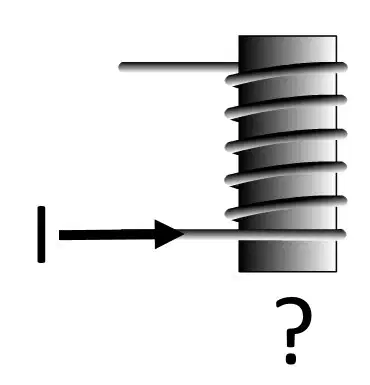
What pole would be at the bottom of this electromagnet when current is run the direction seen here?
(a)
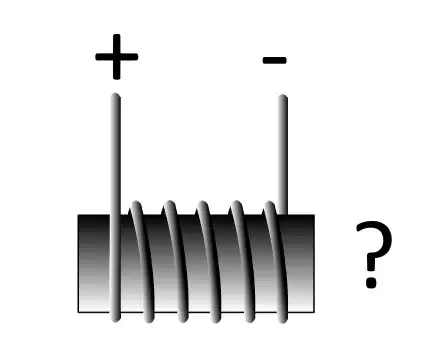
What poll of the electromagnet would be on the right below if a battery was attached so current flowed the way you see it below?
(a)
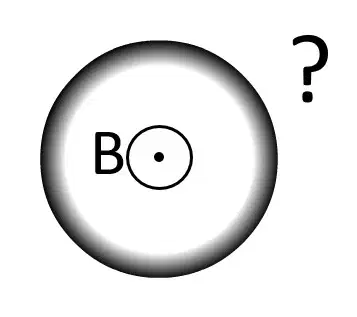
What direction would current flow in a solenoid loop (clockwise or counterclockwise) if the magnetic field on the inside was facing towards you oriented like you see it in the image?
(a)
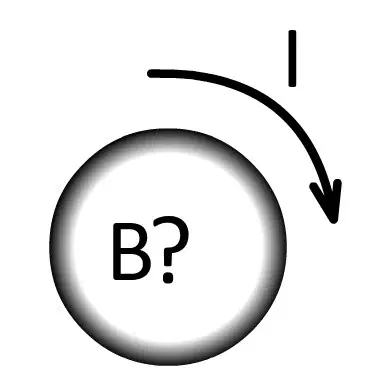
What direction would the magnetic field be pointing if the current was running clockwise around the solenoid loop?
inwards towards the screen or outwards towards you
(Type your answer)
(a)

