
 Worksheets
Unit 10 Test Review (Solids and Liquids)
Total questions: 55
Worksheet time: 37mins
What type of forces hold atoms together within a molecule?
Intermolecular forces
Intramolecular forces
Ionic bonds
Metallic bonds
Are intermolecular forces stronger or weaker than intramolecular forces?
Stronger
Weaker
Equal in strength
Not comparable
What happens to the melting and boiling temperatures when intermolecular forces increase?
They decrease
They remain constant
They increase
They become unpredictable
Which of the following molecules is an example of a polar molecule with dipole-dipole forces?
HCl
CH4
H2O
Ne
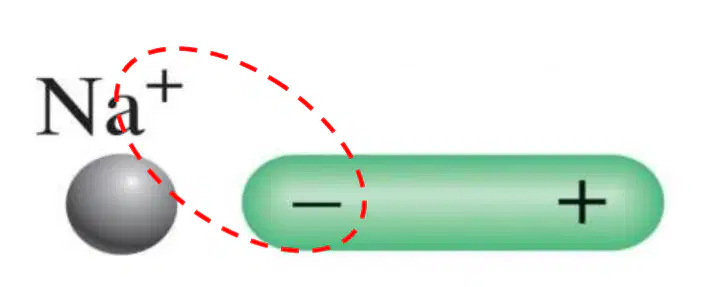
What type of attractive force occurs between an ionic compound (e.g. NaCl) and a polar molecule (e.g. water)?
Hydrogen bonding
London dispersion forces
Dipole-dipole interactions
Ion-dipole forces
What type of intermolecular force is described as weak attractive forces that result from temporary dipoles in non-polar atoms or molecules?
Hydrogen bonding
Ionic bonding
London Dispersion Forces (LDFs)
Covalent bonding
What is polarizability in the context of London Dispersion Forces?
The strength of the bond between two atoms
The ease with which the electron distribution in an atom or molecule can be distorted
The ability of an atom to attract electrons towards itself
The number of electrons in the outermost shell of an atom
Which of the following non-polar compound has the lowest melting point?
CH₄
CF₄
CBr₄
CCl₄
What type of intermolecular force is present in C6H14?
Hydrogen bonding
London dispersion forces
Dipole-dipole forces
Ion-dipole forces
What type of intermolecular force is present in HF?
Hydrogen bonds
Dipole-dipole force
London Dispersion forces
Ionic bonds
What is the role of hydrogen bonds in the structure of DNA?
They connect the sugar-phosphate backbones of each strand.
They hold the two DNA strands together in the double helix.
They form the primary structure of DNA.
They break the DNA strands during replication.
What function do hydrogen bonds have in proteins?
They provide energy for protein synthesis.
They create the primary sequence of amino acids.
They maintain the folds in proteins.
They act as catalysts for biochemical reactions.
Which of the following can form hydrogen bonds?

Methylamine

Acetone

Hydrogen Cyanide

Urea
What is surface tension?
The energy required to decrease the surface area of a liquid.
The energy required to increase the surface area of a liquid.
The force exerted by the surface of a solid.
The pressure exerted by a gas on the surface of a liquid.
What is adhesion?
The attraction between molecules of the same substance.
The attraction between unlike substances.
The repulsion between different substances.
The evaporation of a liquid.
What is cohesion in the context of liquid properties?
The attraction between molecules in a substance.
The attraction between unlike substances.
The formation of a meniscus when a liquid is in a container.
The process where a liquid's surface tension is reduced.
Capillary action occurs when which forces are greater than the other?
Cohesion forces are greater than adhesion forces.
Gravitational forces are greater than adhesion forces.
Adhesion forces are greater than cohesion forces.
Surface tension forces are greater than both adhesion and cohesion forces.
Which of the following is an example of capillary action?
Boiling of water in a pot.
Upward transfer of water through thin channels in plants.
Separation of oil and water when mixed.
Freezing of water in a lake during winter.
What is viscosity?
A fluid's ability to evaporate quickly.
A fluid's resistance to flow.
A fluid's ability to mix with other substances.
A fluid's temperature stability.
What is the relationship between temperature and viscosity in motor oils?
As temperature increases, viscosity increases
As temperature increases, viscosity decreases
As temperature increases, viscosity remains constant
As temperature decreases, viscosity decreases
According to the "like dissolves like" concept, which type of solvents would non-polar molecules be most soluble in?
Polar solvents
Non-polar solvents
Both polar and non-polar solvents
Neither polar nor non-polar solvents
What type of intermolecular force is primarily responsible for the solubility of ionic compounds in polar solvents?
Hydrogen bonding
London Dispersion forces
Dipole-Dipole interactions
Ion-dipole forces
What does it mean when two liquids are described as miscible?
They are not soluble in each other.
They react chemically with each other.
They are completely soluble in each other.
They form a heterogeneous mixture.
Which two of the following would be immiscible or insoluble in water?
NaNO3
C6H14
HCl
Olive oil
What property of surfactants makes them effective in the cleansing action of soaps and detergents?
They are hydrophilic only
They are hydrophobic only
They are amphipathic, having both polar and non-polar regions
They are non-reactive with water
According to the learning material, how is water density unique compared to most substances?
Water is denser in its solid phase than in its liquid phase
Water is less dense in its solid phase than in its liquid phase
Water density does not change between phases
Water is the densest liquid known
What is a characteristic of a crystalline solid?
Lacks long-range order
Occurs when freezing is rapid
Particles occupy specific repeating positions
Not enough time to find optimal positions
Why might an amorphous solid form instead of a crystalline solid?
Because it has a rigid and long-range order
Because particles have enough time to find optimal positions
Because freezing occurs rapidly
Because it maximizes bonding
What is the characteristic property of glass that makes it shatter into irregular shapes?
It is a crystalline solid
It is an amorphous solid
It is made by slowly cooling molten SiO2
It is made by quickly cooling molten SiO2
What is a unit cell in the context of a crystalline solid?
The smallest repeating unit that forms a crystal lattice
The largest component of a crystal structure
A single molecule within a crystal
The space between lattice points in a crystal
What does each lattice point in a crystal lattice represent?
A bond between atoms
A void in the crystal structure
An atom, molecule, or ion
A crystal face
What term is used to describe a substance that can form more than one type of crystal lattice depending on the conditions such as temperature and pressure?
Isomorphic
Polymorphic
Monomorphic
Amorphous
What are allotropes?
Substances that can dissolve in water
Various forms of a pure element that can arrange into different crystal types
Compounds formed by the combination of two elements
Elements that are gases at room temperature
What is found at the lattice points in an ionic crystal?
Only cations
Only anions
Both cations and anions
Neutral atoms
What type of attraction holds ionic crystals together?
Gravitational attraction
Magnetic attraction
Electrostatic attraction
Covalent bonding
What is the Meissner effect related to in the context of superconductors?
Electrical resistance
Magnetic suspension
Thermal conductivity
Optical reflectivity
At what conditions do superconductors typically operate?
Ultra high temperatures
Ultra low temperatures
Ultra low pressure
Ultra high pressure
What type of lattice points are occupied in molecular crystals?
Ions
Atoms
Molecules
Electrons
What type of forces hold molecular crystals together?
Ionic bonds
Covalent bonds
Intermolecular forces
Metallic bonds
Which of the following is a characteristic of molecular crystals?
High melting point
Good conductor of heat
Good conductor of electricity
Soft, low melting point
What type of atoms primarily make up the lattice points in covalent crystals?
Metal atoms
Non-metal atoms
Metalloid atoms
Noble gas atoms
Which of the following is NOT a property of metallic crystals?
Good conductors of heat and electricity
Deformable: malleable and ductile
Held together by metallic bonds
Poor conductors of heat and electricity
What is the purpose of using X-ray diffraction patterns in crystallography?
To determine the melting point of a crystal
To reveal the atomic structure of a crystal
To measure the size of a crystal
To identify the color of a crystal
What is the term used to describe the phase change from solid to gas?
Deposition
Sublimation
Condensation
Vaporization
What is the term used to describe the phase change from gas to solid (without liquid inbetween)?
Deposition
Sublimation
Condensation
Vaporization
What is the process called when a gas turns into a liquid?
Melting
Freezing
Condensation
Sublimation
Which description best fits the particles in a solid state?
Random fast movements of particles
Particles held together, but can slide past one another
Rigid and tightly packed particles
Particles with the least order and fastest movement
As the temperature increases, what happens to the evaporation rate and vapor pressure?
Evaporation rate decreases and vapor pressure decreases
Evaporation rate increases and vapor pressure decreases
Evaporation rate decreases and vapor pressure increases
Evaporation rate increases and vapor pressure increases
What is the equilibrium vapor pressure?
The vapor pressure when the rate of condensation exceeds the rate of evaporation
The vapor pressure when there is no net change in the rates of condensation and evaporation
The vapor pressure when the rate of evaporation exceeds the rate of condensation
The vapor pressure when no evaporation or condensation occurs
At equilibrium, how do the rates of condensation and vaporization of H2O compare?
The rate of condensation is higher than the rate of vaporization
The rate of vaporization is higher than the rate of condensation
The rates of condensation and vaporization are equal
There is no vaporization or condensation occurring
At what point does boiling occur?
A) When the vapor pressure is less than the external pressure
B) When the vapor pressure is greater than the external pressure
C) When the vapor pressure is equal to the external pressure
D) When the vapor pressure is twice the external pressure
What happens to the boiling point of a liquid if the atmospheric pressure drops?
A) The boiling point increases
B) The boiling point remains the same
C) The boiling point decreases
D) The boiling point fluctuates unpredictably
How does the boiling point of water change with altitude according to the graph?
It increases with altitude
It decreases with altitude
It remains constant with altitude
It fluctuates unpredictably with altitude
What is the triple point of a substance?
The point at which it can only exist as a solid
The point at which it can only exist as a liquid
The point at which it can only exist as a gas
The point at which all three phases are in equilibrium
What does a phase diagram represent?
The conditions at which a substance can only exist as a solid
The conditions at which a substance can only exist as a gas
The conditions at which a substance exists as a solid, liquid, or gas
The conditions at which a substance can only exist as a liquid

