wayground logo

Free Printable Worksheets

Font size

S
M
L
XL
Worksheets

States of matter

Total questions: 90

Worksheet time: 1hrs 19mins

Name
Class
Date
1.

A solid

a)

has particles that are far apart

b)

has a size and shape of its own

c)

takes the shape of its container

2.

Anything that takes up space and has mass is

a)

Matter

b)

Volume

c)

Liquid

d)

Atom

3.

The smallest part of matter and makes up molecules

a)

is an atom

b)

is a molecule

c)

is a gas

d)

is matter

4.

In a _______ the molecules are closest together.

a)

solid

b)

liquid

c)

gas

5.

One similarity between solids, liquids and gases is

a)

all three have atoms and molecules

b)

all three have molecules that are close together

c)

all three take the shape of their containers

6.

A ________ has no shape and no size.

a)

gas

b)

liquid

c)

solid

7.

Particles move quickly in each direction

a)

Solid

b)

Liquid

c)

Gas

8.

Easily compressed

a)

Solid

b)

Liquid

c)

Gas

9.

Particles are closed and regular arrangement

a)

Solid

b)

Liquid

c)

Gas

10.
Which of the following occurs when a liquid becomes a gas?
a)
the particles slow down
b)
the particles beak away from one another
c)
the particles move closer together
11.
At higher temperatures
a)
particles in an object have less energy
b)
particles in an object move faster
c)
a gas contracts
12.
Which state of matter has molecules that vibrate the least?
a)
solid
b)

liquid

c)
gas
13.
Which state of matter has molecules that slide past each other but stay close together? They do not form a regular pattern.
a)
solid
b)
liquid
c)
gas
14.
Which has particles that travel faster?
a)
gas
b)
solid
c)

liquid

15.
What does the particle diagram show?
a)
solid
b)
liquid
c)
gas
d)
plasma
16.
Which state of matter has a definite shape?
a)
solid
b)
liquid
c)
gas
17.
In the above diagram, "State of Matter B" is a liquid. This means that it has:

a)
definite shape and volume.
b)
no definite shape or volume.
c)
definite volume, but changing shape.
d)
definite shape, but changing volume.
18.

Which state does the particle diagram show?

a)
solid
b)
liquid
c)
gas
d)

South Australia

e)

Tasmania

19.
What is the change of state from a gas to a liquid called?
a)
melting
b)
evaporation
c)
condensation
d)
sublimation
20.
What am I? I have a fixed mass, a fixed volume, I cannot be squashed and I have a shape that changes to fit the bottom of my container?
a)
solid
b)
liquid
c)
gas
d)
plasma
21.
As particles are exposed to warmer temperatures they __________
a)
speed up
b)
slow down
c)
stay the same
d)
vibrate
e)

look for somewhere shady to cool off

22.
What am I? I have a fixed mass, a volume that changes, I can be squashed and I take the shape of all of my container.
a)
solid
b)
liquid
c)
gas
d)
plasma
23.
What is the change of state from a solid straight to a gas called?
a)
melting
b)
evaporating
c)
freezing
d)
sublimation
24.
As particles are exposed to colder temperatures they _____
a)
speed up
b)
slow down
c)
stay the same
d)
become ions
e)

Turn blue and start to shiver

25.

An uncovered pot of soup is simmering on Mr. Hall's stove, and there are water droplets on the wall behind it. What sequence can you infer has occurred?

a)

evaporation, then condensation

b)

freezing, then thawing

c)

condensation, then vaporization

d)

Mr Hall is a messy cook.

26.

During the process of sublimation

a)

a solid turns directly into a gas

b)

a liquid turns to a gas

c)

a solid turns into a liquid

d)

a gas turns directly into a solid

27.
The characteristic temperature at which a pure solid changes to a liquid is its __________ point.
a)
melting
b)
boiling
c)
Schaffer
d)
pressure
28.
The change from liquid to solid is called ________________.
a)
Melting
b)
Freezing
c)
Evaporation
d)
Condensation
29.

Melting is a process that changes _____________________________.

a)

solid to liquid

b)

liquid to solid

c)

liquid to gas

d)

gas to liquid

30.
_______ occurs when a liquid changes to a gas below its surface as well as at the surface.
a)
Boiling
b)
Evaporation
c)
Freezing
d)
Melting
31.
The change from solid to a gas is called ________________.
a)
Sublimation
b)
Freezing
c)
Evaporation
d)
Condensation
32.

Condensation occurs when _____________ water vapour comes into contact with a cooler surface, loses heat and condenses into water droplets.

a)

warm

b)

warmer

c)

cold

d)

colder

33.

Condensation occurs when warmer water vapour comes into contact with a _______________ surface, loses heat and condenses into water droplets.

a)

warm

b)

warmer

c)

cool

d)

cooler

34.

Energy in the form of heat was applied to a beaker containing a certain substance. The particles of the substance began to move farther apart until they were arranged as shown by the arrow in the diagram. What change of state occurred to the substance in the beaker?

a)

The substance changed from a gas to a solid.

b)

The substance changed from a liquid to a solid

c)

The substance changed from a gas to a liquid

d)

The substance changed from a liquid to a gas.

35.
A shrinking puddle is an example of ___________, or vaporization that takes place only on the surface of a liquid.
a)
evaporation
b)
boiling
c)
freezing
d)
melting
36.
What happens when the particles in a liquid move so slowly that they begin to take on fixed positions?
a)
Condensation
b)
Vaporization
c)
Melting
d)
Freezing
37.
In which state of matter are particles moving the least?
a)
solid
b)
liquid
c)
gas
d)

Queensland

e)

Victoria

38.
Boiling is a change of state from
a)
liquid to gas
b)
evaporation
c)
solid to liquid
d)
liquid to solid
39.
What is the opposite of melting?
a)
condensation
b)
evaporization
c)
freezing
d)
sublimation
40.
The state that water exist in depends on its ________. 
a)
volume 
b)
intensity
c)
temperature 
d)
mass
41.

A substance changes from a solid to a liquid when it reaches its (a)   point

42.

A substance changes from liquid to gas when it reaches its (a)   point

43.

What is a solute in a solution?

a)

The substance in which the solute is dissolved

b)

The substance that dissolves the solute

c)

The substance that is dissolved in the solvent

d)

The container holding the solution

44.

Another name for solidification is

(a)  

45.

What is meant by the solubility of a substance?

a)

The ability to dissolve in any solvent

b)

The ability of a substance to dissolve in a specific solvent

c)

The color change when a substance dissolves

d)

The temperature increase when a substance dissolves

46.

Which of the following is a common solvent in everyday life?

a)

Salt

b)

Sugar

c)

Water

d)

Pepper

47.

What does it mean if a substance is insoluble?

a)

It can dissolve in a solvent

b)

It cannot dissolve in a solvent

c)

It can be separated by filtration

d)

It reacts with a solvent

48.
The substance being dissolved in a solution.
a)
sands
b)
solute
c)
solvent
d)
alloy
49.
The substance in which a solute is dissolved
a)
sands
b)
solvent
c)
alloy
d)
negative particles
50.

How does temperature generally affect the solubility of solid solutes in liquids?

a)

Increases solubility

b)

Decreases solubility

c)

Does not affect solubility

d)

Only affects color, not solubility

51.
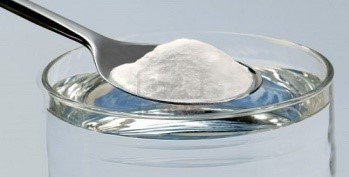
In this mixture, which of the following will be the solute?
a)
The water in the glass
b)
The glass that holds the final mixture
c)
The solution containing both powder and water
d)
The powder on the spoon
52.
If a spoonful of salt is mixed in a glass of water, what is the water called?
a)
A. solute
b)
B. solution
c)
C. solvent
d)
D. element
53.

Name the separation technique shown in the diagram.

a)

evaporation

b)

distillation

c)

filtration

54.
Which one of the following would you use to separate sand from iron filings?
a)
a bar magnet
b)
filter paper
c)
chromatography paper
d)

distilation

55.
To separate a mixture of soil and water what separation method is used?
a)
Filtration
b)
Distillation
c)
Chromatography
d)
Evaporation
56.

Match each mixture to the appropriate separation technique

a)

Ink

1.

Chromatography

b)

Sand and salt

2.

Filtration

c)

Iron filings and sulfur

3.

Magnetic separation

d)

Sugar and water

4.

Evaporation

e)

Oil and water

5.

Decantation

57.
Question Image

Match the separation technique with the physical property it relies on.

a)

Floatation

1.

Density

b)

Filtering

2.

Solubility

c)

Magnetic separation

3.

magnetism

d)

Sieving

4.

size of object

e)

Distillation

5.

Boiling point

58.

Oil and water can be separated by​ (a)   ​. The ​ (b)   floats to the top because it is ​ (c)   dense than the water.

Choose from the below words
floatation
oil
less
magnetism
filtration
more
water
59.

Separation techniques rely on differences in the (a)   properties of the substances being separated.

60.
Can you separate salt from water using filtration?
a)
yes
b)
no
61.

The separation technique being used is

a)

Decanting

b)

Filtering

c)

Evaporation

d)

Distillation

62.
Name the separation method that causes wet clothes on a clothes line to dry
a)
Chromatography
b)
Filtration
c)
Distillation
d)
Evaporation
63.
In filtration, the liquid part collected is called the filtrate and the solid bit that remained on the filter paper is called the residue.
In filtration, what is the part that remains called?
a)
Solid
b)
Filtrate
c)
Remainder
d)
Residue
64.
The clear liquid which passes through the filter paper is called
a)
filt
b)
filter
c)
filtrate
d)
filtration
65.
Which one of the following techniques would best be used to separate soil and water?
a)
Decanting
b)
distillation
c)
Filtration
d)
Chromatography
66.
Sand and gravel may be separated from each other through using..
a)
a filter funnel
b)
a sieve
c)
an evaporating basin
d)
a distillation
67.
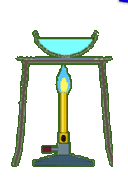
Which one of the following is the name for separation technique in the picture below
a)
distillation
b)
dissolving
c)
evaporation
d)
decanting
68.

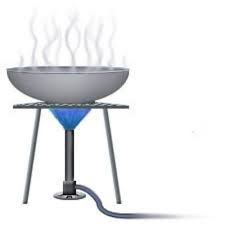
Name the separation technique

a)

Distillation

b)

Crystallisation

c)

Evaporation

d)

Condensation

69.

What is the basis for separating the components of a mixture through distillation?

a)

freezing point of the substances

b)

room temperature

c)

decaying period

d)

boiling point of the substances

70.

Organize these options into the right categories

Categorize the following

Fixed shape and size

Fixed size, but takes shape of container

Takes the shape and size of container

Can be compressed easily

Lower density than other states of matter

Particles locked in place

formed when a solid melts

formed when a gas condenses

Has the fastest moving particles

has the slowest moving particles

Solid
Liquid
Gas
71.

True or false: Sieving can be used to separate a mixture with two solid components of different sizes

a)

True

b)

False

72.
Which technique is shown the diagram below
a)
seiving
b)
filtration
c)
decanting
d)
crystallization
73.
Filtration can separate a mixture because,,,
a)
the parts of the mixture have different density so they separate.
b)
some parts of the mixture are small enough to pass through the small holes in the filter paper and some don't.
c)
some of the particles in the mixture are attracted to the filter paper so it stays behind.
d)
some parts of the mixture boil faster than others so they evaporate first.
74.
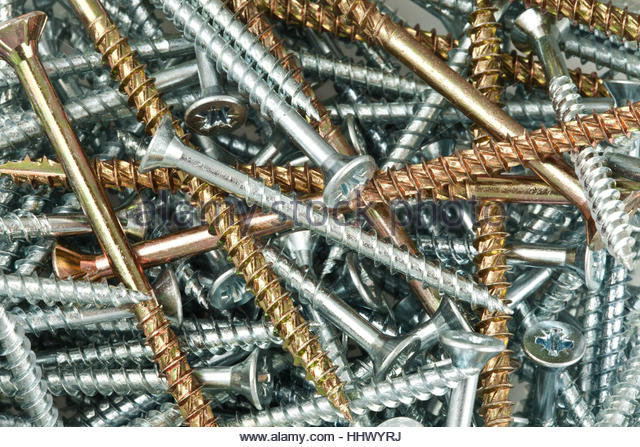
Iron and copper screws could be separated using a magnet because
a)
iron is magnetic, copper is not
b)
copper is magnetic, iron is not
c)
neither metal is magnetic
d)
copper screws are heavier than iron and fall off the magnet
75.
Dyes in water soluble markers may be separated by means of
a)
Distillation
b)
Decanting
c)
Chromatography
d)
Centrifuge
76.
Salt dissolved in water.  
What method would you use to separate this mixture so that you can get the salt AND the water?
a)
sorting by hand
b)
distillation
c)
chromatography
77.
If you shake up the sand and water, the sand spreads through the water forming a cloudy ______.
a)
substance
b)
suspension
c)
sediment
d)
solution
78.
Adding more solvent to a solution will make it more
a)
concentrated
b)
diluted
c)
coloured
d)
wet
79.
Which separation technique could you use to recover fresh drinking water from salty sea water?
a)
Filtration
b)
Decantation
c)
Distillation
d)
Evaporation
80.
An example of a mixture is 
a)
Water and oil
b)
Cereal and Milk 
c)
Sand and water 
d)
All of the above
81.

When salt is dissolved in water, it forms a ​ (a)   . The salt is the ​ (b)   and the water is the ​ (c)   . A ​ (d)   solution would contain only a small amount of salt. A ​ (e)   solution would contain a large amount of salt.

Choose from the below words
solution
solute
solvent
dilute
concentrated
suspension
insoluble
82.

Match the following

a)

Insoluble

1.

Cannot be dissolved

b)

Soluble

2.

Can be dissolved

c)

Saturated

3.

No more solute will dissolve

d)

Sediment

4.

Settles out of a suspension

e)

Suspension

5.

Particles mixed with liquid.Not disolved

83.
7. What physical property allows Distillation to separate different molecules?
a)
a) Melting point
b)
b) Boiling point
c)
c) Diffusion rate
d)
d) Condensation rate
84.

Match the following mixtures to the physical properties that you would use to separate them

a)

1.

Density

b)

2.

Solubility

c)

3.

Magnetism

d)

4.

Size

85.

Match the following separation techniques to the physical properties they use.

a)

1.

Size

b)

2.

Boiling point

c)

3.

Solubility

d)

4.

Magnetism

e)

Floatation

5.

Density

86.

Molecules are made of smaller particles called (a)  

87.

Which of these was NOT used to separate the plastic beads in your separation prac?

a)

Hand separation

b)

Sieving

c)

Evaporation

d)

Floatation

88.

Group these properties as PHYSICAL or CHEMICAL

Categorize the following

solubility

density

size

magnetism

boiling point

colour

reacts with acid

flamable

rusts

PHYSICAL PROPERTIES
CHEMICAL PROPERTIES
89.

Which order did you separate the substance in your prac?

a)

Iron filings

b)

Beads

c)

Sand

d)

Salt

1)
2)
3)
4)
90.

Mixtures can be separated because of their ​ (a)   properties

Choose from the below words
physical
chemical
mysterious
annoying
bizarre