wayground logo

Free Printable Worksheets

Font size

S
M
L
XL
Worksheets

GMAS Science Review

Total questions: 100

Worksheet time: 2hrs 23mins

Name
Class
Date
1.
Identify the energy transformations for a toaster
a)
Electric to Radiation and Thermal
b)
Electric to Chemical Heat
c)
Chemical to Thermal and Radiation
d)
Chemical to Solar
2.
Identify the energy transformation for a windmill that generates electricity.
a)
Mechanical to Electrical
b)
Mechanical to Chemical
c)
Solar to Electrical
d)
Electrical to Mechani
3.
Identify the energy transformations in a lightbulb
a)
Electrical to Radiant
b)
Chemical to Light
c)
Thermal to Radiant
d)
Thermal to Light
4.
Identify the energy transformations in an electric circuit
a)
Chemical to Electrical to Radiant
b)
Electrical to Light
c)
Chemical to Light
d)
Chemical to Mechanical to Radiant
5.

A campfire transforms chemical energy into

a)

A) thermal energy only.

b)

B) mechanical and radiant energies.

c)

C) radiant energy only.

d)

D) radiant and thermal energies.

6.

Which material is the best conductor of heat and electricity?

a)

wood

b)

metal

c)

stone

d)

plastic

7.

Energy is transferred from the sun to Earth mainly by

a)

mechanical waves

b)

air currents

c)

electromagnetic waves

d)

conduction

8.

The main method of heat transfer occurring within water is called________.

a)

conduction

b)

convection

c)

radiation

d)

insulation

9.

Thermal energy is transferred through a material by the collision of ________ within the material.

a)

atoms

b)

waves

c)

crystals

d)

light

10.

Which of the following is the best insulator?

a)

copper

b)

aluminum

c)

gold

d)

wood

11.

What form of energy causes an ice cube to melt?

a)

mechanical

b)

magnetic

c)

sound

d)

thermal

12.

In general, metals are ________.

a)

poor conductors of heat.

b)

fragile. (easily broken)

c)

poor conductors of electricity.

d)

good conductors of heat.

13.

Heat flows from warm objects to cooler objects until both objects are at ________.

a)

expansion

b)

thermal

c)

equilibrium

d)

conduction

14.

What change of state is shown?

a)

liquid to gas

b)

gas to liquid

c)

solid to gas

d)

solid to liquid

15.

Conduction involves heat transfer through direct contact.

a)

True

b)

False

16.

Thermal energy is always transferred from colder objects to warmer objects.

a)

True

b)

False

17.

Heat travels through solids primarily by radiation.

a)

True

b)

False

18.

Potential energy is stored energy.

a)

True

b)

False

19.

Energy is the ability to do work.

a)

True

b)

False

20.

A battery converts what type of energy to another?

a)

sound to kinetic

b)

light to heat

c)

mechanical to electrical

d)

chemical to electrical

21.

On a roller coaster, where is the maximum potential energy?

a)

at the bottom of a big hill

b)

when going around a corner

c)

when going upside down

d)

at the top of a big hill

22.

The law of conservation of energy states that

a)

energy cannot be created.

b)

energy can be destroyed.

c)

energy cannot be created or destroyed.

d)

energy cannot be destroyed.

23.

heat transferred when two objects touch

a)

conduction

b)

convection

c)

temperature

d)

radiation

24.

an increase in the size of a substance in response to an increase in the temperature

a)

thermal expansion

b)

thermal equilibrium

c)

temperature

d)

heat

25.

heat transferred by the circulation of a liquid or gas

a)

conduction

b)

convection

c)

radiation

d)

energy

26.

the energy of motion

a)

kinetic energy

b)

radiation

c)

mechanical energy

d)

convection currents

27.

the measure of how hot or cold something is

a)

heat

b)

temperature

c)

chemical energy

d)

thermal energy

28.

the transfer of energy by electromagnetic waves

a)

radiation

b)

conduction

c)

convection

d)

insulation

29.

This is an example of:

a)

conduction

b)

convection

c)

radiation

30.

This is an example of:

a)

conduction

b)

convection

c)

radiation

31.

This is an example of:

a)

conduction

b)

convection

c)

radiation

32.

The atomic number of krypton is 36. If the mass number of a krypton atom is 84, which table shows the number of subatomic particles inside and outside the nucleus of the krypton atom?

a)
b)
c)
d)
33.

A student is trying to classify an unidentified, solid gray material as a metal or a nonmetal. Which question will best help the student classify the material?

a)

Is the material malleable or ductile?

b)

Does the material feel hard to the touch?

c)

Will the material float in water?

d)

Does the material feel rough or smooth?

34.

Which statement best describes evidence that a chemical reaction occurs as a cake bakes?

a)

the water in the cake batter evaporates

b)

the cake rises as gas bubbles form in the baking cake

c)

the cake takes the shape of the container in which it is baked

d)

the water in the cake batter is used to keep the cake moist as it bakes

35.

The diagrams show forces acting on a toy car as it moves to the right. Which diagram shows the toy car that will most likely accelerate to the right based on these conditions?

a)
b)
c)
d)
36.
Which is an electron?
a)
A
b)
B
c)
C
37.
What is found in the nucleus of atoms?
a)
Protons and electrons.
b)
Protons, neutrons, and electrons.
c)
Protons and neutrons.
d)
Neutrons and electrons.
38.
How many valence electrons does Sodium (Na) have?
a)
1
b)
2
c)
3
d)
4
39.
Which is the correct formula for:
 three hydrogen (H)
one sulfur (S)
four oxygen (O)
a)
H3SO4
b)
HSO4
c)
H4S3O
d)
H2O
40.
How many elements are in C6H12O6?
a)
1
b)
2
c)
3
d)
4
41.
In the equation,          2Mg + O2 ---> 2MgO, which are the reactants?
a)
Mg and O
b)
MgO
c)
Mg and MgO
d)
O and MgO
42.
 Which is NOT an example of chemical change?
a)
production of gas.
b)
change in color.
c)
change in size.
d)
transfer of energy.
43.
Which of the following shows the correct way to balance the chemical equation?
Fe + O2 -> Fe2O3
a)
4Fe + 3O2 -> 2Fe2O3
b)
2 Fe + 3O2 -> Fe2O6
c)
4 Fe + O6 -> 2Fe2O3
d)
None of the options are correctly balanced.
44.
Jack has a rock. The rock has a mass of 14g and a volume of 2cm3. What is the density of the rock?
a)
7 mL
b)
7 g/cm3
c)
28 g/cm3
d)
1/7 g/cm3
45.

The positive particles of an atom are ___________.

a)

electrons

b)

protons

c)

neutrons

46.
In the modern periodic table elements are arranged by:
a)
atomic mass
b)
atomic number
c)
valence electrons
d)
number of isotopes
47.
Each column in the periodic table is called a 
a)
period
b)
group
c)
cluster
d)
unit
48.

What is the name of the element? (Periodic table will be needed)

a)

sodium

b)

magnesium

c)

vanadium

49.
This particle determines what element you have - the elements identity.
a)
electron
b)
proton
c)
neutron
d)
valence shell
50.

In the equation, 146C --> 147N + 0-1B, the _______ decay of radioactive carbon-14 results in the creation of a new nitrogen-14 atom.

a)

Gamma

b)

Beta

c)

Alpha

51.
Solve this equation for alpha decay.
85209At = ___ + 24He
a)
83205Bi
b)
86209Rn
c)
81207Tl
d)
85208At
52.

How many Aluminum atoms are in Al2O3?

a)

3

b)

5

c)

2

d)

1

53.

What two types of atoms make a covalent bond?

a)

2 Nonmetals

b)

1 Metal and 1 Nonmetal

c)

2 Metals

d)

2 Noble Gases

54.

What is the proper name for S2O2?

a)

Sulfur oxide

b)

Sulfur dioxide

c)

Sulfur (II) oxide

d)

Disulfur dioxide

55.

Valence electrons are found

a)

in the innermost energy level of an atom

b)

in the middle energy levels of an atom

c)

in the outermost energy levels of an atom

56.
What are the correct coefficients when this equation is balanced?
KClO3  --> KCl  +  O2
a)
2,2,2
b)
2,2,3
c)
1,2,3
d)
3,3,3
57.

Which would NOT increase the rate at which a sugar cube dissolves?

a)

Reducing the amount of solvent

b)

Crushing the sugar cube

c)

Stirring the solution

d)

Heating the solvent

58.

The solubility graph below shows the amounts of four substances that will dissolve in 100 grams of water at various water temperatures.


Which substance has 80 grams of solute dissolved in 100 grams of water at 50 C?

a)

Potassium Bromide

b)

Ammonium Chloride

c)

Potassium Chloride

d)

Lithium Hydroxide

59.
Which state of matter has particles that are tightly packed?
a)
liquid
b)
gas
c)
solid
60.
Using the picture, match the state of matter in glass B with its correct name.
a)
Gas
b)
Liquid
c)
Solid
d)
Plasma
61.
If the pH of a solution is 9, it is a....
a)
acid
b)
base
c)
both
d)
none
62.
Which is the stronger acid?
a)
pH 1
b)
pH 4
c)
pH 8
d)
pH 13
63.

A very fast snail can go 360 meters in 18 seconds. What is its average speed?

a)

20 m/s

b)

30m/s

c)

40m/s

d)

60m/s

64.
What is the net force in this picture?
a)
50 Newtons to the right
b)
950 Newtons to the right
c)
950 Newtons to the left
d)
50 Newtons to the left
65.

Two forces act on an object at the same time. What is the net force of the system?

a)

9 N to the right

b)

9 N to the left

c)

3 N to the left

d)

18 N to the left

66.
According to the Law of Conservation of Energy, energy cannot be _________ or ____________. 
a)
destroyed, destroyed
b)
created, saved
c)
created, destroyed
d)
lost, found
67.
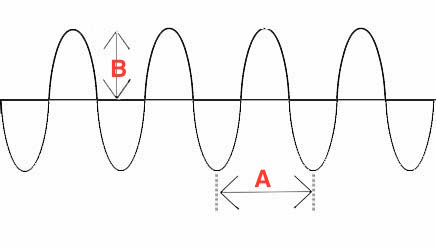
What property of this wave is represented by the letter "A"
a)
amplitude
b)
crest
c)
trough
d)
wavelength
68.
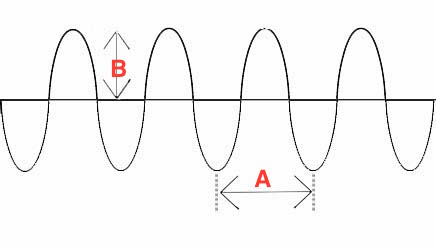
What property of the wave is represented by the letter "B"?
a)
amplitude
b)
crest
c)
trough
d)
wavelength
69.
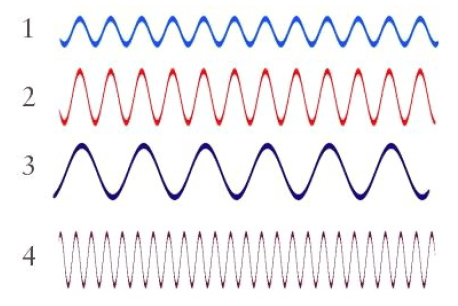
Which wave in the diagram has the greatest frequency?
a)
1
b)
2
c)
3
d)
4
70.

Which of the following is a series circuit?

a)
b)
c)
d)
71.

Which of the following is a simple parallel circuit?

a)
b)
c)
d)
72.
This is a picture of a simple electromagnet. How can the electromagnet be made stronger?
a)
Add more coils of wire to the nail.
b)
Use a smaller battery.
c)
Reverse the poles of the magnet.
d)
Remove all the coils and the nail.
73.
How are electromagnets different from magnets?
a)
magnets can be turned on/off
b)
you can turn an electromagnet on/off
c)
magnets are more powerful
d)
magnets have a North and South pole
74.
 Which statement best describes the atoms of elements that form compounds by covalent bonding? 
a)
They share electrons between them.
b)
They have a large difference in atomic mass.
c)
They are in the same period in the periodic table
d)
They have a large difference in valence electron number. 
75.
How many neutrons are in an atom of Pu-246? 
a)
94
b)
150
c)
152
d)
246
76.
Anions are _______ that form ____________ ions and __________ electrons.
a)
nonmetals, positive, lose
b)
nonmetals, negative, gain
c)
metals, positive, gain
d)
metals, positive, lose
77.
What does the following ion mean 
                      S-2
a)
sulfur gains 2 electrons
b)
sulfur loses 2 electrons
c)
sulfur gains 2 protons
d)
sulfur loses 2 protons
78.

A 25 kg bike accelerates at 5 m/s2.  what was the force?

Force = MA

a)
200 kg/sec
b)
2 Newtons
c)
5 Newton
d)
125 Newtons
79.
Rocket (m=50 kg) slides down a 10 m slope travelling at 4 m/s near the bottom. What is his kinetic energy at the bottom of the slope?
KE = 1/2mv2
a)
400 J
b)
2000 J
c)
1000 J
d)
100 J
80.

You apply a force of 22 N to a dresser and move it  4 m. How much work did you do on the dresser?

Work = Force x Distance

a)
54 J
b)
88 J
c)
21 J
d)
27 J
81.
What are energy and work measured in?
a)
Joule
b)
Watt
c)
Amps
d)
Newton
82.
When the temperature of matter increases the particles...
a)
speed up and move closer
b)
speed up and move farther apart
c)
slow down and move closer together
d)
slow down and move farther apart
83.
What type of chemical bond is the picture illustrating?
a)
Ionic Bond
b)
Covalent Bond
84.
Cations are _______ that form ____________ ions and __________ electrons.
a)
nonmetals, positive, lose
b)
nonmetals, negative, gain
c)
metals, positive, gain
d)
metals, positive, lose
85.
What element is represented in this Bohr Model? 
a)
Carbon
b)
Nitrogen
c)
Aluminum
d)
Lithium
86.
Find the density of a 2 cm x 2 cm x 2 cm cube with a mass of 48 g.
a)
6 g/cm3
b)
12 g/cm3
c)
128 g/cm3
d)
8  g/cm3
87.
A combination of 2 or more atoms that are chemically combined is called a(n)____________. 
a)
mixture
b)
compound
c)
physical
88.
A solution with a pH of 13.5 would be...
a)
Acid
b)
Base
c)
Neutral
d)
Acid and Base
89.
A solution with a pH of 6 would be...
a)
Acid
b)
Base
c)
Neutral
d)
Acid and Base
90.
Which equation obeys the law of conservation of mass?
a)
H2 + O2 ------>  H20
b)
C + 2H2 ---->  CH4
c)
2Fe2O3  ------> 2O2 + 4Fe
91.
Which coefficient will balance the following equation?
Zn + ___ HCl --> ZnCl2 + H2
a)
2
b)
6
c)
4
d)
3
92.
Which of the following is NOT an example of a physical change?
a)
crumpled paper
b)
pencil sharpening
c)
shrunken clothing
d)
burning a log
93.
What usually forms the positive ion?
a)
Metal
b)
Non Metals
c)
None
94.
What is the chemical formula for dinitrogen trioxide?
a)
N2O3
b)
NO2
c)
N3O
d)
N2O4
95.
Which two elements could form an ionic compound?
a)
#6 carbon and #8 oxygen
b)
#1 hydrogen and #7 nitrogen
c)
#3 lithium and #9 fluorine
d)
#5 boron and #10 neon
96.
The splitting of a nucleus into smaller nuclei is
a)
fusion
b)
fission
c)

half-life

d)
gamma radiation
97.
Takes two small nuclei and combines them into a larger nucleus
a)
fission
b)
fusion
98.

Heat is defined as

a)

the transfer of thermal energy from one object to another due to temperature difference

b)

the temperature of a solid, liquid, or gas

c)

The kinetic energy of a solid, liquid, or gas.

99.
Conduction occurs through the air
a)
True 
b)
False
100.

A student removes a pitcher of chilled lemonade from a 5°C refrigerator and leaves the pitcher in a 20°C room for several hours.


Which of the following statements best describes the flow of energy during this time?

a)

Cold energy flows from the lemonade to the room until the room

is colder than the lemonade.

b)

Heat energy flows from the room to the lemonade until the lemonade is warmer than the room.

c)

Cold energy flows from the lemonade to the room until the

lemonade and the room are the same temperature.

d)

Heat energy flows from the room to the lemonade until the lemonade and the room are the same temperature