
 Worksheets
SSA Review 3-65
Total questions: 121
Worksheet time: 2hrs 35mins
Where do non-flowering plants come from?
Seeds
Spores
Nuts
No where
Moss and fern are
Flowering plants
Non- Flowering plants
Trees
Leaves
Jan and Michael were testing the effects of the color of light on plant growth. Which plants would be best for use as a control group?
plants growing under fluorescent light
plants growing under ultraviolet light
plants growing under sunlight
plants growing in the dark
Why is it important to do multiple trials of the same experiment?
Multiple trials improve the methods used by the scientist.
Multiple trials improve the reliability of the data.
Multiple trials improve the predictions made by the scientist.
Multiple trials improve the design of the experiment.
What one is NOT a conductor.
Water
Plastic
Metal
Human Body
When a seed starts to grow, it is called ________________.
photosynthesis
breathing
pollination
germination
Which is the movement of pollen from the male part of a flower to the female part?
pollination
seed formation
germination
life cycle

Desert plants have a coat of wax on their leaves to
keep water from escaping
protect them from animals eating them
absorb water from the air
release scent to attract animals

Why might some plants that grow on the shady rain forest floor have large leaves?
to stay safe from predators
to attract different animals
to survive harsh winters with heavy snowfall
to take in as much sunlight as possible
Arctic foxes live in the tundra. In order to help the camouflage they...
eat a variety of different foods
seek shelter when it's cold
have white fur during the winter and brown fur during the rest of the year
live in large groups
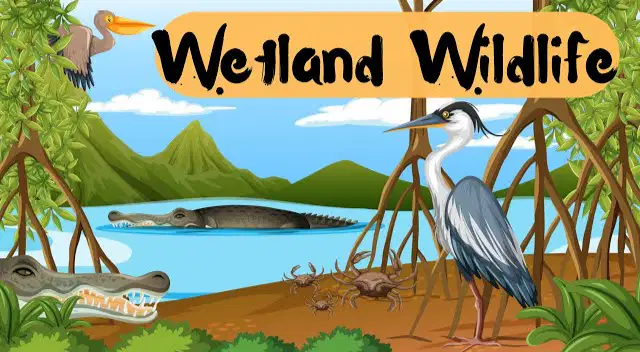
What are the consumers in the habitat?
alligators and egret
mangroves and shrubs
alligators, crabs, egret, pelican
crabs and alligators
The kudzu vine was introduced to this country in the late 1800s. Today, it can be found in many Southern states. Kudzu eventually kills other plants it covers because it blocks out sunlight. Kudzu has been reported to grow roughly 1 foot per day. What can you conclude from this information?
Kudzu is an invasive species that can change an ecosystem.
Kudzu is an illustration of a predator-prey relationship in a community.
Kudzu is an example of a pollutant that is destroying forest ecosystems in the southern United States.

What adaptation helps an eagle hunt prey from afar?
screeching call
wing span
excellent eye sight
Rivers are home to many kinds of birds. Which foot is most likely the adaptation of a bird that swims in water to find food?


Which of the following characteristics would be a learned behavior?
a frog hides beneath the surface of a pond
a rabbit stays very still when a dog approaches
a dog chases squirrels and other small animals
a parrot says “good morning”
Elevation is how high off of earth's surface or "sea level" something is. What would have the lowest temperature?
top of a mountain
valley at the bottom of a mountain
beach
top of a hill
Macy found a fossil in a rock. She decided it had to be a sedimentary rock. Why?
sedimentary rocks form slow and gentle to preserve fossils
because she found it on a mountail
because it was a melted rock
because of the heat and pressure
The polar climate zone is
cold and dry
cold and wet
warm and wet
warm and dry

stormy weather, high humidity
high pressure
low pressure

Emma is studying the physical properties of a rock. She puts water in a cylinder, and then puts the rock into the cylinder.
Which of these properties is Emma measuring?
mass
texture
volume
temperature

Bina and Laurent used some sugar cubes to make lemonade.
How can they make the sugar dissolve more quickly?
do not stir
decrease the temperature
add more sugar cubes
increase the temperature of the water
How are a gas and a liquid different?
A liquid takes the shape of its container, a gas has a definite shape
A gas has a definite volume, a liquid does not
Gas expands to fill a container, while a liquid takes the shape of the container
A liquid has a definite shape and a gas does not
Plant or insect can go dormant in their life cycle because
they want to
environmental changes where they live
they need more sleep
to grow better
Mangrove and other coastal trees have adapted by..
having deep roots
not having leaves
being able to block salt from entering their roots
What is the correct food chain order?
sun, producer, herbivore, carnivore
sun, producer, carnivore, herbivore
sun, herbivore, producer, carnivore
sun, predator, prey

What would happen if you tighten the strings on this guitar?
It would have a lower pitch
It would have a higher pitch
It would have no effect on the sound


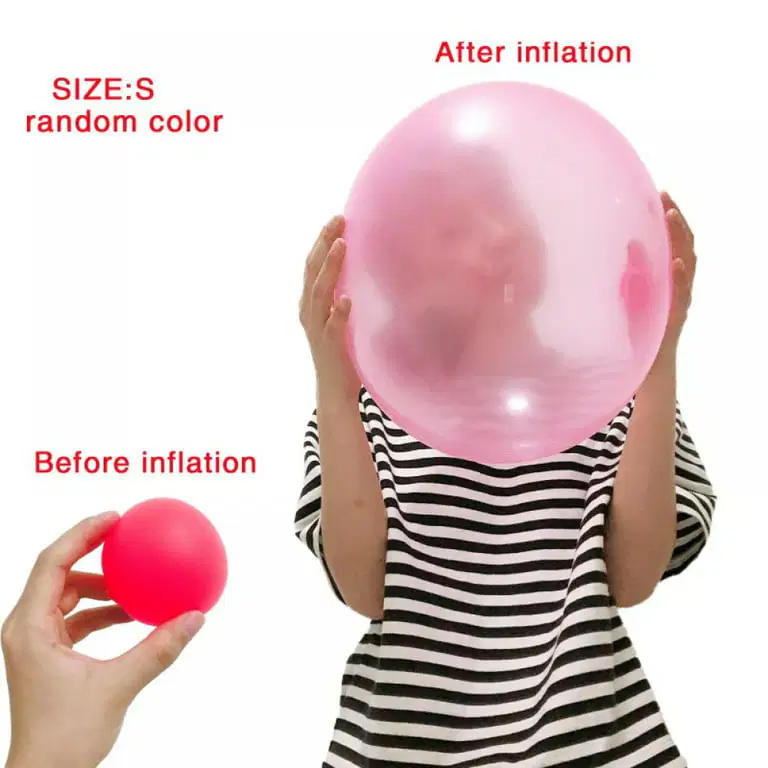
Avery inflated her punch ball. What is the property that changed after she inflated the ball?
the volume increased
the color changed
the volume decreased
the area decreased
What is the most common rock in Florida that is used to construct and make cement?
Silica
Phosphate
Limestone
Concrete
Silica is a natural resource found in Florida. What is one way people use silica?
to make solar panels
to build houses
to produce energy
as a gemstone in jewelry
How does light travel?
Light travels in a straight line forever and ever.
Light curves around objects as it travels.
Light travels in a straight line until it hits an object.
Light cannot travel at all.

The picture shows coal, one of Earth's energy resources.
Why is coal a nonrenewable resource?
It is difficult to mine because it is deep inside Earth.
It is a resource that can easily be replaced as it is used.
It is a resource that cannot be replaced as fast as people use it.
It is the resource that fuels many power plants that make electricity.
The arrows in the diagrams below represent light. Which diagram best shows how a glass mirror would reflect light?


What is one difference between weather and climate?
weather describes conditions near the ground, but climate does not.
Climate describes energy from the sun, but weather does not.
weather includes precipitation, but climate does not.
Climate describes long-term conditions over an entire region, but weather does not.
What is used to make fertilizers and detergents?
Phosphate
Silica
Limestone
Tide
Sun's revolution
Earth's revolution
Some areas suffer from droughts. That means they don't receive rain for long periods of time. What is the best way for a plant to survive a drought?
produce flowers to attract insects
have propeller seeds to travel in the air
store water in thick stems
increase the rate of growth
If the sun is BEHIND the moon. What phase of the moon are you seeing on Earth?
new
full
first quarter
last quarter

A student is investigating how mixtures can be separated. Which of the following combinations will be easiest to separate with a magnet?
Salt and sand
Sand and iron nails
Aluminum cans and sand
Salt and aluminum cans
Which animal breathe with gills first when hatched from egg and then lungs as an adult?
fish
tiger
frog
snake
The small intestine is located under the stomach and is where the human body digests most substances. Which human organ provides digestive chemicals to the small intestine and regulates sugars?
bladder
kidneys
liver
pancreas
Which two parts do flowering plants use to reproduce?
cones and spores
stems and leaves
flowers and seeds
flowers and spores
Samson spotted an animal in his yard that he had never seen before. It was lying on top of a pile of eggs. He could also tell that the animal's skin was tough and scaly. Based on this information, what kind of vertebrate was Samson most likely looking at?
an amphibian
a bird
a mammal
a reptile
Hannah rolls up a paper towel and puts it in a straw. She puts the straw in a glass of water and observes the movement of water from the glass up the towel. What does Hannah’s model show?
Pathway of water from leaves to stem
Pathway of water from leaves to roots
Pathway of water from roots through the stem
Pathway of water from roots directly to the leave
During a storm, the power goes out at Randall's house. His mother strikes a match to light a candle. As the match burns, it gives off light energy. What other form of energy does the burning match give off?
chemical
electrical
mechanical
thermal

Deanna measured the temperature and humidity every afternoon for four days. She recorded the results in the table below.
Which day could Deanna conclude was the most hot and humid?
Monday
Tuesday
Wednesday
Thursday
When two objects have the same electrical charge they will:
repel one another
attract one another
create electricity
produce a popping sound
What is the function of the heart?
to grind up food for the body
to pump blood throughout the body
to control blood sugar through the release of chemicals
to control muscle groups through the release of chemicals
This organ is part of the digestive system. It cleans the blood and makes a juice called bile to break down fats and proteins. It removes toxins and stores vitamins and minerals.
pancreas
kidneys
intestines
liver
Samantha put some ice in a cup and poured some cold tea over the ice. She set the filled cup on the kitchen table. In a few minutes, she noticed that there were drop of water all over the outside of the cup. Where did the drops of water most likely come from?
They evaporated out of the air above the cold liquid.
They condensed out of the air surrounding the cold cup.
They dripped off the ice cubes as he put them into the cup.
They came off his hands after holding the melting ice cubes.
A seasonal period of dormancy characterized by low body temperature, slow breathing and heart rate.
hibernation
environment
structural adaptation
mimicry
Victor and Karen looked out the window. Victor said it was snowing outside. Karen said she thought it was sleet.
What is the best way Victor and Karen can determine who
is correct?
look for ice pellets in a sample
check the temperature and wind speed
look at a local weather map
check the direction of the wind
A layer of very cold air is close to the ground. Rain will have to pass through this layer as it falls. Which type of precipitation is most likely to reach the ground?
hail
rain
snow
sleet
If a road is built through the middle of a forest, it will be most dangerous for which of the following?
Animals that hide from predators in shallow water.
Animals that build their nests underground.
Animals that fly in order to catch their food.
Animals that travel through the forest on the ground.
The American crocodile is found in the wild in the Florida Everglades. It hunts and eats fish, mammals, and other living things. It is the animal at the top of the Everglades food chain. When the crocodile eats a turtle, what is the role of the crocodile in the food chain?
herbivore
omnivore
consumer
producer
How is an eagle like a crocodile, but not like a giraffe?
They both are covered with scales.
They both have backbones.
They both have feathers.
They both lay eggs.
The brightly colored petals of flowering plants attract insects such as bees. The bees help pollinate the plants by picking up pollen. In which part of the flower does the bee pick up pollen?
petal
anther
stamen
pistil
Dennis observes that the Moon goes through different phases as it goes from new moon to full moon and back to new moon again. How long does it take for the Moon to complete all of its phases?
about one day
about one week
about one month
about one season
A car goes through a tunnel and up a hill. It then goes down the hill and over railroad tracks. At which point is the car overcoming gravity?
As it goes up the hill.
As it goes down the hill.
As it goes through the tunnel.
As it goes over the railroad tracks.
Sally is studying objects in the sky that give off light energy. Which of the following gives off light energy?
the Moon, because it lights up the nighttime sky
clouds, because they are bright white in the daytime
the Sun, because it is a star
Jupiter, because it is a planet
Which of the objects below would produce the MOST heat when rubbed together?
rubbing sanitizer on hands
rubbing dry hands together
rubbing lotion on your hands
rubbing soapy hands together
Kenji is writing some observations of different samples in his mineral collection. Which of the following terms can be used to describe luster?
earthy and coarse
glassy and metallic
grainy and rough
metallic and smooth
Why does the Sun appear much larger than all of the other stars?
It is much hotter than all other stars.
It is much brighter than all other stars.
It is much closer to Earth than all other stars.
It is a different color and temperature than all other stars.
Min's backyard has pieces of slate rock that are used as a footpath. Slate is a metamorphic rock that splits into flat pieces. What natural forces in Earth cause the formation of slate?
Molten magma deep inside Earth cools and slowly hardens over time.
Great heat and pressure cause the minerals to line up in parallel layers.
Lava erupts and runs down the side of a volcano, then cools and hardens.
Sediments of once living things are deposited over time and become cemented.
Which of the following is the best example of evidence used in an investigation?
books and movies
tools and materials
conclusions and explanations
observations and measurements
A science museum plans to prepare an exhibit that shows how energy can cause motion. Which of the following examples would be BEST to include in the exhibits?
a radio that is playing music
a black box that is being heated by a lamp
a solar-powered car that is rolling on a track
a high-output lamp that is plugged into an electrical outlet
What is the most important reason that plants need energy from the Sun?
to use water from the ground
to use oxygen in the air
to make flowers blook
to make food
Heat and light are both forms of energy. Some things make light. Some things make heat. Some things make both. Which of the following is true about fire?
A fire makes light, but not heat.
A fire makes heat, but not light.
A fire makes light and also heat.
A fire does not make light or heat.
Why do all the stars look like small points of light in the night sky?
Because all the stars are very far away from Earth.
Because all the stars are the same temperature.
Because all the stars are the same brightness.
Because all the stars are the same size.
Which of the following processes takes one 24-hour day to complete?
Earth completes one full rotation on its axis.
Earth completes one full revolution on its axis.
Earth completes one full rotation around the Sun.
Earth completes one full revolution around the Sun.
Which statement is NOT an example of scientific evidence about the properties of water?
Water can be a liquid, solid, or gas.
Cold water tastes better than warm water.
Water boils at a temperature of 100 degrees Celsius.
Water freezes at a temperature of 0 degrees Celsius.
A student dropped a rock and watched it hit the ground. He wondered if heavy rocks would fall faster than light rocks. Which is the BEST scientific way to find out if heavy rocks fall faster than light rocks?
Ask the teacher.
Plan an experiment.
Look on the Internet.
Read books about rocks.
Christopher is following these steps during a lab.
Procedure:
1. Fill 4 cups halfway with water
2. Add 10 drops of both blue and red food coloring to each cup to make purple water3. Label the cups with: 10 min, 20 min, 30 min, and 40 min
4. Place 1 stalk of celery in to each cup for the amount of time on each cup
5. Record your observations every 5 minutes
Which of the following statements is he most likely testing?
If blue and red food coloring are added to water in equal amounts, then the water will turn purple
If there are 60 seconds in a minute, then 40 minutes will take 2,400 seconds
If the celery absorbs the water through its stem, then the plant will change color
If the celery absorbs purple water, then it will taste better

A student is setting up an experiment with several plants. Her teacher recommends that she set up a control plant.
Why should the student have a control group in her experiment?
To make sure the plant would have grown under normal circumstances
To help the student become a better plant caretaker
To give the student more work to complete
To create a competition between the plants to encourage growth

After each trial in an investigation, a student changes the mass of an object by adding additional weight. The student then places the object at the top of a ramp that is 25 centimeters in height and measures the distance the object travels down the ramp. Why is the distance the object travels different in each trial??
The force applied to the object at the top of the ramp changes.
The height of the ramp changes.
The mass of the object travelling down the ramp changes.
The material the ramp is made of changes.
Which experiment below will best determine how height affects the forces acting on an object as it hits the ground??
Drop several balls with different masses from the same height on to the same surface.
Drop the same ball from different heights on to the same surface.
Drop the same ball from the same height on to different surfaces.
Drop the same ball from different heights on to different surfaces.

A student measures the distance a toy car travels down a ramp. After each trial, the student adds an additional textbook to increase the height of the ramp by 5 centimeters.? Which question is the student most likely trying to answer with this scientific investigation?
How does the height of the ramp affect the distance an object will travel?
How does the mass of an object affect the distance it will travel on a ramp?
What causes an object to travel down a ramp?
How does the height of the ramp affect the speed of an object?
Lori wants to see if dark colored soda loses its carbonation faster than clear colored soda. The steps she followed in her experiment are below.
1. Get several types of dark and clear sodas.
2. Pour equal amounts of soda in similar glasses.
3. Recycle all of the bottles that the soda came from
4. Leave glasses on the counter in an open environment.
5. Each hour come back and record carbonation results.
Which step in Lori's experiment was not needed?
Leave glasses on the counter in an open environment.
Each hour come back and record carbonation results.
Recycle all of the bottles that the soda came from
Get several types of dark and clear sodas.
Pour equal amounts of soda in similar glasses.
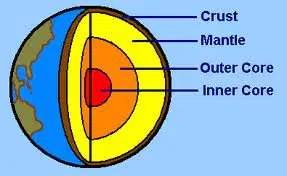
The picture above shows the Earth's layers. Why might a student use a model to study the Earth's layers?
People, animals and plants are all on the surface.
The Earth's layers are unknown.
The Earth's layers are too large to study directly.
The Earth's layers are too small to study.
Which of the following questions would best be explored using a scientific experiment?
What color were dinosaurs?
How many spiders are in the world?
Which brand of light bulb lasts longer?
How many shrimp are in the oceans?

Farmer Verret is a chicken farmer. He has 100 chickens that lay eggs. He wants to get as many eggs as possible. Farmer Verret's hypothesis is his chickens will lay more eggs at 75°F than any other temperature. What is the only variable that will change in his experiment?
Temperature
Weight of the chickens
Chicken's food
The number of chickens
Cheryl notices that most grass is green. She wants to know why. Which of the following is a testable question that Cheryl could ask about the color of grass?
Why isn't most grass blue?
Why aren't plants red?
What would grass look like if it were purple?
What gives grass its green color?
Why is it important to conduct multiple trials?
to make your conclusion match your prediction
to make sure you are correct
to make sure you followed your steps correctly
to make sure your evidence is valid
Why is it important to conduct multiple trials?
to make your conclusion match your prediction
to make sure you are correct
to make sure you followed your steps correctly
to make sure your evidence is valid
Comets develop a tail that glows, asteroids do not. What other way are asteroids different?
Asteroids orbit planets while comets orbit the Sun
Asteroids orbit outside of the the Solar System, comets do not
Asteroids are rocky while comets are balls of ice and dust
Asteroids are gaseous, comets are solid rock
Which property describes how easily a mineral can be scratched?
hardness
luster
cleavage
streak
How does evaporated water return to Earth's surface?
condensation
precipitation
runoff
collection
How do you measure the mass of objects?
with a ruler
with a balance scale
with a graduated cylindar
with a spring scale
Which is true about light?
It refracts when it moves through walls
It does not produce heat
It travels in a straight line
It can only be reflected or absorbed.
Which means change in position?
speed
force
motion
velocity
What is the main function of the pistil in a flowering plant?
help plant reproduce
anchors the plant
transports water and nutrients
attracts pollinators
What role do petals play in a plant's life cycle?
transports water to the rest of the plant
absorbs water from the soil
soak in energy from the Sun
brightly colored ones attract pollinators to help reproduce
What is a control group?
the group that is changed and compared to the other groups
The group that stays the same so it can be compared
The group that is measured
The group that is left out
Some stars appear to be brighter than others. Which 3 factors affect how bright stars appear?
the gas make-up, its size, and distance from Earth
the star's energy, size, and temperature
the stars movement, distance from earth, and gravity
the star's size, temperature, and distance from Earth
Which of the following is an example of renewable resource?
limestone
phosphate
solar energy
silicon
What happens to water during the condensation phase?
It changes from a gas to a liquid
It changes from a solid to a liquid
It changes from a gas to a solid
It changes from a liquid to a gas
Heat energy always flows from ____ to ____.
solids to liquids
cool to hot
insulator to conductor
hot to cool
When an object is in motion, its ____ is changing.
mass
frame of reference
weight
position
Which plant structures respond by growing towards any source of light?
roots and leaves
leaves and stem
flower and roots
flower and stem
What type of adaptation causes birds to migrate to the south during winter?
structural
both structural and behavioral
behavioral
there is no adaptation
Your observations should always be based on
your prediction
evidence
your hypothesis
opinions
What is the path that each planet takes as it revolves around the sun?
orbit
eclipse
lane
satellite
What is the major difference between weathering and erosion?
weathering moves rocks while erosion breaks down rocks
weathering creates rocks while erosion moves rocks
weathering breaks down rocks while erosion creates rocks
weathering breaks down rocks while erosion moves rocks
Which is NOT a factor in determining weather in a particular place
how close it is to water
the type of precipitation
the amount of air pressure
the temperature of the air
How can you speed up a chemical change?
stir it
you cannot speed it up
increase the temperature
decrease the temperature
What kind of energy does a moving ball have?
heat
light
chemical
mechanical
Which measures a change in position over time?
force
periodic motion
friiction
speed
What is a nonflowering plant?
reproduces through flowers
reproduces through spores
reproduces through leaves
reproduces through stems
What structural adaptation do tigers have to help them increase their chances of survival?
long tail
sharp claws and teeth
length of their necks
webbed feet
If I wanted to separate a mixture of salt and water, what is the BEST way?
leave the mixture in the sun and let the water evaporate
use a filter
use a magnet
separate the mixture by hand

