
 Worksheets
Unit 4 Test Review
Total questions: 142
Worksheet time: 3hrs 9mins
A producer
Eats grass
Makes its own food
Does not need food(energy)
Is a primary consumer
A primary consumer
makes its own food
eats other animals
is a carnivore
consumes the producer
A secondary consumer
Only eats meat
Only eats plants
makes its own food
eats the primary consumer
The first trophic level is
Carnivore
Producer
Primary Consumer
Herbivore
tertiary consumers
Eat the primary consumer
Eat plants and animals
Consume the producer
eat the secondary consumer
How much energy is moved from one trophic level to the next trophic level?
100%
1/2
10%
25%
Which trophic level makes its own food?
producer
carnivore
herbivore
animals

According to the image, what is the producer?
plant
insect
mouse
snake

The word "primary" means "first."
If that's true, what does primary consumer mean?
Hint: look carefully at the food chain!
the first organism in a food chain
the first organism that consumes something else for energy

What are "producers" producing?
the energy for the food chain
the insects for the food chain


Does photosynthesis release carbon or store carbon during the Carbon Cycle?
Release Carbon
Stores Carbon
Does cellular respiration release carbon or store carbon during the Carbon Cycle?
Release Carbon
Stores Carbon
Does combustion release carbon or store carbon during the Carbon Cycle?
Release Carbon
Stores Carbon
Is evaporation a part of the Water Cycle, Carbon Cycle, or Nitrogen Cycle?
Water Cycle
Carbon Cycle
Nitrogen Cycle
Is transpiration a part of the Water Cycle, Carbon Cycle, or Nitrogen Cycle?
Water Cycle
Carbon Cycle
Nitrogen Cycle
Is runoff a part of the Water Cycle, Carbon Cycle, or Nitrogen Cycle?
Water Cycle
Carbon Cycle
Nitrogen Cycle
Is condensation a part of the Water Cycle, Carbon Cycle, or Nitrogen Cycle?
Water Cycle
Carbon Cycle
Nitrogen Cycle
Is precipitation a part of the Water Cycle, Carbon Cycle, or Nitrogen Cycle?
Water Cycle
Carbon Cycle
Nitrogen Cycle
Is combustion a part of the Water Cycle, Carbon Cycle, or Nitrogen Cycle?
Water Cycle
Carbon Cycle
Nitrogen Cycle
Is respiration a part of the Water Cycle, Carbon Cycle, or Nitrogen Cycle?
Water Cycle
Carbon Cycle
Nitrogen Cycle
Is decomposition a part of the Water Cycle, Carbon Cycle, or Nitrogen Cycle?
Water Cycle
Carbon Cycle
Nitrogen Cycle
Is photosynthesis a part of the Water Cycle, Carbon Cycle, or Nitrogen Cycle?
Water Cycle
Carbon Cycle
Nitrogen Cycle
Is fixation a part of the Water Cycle, Carbon Cycle, or Nitrogen Cycle?
Water Cycle
Carbon Cycle
Nitrogen Cycle
Is nitrification a part of the Water Cycle, Carbon Cycle, or Nitrogen Cycle?
Water Cycle
Carbon Cycle
Nitrogen Cycle
Is denitrification a part of the Water Cycle, Carbon Cycle, or Nitrogen Cycle?
Water Cycle
Carbon Cycle
Nitrogen Cycle
Is assimilation a part of the Water Cycle, Carbon Cycle, or Nitrogen Cycle?
Water Cycle
Carbon Cycle
Nitrogen Cycle
Is ammonification a part of the Water Cycle, Carbon Cycle, or Nitrogen Cycle?
Water Cycle
Carbon Cycle
Nitrogen Cycle

The step of the nitrogen cycle that is in red is called...
Denitrification
Nitrification
Nitrogen Fixation
Ammonification

The step of the nitrogen cycle that is in red is called...
Denitrification
Nitrification
Nitrogen Fixation
Ammonification

The step of the nitrogen cycle that is in red is called...
Denitrification
Nitrification
Assimilation
Ammonification

The step of the nitrogen cycle that is in red is called...
Denitrification
Nitrification
Nitrogen Fixation
Ammonification
Which type of reproduction is quick?
Asexual Reproduction
Sexual Reproduction
Which reproduction increases chances of survival in changing environments?
Asexual Reproduction
Sexual Reproduction
Which type of reproduction produces genetic variation?
Asexual Reproduction
Sexual Reproduction
Which type of reproduction requires only one parent?
Asexual Reproduction
Sexual Reproduction

Which word best describes the following definition?
The process by which individuals that are better adapted to their environment are more likely to survive and reproduce than other members of the same species.
Trait
Generation
Adaptive Trait
Natural Selection
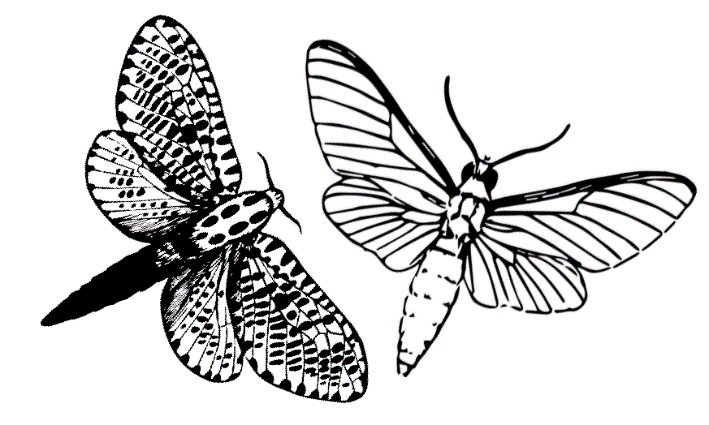
According to natural selection, light colored tree trunks would favor
light colored moths
dark colored moths
red colored moths
red and light colored moths

Which of the following statements best describes what will most likely occur to the moth populations in the image above?
The light moths will be captured by predators more easily than the dark moths, and the population of dark moths will rise.
The light moths will be captured by predators more easily than the dark moths, and the population of light moths will rise.
The dark moths will be captured by predators more easily than the light moths, and the dark moths will probably go extinct.
The light moths will change their wing color to match that of the dark moths.
What is an example of artificial selection?
Letting dogs choose their own mate
Letting plants pollinate on their own
Crossing a labrador and a poodle to create a labradoodle
Process by which organisms with favorable traits produce more successful offspring than organisms with less-favorable traits, causing the favorable traits to become more common in the population
Selective breeding
Natural selection
Genotype
Phenotype


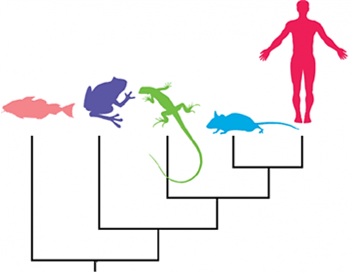
What is the human most closely related to?
Fish
mouse
Salamander
Human
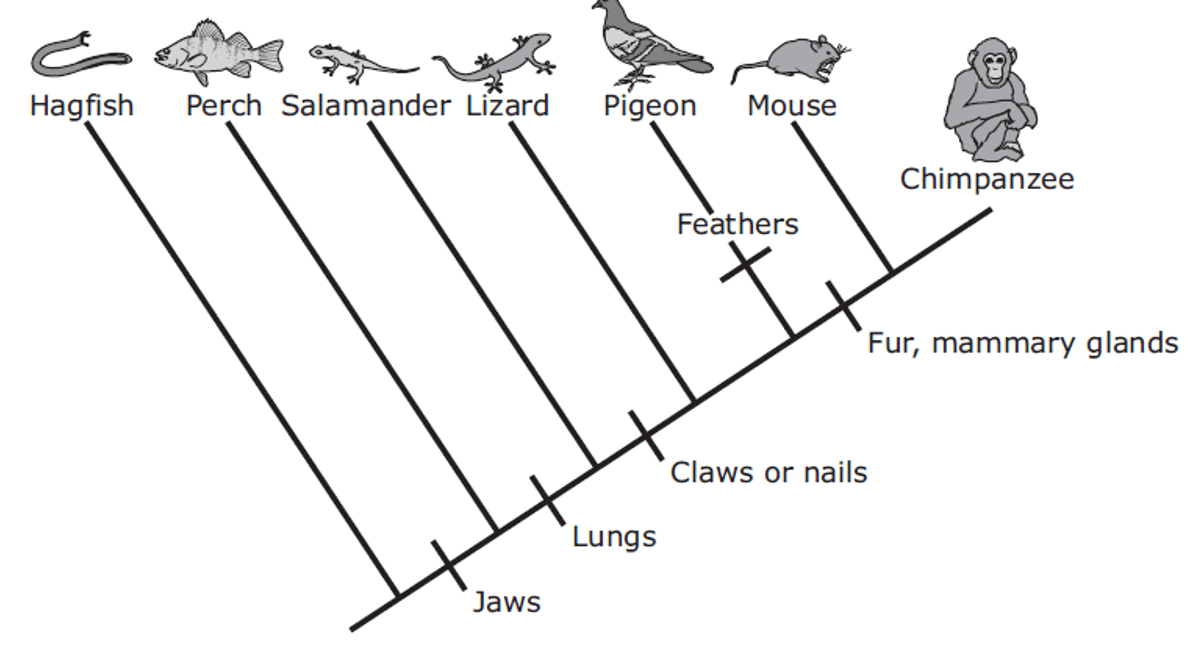

What do both the squirrel and lion have in common that the other animals do not?
They are both vertebrates
They both have lungs
They are both mammals
They both lose their canine teeth.
How many parents are involved with sexual reproduction?
none
1
2
4
How many parents are required for asexual reproduction?
none
1
2
4
I am single celled. I am prokaryotic. I have a cell wall that's not made of peptidoglycan. I also live in very extreme conditions. Which domain do I belong in?
Bacteria
Archea
Eukarya
Are archaea multicellular or unicellular?
Multicellular
Unicellular
Which domain has organisms that live in harsh environments?
Bacteria
Archaea
Both
Which of the following is the correct order of organization in living things from most basic (simple) to most complex?
organism, cell, tissue, organ, organ system
organ system, organ, tissue, cell, organism
cell, tissue, organ, organ system, organism
cell, organ, tissue, organism, organ system
The basic unit of structure and function of living organisms
organ
organ system
cell
tissue
organism
A group of similar cells that work together to form the same function is called .......
organ
cell
organ system
organism
tissue
What is the difference between a cell and a tissue?
cell is basic unit of life; tissue is group of cells that work as one
cell is group of tissues; tissue is basic unit of life
cell is basic unit of life; tissue is groups of different cells
cell is group of organs; tissue is group of different cells
A structure that is composed of different kinds of tissues
organ
cell
organ system
organism
tissue
A group of organs that work together to perform a major function....
organ
cell
organ system
organism
tissue
Any living thing made up of one or more cells....
organ
cell
organ system
organism
tissue
Please choose from the options below, which are levels of organization.
cells
organ
face
skin
tissue
Which of the following is the LEAST complex level of organization?
Tissue
Organism
Cell
Organ
Which of the following is the MOST complex level of organization?
Organism
Organ System
Cell
Tissue
What type of cell has a nucleus?
Virus
Prokaryotic cell
Karyotic cell
Eukaryotic cell
What type of cell does NOT have a nucleus?
Prokaryotic cell
Karyotic cell
Eukaryotic cell
Plant cell
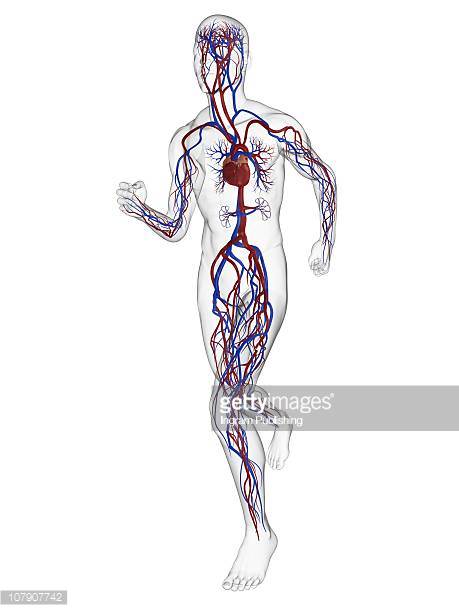
What is the main organ of the circulatory system?
small intestine
bone
lungs
heart

The job of the heart is to . . .
pump blood around the body.
send food to the small intestines.
break down food.
give energy to the body.

The circulatory system works with the ___________ system to provide our body with oxygen.
respiratory
digestive
muscular
skeletal

Deoxygenated blood means that the blood is low in...
Oxygen
Carbon Dioxide
Which of the following is not part of the circulatory system?
veins
heart
stomach
arteries
What do we call the movement of blood through the heart and around the body?
circulation
digestion
What is the purpose of the respiratory system?
takes in oxygen and release carbon dioxide
takes in carbon dioxide and releases oxygen
takes in nitrogen and releases carbon dioxide
takes in oxygen and releases nitrogen
Where does oxygen initially enter into the body?
nose and mouth
eyes
brain
throat
What is the formal name for your throat area?
pharynx
larynx
throat
esophagus
What are the two branches called that branch off from your trachea and into your lungs?
bronchus (bronchi)
alveoli
lungs
trachea
These tiny grape-like air sacs is where the gas exchange of oxygen and carbon dioxide happen in the lungs. What is it?
alveoli
lungs
ravioli
bronchioles
The elastic sponge-like organs are where gas exchange occurs.
lungs
alveoli
ravioli
trachea
What do humans need to breathe in from the air?
oxygen
nitrogen
carbon dioxide
ammonia
What gas do plants take in that animal/humans breathe out?
carbon dioxide
oxygen
nitrogen
phosphorus
Which statement is not a function of the skeletal system?
Protects organs
stores minerals
circulates blood in the body
helps with movement
What is cartilage?
joints that connect bone to tissue
Connective tissue that acts as balance for the body
Connective tissue near joints that act as a shock absorber
a piece of tissue that is attached to the scapula
What connects bones together?
ligaments
brains
trachea
heart

What is the place where two bones meet?
bones
tendons
ligament
joint

What is the name for the connector that attaches muscle to bone?
ligament
tendon
joint
bones
The _________________ gives the body its shape and supports and protects the internal organs.
nervous system
skeletal system
muscular system
body system
What is a flexible connective tissue that is found in your nose and ears?
cartilage
joints
ligaments
cranium
Which organ of the digestive system physically breaks down food by the squeezing and churning of muscular contractions?
mouth
stomach
esophagus
small intestine
The muscular tube that connects the mouth to the stomach.
stomach
esophagus
large intestine
small intestine
Which organ is responsible for absorbing water from digested food?
small intestine
stomach
large intestine
mouth
Digestion begins here, where food is broken into smaller pieces before entering the esophagus.
large intestine
stomach
small intestine
mouth
In which organ does most of the chemical digestion of food occur?
small intestine
large intestine
stomach
mouth
Which of the following organs does NOT contribute digestive juices and enzymes?
liver
gallbladder
pancreas
thyroid
What happens if one organ of the digestive system is not functioning properly?
We will not be able to digest food properly.
We will have no problems.
It will only affect my digestive system, but not other body systems.
Which organ of the digestive system secretes pepsin and hydrochloric acid?
mouth
stomach
esophagus
small intestine
Which organ of the digestive system begins the breakdown of proteins in food?
mouth
stomach
esophagus
small intestine
In which organ does most of the nutrient absorption occur?
small intestine
large intestine
stomach
mouth
Filtering blood to remove excess water and waste products is the job of the:
kidneys
ureters
urinary bladder
Transporting urine from the kidneys to the bladder is the job of the:
kidneys
ureters
urethra

What is the function of the nervous system?
to control and coordinate body functions and systems.
to protect the body from harm.
to identify pain and begin healing.
to break down food.
The basic unit of structure and function in the nervous system is a nerve cell. Nerve cells are also called-
Osteocytes
Dendrites
Neurons
Spinal Cords
Digestive System
Nervous System
Immune System
Skeletal System
From touching a mucous membrane
From not washing your hands
a. From touching your face
All of the above
The _________________ gland(s) sit on top of the kidneys, protect us from stress and produce cortisol (adrenaline).
thyroid
pituitary
parathyroid
adrenal
_____________________ are the chemicals that act as messengers in the endocrine system of the body.
glands
hormones
platelets
plasma
Regulation of body processes is the function of the __________________________ system.
nervous
lymphatic
endocrine
digestive
What organ makes insulin to regulate blood sugar?
thyroid
pancreas
glands
pineal

