
 Worksheets
Bio midterm
Total questions: 110
Worksheet time: 3hrs 32mins

Lion
Abiotic (non-living)
Biotic (living)
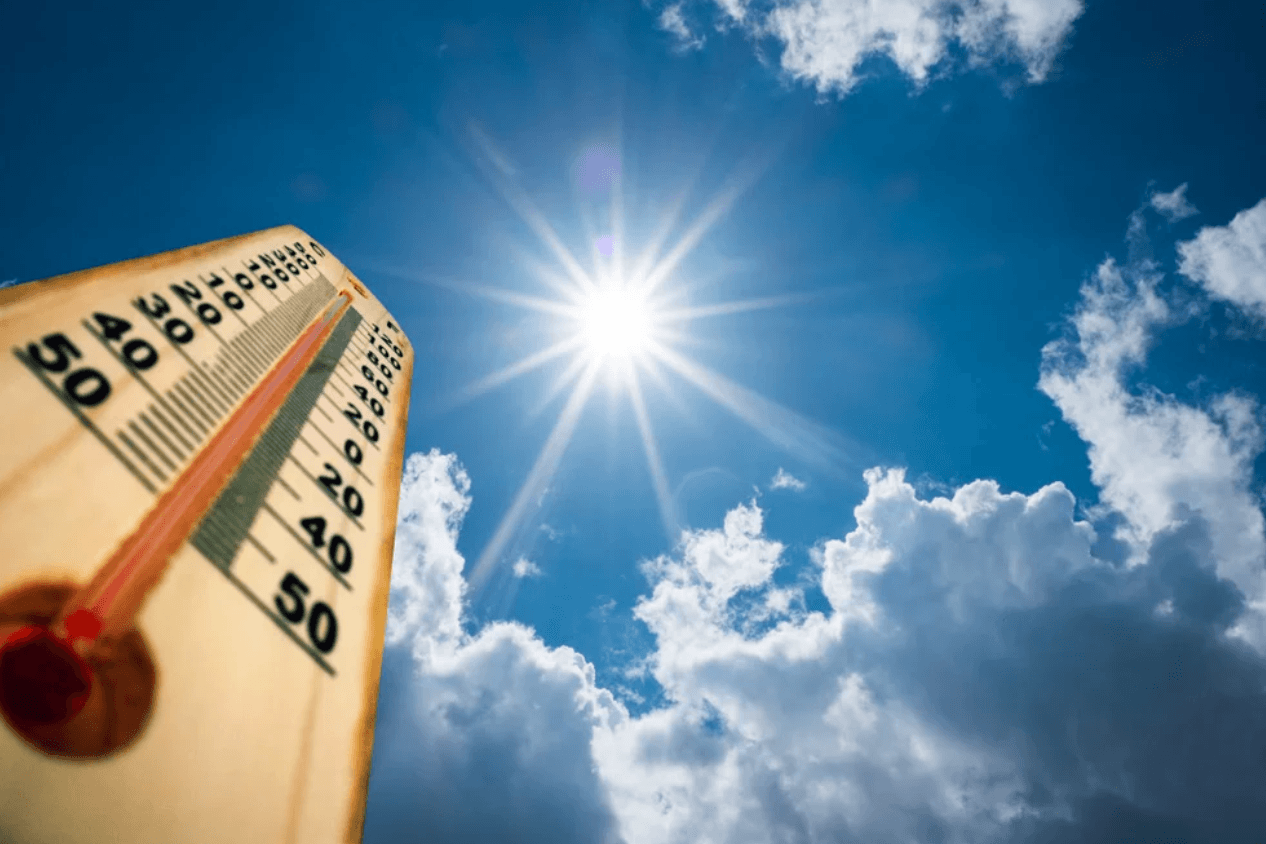
Temperature
Biotic (living)
Abiotic (non-Living)

Sunlight
Biotic (living)
Abiotic (non-living)

Fox
Abiotic (non-living)
Biotic (living)
Independent variable
Dependent variable
Conclusion

Maya designed an experiment to answer the following question:
How does the amount of water given to a lima
bean seed affect how tall it grows?
In this experiment, what variable should Maya CHANGE?
the amount of water
the kind of plant
the type of soil
the amount of sunlight it gets
Esther became interested in insulation while her parent’s new house was being built. She decided to determine which insulation transferred the least heat. She filled each of 5 jars half-full with water.
She sealed each jar with a plastic lid.Then she wrapped each jar with a different kind of insulation. She put the jars outside in the direct sunlight. Later, she measured the temperature of the water in each jar. What is the independent variable?
The type of insulation
The temperature of the water
Number of houses
The amount of sunlight
only 1
The type of variable that responds to the experiment and is what you measure or count to determine if your hypothesis is true.


Which statement is NOT a part of the Cell Theory?
All cells come from pre-existing cells
All living things are made of cells
All cells form from spontaneous generations
Cells are the basic unit of structure & function of living organisms
The Endosymbiotic Theory gives an explanation of how eukaryotic cells could have evolved from prokaryotic cells. Which part of the Cell Theory supports this explanation?
Cells are the basic unit of structure & function of living organisms
All living things are made of cells
All cells come from pre-existing cells
Muscle cells, commonly known as myocytes, are the cells that make up muscle tissue. These cells form the muscle that we use to move and produce contraction. Which part(s) of the Cell Theory does this statement BEST relate to?
All living things are made up of cells
All cells come from pre-existing cells
Cells are the basic unit of structure and function in living organisms
Cells form from spontaneous generations

Type of microscope that commonly uses visible light and a system of lenses to magnify images of small objects
Electron Microscope
Scanning Electron Microscope
Transmission Electron Microscope
Light Microscope
Students observe cells under a microscope. Which of the students’ observations will be most helpful in classifying a cell as either prokaryotic or eukaryotic?
Shape of the cell.
Presence of a nucleus.
Presence of organelles.
Visible DNA.

Students use a microscope to look for structures present in four different cells. The students placed an X for each structure that was viewed for each cell on the table shown. Which cell that was viewed is most likely a prokaryote?
Cell W
Cell X
Cell Y
Cell Z

A table with characteristics of three different cells is shown. Cell 2 is a _____.
prokaryote
eukaryote
PROKARYOTIC cells do NOT have
membrane bound organelles
cell membrane
DNA
ribosomes

Which type of cell developed first?
Prokaryotic Cells
Eukaryotic Cells
How are vacuoles in plant cells different than vacuoles in animal cells?
In animal cells, vacuoles are larger than in plant cells.
In plant cells, vacuoles are smaller than in animal cells.
Vacuoles are the same size in both plant and animal cells.
In plant cells, vacuoles are larger than in animal cells.
Which of the following would best identify a plant cell?
cell membrane
cell wall
DNA
cytoplasm
Identify the structures that are responsible for creating energy for the cell.
mitochondria
nuclei
ribosomes
flagella


Bacteria, amoeba, paramecium are microscopic organisms and they are called
multi-cellular organism
unicellular organism
eukaryotes
prokaryotes
Specialized cells such as muscle, blood, or nerve cells are caused by cell differentiation led by
DNA
nucleus
ribosomes
plasma membrane
What causes cells in our bodies to do different things?
DNA
nucleus
ribosomes
plasma membrane
________ are small individual molecules that when linked together form a _______
polymers
monomer
carbohydrates
lipid
proteins
nucleic acid
monomers
polymer
Which biomolecule is a source of quick energy for cells?
carbohydrates
lipids
proteins
nucleic acids
A mutation in DNA would initially start with which biomolecules?
carbohydrates
lipids
proteins
nucleic acids
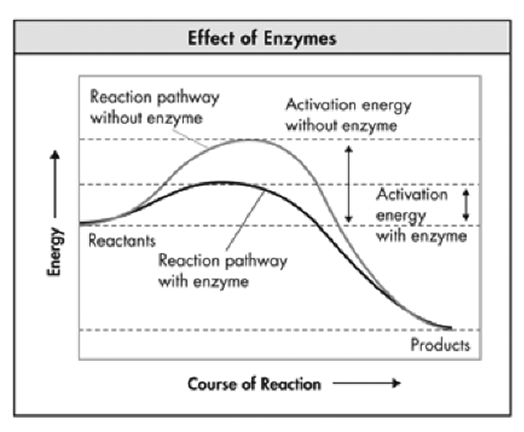
Enzymes are special _______ that speed up chemical reactions.
carbohydrates
lipids
proteins
nucleic acids
Which of these is NOT a lipid
fats
oils
amino acids
waxes

The shape and size of proteins determine the function of the protein
True
False

Identify the biomolecule
Carbohydrate
Lipid
Protein
Nucleic Acid
Which biomolecule includes RNA as an example?
Protein
Lipid
Nucleic Acid
Carbohydrate
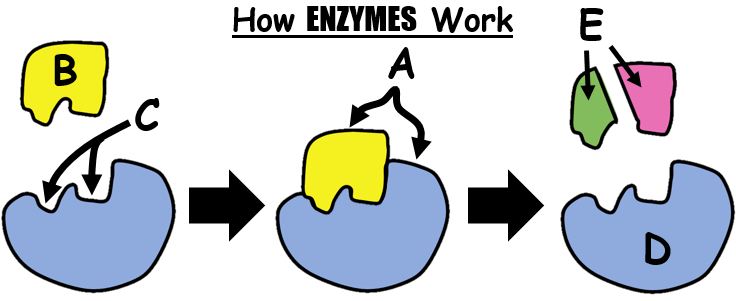

Simple Diffusion
Facilitated diffusion
Simple Diffusion
When molecules passively cross the plasma membrane through the phospholipid bilayer
Facilitated Diffusion
When molecules passively cross the plasma membrane through a channel protein
Osmosis
The movement of water across the cell membrane
Endocytosis
Bringing in large materials through the cell membrane into a vacuole.
Exocytosis
Moving larger amounts or large quantities of materials through the cell membrane
Hypertonic
The solution contains a high concentration of solute an and low concentration of water
Hypotonic
The solution contains a low concentration of solute an and high concentration of water
Isotonic
The solution has an equal concentration of solute and water compared to the inside of the cell

What is the process through which the majority of ATP is produced?
Photosynthesis
Respiration
Exercise
Nucleotides

Which of these organisms produce ATP through cellular respiration?
Plants
Animals
Both
Neither

Which macromolecule stores the most energy?
Carbohydrates
Lipids
Proteins
Nucleic Acids

What is used or released when ATP becomes ADP?
phosphate released / energy used
phosphate used / energy released
phosphate released / energy released
phosphate used / energy released
Where does photosynthesis occur?
mitochondria
chloroplast
animal cells
ribosomes
What is the name of the pigment molecule that absorbs light energy and makes plants green?
chloroplast
glucose
mitochondria
chlorophyll

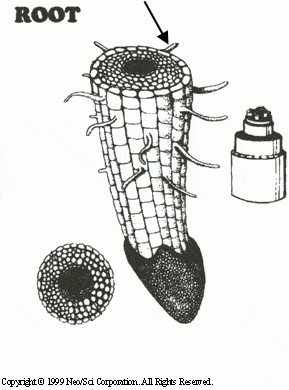

What is the collective term for the male part of the flower?
Carpel
Sepal
Petal
Stamen

What part of the flower becomes the seed?
Ovary
Ovule
Embryo
Cotyledon

Which part of the flower becomes the fruit
Ovule
Root
Anther
Ovary

What is the name of number 3?
Filament
Stigma
Anther
Pistil

True or False: The larger the blood vessel diameter, the more resistance there is to blood flow.
True
False
This is a waxy and fat-like substance found in your blood that can build up in your BV's and can make up Plaque
protein
blood clots
carbohydrates
cholesterol
True or False: The more plaque build up in a blood vessel, the more risk one has of heart disease.
True
False


Disease-causing microorganism, such as a bacterium or virus.
pathogen
allergen
prion
antigen
What is the body's first line of defense against infection by foreign organisms?
antibodies
lymph nodes
white blood cells
the skin
A nonspecific defensive response of the body to tissue injury characterized by dilation of blood vessels and swelling.
immunity
interferon
immunization
inflammation
This type of cell inspects cells for antigens and kills any cells that display the foreign antigens.
Macrophage
T Cells
B Cells
What do B cells produce?
antigens
macrophages
T cells
antibodies

An immune response that occurs in the human body is shown above. This activity helps to do which of the following?
Produce antibiotics to control disease
Provide protection against a specific pathogen
Provide protection against all types of pathogens
Eliminate harmful gene alterations
What is used to regulate many bodily processes?
bile
hormones
blood vessels
hydrochloric acid

How are the offspring different in both methods?
Method A (genetically different)
Method B (genetically identical)
Method A (genetically identical to parent)
Method B (genetically different from Parent)
Method A (sexual reproduction)
Method B (Asexual reproduction)
Method A (Mitosis)
Method B (Meiosis)

Where does the following occut?
A) Meiosis?
B) Fertilization?
C) Growth & Development of Baby?
A) 5
B) 4
C) 3
A) 4
B) 5
C) 3
A) 3
B) 4
C) 5
A) 3
B) 5
C) 4

Identify the structure labeled "B".
Fallopian Tubes
Ovaries
Uterus
Placenta
Which part of the female reproductive system is the site of fertilization?
Uterus
Fallopian tube
Ovary
Cervix
The combining of a sperm cell and an egg cell creates
Zygote
Umbilial cord
Uterus
Embryo
What is sexual reproduction?
1 parent
2 parents

What is the function of A & B?
A - transport gametes (eggs)
B - Produce eggs
A - produce eggs
B - transport gametes (eggs)
A - transport gametes (sperm)
B - produce sperm
A - produce sperm
B - transport gametes (sperm)

"C" will inherit...
46 chromosomes from each parent
half of their chromosomes (23) from each parent
Double the amount of chromosomes from each parent
Pairs of chromosomes from each parent
The process of a cell developing into a certain type has two names, what are they?
Replication
Translation
Differentiation
Specialization

What is the process of cell division called?
Mitochondria/Meiosis
Mitosis/Melanin
Mitosis/Meiosis
Mitosis/Mitchondria
What is the acryonym used to remember the four phases of mitosis?
P, S, A, T
P, R, O, M
P, T, A, P
P, M, A, T

What phase is this?
anaphase
anaphalytic
aneurysm
antibacterial

Interphase is the ________________ period for the cell.
growing
glowing
going
guessing

What do the blue and yellow arrows represent
The blue arrow is prophase and the yellow is interphase
The blue arrow is mitosis and the yellow arrow is meiosis
The blue arrow is interphase and the yellow is mitosis
The blue arrow is meiosis and the yellow is prophase
What stage of interphase does DNA replication occur?
G1
S
G2
In mitosis, one parent cell -
Forms two identical daughter cells
Forms four identical daughter cells
Forms two genetically diverse daughter cells
Forms four genetically diverse daughter cells
During prophase I crossing over occurs and genetic material is exchanged between homologous chromosomes. How is this important
Increases genetic variation
Reduces the diploid number to the haploid number
Increases the haploid number to the diploid number
Reduces the probability of mutations

