
 Worksheets
Ib-Biology Sem II Final Exam Study Guide 2024
Total questions: 219
Worksheet time: 9hrs 56mins


cell are called ____________________.

Which macromolecule is shown?
lipid
protein
nucleic acid
carbohydrate


What is a long chain of amino acids called?
Polysaccharide
Lipid
Carbohydrate
Polypeptide
Nucleic acid
What is the name of the bond that joins two amino acids together?
Ester bond
Glycosidic bond
Peptide bond
Nucleic bond

All proteins
have a unique structure that determines their unique function.
are exactly the same in function but different in structure.
are exactly the same in structure but different in function.
are enzymes.
Proteins are made of
CHO
CHON
CHONP`
CHONS
This is one job proteins do NOT have in the body
insulation
structure for tissues and organs
speeds up chemical reactions
transport things through cell membrane
Which enzyme fixes the Okazaki fragments?
Helicase
Polymerase
Ligase
Primerase
DNA polymerase is able to build the new DNA ______ along the leading strand.
continuously
only in short fragments
very slowly
prokaryotically
Helicase
DNA Polymerase
Ligase
Primase


DNA polymerase
Ligase
Primase
Helicase
Which enzyme is responsible for checking DNA for errors, and fixing it?
DNA Polymerase
Primase
Helicase
RNA Polymerase
Okazaki fragments are found on the _______________ strand
Leading
Lagging
DNA is built in this direction
5' to 3' (new nucleotides added to the 3' end)
3' to 5' (new nucleotides added to the 5' end)
3' to 5' (new nucleotides added to the 3' end)
5' to 3' (new nucleotides added to the 5' end)
DNA Replication occurs during which phase of the cell cycle?
G 1 phase
S phase
G 2 phase
Mitotic phase
Which enzyme fixes the Okazaki fragments?
Helicase
Polymerase
Ligase
Primerase
DNA polymerase is able to build the new DNA ______ along the leading strand.
continuously
only in short fragments
very slowly
prokaryotically

What does the acronym CRISPR stand for?
Controlled Reservative Image Spectacle Palindromic Recounts
Clustered Regularly-Interspaced Short Palindromic Repeats
CRISPR can edit DNA. What organisms naturally has CRISPR?
Viruses
Humans
Plants
Bacteria
Why do bacteria have CRISPR? Check all that apply.
To be able to remember which viruses they have been infected with
To be able to edit virus DNA
To cut apart virus DNA thereby stopping the virus infection
To be able to edit their own DNA
A PAM is
a 15-20 bp sequence snipped from a viral genome that serves as a tracer DNA to locate viruses later
a 3 bp sequence that adjacent to viral DNA in a CRISPR array
a girl's name popular in the 1960s
where the DNA is cut

What is the role of the guide RNA?
It helps the cell repair the DNA
ensures that the Cas9 enzyme cuts at the right point in the genome
Recognizes PAM sequences and opens up the DNA
makes a cut across both strands of the DNA
How does the guide RNA help the cell know where to cut the DNA?
Guide RNA helps to find the PAM
Guide RNA is complementary to the DNA sequence
Guide RNA always binds to the same sequence of DNA
Like restriction sites, they are always palindromes
The following sequence is a known GENE MUTATION that geneticists would like to remove. What would be the guide RNA they need to build into a CRISPR-Cas9 enzyme?
TTA CCG
AAU GGC
AAT GGC
TTA CCG
GCC ATT
What does the cas9 protein do?
Prevents viruses from entering bacteria
Cut RNA
Cut DNA
Binds to RNA
Bacteria have CRISPR as a tool to be able to remember what viruses they have been infected with and then get rid of those viruses if they see them again.
How does the bacteria remember what virus they have been infected with?
Bacteria have CRISPR as a tool to be able to remember what viruses they have been infected with and then get rid of those viruses if they see them again.
How does the bacteria identify a virus it has seen before?
Bacteria have CRISPR as a tool to be able to remember what viruses they have been infected with and then get rid of those viruses if they see them again.
How does the bacteria get rid of the virus infection once it has identified that it has seen the virus before?
The videos kept stating that CRISPR is "programmable" - that you can somehow tell the system which DNA to edit. How is CRISPR "programmable"?
We have been modifying DNA sequences for many years - ever since restriction enzymes were discovered in the early 1970's. CRISPR and restriction enzymes are essentially the same because they can both be used to cut DNA and can be used inside of living cells.
TRUE
FALSE - Restriction enzymes do not cut DNA
FALSE - CRISPR does not cut DNA
FALSE - Restriction enzymes cannot be used inside of living cells
How does CRISPR edit DNA? Check ALL that apply.
CRISPR chemically changes A's to C's
CRISPR cuts the DNA and the cell makes errors when it tries to fix the broken DNA
CRISPR cuts the DNA and the cell can use a similar DNA sequence as a template to try to fix the DNA
CRISPR changes all PAM's so that they are no longer able to be recognized
CRISPR involves "gene editing". Dr. Doudna distinguishes "gene editing" from "genetic modification" like we have been doing prior to CRISPR. Which of the following is a big difference between "gene editing" and "genetic modification"?
Gene editing can move DNA from one organsim to another
Genetic modification can move DNA from one organism to another
Gene editing can only change A's to C's
Gene editing can move DNA from one organism to another
Describe one specific example of how CRISPR has been used already. Be sure to use detail. You have 3 minutes to answer this question.
Describe one ethical concern regarding the use of CRISPR. Use detail. You have 3 minutes to respond to this question.
CRISPR-Cas9 is a type of ________ system found in bacteria.
digestive
endocrine
circulatory
immune
CRISPR-Cas9 was discovered in which of the following organisms?
protists
fungi
bacteria
viruses
Scientists have adapted it to turn it into a biotechnology tool for _______ DNA.
building
editing
destroying
synthesizing
The enzyme portion of this complex is called ________.
CRISPR
Replicase
Lysozyme
Cas9
What type of RNA is used as a GPS of sorts, to find or locate specific genes?
mRNA
gRNA
tRNA
rRNA
What is PAM?
a 3 letter sequence for binding on the target DNA
the main gene portion of the DNA
the cut site for Cas9
a 10 letter sequence for binding on the target DNA
Once the DNA and RNA are bound, Cas9 is activated to cut the DNA ____ upstream from the binding sequence.
1 base
3 bases
6 bases
10 bases
After Cas9 cuts the target DNA, cellular enzymes attempt to repair the break. Which of the following types of repair mechanisms creates a mutation and inactivates the gene.
HDR
NHEJ
After Cas9 cuts the target DNA, cellular enzymes attempt to repair the break. Which of the following repair mechanisms involves "editing" of the gene with insertion of a corrected sequence?
HDR
NHEJ
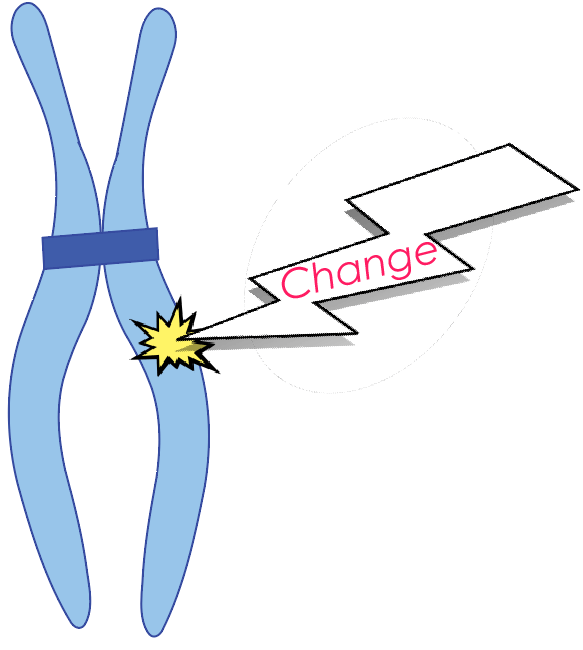
A change in a gene, group of genes or chromosome that results in a change in the proteins
Replication
Mutations
Translation
Transcription

One nucleotide base is changed so only one amino acid
is affected
Substitution Mutation
Point Mutation
Translocation
Inverse Mutation

A point mutation where one nucleotide base replaces an original nucleotide base
Inversion Mutation
Chromosomal Mutation
Translocation
Substitution Mutation

A substitution mutation that has no effect
on amino acids sequence
Insertion Mutation
Translocation
Silent Mutation
Deletion Mutation

A mutation that results in an amino acid change
Translocation
Homeostasis
Silent Mutation
Expressed Mutation

A nucleotide base is inserted or deleted shifting the entire DNA sequence. Entire protein will be changed.
Substitution Mutation
Silent Mutation
Frameshift Mutation
Translocation

A frameshift mutation where a nucleotide base
is removed from the DNA sequence.
Deletion Mutation
Substitution Mutation
Translocation
Silent Mutation

A frameshift mutation where a nucleotide base is added
to the DNA sequence
Insertion Mutation
Deletion Mutation
Substitution Mutation
Chromosomal Mutation
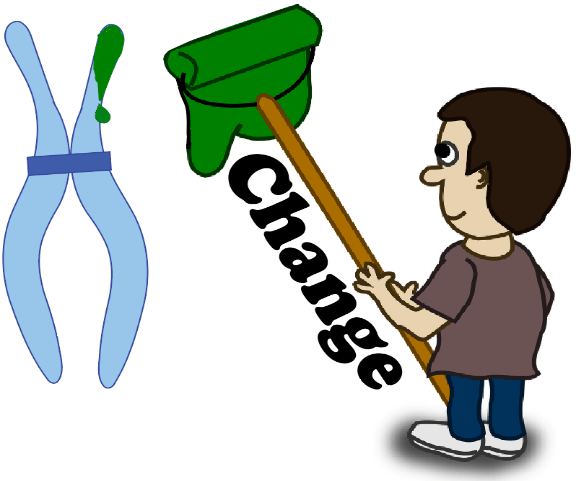
Mutations that involve parts of or all of
a chromosome
Replication
Deletion Mutation
Chromosomal Mutation
Transcription

A point mutation where DNA adenine (A)
is replaced by thymine (T) resulting in a single amino acid change during translation(affects blood cell
shape and function)
Encephelitis
Hemophilia
Sickle Cell Anemia
Influenza
Mutations can be negative because
They can cause cancer
They can cause birth defects
They can help an organism thrive in its environment.
They can affect offspring.
Mutations can benefit humans because they can:
Cause illness
Make an organism more suited to live in its environment.
Make organisms live shorter lives
Cause organisms to grow extra limbs.
A mutation is defined as:
A change in the cell's structure
Anything that changes in an embryo
Any change in the physical features of a human
A change in the DNA sequence

Genetic Engineering is...
The manipulation of an organism's genes
The manipulation of an organism's chromosomes
Mutations are random.
True
False
Mutations are SOMETIMES helpful to the organism.
true
false
True or false, mutations create genetic diversity?
True
False
The DNA is tightly wrapped around the histone proteins and the gene is methylated.
The gene is silenced.
The gene is active.
It is impossible to tell.
The gene is on and off at various times.
These chemical tags inactivate or silence a gene.
acetyl groups
methyl groups
histones
genes
This term refers to the chemical tags that affect gene function and may be passed on through generations.
genome
methylation
epigenome
autosomes
Why do identical twins begin to look different as they age?
Their environment causes mutations that interfere with gene function.
Mutations accumulate which deactivates histone proteins.
The addition of epigenetic tags result in changes in gene function.
The DMNT gene is silenced.
If a cells Ψp = 3 bars and its Ψs = -4.5 bars, what is the resulting Ψ ?
-7.5
7.5
-1.5
1.5
The cell from question 1 is placed in a beaker of sugar water with Ψs = -4.0 bars. In which direction will the net flow of water be?
Out of the cell
Into the cell
Both into and out of the cell
Neither into nor out of the cell
The original cell from question 1 is pllaced in a beaker of sugar water with Ψs = -0.15 MPa (megapascals). We know that 1 MPa = 10 bars. In which direction will the net flow of water be?
Into the cell
Out of the cell
No net flow of water
The value for Ψ in root tissue was found to be -3.3 bars. If you take th root tissue and place it in a 0.1 M solutin of sucrose at 20 ° C in an open beaker, what is the Ψ of the solution, and in which direction would the net flow of water be?
Ψs = -3.3, net flow into the root
Ψs = 3.3, net flow out of the root (into the solution)
Ψs = -2.43, net flow into the root
Ψs = 2.43, net flow out of the root (into the solution)
NaCl dissociates into 2 particles in water: Na+ and Cl-. If the solution in question 4 contained 0.1M NaCl instead of 0.1M sucrose, what is the Ψ of the solution, and in which direction would the net flow of water be?
-3.3 bars, net flow out of the root (into the solution)
3.3 bars, net flow into the root
-4.87 bars, net flow out of the root (into the solution)
4.87 bars, net flow into the root
A plant cell with a Ψs of -7.5 bars keeps a constant volume when immersed in an open-beaker solution that has a Ψs of -4 bars. What is the cells Ψp ?
-4
-7.5
-3.5
3.5
At 20 ° C, a cell containing 0.6M glucose is in equilibrium with its surrounding solution containing 0.5M glucose in an open container. What is the cell's Ψp ?
2.4
0.1
-12.2
-14.6
At 20 ° C, a cell with Ψp of 3 bars is in equilibrium with the surrounding 0.4M solution of sucrose in an open beaker. What is the molar concentration of sucrose in the cell?
0.4
-9.7
-12.7
0.5
What is the Ψs of a 1.0M sugar solution at 22 ° C under standard atmospheric conditions?
-24.5 bars
24.5 bars
-2.45
2.45
At 22 ° C, zucchini cores are measured and determined to have a sucrose concentration of 0.36M. What is the Ψs of these cells and in which direction will the net flow of water be?
0.64 net flow of water out of the cell
-0.36 net flow of water into the cell
8.17 net flow of water out of the cell
-8.83 net flow of water into the cell
Which of the following is not true about the first living things?
A.The first living things may have used oxygen.
B.The first living things were prokaryotic.
C.The first living things were unicellular.
D. The first living things had a cell membrane.
Which two cell structures work together in the process of making proteins?
A.Nucleus and chloroplast
B.Ribosome and Vacuole
C.Nucleus and ribosome
D.Mitochondria and cell membrane.
Hormones are proteins that regulate many functions in the body such as growth and cell differentiation. Which of the following does not describe a function of proteins in living organisms?
A. They catalyze biochemical reactions
B. They provide support for connective tissues
C. They serve as a short-term energy source for the body
D. They carry molecules from one place to another in the body
Proteins are one of four classes of biological macromolecules. Which of the following statements about proteins is not correct?
Enzymes are specific types of proteins
There are 20 amino acids that make up proteins
All R chains on the amino acids that make up proteins are polar and acidic
Peptide bonds form between amino acids in a dehydration reaction, creating proteins
How do enzymes speed up the rate of biological reactions?
Enzymes increase the activation energy of the reaction
Enzymes provide a site where reactants can be brought together
Enzymes become reactants and are used up in the chemical reaction
Enzymes change the temperature of the surrounding to be suitable for the reaction
Which of the following statement regarding carbohydrates is true?
a. They contain fatty acids and glycerol
b. They are made of monomers called amino acids
c. They are used as living things as the main source of energy
d. They are not used for structural support in living organisms
Which types of organisms developed first due to the early environmental conditions on Earth?
A. prokaryotic and aerobic
B. prokaryotic and anaerobic
C. eukaryotic and aerobic
D. eukaryotic and anaerobic

Which type of biomolecule is it?
A. Proteins
B. Carbohydrates
C. Nucleic Acids
D. Lipids
Which of the following is not true about the first living things?
A.The first living things may have used oxygen.
B.The first living things were prokaryotic.
C.The first living things were unicellular.
D. The first living things had a cell membrane.
Which two cell structures work together in the process of making proteins?
A.Nucleus and chloroplast
B.Ribosome and Vacuole
C.Nucleus and ribosome
D.Mitochondria and cell membrane.
Hormones are proteins that regulate many functions in the body such as growth and cell differentiation. Which of the following does not describe a function of proteins in living organisms?
A. They catalyze biochemical reactions
B. They provide support for connective tissues
C. They serve as a short-term energy source for the body
D. They carry molecules from one place to another in the body
Proteins are one of four classes of biological macromolecules. Which of the following statements about proteins is not correct?
Enzymes are specific types of proteins
There are 20 amino acids that make up proteins
All R chains on the amino acids that make up proteins are polar and acidic
Peptide bonds form between amino acids in a dehydration reaction, creating proteins
How do enzymes speed up the rate of biological reactions?
Enzymes increase the activation energy of the reaction
Enzymes provide a site where reactants can be brought together
Enzymes become reactants and are used up in the chemical reaction
Enzymes change the temperature of the surrounding to be suitable for the reaction
Which of the following statement regarding carbohydrates is true?
a. They contain fatty acids and glycerol
b. They are made of monomers called amino acids
c. They are used as living things as the main source of energy
d. They are not used for structural support in living organisms
Which types of organisms developed first due to the early environmental conditions on Earth?
A. prokaryotic and aerobic
B. prokaryotic and anaerobic
C. eukaryotic and aerobic
D. eukaryotic and anaerobic
Which type of biomolecule is it?
A. Proteins
B. Carbohydrates
C. Nucleic Acids
D. Lipids

Which type of macromolecule is made up of Hydrogen (H), Carbon (C), Nitrogen (N) and Oxygen (O)
A. Proteins
B. Carbohydrates
C. Nucleic Acids
D. Lipids
Plant cells are different from animal cells. Compared to the structures in animal cell, which of the following structures is found only in a plant cell?
A. Mitochondria
B. Cell Wall
C. Cytoplasm
D. Nucleus
Which of the following is a major difference between plant and animal cells?
A. Animal cells have a cell membrane and plant cells do not.
B. Only animal cells have a nucleus.
C. Animal cells have much larger vacuoles than plant cells.
D. Plant cells have a cell wall and animal cells do not.
Which cell organelle directs all the activities of the cell?
A. Chloroplast
B. Nucleus
C. Mitochondria
D. Vacuole
A cell can be seen looking through a microscope. Seeing which of these organelles would let you know that you are looking at a plant cell?
A. mitochondria
B. chloroplast
C. cell membrane
D. nucleus
Which type(s) of cells have genetic material that is contained in a nucleus?
A. Bacteria
B. Only animal cells
C. Protists
D. Both Plants and Animal Cells
A membrane that allows some substances to pass across and others not is called
a. non-permeable
b. permeable
c. semi-permeable
d. permanently permeable
The diffusion of water through a semi-permeable membrane is called.
a. Osmosis
b. Cell wall
c. Diffusion
d. Respiration
1. A person should never drink salty water because their cells would
a. shrink
b. expand
c. increase in size
d. explode
1. The movement of molecules against a concentration gradient
a. simple diffusion
b. facilitated diffusion
c. active transport
d. osmosis
Movement of SOLUTE through the cell membrane from high to low concentration is called....
a. diffusion
b. active transport
c. facilitated diffusion
d. osmosis
Earth’s atmosphere today is very different from its early atmosphere. Which of the following processes changed Earth’s early atmosphere to its current form?
A. release of water vapor and carbon dioxide by volcanoes
B. formation of amino acids from simple nonliving molecules
C. photosynthesis by cyanobacteria
D. cellular respiration by eukaryotic cells
The early Earth had many active volcanoes, which contributed to the atmosphere. How did that early atmosphere differ from Earth’s atmosphere today?
A. The early atmosphere contained more oxygen, which was harmful to many organisms.
B. The early atmosphere contained far less oxygen, but higher levels of other, toxic gases.
C. The early atmosphere contained more water vapor and not enough oxygen to support life.
D. The early atmosphere contained far less carbon monoxide, carbon dioxide, methane, and ammonia.
Which is NOT considered a possible location on primitive Earth where conditions would have allowed the synthesis of complex organic compounds?
A. near volcanoes
B. dry, hot deserts
C. deep ocean vents
D. shallow seashores
Which Cellular Structure allows nutrients to pass into the cell?
Which organelle in plant cells captures sunlight and converts the energy into food?
In a Eukaryotic cell which organelle contains the DNA and acts as the control center for the cell?
How do cell membranes differ from cell walls?
The human body processes and eliminates food waste. Which organelle is responsible for doing the same task at cellular level?
Which statement describes the primary function of the cell wall of a plant cell?
Which cellular structure in animal cells helps maintain homeostasis by controlling the transport of substances in and out of the cell?
If the ribosome of the cell stops working, what process will most likely be interrupted?
Which of these cell parts contains instructions for passage of traits from one generation to the next?

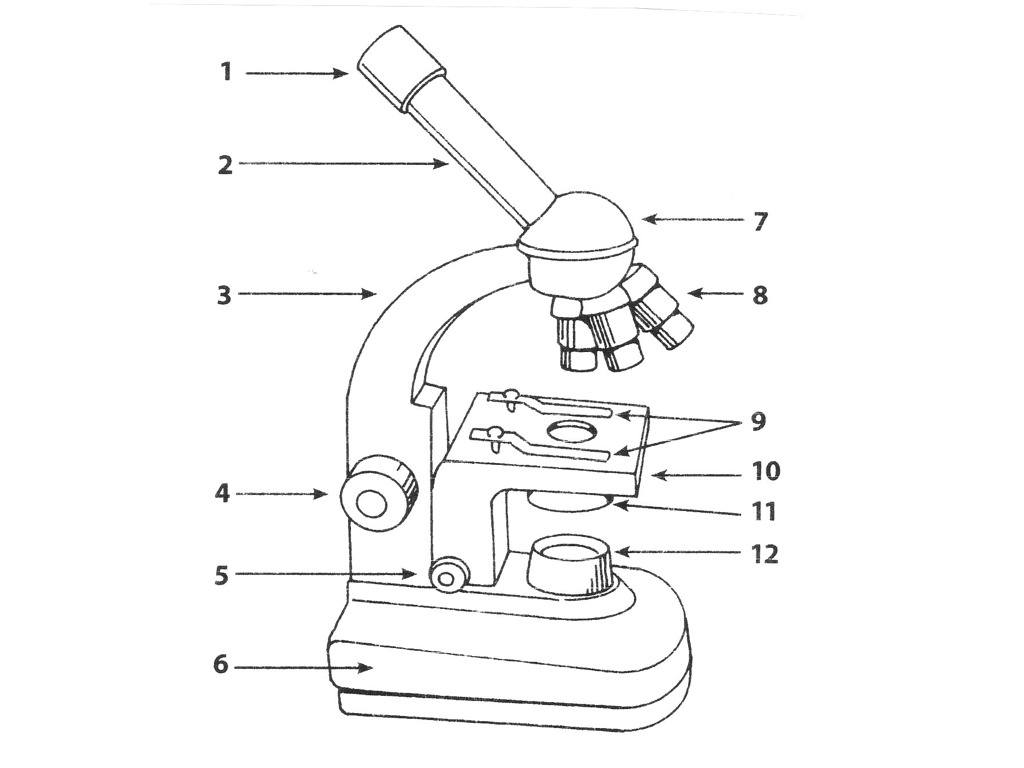


coarse focus


eye piece/ocular lens

coarse focus

coarse focus
fine focus


coarse focus
The greater the ___________________, the smaller the field you are actually viewing.
detail
objective
magnification
body
Moves stage up and down for focusing; locates the specimen
Fine Focus Knob
Large Focus Knob
Course Focus Knob
Small Focus Knob
Which objective lens should you start on to locate an image?
scanning power
low power
high power

What piece contains a high-power magnifying lens (40x)?
HIgh-power Objective
Eyepiece
Low-power Objective
Stage
True of False: If the coarse and fine focus knobs are not turning, you should force them to turn.
True
False
True of False: You should always store microscopes covered.
True
False

My second favorite holiday is _______________. Halloween is my first.
Christmas
Thanksgiving
Fourth of July
Valentine's Day

= 1 mm?

= 1 micron (µm)?

= 1 mm?


To calculate actual size we use.....
image size ÷ magnification
image size x magnification
magnification ÷ image size


Josie measured the scale bar image to be 80 mm. What is the magnification of this electron micrograph?
160X
0.00625 X
0.16X
25,000X

Serena measured the image of one of the bacterial cells to be 32 mm. If the magnification of the image is 8,000X, what is the actual size of the bacterial cell?
4 μm
0.004 μm
256,000 μm
0.25 μm


What steps should Burt use follow to calculate the actual size of each bacterial cell?
Step 1: Calculate the magnification by measuring the scale bar image ÷ actual size
Step 2: Measure image of bacterial cell ÷ magnification
Step 1: Calculate the magnification by measuring the scale bar image x actual size
Step 2: Measure image of bacterial cell ÷ magnification
Step 1: Measure the image of the bacterial cell
Step 2: Divide the image size by the scale bar size
He can't, it is impossible to calculate

A microscope that uses a stream of electrons to form magnified images of objects
Optical Microscope
Electron Microscope
Compound Microscope
Simple Microscope

