
 Worksheets
Semester 2 Final Review
Total questions: 72
Worksheet time: 1hrs 9mins
What phase of the cell cycle do cells spend 90% of their time?
Interphase
Anaphase
Metaphase
Telophase
Which stage of the cell cycle is characterized by the replication of DNA?
G1 phase
S phase
G2 phase
M phase
During which phase of mitosis do the chromosomes align at the cell's equator?
Prophase
Prometaphase
Metaphase
Anaphase
What is the main purpose of the G2 phase in the cell cycle?
DNA replication
Protein synthesis
Cell growth and preparation for mitosis
Cell division

Label the parts of the Cell Cycle
G1
S phase
G2
Mitosis

Interphase
The longest stage of a cell's life
G1
part of interphase where the cell is growing
S phase
DNA Synthesis
When the cell is making more DNA
G2
part of interphase where the cell prepares to divide
Cell Division
A small stage in the cell's life where the cell splits to make more cells
Cancer is defined as the
uncontrolled division of mutated cells
normal division of cells
normal DNA replication
abnormal ATP synthesis
The process used for asexual reproduction is
meiosis
mitosis
Offspring that are produced by only one parent are
genetically diverse
clones
gametes
Asexual reproduction produces offspring with DNA that is _________ the parent.
different from
the same as
Sexual reproduction requires two
gametes
blastocysts
embryos
A benefit of sexual reproduction is
less energy is used
greater genetic diversity in the species
it is more efficient than asexual reproduction


What is the image above:
Chromosome
Chromotid
Centromere
Centriole
A chromosome is packaged
DNA
Protein
Carbohydrates
Lipids
Centrioles pull the chromosomes apart towards the opposite sides of the cell describes:
Prophase
Metaphase
Telophase
Anaphase
In which phase does a cell spend most of its life?
Interphase
Prophase
Metaphase
Anaphase
Telophase
The splitting of the cytoplasm and cell membranes is called?
Interphase
Telophase
Centromere
Cytokinesis

In humans, the haploid number of chromosomes is ____.
23
46
69
92
Which of the following is the best definition for MEIOSIS?
the process of two haploid cells uniting
the counting of chromosomes within a diploid cell
a two-step process that reduces the number of chromosomes in half such that there is only one copy of all the chromosomes
the equational division of a cell into two identical copies
How many cells are formed at the end of Meiosis II?
2
3
4
8
The products of MEIOSIS have _______ number of chromosomes.
haploid
diploid
What is the primary cause of genetic variation during meiosis?
chromosomes lining up
"crossing over" of chromosomes
separation of chromosomes
chromosomes pulling apart
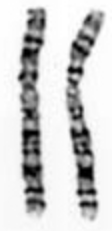
A pair of identical chromosomes (one inherited from mom and one inherited from dad) are called ______________________________.
sister chromotids
centromeres
homologous chromosomes
autosomes
Which of the following is heterozygous?
MM
Mm
mm
Which of the following is homozygous dominant?
RR
Rr
rr
Which of the following is homozygous recessive?
What term denotes the physical expression of a gene?
genotype
phenotype
appearance
homologous
What organism did Mendel study?
pea plants
onions
mice
cats

In the punnett square below, what belongs in the missing square


In the image above, what is the percentage of the offspring has the possibility of inheriting blood type O?
0%
25%
50%
100%
Aa, DD, Bb, yy are all examples of ---
genotypes.
phenotypes.
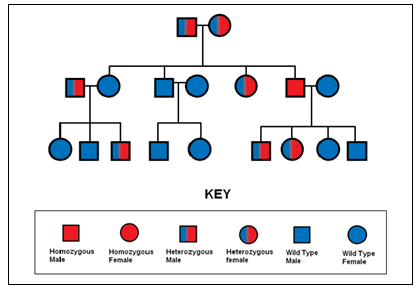
In a pedigree, which shape represents a male?
circle
square

What molecules are in nucleotides?
Phosphate group
Protein
Sugar
lipid
Nitrogenous base
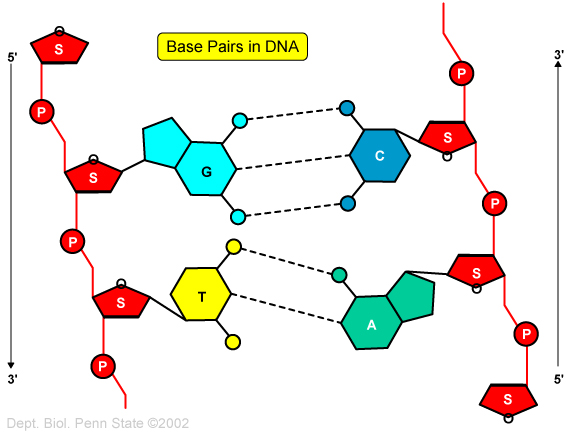
Thymine will bond with...
Guanine
Cytosine
Adenine
Uracil
Adenine can bond with... (CAREFUL!!!)
Guanine
Cytosine
Thymine
Uracil
Guanine will bond with...
Thymine
Cytosine
Adenine
Uracil
What is the name of the model that Watson and Crick came up with to describe a DNA molecule?
(a)
DNA replication occurs during (a) .
Polymerase
builds the complimentary DNA strand
Ligase
bonds DNA fragments together
Primase
Indicates whee DNA replication begins
Helicase
"unzips" the DNA
DNA is unzipped
Primase marks region to begin replication
Polymerase builds complimentary DNA strand
Ligase bonds DNA fragments
During transcription, this type of ribonucleic acid is responsible for copying the DNA and brining it out of the nucleus.
tRNA
mRNA
rRNA
dRNA
When these bond together, they form a protein
Amino Acids
Peptide Bonds
Ribose
Nucleotides
mRNA occurs during this process
Translation
Transcription
Replication
Delivery

What is the amino acid sequence for the following mRNA strand:
UCG-GAA-CAC-AAU
(a)
A phenotype that improves an organism’s chance of survival in their environment is considered a(n) ____________.
natural selection
adaption
speciation

Many different groups of organisms have wings, even though they do not share a recent common ancestor. This is because they evolved in environments with similar selective pressures. Wings are an example of a(n) ______________ structure.
vestigial
analogous
homologous
Which best describes the phrase survival of the fittest?
strongest in a population are most successful
fastest in a population are most successful
those that can survive and reproduce are most successful
those that can live the longest are most successful
Match the following pictures with the words they represent

Analogous Structure

Homologous Structure

Artificial selection

Natural selection


Charles Darwin observed that finches of different species on the Galápagos Islands have many similar physical characteristics, this supports the hypothesis that these finches
are twins
acquired traits through use and disuse.
all eat the same type of food.
descended from a common ancestor.
In a population of ladybugs, black bugs are more successful in escaping predators. Overtime, this gene becomes more popular in the population and the ladybug population loses its red color. This is an example of?
Natural Selection
Mutation
Genetic Drift
Gene Flow

According to the diagram, crocodiles evolved from dinosaurs and birds.
True
False
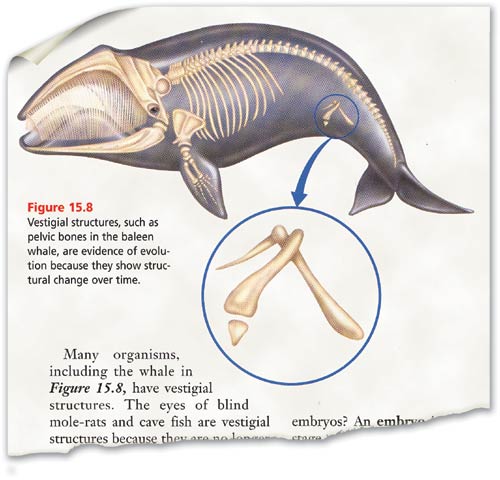
What do we call a change in a species over time?
Adaptation
Evolution
Extinction
Environmental influences

