
Font size
 Worksheets
Environmental Science Honors Review
Total questions: 77
Worksheet time: 2hrs 46mins
In a biology class, Emma is learning about biomolecules and asks, 'What is the function of nucleic acids?'
Perform cell's functions/tasks
Fast energy
Energy storage
Alter other biomolecules
Store information for cells
During a biology class, Ava, Samuel, and Kai are discussing the role of carbohydrates in the human body. What is the primary function of carbohydrates?
Perform cell's functions/tasks
Provide quick energy
Energy storage
Alter other biomolecules
Store information for cells
In a biology class, Daniel, Abigail, and Rohan are studying the composition of different biomolecules. They are currently focusing on carbohydrates. Carbohydrates are primarily made out of...
Carbon
Hydrogen
Oxygen
Nitrogen
Phosphorus
Michael is studying biology and wants to understand the role of lipids in the human body. What is the primary function of lipids?
Perform cell's functions/tasks
Fast energy
Energy storage
Alter other biomolecules
Store information for cells
During a biology class, Rohan is asked to identify the monomer for various biomolecules. He needs to determine the monomer for carbohydrates. What is it?
Lipid
Carbohydrate
Nucleic Acid
Protein

protein

nucleic acid

carbohydrate

lipid
In a biology class, Aria and Jackson are discussing how carbs and lipids are similar. They conclude that they...
Are a source of energy for living organisms
Help with immune response
Build structures such as cellulose and chitin
Contain the same elements (CHO)
Match the following functions to the biomolecule
Act as hormones
Lipid
Build muscle
Protein
Carry genetic information
Nucleic acid
Energy source (cellular respiration)
Carbohydrate

In a biology class, Michael is learning about cell structures. He is asked which part of the cell directs all cell activities through the DNA located there.
Lysosomes
Nucleus
Ribosomes
Mitochondria
During a biology class, Aria asked how mitochondria regulate energy in a cell. Can you help her understand?
Mitochondria transfer energy between cells as energy is needed.
Mitochondria convert energy in nutrients into usable energy.
Mitochondria absorb and convert energy from the sun.
Mitochondria convert energy from the nucleus into usable energy.
In a biology class, Scarlett is learning about cell structures and asks which of the following is NOT found in PROKARYOTIC cells.
membrane bound organelles
cell membrane
DNA
ribosomes
During a biology class, William and Nora are examining cells under a microscope. They observe that plant and animal cells are examples of
prokaryotic cells
eukaryotic cells
In a biology class, Isla is learning about cell structures. She is asked to identify the organelle that controls what goes in and out of plant and animal cells. Which one is it?
Cell Wall
Cell Membrane
Chloroplasts
Cytoplasm
In a science class, Mia is learning about how plants produce food. She learns that an organelle captures energy from the sunlight to help in this process. Which organelle is it?
Chromatin
Chloroplast
Cytoplasm
Cell Membrane
During a biology class, Ava observed under the microscope that the _____________ is a gel-like fluid that fills plant and animal cells. It holds the organelles in place and gives each cell its shape.
Cytoplasm
Cell Membrane
Cell Wall
Chloroplast
Anika, a paleontologist, discovers a fossilized cell during her excavation. She notes that the cell reproduced on its own and had DNA, but a membrane did not enclose its DNA. Based on these characteristics, which type of organism would this cell most likely belong to?
prokaryote
eukaryote
plant cell
animal cell

During a biology class, Nora examines a diagram showing the structure of an amino acid. She discusses with Michael and Zoe about the type of molecule that is formed from amino acids. Which type of molecule is it?
lipids
proteins
carbohydrates
nucleic acids

In a biochemical experiment, Jackson observes that a reactant binds to an enzyme at a region known as the
catalyst.
product.
substrate.
active site.
In a biology class, Scarlett is learning about enzymes. She is asked to identify the area on an enzyme where the substrate attaches. What is this area called?
active site
product
catalytic region
reactant site

During a biology class, Mia was asked to identify what type of biomolecule glucose (sugar) is. Glucose is an example of a
Carbohydrate
Lipid
Protein
Nucleic Acid
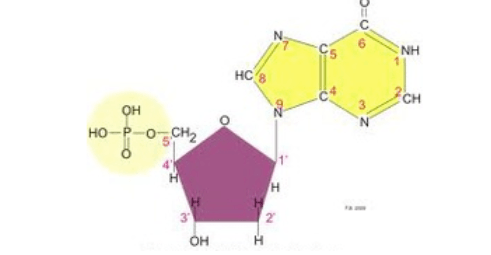
During a biology class, Emma shows a slide under the microscope and asks Benjamin, 'Which biomolecule is this a picture of?'
Protein
Nucleic Acid
Lipid
Carbohydrate
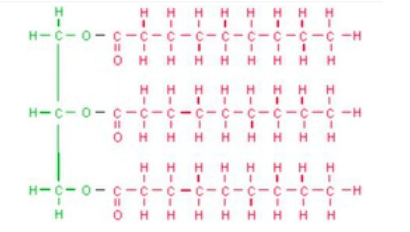
During a biology class, Noah shows a slide under the microscope and asks the class, 'Which biomolecule is this a picture of?'
Protein
Nucleic Acid
Lipid
Carbohydrate
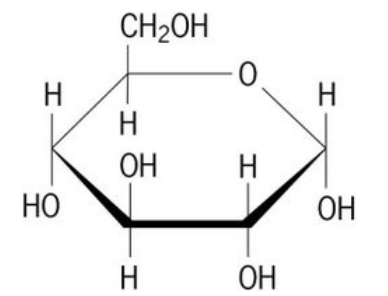
During a biology class, Nora shows a slide under the microscope and asks, 'Which biomolecule is this a picture of?'
Protein
Nucleic Acid
Lipid
Carbohydrate
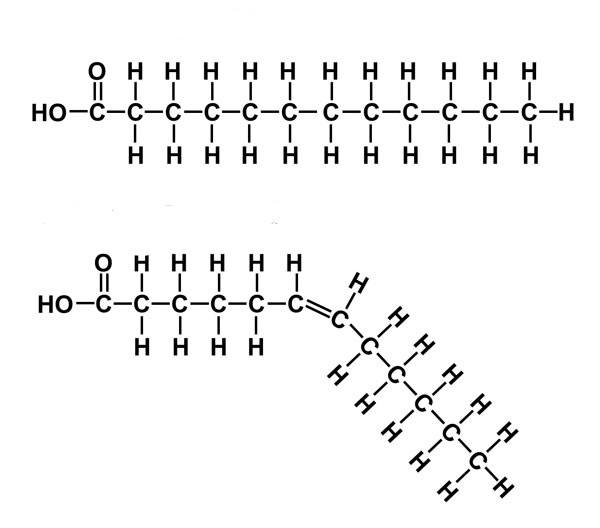
During a biology class, Nora is examining a molecular structure under the microscope. What macromolecule is Nora observing?
Carbohydrate
Lipid
Protein
Nucleic Acid
In a biology class, Luna and Oliver are conducting an experiment on plant growth. They are discussing the essential reactants for photosynthesis. Which two substances do they need to ensure are available for their plants?
oxygen
carbon dioxide
glucose
water
During a school science project, Anika and Aria are explaining the process of photosynthesis. They mention that the two products of photosynthesis are:
oxygen
carbon dioxide
water
glucose
The location where photosynthesis takes place is the ______________________.


Benjamin is conducting a science experiment to understand how different conditions affect photosynthesis in his home-grown plants. Which of the following actions could slow or stop the photosynthesis process? (Choose all that apply.)
Place the plant in a dark closet.
Expose the plant to excessive light.
Limit the plant's exposure to carbon dioxide.
Ensure the plant is watered regularly.

In a biology class, Jackson and Lily are discussing photosynthesis. They are trying to identify what 'g' and 'i' represent in the process. What are 'g' and 'i'?
g. water i. glucose
g. carbon dioxide i. oxygen
g. ATP i. NADPH
g. carbon dioxide i. glucose

In a biology class, Isla is studying cellular energy and asks, 'Using the diagram of ATP molecule, which parts must the bonds be broken to form an ADP molecule?'
A and B
B and C
C and D
all of the above
In a biology class, Abigail learned that plants need ________ for photosynthesis. What did she find out?
oxygen
soil
carbon dioxide
sugar
During a biology lab, Nora observed that energy is released from ATP when
a phosphate group is added
adenine bonds to ribose
ATP is exposed to sunlight
a phosphate group is removed
During a biology class, Ethan, Abigail, and Elijah are learning about cellular processes. They are asked: What molecules are produced by cellular respiration?
Water & glucose
Water, carbon dioxide & ATP
Glucose, oxygen & ATP
Oxygen & ATP
Imagine a scenario where Henry, Isla, and Aria are studying botany. They are discussing a process that is part of the light-independent reaction in plants. This process uses CO2 and energy to make sugar. What is this process called?
photosynthesis
Light-dependent reaction
Calvin Cycle
electron transport chain
During a biology class, Liam and Evelyn are studying a green molecule in chloroplasts that absorbs some energy in visible light. This molecule has two forms, a and b, which absorb blue and red light from the visible light spectrum.
ATP synthase
chlorophyll
stroma
thylakoid
During a biology class, Jackson, William, and Grace are learning about the structure of chloroplasts. They discuss pancake-shaped compartments filled with chlorophyll, which form stacks called grana inside the chloroplast. What are these compartments called?
chloroplast
stroma
grana
thylakoids
In a biology class, Benjamin conducted an experiment on plant photosynthesis. What gas did the plants release as a result of photosynthesis?
oxygen
carbon dioxide
hydrogen
nitrogen
During a biology class, Mia asked which organism(s) are capable of photosynthesis. Can you help her identify the correct group?
plants
algae
some bacteria
all of these

During a school science project, Scarlett is tasked with explaining how plants produce energy. She focuses on a specific organelle. Which organelle from the plant cell is primarily responsible for converting sunlight to energy?
Mitochondria
Nucleus
Vacuole
Chloroplast
Isla, Aria, and Mia are studying botany and are discussing the process of photosynthesis. Which of the following is the correct equation that they agree upon for PHOTOSYNTHESIS?
6CO2 + light + 6H2O --> 6O2 + C6H12O6
6CO2 + C6H12O6 + 6H2O --> 6O2 + light
6O2 + light + 6H2O --> 6CO2 + C6H12O6
CO2 + O2 + H2O --> Light + C6H12O6
During a biology class, David asked, 'Which process releases energy?'
cellular respiration
photosynthesis
During a school science project, Isla observes a plant under sunlight. Which process in this scenario absorbs energy?
Photosynthesis
Cellular Respiration

During a biology class, Isla learned about the process by which cells use oxygen to produce energy from food. What is this process called?
photosynthesis
transpiration
cellular respiration
germination

Sophia, Ethan, and Luna are studying the processes of photosynthesis and cellular respiration in plants in their garden. Which statement correctly describes the relationship between photosynthesis and cellular respiration in the plants they are studying?
The reactants and products of both processes are the same in the plants.
Photosynthesis and cellular respiration occur in all organisms in their garden.
Products of photosynthesis in the plants form the reactants for cellular respiration.
All ATP produced during photosynthesis in the plants is utilized during cellular respiration.

Olivia, Daniel, and Samuel are studying for their biology exam. They come across a diagram that shows the process of cellular respiration both in the presence and in the absence of oxygen. They start discussing what can be concluded from the diagram. What do you think their conclusion should be?
Fermentation is more efficient because it produces a total of 34 ATP molecules.
Aerobic respiration is more efficient because it produces a total of 36 ATP molecules.
Aerobic respiration produces only 2 ATP molecules more than fermentation.
Fermentation and aerobic respiration both produce the same amount of ATP molecules.

Jackson, Noah, and Kai are preparing for their upcoming biology exam. During their study session, they examine a diagram of a molecule. After discussing the bond shown in the diagram and its breakage, they engage in a discussion to determine the correct name of the molecule that results from this process. Can you assist them in identifying the correct molecule?
ATP
Glucose
ADP
NADPH

Arjun, Hannah, and Evelyn set up the experiment shown in their Biology class. After 24 hours, they noticed gas had accumulated in one of the inverted test tubes. They measured the amount of gas. What would be a best explanation for the gas accumulated in one of the inverted test tubes?
A. Arjun hypothesized that the light source is causing the water to evaporate causing water vapor to fill the top of the tube
B. Hannah thought that metabolism of the elodea plants absorbed the CO2 from the water
C. Evelyn suggested that heat from the light source caused the escape of the dissolved gas
D. They all agreed that light caused the elodea plants to photosynthesize, releasing O2 gas

Michael, Sophia, and Benjamin are conducting a biology experiment in their school laboratory. They have four tubes, each containing different organisms. Which tubes contain an organism(s) that are carrying on cellular respiration?
A. tubes 1 and 2, only
B. tubes 3 and 4, only
C. tubes 2 and 4, only
D. tubes 2, 3, and 4, only
Henry, David, and Anika are watching a weightlifting competition. They notice that one of the competitors, who is using heavy weights in short bursts, begins to show signs of fatigue. They understand that his muscle cells are not able to take in enough oxygen to make very much ATP. Which of the following processes do they believe is most likely going on in the muscles of the weightlifter as he competes in his event?
A. As the cells run out of oxygen they switch to anaerobic respiration, which allows the cell to make small amounts of ATP in the absence of oxygen.
B. As the cells run out of oxygen, they die off gradually and the weightlifter's muscles have fewer contracting muscle cells.
C. The cells will never run out of oxygen if the weightlifter is breathing.
D. As the cells run out of oxygen, they will continue to make the same amount of ATP, since oxygen is not required to make ATP.
Aerobic
Presence of Oxygen
Anaerobic
Absence of Oxygen
Glycolysis
Cytoplasm
Krebs Cycle
Mitochondria
Electron Transport Chain
Inner Membrane of Mitochondria

Maya, Olivia, and Scarlett are studying for their biology exam. They come across a diagram that shows ions moving against a concentration gradient to an area of higher concentration in a cell, similar to a salmon swimming upstream. They are trying to figure out which molecule provides the energy needed for this movement. Can you help them?
ATP
mRNA
protein
lipid
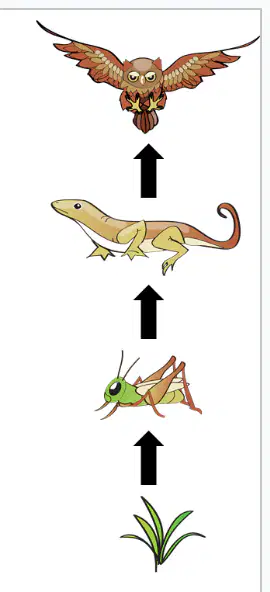
In a park, Evelyn noticed a food chain where grass was eaten by a grasshopper, which was then eaten by a lizard, and finally, the lizard was eaten by an owl. In this scenario, Charlotte asked Aiden, what role does the grasshopper play?
producer
primary consumer
secondary consumer
tertiary consumer

Nora has a vegetable garden and she noticed that only __% of the energy from the vegetables she grows is transferred to Avery, who is the primary consumer of these vegetables.
10
20
30
40

Benjamin, Anika, and Scarlett are studying a plant in their biology class. Based on the diagram they are observing, which process do they conclude is happening in the plant?
aerobic respiration
anaerobic respiration
fermentation
photosynthesis

Abigail, Mia, and Daniel are studying the role of photosynthesis in the carbon cycle. They are discussing various statements about photosynthesis and its contribution to the carbon cycle. Select ALL of those that demonstrate the role of photosynthesis in the cycling of matter into and out of organisms (#3).
Photosynthesis uses carbon dioxide from the atmosphere.
Photosynthesis releases carbon dioxide into the atmosphere.
Photosynthesis returns carbon to the ground as plants die and decompose.
Photosynthesis stores energy in the form of glucose (C6H12O6).
Photosynthesis provides glucose (C6H12O6) to herbivores in the environment.
Arjun, Hannah, and Evelyn set up the experiment shown in their Biology class. After 24 hours, they noticed gas had accumulated in one of the inverted test tubes. They measured the amount of gas. What would be a best explanation for the gas accumulated in one of the inverted test tubes?
A. Arjun hypothesized that the light source is causing the water to evaporate causing water vapor to fill the top of the tube
B. Hannah thought that metabolism of the elodea plants absorbed the CO2 from the water
C. Evelyn suggested that heat from the light source caused the escape of the dissolved gas
D. They all agreed that light caused the elodea plants to photosynthesize, releasing O2 gas

Abigail, Rohan, and Isla were conducting a science experiment in their school lab. They used Bromothymol blue, an indicator that changes from blue to yellow in the presence of carbon dioxide. They placed four test tubes in sunlight for 48 hours. According to their observations, which test tube turned the MOST yellow?
Test tube A
Test tube B
Test tube C
Test tube D

Arjun, Anika, and Abigail were conducting an experiment in their science class. They observed the absorption spectra of chlorophyll in a plant leaf. This observation showed them that
chlorophyll absorbs all light equally
chlorophyll likes to absorb lots of green light
chlorophyll likes to absorb lots of yellow light
chlorophyll likes to absorb lots of blue light

What is the order of the three phases in interphase?
G1, G2, S
S, G1, G2
G1, S, G2
G1, G2, G3

In one phase of mitosis the chromosomes are attached to spindle fibers and line up in the center of the cell – what phase is this?
Anaphase
Telophase
Prophase
Metaphase
How many daughter cells are formed during mitosis?
4
3
2
1


Name this structure:
Chromosome
Chromatin
Chromatid
Tetrad

What is represented here?
DNA replication
Nuclear membrane breaking down
Crossing Over
What is the end product of meiosis?
4 haploid cells.
2 diploid cells.
2 haploid cells.
4 diploid cells.

Which organism in the food web shown would
contain the lowest concentration of chemical pollutants?
producers
primary consumers
secondary consumers
tertiary consumers

10. Which of these daily human activities would have a beneficial impact on the environment?
A. letting water run while brushing teeth
B. leaving a ceiling fan on when departing a room
C. removing a nonnative, invasive plant species from a habitat
D. throwing away plastic bottles in containers designated for the landfill


Prokaryotic
Eukaryotic
Organelle in cells that modifies, sorts, and packages proteins and other materials from the endoplasmic reticulum for storage in the cell or release outside the cell
Golgi apparatus
Ribosome
Vacuole
Lysosome
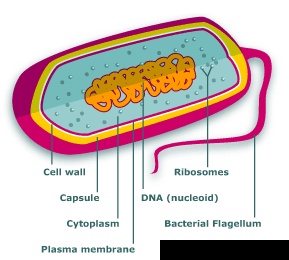
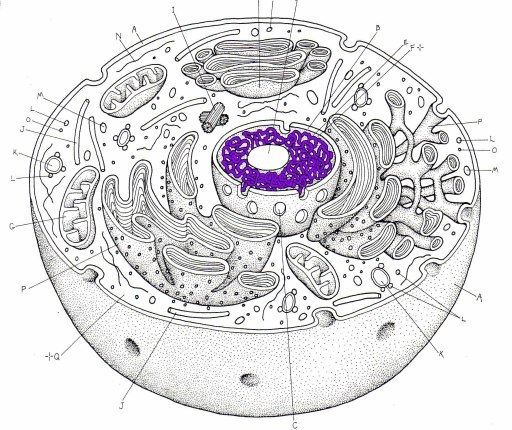

Scientists have found evidence that about 2.4 million years ago a gene regulating jaw muscles mutated and may have led to the more graceful human jaw we see today. The diagram below shows the skulls of 3 hominid species. Which statement below most closely explains the link between jaw size and hominid evolution?
The jaws of hominids evolved to be smaller and less protruding over time as did the skull.
The jaws of hominids evolved to be larger and more protruding over time.
There appears to be no change in the jaws of hominids over time.
The jaws of hominids changed over time due to a change in brain size

The illustrations below represent different stages of hominid skull evolution.
What is the correct order of the evolution of the skull beginning with the earliest example?
D,C,B,A
C,A,D,B
A,C,B,D
B,D,A,C

The picture above shows homologous structures from various species. Which of the following statements explains why these structures provide support for the theory of evolution?
They provide evidence of common ancestry.
They provide evidence that whales are not mammals.
They provide evidence that ancestors of dogs were bipedal.
They provide evidence that humans may have evolved from dogs.

