Wayground logo

Free Printable Worksheets

Font size

S
M
L
XL
Worksheets

PS Semester 2 Final Review

Total questions: 111

Worksheet time: 56mins
Name
Class
Date
1.
At higher temperatures
a)
particles in an object have less energy
b)
particles in an object move faster
c)
a gas contracts
2.
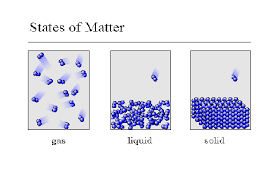
A gas
a)
has a definite shape but no definite volume
b)
has a definite volume but no definite shape
c)
has fast-moving particles
3.

Freezing

a)

Solid to gas

b)

Liquid to solid

c)

Gas to solid

4.

Boiling

a)

liquid to gas

b)

gas to solid

c)

gas to liquid

5.
Which state of matter has a definite shape?
a)
solid
b)
liquid
c)
gas
6.

What is happening when my ice cream changes from a solid to a liquid?

a)

freezing

b)

melting

c)

burning

7.

Solid to Gas

a)

Deposition

b)

Sublimation

c)

Evaporation

8.

What is condensation?

a)

gas to solid

b)

gas to liquid

c)

liquid to solid

9.

The slower the particles in a substance move,

a)

the colder it is.

b)

the warmer it is.

c)

the more energy it has.

10.

Liquid to Gas

a)

Condensation

b)

Evaporation

c)

Sublimation

11.

Is Lightning a Solid, Liquid, Gas, or Plasma?

a)

Solid

b)

Liquid

c)

Gas

d)

Plasma

12.
Blue Color: Chemical or Physical Property
a)
Chemical Property
b)
Physical Property
13.
Density: Chemical or Physical Property
a)
Chemical Property
b)
Physical Property
14.
Flammability (burns): Chemical or Physical Property
a)
Chemical Property
b)
Physical Property
15.
Reacts with Acid: Chemical or Physical Property
a)
Chemical Property
b)
Physical Property
16.
Melting Point: Chemical or Physical Property
a)
Chemical Property
b)
Physical Property
17.
Odor: Chemical or Physical Property
a)
Chemical Property
b)
Physical Property
18.
Ability to rust is this type of property:
a)
Physical property
b)
Chemical property
19.
Physical properties are
a)
properties that can be observed without changing the identity of the substance
b)
properties that describe how a substance changes into a completely different substance
20.
Is milk going sour a physical or chemical change?
a)
Physical 
b)
Chemical
21.

The ability to hammered into a thin sheet or be bent is

a)

Ductility

b)

Solubility

c)

Density

d)

Malleability

22.
Is sharpening a pencil a physical or chemical change?
a)
Physical 
b)
Chemical
23.
Evidence of a physical change.
a)
New substance
b)
Shape Change
c)
Light produced
d)
Gas released.
24.
In chemical reactions, what does the principle of conservation of mass mean?
a)
Matter is not created or destroyed.
b)
The total mass of the reactants is greater than the total mass of the products.
c)
The total mass of the reactants is less than the total mass of the products.
d)
Matter is not changed.
25.

Chocolate Chip Muffin

a)

Compound

b)

Element

c)

Mixture

26.

Lucky Charms Cereal

a)

Compound

b)

Element

c)

Mixture

27.

Koolaid

a)

Compound

b)

Element

c)

Mixture

28.

Mg

a)

Compound

b)

Element

c)

Mixture

29.

What type of mixture is trail mix?

a)

compound

b)

heterogeneous

c)

homogeneous

30.
A substance that contains only one type of atom is a(n)
a)
compound
b)
element
c)
heterogeneous mixture
d)
homogeneous mixture
31.
A mixture that appears to be evenly mixed throughout:
a)
an atom
b)
a compound
c)
a homogeneous mixture
d)
a heterogeneous mixture
32.

How many valence electrons do all of the Group 1 Alkali Metals have?

a)

1

b)

2

c)

5

d)

7

e)

8

33.

All matter is made of what?

a)

energy

b)

atoms

c)

electrons

34.

The positive particles of an atom are ___________.

a)

electrons

b)

protons

c)

neutrons

35.

The center of an atom where its neutrons and protons are is called the _____________.

a)

nucleus

b)

electron cloud

c)

center

36.

An atom with atomic number 6 would have how many protons?

a)

6

b)

12

c)

3

37.

Particles in an atom that are neutral and have no charge are

a)

protons

b)

electrons

c)

neutrons

38.

What is the atomic number for an element with three protons?

a)

6

b)

1

c)

3

39.

A particle that moves around the nucleus is called an _________.

a)

Proton

b)

Neutron

c)

Electron

d)

Quark

40.
In the modern periodic table elements are arranged by:
a)
atomic mass
b)
atomic number
c)
valence electrons
d)
number of isotopes
41.
What does the 1.00794 stand for?
a)
Hydrogen
b)
atomic number
c)
atomic mass
d)
atomic explosion
42.

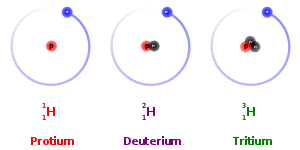
Different isotopes have...

a)

different masses

b)

different protons

c)

different electrons

43.

Isotopes are weighted in the same way that your ____________ are weighted.

a)

bank account

b)

grades

c)

shoes

44.

Isotopes are atoms that have the same number of protons but a different number of _____________.

a)

neutrons

b)

electrons

c)

atoms

45.
An atom is electrically neutral when
a)
protons and neutrons are the same
b)
protons and electrons are the same
c)
neutrons and electrons are the same
d)
neutrons balance the protons and electrons
46.
Two isotopes of carbon are carbon-12 and carbon-14.  These isotopes differ from one another by two protons.
a)
true
b)
false
47.
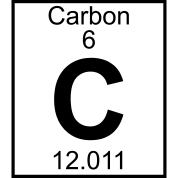
What does the C represent?
a)
atomic mass
b)
atomic number
c)
element name
d)
chemical symbol 
48.
These are found on the Periodic Table.
a)
Compounds
b)
Elements
c)
Mixtures
49.

a row on the Periodic Table of Elements

a)

family

b)

period

c)

row

d)

isotope

50.

How many valence electrons does a carbon atom have?

a)

8

b)

4

c)

2

d)

6

51.

What are valence electrons?

a)

Any of an atom's electrons

b)

Electrons located on the first energy level

c)

Electrons not attached to any atom

d)

electrons located on the outer energy level

52.
Which is a halogen?
a)
Helium
b)
Chlorine
c)
Oxygen
d)
Neptune
53.

Atoms of elements that are in the same group have the same number of

a)

protons.

b)

neutrons.

c)

valence electrons.

d)

protons and neutrons.

54.

What are the horizontal rows (left and right) in the periodic table called?

a)

Families

b)

Groups

c)

Periods

d)

Orbitals

55.

This image shows the bonding between Lithium and Fluorine. What does the red arrow show?

a)

electrons being shared

b)

electrons being transferred to Fluorine

c)

electrons being transferred to Lithium

d)

electrons being destroyed

56.

An ionic bond is the attraction between: (Select ALL that apply)

a)

oppositely charged ions

b)

similarly charged ions

c)

metals and nonmetals

d)

neutral atoms

e)

cations and anions

57.

Which of the following is the correct formula for these two ions: Al+3 & S-2

a)

AlS3

b)

Al2S3

c)

Al3S2

d)

Al3S

58.

If I had a cation with a charge of 2+ how would you describe the formation of that ion?

a)

gained 2 electrons

b)

lost 2 electrons

c)

gained 4 electrons

d)

lost 4 electrons

59.

If I had an anion with a charge of 3- how would you describe the formation of that ion?

a)

gained 2 electrons

b)

lost 2 electrons

c)

gained 3 electrons

d)

lost 3 electrons

60.

Nitrogen, N, will form which of the following ions?

a)

N

b)

N-3

c)

N-5

d)

N+5

61.

When ionic compounds form what is the overall charge?

a)

neutral

b)

positive

c)

negative

62.

What is responsible for bringing cations and anions together?

a)

the size of the ions

b)

the opposite charges are attracted to one another

c)

the similar charges are attracted to one another

d)

depends on what period they're in

63.

Which of the following is the correct formula for Sodium Nitride ( Na +1 & N 3- )

a)

NaN3

b)

Na3N

c)

Na2N3

d)

Na3N2

64.

What is the name for CsBr?

a)

Cesium Bromide

b)

Calcium Bromine

c)

Calcium Bromide

d)

Cesium Bromine

e)

Bromine Ceside

65.

When assigning ionic charge it is always written as a...

a)

superscript

b)

subscript

c)

coefficient

d)

script

66.

When assigning the number of individual atoms in a chemical formula it is written as a...

a)

superscript

b)

subscript

c)

coefficient

d)

script

67.

Which of the following is NOT a property of ionic compounds?

a)

They conduct electricity when molten

b)

They conduct electricity when in solution

c)

They have high boiling points

d)

They are insoluble in water

68.
In the chemical formula for an ionic compound, which item is written first?
a)
positive ion
b)
negative ion
c)
subscript
d)
the female
69.
Magnesium bromide is an ionic compound with the chemical formula MgBr₂.  What does the "2" tell you?
a)
There are 2 bromide ions for every magnesium ion
b)
Bromide has a 2- charge
c)
Bromide has a 2+ charge
d)
There are 2 magnesium ions to every bromide ion
70.
What is the formula for tin (II) nitride?
a)
Sn3N2
b)
SnN2
c)
Sn3N
d)
SnN
71.
Write the correct chemical formula for Ag +  and  Br -
a)
AgBr
b)
silver bromide
c)
Ag2Br2
d)
gold bromide
72.
This type of model shows only the valence electrons of an element? 
a)
Bohr diagram 
b)
Childers model
c)
Lewis-dot diagram 
d)
What is a valence electron again?
73.
Which of the following combinations would need roman numerals in the name?
a)
potassium + fluorine
b)
beryllium + oxygen
c)
boron + iodine
d)
silver + oxygen
74.
What would you name this molecule?
a)
SNa3
b)
H3O
c)
NaCl
d)
H2O
75.
In a covalent bond, one or more electrons are? 
a)
shared 
b)
lost 
c)
gained 
d)
transferred 
76.
The desire for an element to have 8 atoms around it is called 
a)
Octet Rule
b)
Resonance
c)
Ionization energy
d)
Electronegativity
77.
How many Valence Electrons are on Oxygen
a)
2
b)
7
c)
6
d)
1
78.

What two types of atoms make a covalent bond?

a)

2 non-metals

b)

1 metal and 1 non-metal

c)

2 metals

79.

What type of bond involves the sharing of electrons between atoms?

a)

covalent bond

b)

ionic bond

c)

metallic bond

d)

transfer bond

80.

When naming covalent compounds,

a)

roman numerals are needed but no prefixes required

b)

both roman numerals or prefixes are not required

c)

both roman numerals and prefixes must be included

d)

prefixes are needed but roman numerals are not required

81.
What is the OFFICIAL name for H2O
a)
Hydrogen Oxide
b)
Oxygen Dinitride
c)
Agua
d)
Dihydrogen Monoxide
82.
A covalent compound made of one sulfur and two oxygen atoms would be named
a)
sulfur dioxide.
b)
sulfur oxide.
c)
disulfur oxide.
d)
sulfide oxygen.
83.

Select the correct formula for the

COVALENT COMPOUND

diphosphorus trioxide

a)

PO

b)

P3O2

c)

PO2

d)

P2O3

84.
2 RbNO3 + BeF2 --> Be(NO3)2 + 2 RbF
a)
single displacement
b)
double displacment
c)
decomposition
d)
synthesis
85.
Which chemical reaction breaks down into 2 substances?
a)
Double displacement
b)
Single displacement
c)
Synthesis
d)
Decomposition
86.
Which of the following is a sign that a chemical reaction has occurred?
a)
change in shape
b)
melting
c)
formation of a gas
d)
dissolving
87.
A white baking soda solution was combined with white calcium chloride. Once combined the temperature increased, the substances bubbled, and were white in color. What indicators of a chemical change were shown?
a)
Temperature increase
b)
Color change
c)
Bubbling/fizzing
d)
Temperature increase and bubbling/fizzing
88.

During a reaction, atoms are

a)

created

b)

destroyed

c)

neither created or destroyed - just rearranged

89.

How many total atoms are in this compound? Al2O3

a)

2

b)

5

c)

6

d)

3

90.

How many F atoms are in this compound?

MgF2

a)

2

b)

6

c)

8

d)

12

91.

Is a copper penny turning greenish after a few years a chemical or physical change?

a)

Chemical Change

b)

Physical Change

92.

the starting materials in a chemical reaction are called what?

a)

Products

b)

Reactants

c)

Starters

d)

Enders

93.

a substance that is formed as the result of a chemical reaction is called

a)

Product

b)

Reactant

c)

Starters

d)

Enders

94.
What are the basic building blocks for all matter?
a)
atoms
b)
elements
c)
compounds
d)
chemicals
95.
What is a molecule?
a)
Two or more atoms bonded together
b)
One element
c)
One atom
d)
Solid, Liquid, Gas
96.
In an endothermic reaction, heat is ...
a)
taken in or absorbed
b)
given out or released 
97.
Baking bread and cooking an egg are examples of....?
a)
Endothermic processes
b)
Exothermic processess
c)
None of these 
98.
Exothermic reactions...
a)
Absorb energy
b)
Release energy
c)
Release Color
d)
Absorb Color
99.
What is essential for a combustion reaction to begin?
a)
Carbon dioxide
b)
Fuel 
c)
Fuel, oxygen and heat
d)
Water and oxygen
100.
What happens in ALL chemical changes?
a)
Change in state of matter
b)
A new substance is formed
c)
Bubbles are produced
d)
An explosion
101.
Is the following equation balanced or unbalanced?
Fe + S --> FeS
a)
balanced
b)
unbalanced
102.

In reactions, products must be equal to..

a)

Products

b)

Reactants

c)

Starters

d)

Enders

103.
Which of the following describes a precipitate?
a)
a liquid forms when a block of metal is heated
b)
a solid forms when one liquid is poured into another
c)
a gas forms when a solid is placed in a liquid
d)
bubbles form when an acid is poured on a rock
104.

Which reaction type is the following:

C5H10 + O2 --> CO2 + H2O

a)

Decomposition

b)

Synthesis

c)

Complete Combustion

d)

Double Replacement

105.

What is the charge of Iron in this compound. (Hint: think criss cross method):

Fe3(PO4)2

a)

3+

b)

2+

c)

1+

d)

6+

106.

The symbol for a substance dissolved in solution is ______

a)

(s)

b)

(l)

c)

(aq)

d)

(g)

107.

Complete the balanced equation for this Double Replacement reaction.

3 NaOH + Fe(NO3)3 →

a)

NaFe + OH(NO3)3

b)

NaNO3 + Fe(OH)3

c)

3 NaNO3 + Fe(OH)3

d)

3 NaFe + 3 (OH)NO3

108.

Identify the following chemical reaction.

2 NaBr + 1 Ca(OH)2 ----> 1 CaBr2 + 2 NaOH

a)

Synthesis (or combination)

b)

Decomposition

c)

Single displacement

d)

Double displacement

109.

In a _____ reaction, the products have more energy than the reactants.

a)

exergonic

b)

endergonic

110.

An _______ reaction is when more energy is released than is absorbed. This energy can be in the form of light, heat, electricity, etc.

a)

endothermic

b)

endergonic

c)

exothermic

d)

exergonic

111.
Which of the following is not evidence of a chemical reaction?
a)
Formation of a precipitate
b)
Production of gas
c)
Change in temperature
d)
Change in state of matter