Wayground logo

Free Printable Worksheets

Font size

S
M
L
XL
Worksheets

Sem 2

Total questions: 100

Worksheet time: 55mins

Name
Class
Date
1.

What is the correct sequence of structures from smallest to largest?

a)

Chromosomes, Gene, DNA, Nucleus, Cell

b)

Cell, Nucleus, Chromosomes, DNA, Genes

c)

DNA, Gene, Nucleus, Chromosome, Cell

d)

Gene, DNA, Chromosomes, Nucleus, Cell

e)

Gene Nucleus, DNA, Chromosome, Cell

2.

_______ are sections of DNA that regulate protein and code for specific traits.

a)

Genes

b)

Chromosomes

c)

Proteins

d)

Mutations

3.

How many pairs of chromosomes do you have?

a)

2

b)

46

c)

23

d)

8

4.
having two of the same genes for the trait (sometimes called purebred).
a)
homozygous
b)
hetrozygous
c)
protein
d)
chromosome
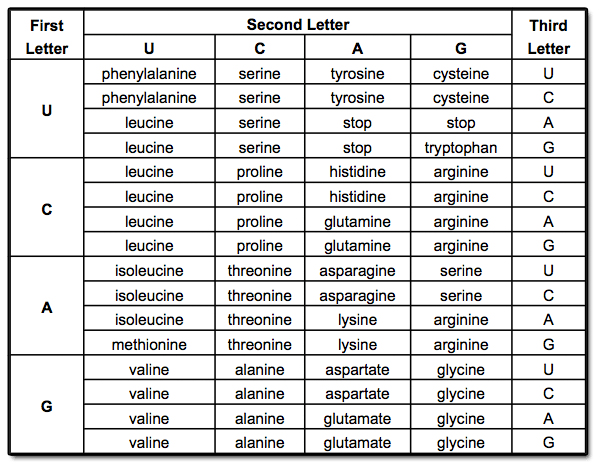
5.

What do we call bundles of tightly coiled DNA?

a)

chromosome

b)

genes

c)

traits

d)

nucleus

6.

What are two chromatids are called that are the same size, shape, and share the same genetic material?

a)

daughter chromatids

b)

sister chromatids

c)

brother chromatids

d)

twin chromatids

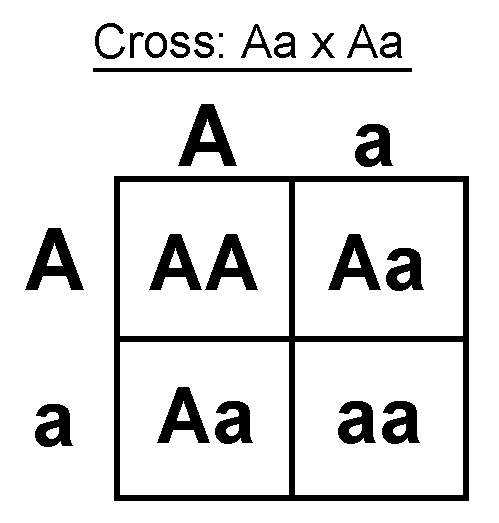
7.

What is structure B?

a)

chromatid

b)

centromere

c)

chromosome

d)

gene

8.

What is structure D?

a)

homologous chromosomes

b)

sister chromatids

c)

genes

d)

DNA

9.
What is the purpose of mitosis?
a)
To increase the surface area of a cell
b)
To allow cells to divide for growth, repair, and renewal
c)
For increasing genetic variation within a species
d)
To allow for DNA replication and protein synthesis
10.
Mitosis results in the formation of...
a)
Two identical cells with all of the original chromosomes
b)
Two different cells with half of the original chromosomes
c)
Four identical cells with all of the original chromosomes
d)
Four different cells with half of the original chromosomes
11.
Put the following stages of the cell cycle in order: G2, S, G1, M. 
a)
G1, S, G2, M
b)
S, G1, G2, M
c)
G1, M, G2, S
d)
M, G1, S, G2
12.
What is the longest stage of the cell cycle called?
a)
Cytokinesis
b)
M phase
c)
Interphase
d)
G1 Phase
13.
What stage is this?
a)
Prophase
b)
Metaphase
c)
Anaphase
d)
Telophase
14.
What stage is this?
a)
Prophase
b)
Metaphase
c)
Anaphase
d)
Telophase
15.
What stage is this?
a)
Prophase
b)
Metaphase
c)
Anaphase
d)
Telophase
16.
What stage is this?
a)
Prophase
b)
Metaphase
c)
Anaphase
d)
Telophase
17.

Why is DNA important

a)

it provides the instructions/blueprint for a cell

b)

it makes energy

c)

it stores wastes

d)

it is responsible for making food

18.

The structures labeled B are_________, held together by a centromere.

a)

sister chromatid

b)

centriole

c)

centromere

d)

chromophere

19.

When a cell cannot control it's cell cycle due to a mutation, it reproduces out of control. What is the result of this overgrowth of cells?

a)

Cell cluster

b)

Scar formation

c)

Apoptosis

d)

Cancer

20.

The --------------------- cells undergo Mitosis while the --------- undergo Meiosis

a)

(A) Somatic or body ; Gametes

b)

(B) Gametes; Somatic or body cells

c)

(C) Gametes; Gametes

d)

(D) Somatic or Body cells; Somatic or Body cells

21.

Meiosis results in ------------ While Mitosis resuls in ---------

a)

(A) 2 haploid daughter cells and 2 haploid daughter cells

b)

(B) 4 haploid daughter cells and 2 diploid daughter cells

c)

(C) 2 diploid daughter cells and 4 haploid daughter cells

d)

(D) 4 diploid daugther cells and 2 haloid daughter cells

22.

Has one set of chromosomes

a)

Haploid

b)

Diploid

c)

Body cells

d)

None of the above

23.

Forms genetically non-identical cells

a)

Mitosis

b)

Meiosis

24.
How many chromosomes do humans have?
a)
46-- 23 from mom, 23 from dad
b)
22--11 from mom, 11 from dad
c)
10-- 5 from mom, 5 from dad
d)
23
25.
the phase of mitosis in which the sister chromatids separate (pull apart) from each other
a)
prophase
b)
metaphase
c)
anaphase
d)
telophase
26.
Fruit fly body cells have 8 chromosomes. After mitosis, you would expect a resulting fruit fly daughter cell to have ...
a)
16 chromosomes.
b)
46 chromosomes.
c)
8 chromosomes.
d)
4 chromosomes.
27.
Cytokinesis happens at the end of mitosis. That is when
a)
the cell membrane splits
b)
the nucleus splits again
c)
the chromosomes merge
28.

These cells are considered body cells like skin, hair, and cheek.

a)

Somatic Cells

b)

Sex Cells

c)

Germ

d)

Gametes

29.

Sperm and egg cells are

a)

Somatic

b)

Diploid

c)

Gametes

d)

Body cells

30.

Male Chromosome arrangement

a)

XY

b)

XX

c)

XZ

d)

YY

31.

Female Chromosome Arrangement

a)

XY

b)

XX

c)

YY

d)

XZ

32.

The process that creates genetically unique sex cells

a)

Mitosis

b)

Reproduction

c)

Meiosis

d)

Budding

33.

The end result of mitosis is _______________

a)

2 identical diploid cells

b)

2 genetically unique diploid cells

c)

4 identical haploid cells

d)

4 different haploid cells

34.
____ means cancerous.
a)
Malignant
b)
Metastesis
c)
Mitosis
d)
Replication
35.
Cancer spreading to another tissue is called
a)
Malignant
b)
Metastesis
c)
Mitosis
d)
Replication
36.
Cancer tumors result from
a)
rapid cell division
b)
rapid DNA replication
c)
slow cell division
d)
long interphase
37.
What happens during S Phase?
a)

cell grows larger

b)
mitosis
c)

cell splits

d)

DNA replication

38.
Cells grow and do their job during ___.
a)
G2 phase
b)
M phase
c)
G1 phase
d)
S phase
39.

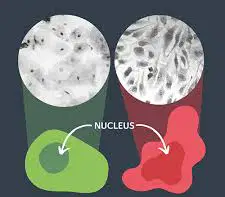
Which cell is a normal cell?

a)

The green cell

b)

The red cell

40.

Which cell is a cancer cell?

a)

The green cell

b)

The red cell

41.
This type of tumor DOESN'T usually spread to other parts of the body?
a)
benign
b)
malignant
c)
metastasis
42.

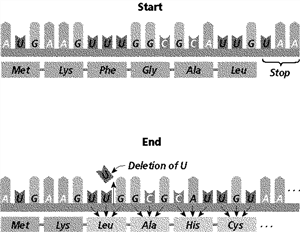
What will be the result of this deletion mutation?

a)

substitution

b)

frameshift mutation

c)

point mutation

d)

insertion

43.
In RNA, the nitrogen base____ replaces ____ that was present in DNA. 
a)
A, U (adenine, uracil)
b)
C, G (cytosine, guanine)
c)
U, T (uracil, thymine)
d)
U, A (uracil, adenine)
44.
Transcription takes place in the 
a)
cytoplasm
b)
ribosome
c)
mitochondrion
d)
nucleus
45.

At which organelle does translation occur?

a)

Nucleus

b)

Ribosome

c)

Mitochondria

d)

Golgi apparatus

46.
Translation occurs in the
a)
nucleus
b)
mitochondria
c)
cytoplasm
d)
golgi apparatus
47.

What does rRNA represent?

a)

Ribosomal RNA

b)

Reconstructed RNA

c)

Reactive RNA

d)

Reusable RNA

48.

What is the role of tRNA?

a)

To treat the DNA strand

b)

To transfer codons

c)

To transfer amino acids

d)

To tackle mutations

49.
How would the DNA sequence GCTATA be transcribed to mRNA?
a)
GCUAUA
b)
CGATAT
c)
CGAUAU
d)
GCUTUT
50.
Which phase of which process does this picture show?
a)
Transcription
b)
Translation
c)
Replication
d)
Cloning
51.
The anticodon is located on 
a)
DNA
b)
mRNA
c)
tRNA
d)
rRNA
52.

In RNA, Uracil pairs with ______.

a)

cytosine

b)

adenine

c)

guanine

d)

thymine

53.
The process to go from DNA to mRNA is _______
a)
translation
b)
transcription
c)
replication
54.
What is the complimentary mRNA sequence to the DNA sequence A-T-T-G-C-A.
a)
T-A-A-C-G-T
b)
U-A-A-C-G-T
c)
U-A-A-C-G-U
d)
T-A-A-G-C-U
55.

What is the job of messenger RNA?

a)

to transfer amino acids to the ribosome

b)

to assemble the protein from amino acids

c)

to carry genetic information out of the nucleus
56.
What amino acid is represented by the codon UUA?
a)
Phenylalanine
b)
Tyrosine
c)
Leucine
d)
Stop codon
57.

How many nucleotides make up a codon?

a)

1

b)

3

c)

5

d)

15

58.

When using your codon chart, what sequence can you use to find the correct amino acid?

a)

DNA

b)

mRNA

c)

tRNA

d)

Any of these will do

59.
Which of the following would result in a frameshift mutation?
a)
Insertions only
b)
Substitution only
c)
Deletion only
d)
Insertions and Deletions
60.
21 nucleotides will provide how many codons?
a)
3 amino acids
b)
5 amino acids
c)
7 amino acids
d)
9 amino acids
61.

When a nucleotide is replaces another nucleotide

a)

Insertion

b)

Removal

c)

Substitution

d)

Deletion

62.
Which of the following is heterozygous
a)
FF
b)
tt
c)
Gg
d)
RR
63.
Which of the following is homozygous recessive?
a)
rr
b)
AA
c)
TT
d)
Ff
64.
The physical appearance of a trait is known as the-
a)
genotype
b)
phenotype
c)
characteristics
d)
intelligence
65.
Mark is heterozygous. If B is for brown hair, and b is for blonde hair, what is Mark's phenotype?
a)
Brown Hair
b)
Blonde Hair
c)
Brown and Blonde Hair
d)
Black Hair
66.
Mark is heterozygous. If B is for brown hair, and b is for blonde hair, what is Mark's genotype?
a)
BB
b)
bb
c)
Bb
d)
bB
67.
The two-letter code that describes the genetic traits of an organism is called a-
a)
Phenotype
b)
Genotype
c)
Physical Appearance
d)
Intelligence
68.

These types of alleles are only expressed if the organism has two copies

a)

dominant

b)

recessive

c)

homozygous

d)

heterozygous

69.
Dominant Traits show up 
a)
Always
b)
Only when there are two
70.
This symbol represents an...
a)
Unaffected Male
b)
Unaffected Female
c)
Affected Male
d)
Affected Female
71.
This symbol represents an...
a)
Unaffected Female
b)
Unaffected Male
c)
Affected Male
d)
Affected Female
72.
Dominant alleles are represented by a:
a)
Male gene
b)
lowercase letter
c)
recessive trait
d)
capital letter
73.
In a heterozygous genotype, the ___________ allele takes over in the phenotype.
a)
recessive
b)
dominant
c)
lower case letter
d)
both 
74.

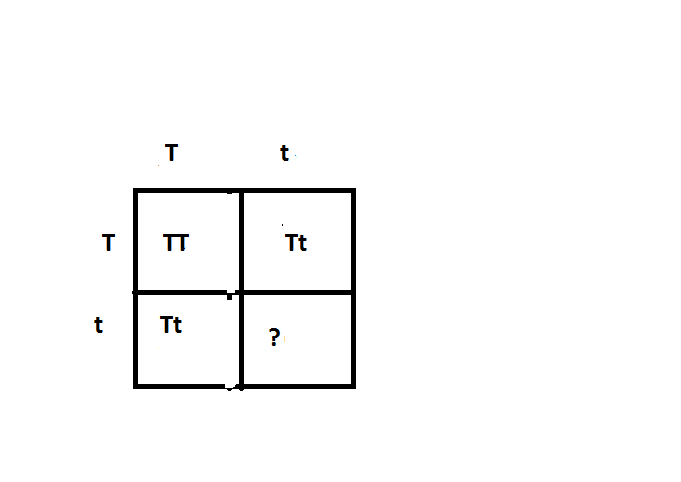
T - tall and t = short

In the punnett square below, what belongs in the missing square

a)

tt

b)

Tt

c)

Bb

d)

TT

75.

Which of the following genotypes is homozygous dominant?

a)

Yy

b)

yY

c)

yy

d)

YY

76.

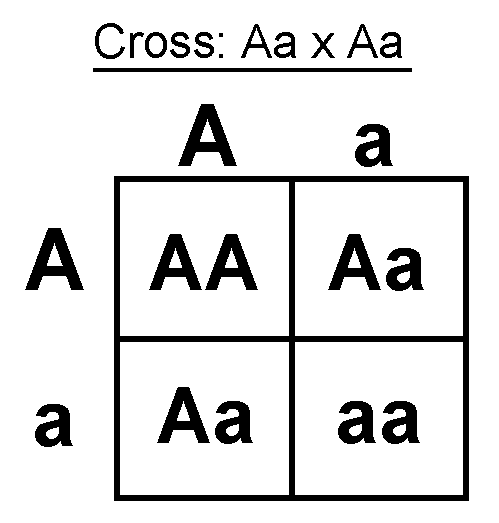
What is the genotypic ratio of the offspring?

a)

3:1

b)

1:3

c)

1:2:1

d)

2:2

77.

What are the phenotype percentages of the offspring?

(A-Brown fur color; a-white fur color)

a)

50 % Brown fur and 50% White fur

b)

25 % Brown fur and 75% White fur

c)

75 % Brown fur and 25% White fur

d)

0% Brown fur and 100% White fur

78.

The failure of one or more pairs of homologous chromosomes or sister chromatids to separate "normally" during meiosis is called _____________________.

a)

nondisjunction

b)

anaphase I

c)

nondiploidy

d)

karyotype

79.
Which one is a way the body defends against a pathogen?
a)
Fever
b)
Stomach Acid digesting
c)
White Blood Cells fighing
d)
All of these are correct
80.

An agent that causes a disease is a...

a)

Pathogen

b)

Coronavirus

c)

Antigen

d)

Leukocyte

81.

What is immunity that is general and you are born with called?

a)

Passive

b)

Active

c)

Acquired

d)

Innate

82.

A white blood cell that makes antibodies

a)

T cell

b)

bacteria

c)

B cell

d)

mast cell

83.
What is the role of antibodies?
a)
Kills pathogens
b)
Helps activate other immune cells
c)
Produces antibodies
d)
Binds to antigens and neutralizes pathogen
84.

What cells destroy pathogens by targeting them?

a)

Red blood cell

b)

T-cells

c)

Antibodies

d)

B-cells

85.

Single-celled organisms that do not rely on a host are known as..

a)

bacteria

b)

viurs

c)

fungi

d)

host

86.

Organisms such as yeasts or molds that reproduce quickly in moist, humid environments are known as..

a)

bacteria

b)

fungi

c)

virus

d)

host

87.

Tiny infectious agents that can only multiply when they are inside a host, the living cells of plants, animals, or bacteria.

a)

Bacteria

b)

Fungi

c)

Microorganism

d)

Virus

88.

Parasitic worms that cause infection

a)

protozoa

b)

prions

c)

fungi

d)

helminths

89.

Pathogens spread from person to person by objects (chairs, medical equipment, office supplies, doorknobs, etc.)

a)

Direct Contact

b)

Indirect Contact

c)

Airborne Transmission

d)

Foodborne Tranmission

e)

Vector-Borne Transmission

90.

When a pathogen is moved from person to person through physical touch (kissing, hugging, close-up sneezing, shaking hands).

a)

Transmission

b)

Translation

c)

Emission

d)

Direct Contact

e)

Indirect Contact

91.

Thick peptidoglycan in cell wall

a)

Gram positive bacteria

b)

Gram negative bacteria

92.

Thin peptidoglycan in cell wall

a)

Gram positive bacteria

b)

Gram negative bacteria

93.

Identify what type of organism

a)

Gram positive

b)

Gram negative

94.

Stained pink

a)

Gram positive bacteria

b)

Gram negative bacteria

95.
During osmosis
a)
water moves from high to low concentration
b)
large or oddly shaped molecules move across a cell membrane
c)
water moves when energy is used
d)
proteins are built
96.
Ideally, your cells should be in a(n) _______ solution
a)
Hypertonic
b)
Hypotonic
c)
Isotonic
d)
Cola
97.

The solution surrounding the cell in Diagram B, would be defined as:

a)

hypertonic

b)

hypotonic

c)

isotonic

98.
The cell below is in a _____________ solution.
a)
Hypertonic
b)
Hypotonic
c)
Isotonic
99.
In this picture, how do you classify the solution?
a)
The solution is hypotonic
b)
The solution is hypertonic
c)
The solution is isotonic
d)
The solution is my tonic
100.

Amino acids bind together to create a...

a)

Gene

b)

Pathogen

c)

Protein

d)

Nucleotide