wayground logo

Free Printable Worksheets

Font size

S
M
L
XL
Worksheets

Earth Sci Semester 2 Review Quizizz

Total questions: 85

Worksheet time: 10hrs 57mins
Name
Class
Date
1.
The Köppen classification system classifies climate based on mean monthly values of temperature and precipitation.
a)
True
b)
False
2.
Milankovitch cycles include changes in the Earth's tilt, the wobble of the Earth, and the change in Earth's orbit.
a)
True
b)
False
3.
Retention of heat in the atmosphere is a result of
a)
ice age
b)
global warming
c)
greenhouse effect
d)
season
4.
The differences in temperature caused by the presence of a large city is an example of a(n)
a)
macroclimate
b)
heat island
c)
climate
d)
lake effect
5.
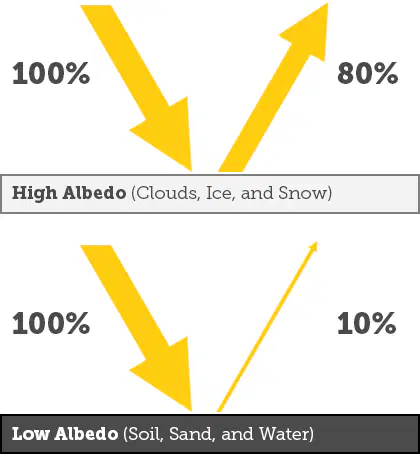
Which type of surface would have the highest albedo effect?
a)
Forest
b)
Water
c)
Snow
d)
Rock
6.
Which of these are the main characteristics that define climate?
a)
weather and humidity
b)
pressure and precipitation
c)
weather and pressure
d)
temperature and precipitation
7.
Two climates that are at the same latitude may be different because of
a)
Earth’s magnetic field.
b)
soil type.
c)
bodies of water.
d)
distance from the poles.
8.
The climatic zone that receives the least solar radiation and has the coldest climate is the
a)
tropical zone.
b)
equatorial zone.
c)
polar zone.
d)
temperate zone.
9.
A lowering of global temperatures caused by dust blocking solar radiation can be triggered by
a)
El Niño.
b)
hurricanes.
c)
volcanic eruptions.
d)
blizzards.
10.
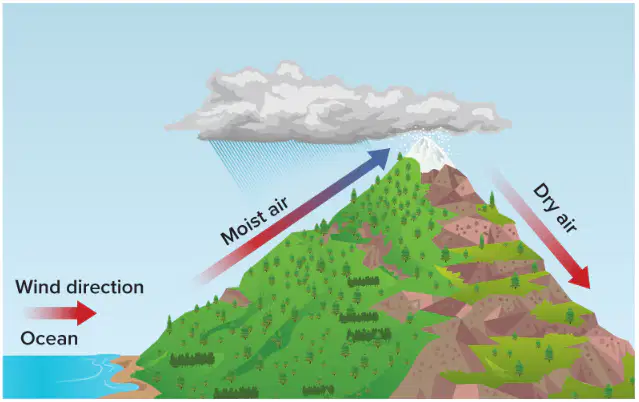
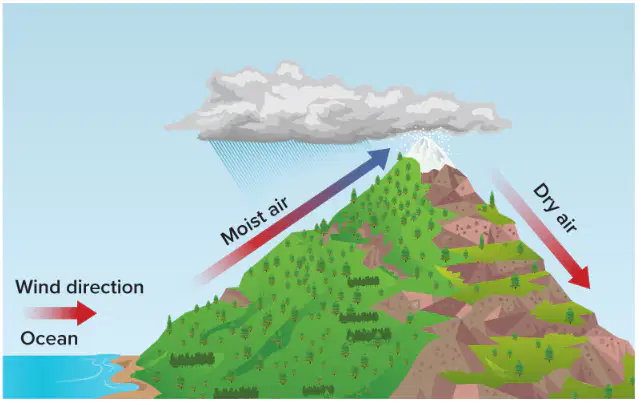
a. Which best describes the climate on the leeward (facing away from the wind) side of a mountain?
a)
cool and dry
b)
warm and dry
c)
cool and rainy
d)
warm and rainy
11.
What happens to air as it passes over the windward side (the side facing the wind) of a mountain?
a)
It rises and begins to condense.
b)
It rises and evaporates.
c)
It sinks and gathers moisture.
d)
It sinks and begins to condense.
12.
Albedo can best be described as...
a)
the temperature at the equator
b)
the amount of solar radiation reflected
c)
the amount of solar radiation absorbed
d)
the air pressure during El Nino
13.
How is climate different from weather?
a)
Weather is more variable.
b)
Climate describes only the average weather.
c)
Climate describes the long-term weather patterns.
d)
Weather is easier to predict.
14.
If the ice caps continue to melt, then there is less albedo at the poles. This process will continue to melt more ice and have less albedo. This is an example of a...
a)
fruit loop
b)
loop di loop
c)
negative feedback loop
d)
positive feedback loop
15.
Sonar uses sound waves to measure water depth.
a)
True
b)
False
16.
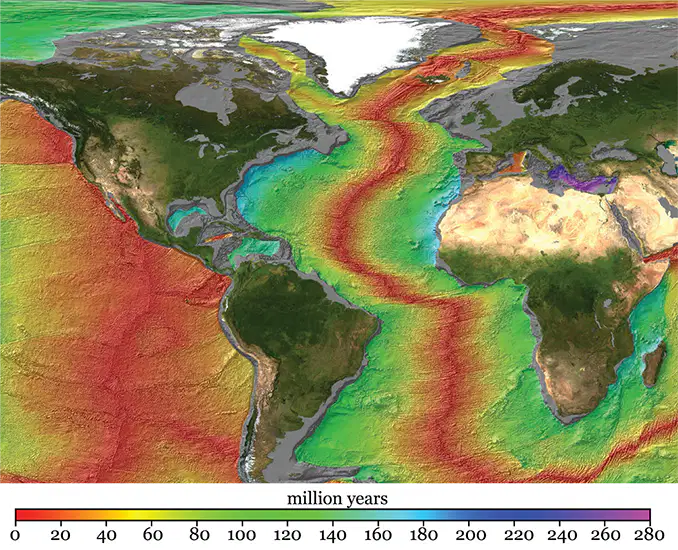
Maps made from sonar and magnetometer data led to the discovery of ocean ridges and deep-sea trenches.
a)
True
b)
False
17.
Rock samples taken near ocean ridges are older than rock samples taken near deep-sea trenches.
a)
True
b)
False
18.
The thickness of ocean-floor sediments decreases with distance from an ocean ridge.
a)
True
b)
False
19.
Earthquake activity and volcanism are common along ocean ridges.
a)
True
b)
False
20.
The theory of seafloor spreading explains that Earth’s continents move because they ride atop ocean crust as it moves away from ocean ridges.
a)
True
b)
False
21.
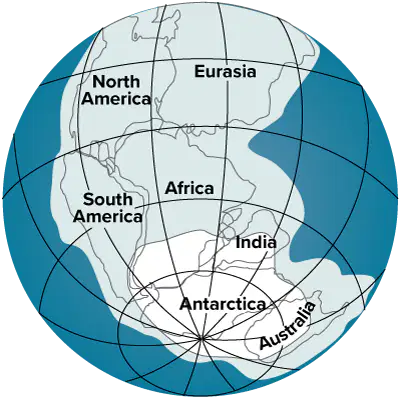
This is Wegener’s hypothesis that Earth’s continents were joined as a single landmass, called Pangaea, that broke apart about 200 mya and slowly moved to their present positions
a)
convection currents
b)
continental drift
c)
plate tectonics
d)
seafloor spreading
22.
This is an ancient landmass made up of all the continents that began to break apart about 200 mya
a)
pangaea
b)
north america
c)
jurassic period
d)
Laurentia ice sheet
23.
This is a device used to map the ocean floor that detects small changes in magnetic fields
a)
sonar
b)
scuba gear
c)
isochron
d)
magnetometer
24.
This is when Earth’s magnetic field changes polarity between normal and reversed
a)
magnetic reversal
b)
solar flair
c)
seafloor spreading
d)
milankovitch cycle
25.
This is the study of Earth’s magnetic record using data gathered from iron-bearing minerals in rocks that have recorded the orientation of Earth’s magnetic field at the time of their formation
a)
paleomagnetism
b)
geography
c)
human psychology
d)
magnetography
26.
This is an imaginary line on a map that shows points of the same age; formed at the same time
a)
isochron
b)
isobar
c)
isotherm
d)
contour line
27.
This is the hypothesis that new ocean crust is formed at mid-ocean ridges and destroyed at deep-sea trenches; occurs in a continuous cycle of magma intrusion and spreading
a)
seafloor spreading
b)
continental drift
c)
crustal plate movements
d)
convection currents
28.
Continental drift was not widely accepted when it was first proposed because:
a)
mantle convection currents weren’t in motion at that time.
b)
magnetic and sonar data proved that Wegener’s hypothesis was incorrect.
c)
continental landmasses were too big to move slowly over Earth’s surface.
d)
Wegener couldn’t explain why or how the continents moved.
29.
Compared to ocean crust near deep-sea trenches, crust near ocean ridges is:
a)
magnetically reversed.
b)
younger.
c)
older.
d)
the same age.
30.
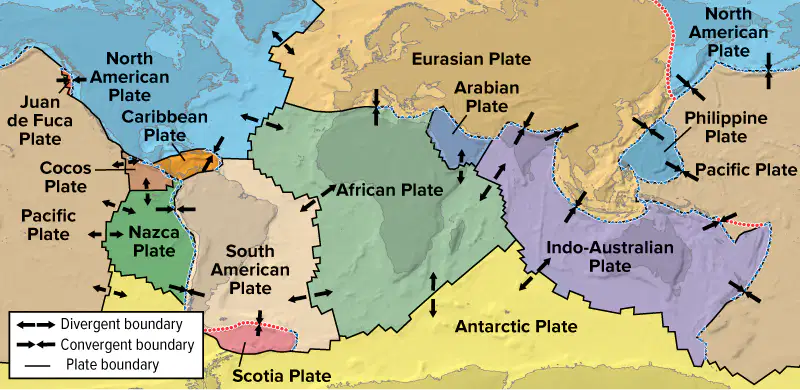
Features found at divergent boundaries include:
a)
crumpled mountains.
b)
ocean ridges.
c)
deep-sea trenches.
d)
island arc volcanoes.
31.
Subduction results in the formation of:
a)
a magnetic reversal.
b)
new continental crust.
c)
a deep-sea trench.
d)
a rift valley.
32.
Continental-continental plate collisions produce:
a)
island arcs.
b)
tall mountain ranges.
c)
rift valleys.
d)
deep-sea trenches.
33.
Crust is neither destroyed nor formed along which of the following boundaries?
a)
magnetic
b)
convergent
c)
divergent
d)
transform
34.
Which theory states that Earth’s crust and rigid upper mantle move in different directions and at different rates over Earth’s surface?
a)
continental drift
b)
plate tectonics
c)
seafloor spreading
d)
ridge push and slab pull
35.
Tectonic plates interact at places called plate:
a)
regions.
b)
boundaries.
c)
subductions.
d)
reversals.
36.
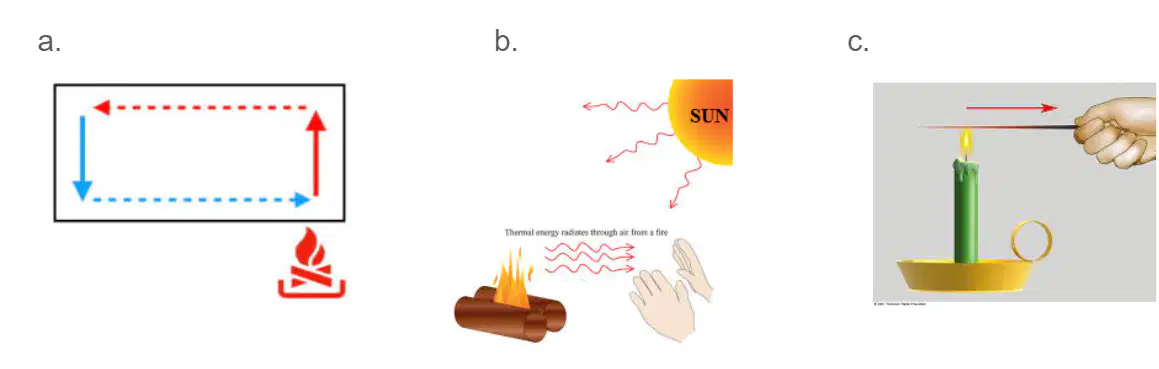
Which of the following diagrams best describes the flow of the Earth's mantle?
a)
a
b)
b
c)
c
37.
What can happen when two oceanic plates converge, and one is subducted into the mantle?
a)
The lithosphere splits to create a divergent plate boundary on land.
b)
The colliding plate edges become crumpled to form a mountain range.
c)
Magma erupts and forms an arc of islands.
d)
A continent splits to form a new ocean basin.
38.
The Mid-Atlantic Ridge is an example of a:
a)
transform boundary.
b)
convergent boundary.
c)
subduction zone.
d)
divergent boundary.
39.
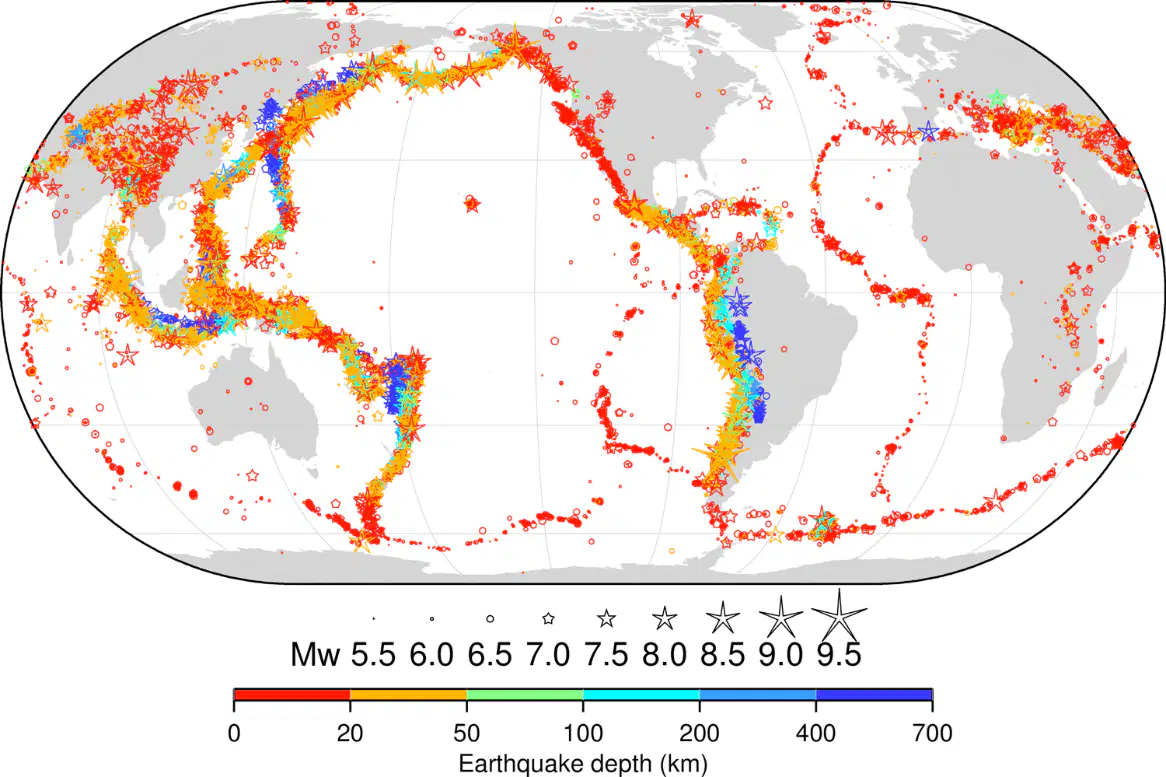
How do scientists use earthquakes to determine the shapes of tectonic plates?
a)
p-wave measurements indicate the outline of the plates
b)
the epicenter of earthquakes outline the plates
c)
body waves of earthquakes are most severe at plate boundaries
d)
surface waves of earthquakes don't go past the plate boundaries
40.
Which of the following causes Earth's tectonic plates to move?
a)
Energy from the Sun
b)
Magnetic Pole Reversal
c)
Convection currents in the mantle
d)
Faults in Mountain Ranges
41.
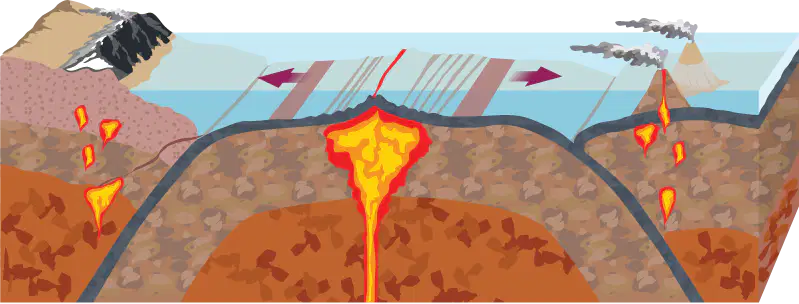
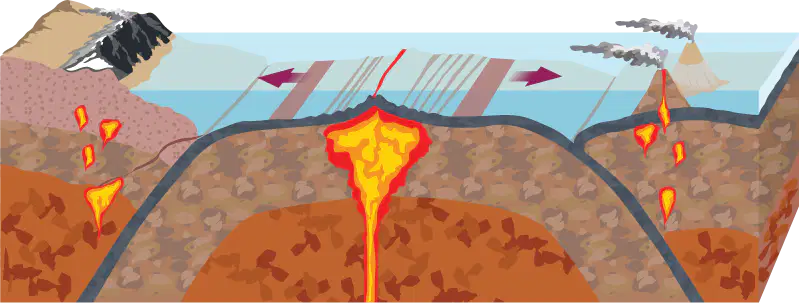
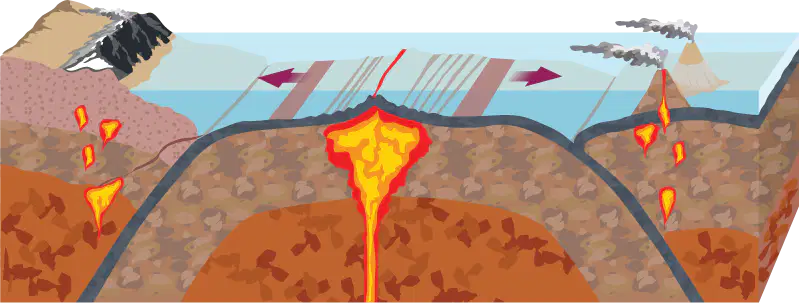
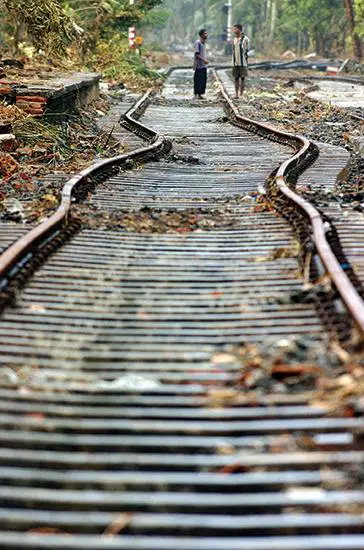
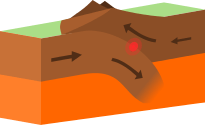
What type of event will occur at this boundary?
a)
Earthquake
b)
Volcano Eruption
c)
Tornado
d)
Mountain Building
42.
What type of plate boundary is this?
a)
Plate
b)
Divergent
c)
Convergent
d)
Transform
43.
A divergent boundary occurs when plates ....
a)
Pull apart
b)
Come together
c)
Slide past each other
d)
subducting
44.

Which of the following is the name of the ancient supercontinent formed 280 Million Years ago.

a)

Pangea

b)

Gondwanda

c)

Laurasia

d)

Neverland

45.
Which of the following is NOT evidence to support the theory of plate tectonics?
a)
Fossils
b)
Mountains
c)
Glaciers
d)
Sand Erosion
46.
What geologic feature/event would you most likely to find at a divergent boundary between two pieces of oceanic crust?
a)
Rift Valley
b)
Mid-Ocean Ridge
c)
Island Arc
d)
Flat land
47.
What geologic feature/event would you most likely to find at a convergent boundary between two pieces of continental crust?
a)
Volcano
b)
Mountain
c)
Rift
d)
Island Arc
48.
This layer is divided into pieces called tectonic plates.
a)
Mesosphere
b)
Asthenosphere
c)
Mantle
d)
Lithosphere
49.
Which piece of evidence did Wegener use to prove continental drift?
a)
The shape of the continents
b)
Similar fossils found on separate continents
c)
Tree fossils found in odd places
d)
All of the above
50.
Convection currents in the mantle are thought to be the driving force behind tectonic movement. At which location do the convection currents cause the plates to diverge?
a)
strike-slip fault
b)
subduction zone
c)
mid oceanic ridges
d)
folded mountains.
51.

What do we call an area where more then two plates interact in different ways

a)

plate boundary zones

b)

hot spots

c)

convergent boundaries

d)

subduction

52.
What are the two types of crust?
a)
continental and oceanic
b)
ocean and basin
c)
lower and upper
d)
thick and thin
53.
What drives tectonic plate movement? 
a)
gravity
b)
coriolis effect
c)
convection currents
d)
the earth's magnetic core
54.
According to Wegener's hypothesis of continental drift, 
a)
Earth's surface is made up of seven major landmasses
b)
the continents DO NOT move
c)
Earth is slowly cooling and shrinking
d)
the continents were once joined together in a single landmass
55.
What is Pangaea?
a)
the name of a German scientist
b)
the name of the super-continent that existed millions of years ago
c)
another name for continental drift
d)
the name of an ancient fossil
56.
What type of evidence was NOT used by Alfred Wegener to support his continental drift hypothesis?
a)
evidence from landforms
b)
evidence from fossils
c)
evidence from human remains
d)
evidence from climate
57.
Most geologists rejected Alfred Wegener's idea of continental drift because...
a)
it did not agree with their current theory
b)
Wegener was interested in what Earth was like millions of years ago
c)
Wegener used several different types of evidence to support his hypothesis
d)
Wegener could not identify the force that moved the continents
58.
In Seafloor Spreading, molten material rises from the mantle and erupts or flows out 
a)
along the edges of all the continents
b)
along mid-ocean ridges
c)
in the deep ocean trenches
d)
in the north and south poles
59.
Which of the following is evidence that supports continental drift?
a)
the presence of penguins at both the equator and Antarctica
b)
fossils of the same plant have been found on several continents
c)
the presence of glacial features in Antarctica
d)
the presence of volcanic rock in Antarctica
60.
What must be true for a celestial body to be a planet? Select all that apply:
a)
Must have at least one moon
b)
Orbits a star
c)
Must have other planets around it
d)
Big enough to be round
e)
Cleared the neighborhood around its orbit
61.
The Earth's orbit around the Sun is a perfect circle.
a)
True
b)
False
62.
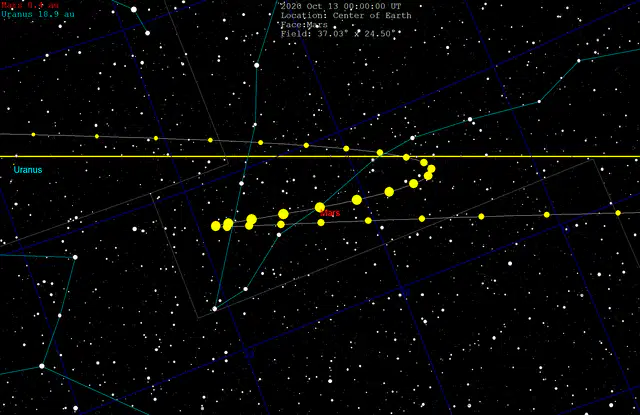
What is the following phenomenon called?
a)
heliocentric motion
b)
retrograde motion
c)
geocentric motion
d)
incline orbital motion
63.
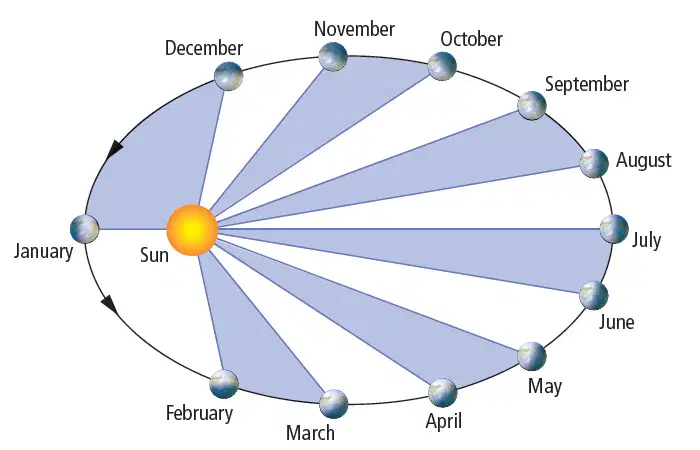
The figure illustrates Kepler's second law. Which conclusion can you draw from analyzing the shaded areas “swept out” by the planet each month?
a)
The Sun is the center of the universe.
b)
The shape of a planet's orbit is a circle.
c)
Planets move faster when they are closer to the Sun and slower when they are farther away.
d)
The speed of a planet's orbit steadily increases as it moves around the Sun.
64.

Which planet is closest to the sun?

a)

Uranus

b)

Mercury

c)

Neptune

d)

Earth

65.

In correct order of the INNER planets starting from closet to the sun is _______,______<______and ______.

a)

Mercury Venus Earth and Mars

b)

Jupiter Saturn Uranus and Neptune

c)

Venus Mars Mercury and Earth

d)

Mars, Earth, Venus, and Mercury

66.

The only planet known to support life is (a)   .

67.
A force of attraction between any two objects is called _____________.
a)
static electricity 
b)
rotation
c)
gravity
d)
orbit
68.
How long does it take Earth to complete one revolution around the Sun?
a)
24 hours
b)
one week
c)
one month
d)
one year
69.
Earth completes one full ___________ on its axis every 24 hours.
a)
rotation
b)
revolution
c)
resolution
d)
reservation 
70.
What object in the solar system is considered a dwarf planet?
a)
Mercury
b)
Mars
c)
Pluto
d)
Neptune
71.

When the distance increases between 2 objects, the gravitational pull _________________.

a)

decreases

b)

increases

c)

stays the same

d)

is not affected

72.

When the distance decreases between 2 objects, the gravitational pull _________________.

a)

decreases

b)

increases

c)

stays the same

d)

is not affected

73.

How many planets are there?

a)

6

b)

7

c)

8

d)

9

74.

What are the three "proofs" scientists use to explain the Big Bang Theory?

a)

cosmic background radiation

b)

milky way spinning

c)

redshift

d)

blueshift

e)

abundance of elements

75.

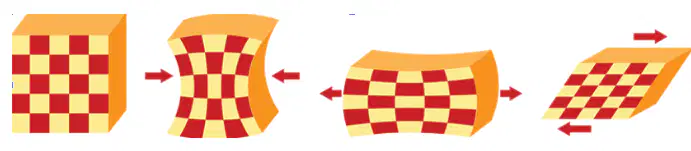
This is the total force acting on crust per unit area. 

a)

stress

b)

strain

c)

focus

d)

epicenter

76.

This is the deformation of material as a response to force. 

a)

stress

b)

strain

c)

focus

d)

epicenter

77.

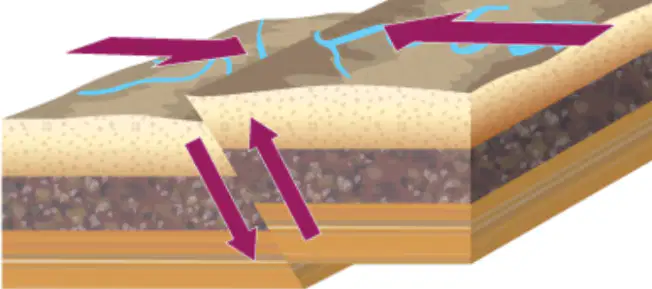
The type of fault that occurs when plates collide and one plate is pushed up relative to the other. 

a)

reverse

b)

normal

c)

strike-slip

78.

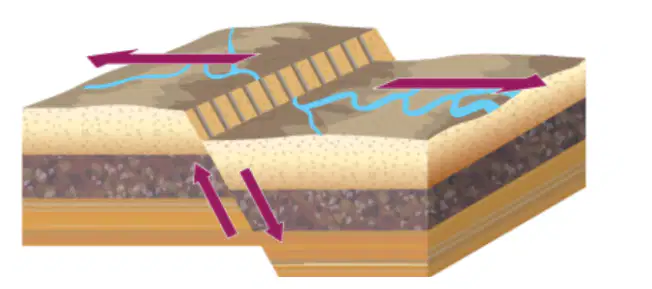
The type of fault that occurs when plates separate and one plate slides down relative to the other. 

a)

reverse

b)

normal

c)

strike-slip

79.

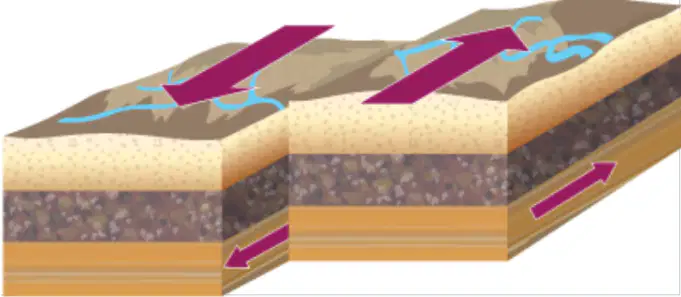
The type of fault that occurs when plates slide past each other horizontally. 

a)

reverse

b)

normal

c)

strike-slip

80.

These seismic waves are the fastest travelling. 

a)

seismic waves

b)

surface waves

c)

p-waves

d)

s-waves

81.

Seismic waves change speed and direction when they encounter different materials. 

a)

True

b)

False

82.

Which of the following principles state that, in an undisturbed sequence, the oldest rocks are at the bottom of the sequence and successive layers are younger than those below them?

a)

superposition

b)

cross-cutting concepts

c)

uniformitarianism

d)

intrusions

83.

Which of the following principles uses relationships to infer that a fault or an intrusion is younger than the rock it cuts across.

a)

superposition

b)

cross-cutting concepts

c)

uniformitarianism

d)

intrusions

84.

This divides Earth’s history into units from its origin to the present.

a)

eons

b)

geologic time scale

c)

principle of uniformitarianism

d)

relative age dating

85.

The matching of rock layers from one geographic area with those of another area is known as

a)

cross-cutting

b)

absolute age dating

c)

igneous intrusions

d)

correlation