wayground logo

Free Printable Worksheets

Font size

S
M
L
XL
Worksheets

Med Serv 20 - Nervous System

Total questions: 90

Worksheet time: 2hrs 46mins

Name
Class
Date
1.
The area of the brain most associated with coordination and balance is the:
a)
Cerebellum
b)
Hippocampus
c)
Amygdala
d)
Pons
2.
The area of the brain most associated with forming memories is the:
a)
Cerebellum
b)
Hippocampus
c)
Amygdala
d)
Pons
3.
The brain lobe controlling vision is the:
a)
Frontal
b)
Occipital
c)
Temporal
d)
Parietal
4.
Autonomic life functions such as heartbeat and breathing are centred in the:
a)
Amygdala
b)
Brain Stem
c)
Cerebellum
d)
Limbic System
5.
The part of the neuron that conducts action potentials is the:
a)
Axon
b)
Dendrite
c)
Axon Terminal
d)
Cell Body
6.
The part of the neuron that receives signals is the:
a)
Axon
b)
Dendrite
c)
Axon Terminal
d)
Cell Body
7.
The neurotransmitter enters the post-synaptic cell to cause depolarization.
a)
True
b)
False
8.
The neurotransmitter cause depolarization by opening up Na+ channels in the post-synaptic membrane.
a)
True
b)
False
9.
The neurotransmitter most associated with rewards and motivation is:
a)
Dopamine
b)
Serotonin
c)
GABA
d)
Adrenaline
10.
The depolarization phase of an action potential is caused by:
a)
Na+ rushing into the axon
b)
K+ rushing out of the axon
c)
Ca++ rushing into the axon
d)
Activation of Na/K pumps
11.
Na/K Pumps are most active during which phase of Action Potential events?
a)
Hyperpolarization
b)
Depolarization
c)
Repolarization
d)
Resting Membrane Potential
12.
Which event characterizes repolarization?
a)
Na+ rushing into the axon
b)
K+ rushing out of the axon
c)
Ca++ rushing into the axon
d)
Activation of Na/K pumps
13.
Which photo-receptor cells in the human eye would be sensing light wavelengths in the red range?
a)
Rods
b)
Cones
c)
Melanopsin Producing Cells
d)
SupraChiasmatic Nuclei
14.
The ultra-HD area of the human eye is the:
a)
Fovea
b)
Retina
c)
Optic Fundus
d)
Lachrymal Gland
15.
Heartbeat would be accomplished by which branch of the nervous system?
a)
Sensory
b)
Autonomic
c)
Motor
d)
Pineal
16.
This nervous system branch causes increases in heart rate and breathing.
a)
Sympathetic
b)
Parasympathetic
c)
Motor
d)
Sensory
17.
The CNS is contained by a membrane and bathed in:
a)
Blood
b)
Cerebro-Spinal Fluid
c)
Lymph
d)
Cytoplasm
18.

What two components make up the central nervous system (CNS)?

a)

spinal cord and facial nerves

b)

nerves in the limbs and the brain

c)

brain and spinal cord

d)

nerves in the limbs and those around the organs

19.

Put the following parts of the reflex arc in the correct order:

1. motor neuron (efferent)

2. receptor

3. effector

4. sensory neuron (afferent)

5. interneuron

(a)  

20.

The part of the neuron that contains the nucleus of the cell is the

a)

dendrite

b)

cell body

c)

axon

d)

myelin sheath

21.

The part of the neuron that conducts the action potential away from the cell body is the

a)

neurilemma

b)

dendrite

c)

axon terminal

d)

axon

22.

The part of the neuron that insulates the axon in order to ensure a "faster" action potential.

a)

myelin sheath

b)

Schwann cell

c)

Node of Ranvier

d)

axon

23.

What does the letter F represent?

a)

axon

b)

Schwann cell

c)

Node of Ranvier

d)

myelin sheath

24.

What does the letter A represent?

a)

nucleus

b)

cell body

c)

dendrite

d)

axon terminal

25.

What does the letter G represent?

a)

axon terminal

b)

Schwann cell

c)

myelin sheath

d)

Node of Ranvier

26.

What structure is correctly named AND is the structure that releases an outgoing chemical signal into the synapse?

a)

H, axon terminal

b)

H, dendrite

c)

A, dendrite

d)

A, axon terminal

27.

An action potential, or the "firing" of the nerve occurs at 1 which is called

a)

polarization

b)

repolarization

c)

depolarization

d)

hyperpolarization

28.

An action potential, or the "firing" of the nerve occurs at 1 which is caused by

a)

Ca2+ ions rushing into the axon

b)

K+ ions rushing out of the axon

c)

Activation of the Na+/K+ pumps

d)

Na+ ions rushing into the axon

29.
a signal molecule that transmits nerve impulses across synapses
a)
neuron
b)
neurotransmitter
c)
nerve
d)
action potential
30.
Which ions are involved in the electrical nerve impulse?
a)
Iodine and Sodium
b)
Potassium and Sodium
c)
Iron and Sodium
d)
Calcium and Iodine
31.

What contains the nucleus of the neuron?

a)

Terminal Bouton

b)

Cell Body

c)

Axon Hillock

d)

Myelin Sheath

32.
When a neuron is depolarized, what are the first channels to open?
a)
Sodium
b)
Potassium
c)
Calcium
d)
ACTH
33.

Which of the following uses ACTIVE transport?

a)

sodium-potassium pump

b)

sodium channel

c)

potassium channel

d)

diffusion

34.
What is the insulating membrane that surrounds parts of the axon that helps to protect & propagate action potential?
a)
Axon
b)
Dendrites
c)
Node of Ranvier
d)
Myelin Sheath
35.
This type of channel respondes to a change in the electrical potential of the cell membrane
a)
leaky
b)
voltage gated
c)
mechanically gated
36.
Gaps in the myelin sheath are called this.
a)
Nodes of Ranvier
b)
Axon terminals 
c)
Synapses
d)
Neurotransmitters
37.
Why is hyperpolarization important?
a)
It makes sure the neuron is healthy
b)
It prevents a second, unwanted signal from being sent
c)
It makes sure the neurons are in the correct space
d)
It makes sure the charge is back at -70 mV
38.
Produce the fatty, white substance that is wrapped around the axon of a neuron.
a)
Schwann's Cells
b)
Glial Cells
39.
What is letter B
a)
Optic nerve
b)
Lens
c)
Cornea
d)
Retina
40.
What is letter E?
a)
Vitreous humor
b)
Retina
c)
Cornea
d)
Optic nerve
41.
What is letter F?
a)
Retina
b)
Pupil
c)
Vitreous humor
d)
Iris
42.
What is letter G?
a)
Sclera
b)
Retina
c)
Lens
d)
Vitreous humor
43.
What is letter H?
a)
Cornea
b)
Optic nerve
c)
Iris
d)
Retina
44.
What is letter I?
a)
Cornea
b)
Lens
c)
Vitreous humor
d)
Optic nerve
45.
Why does your pupil increase in size when you enter a dark room?
a)
To protect the eye
b)
to allow more light to enter the  eye
c)
to allow less light to enter the eye
d)
to look like a  pirate
46.
What part of the eye are the cones located
a)
Iris
b)
lens
c)
retina
d)
pupil
47.
What part of the eye holds the lens in place?
a)
cornea
b)
ciliary muscles
c)
pupil
d)
retina
48.
When you enter a dark room, what does the pupil do
a)
get larger
b)
get smaller
49.
what is the iris
a)
the colored part of the eye that controls the size of the pupil
b)
Transparent jellylike fluid that fills the eye and refracts light.
c)
Sends messages picked up by the retina to the brain 
d)
Hole passes different amounts of light
50.
This part of the eye has photoreceptors called rods and cones.  They help us to see color and see at night.  It is called:
a)
optic nerve
b)
brain
c)
retina
d)
cornea
51.
This part of the eye focuses light/images onto the retina.
a)
lens
b)
cornea
c)
cones
d)
vitreous humor
52.

Sensory information and voluntary muscle activity is processed by the

a)

cerebellum

b)

pons

c)

medulla

d)

cerebrum

53.
This part protects the eye, especially the iris, pupil and lens.
a)
rods
b)
cornea
c)
optic nerve
d)
retina
54.
This part of the eye changes shape to control the amount of light that enters the eye.  It is also known as the colored part of the eye.  What is it called?
a)
pupil
b)
lens
c)
iris
d)
retina
55.
This part of the eye allows light into the eye.  
a)
pupil
b)
optic nerve
c)
sclera
d)
lens
56.
This part of the eye sends messages to the brain
a)
rods
b)
retina
c)
optic nerve
d)
cones
57.
The outer layer of the eye is the ________.
a)
Sclera
b)
Retina
c)
Choroid
d)
Cornea
58.

Hair cells in the inner ear which move in response to sound waves and movement of the head are examples of

a)

thermoreceptors

b)

photoreceptors

c)

mechanoreceptors

d)

chemoreceptors

59.
Which of the following is NOT in the OUTER EAR?
a)
Auricle
b)
Eustachian tube
c)
External Auditory Meatus
d)
Tympanic Membrane
60.
The malleus, incus, and stapes are collectively called the
a)
maculae
b)
otoliths
c)
semicircular canals
d)
ossicles
61.
Which ossicle gets it vibrations directly from the Tympanic Membrane?
a)
Melleus
b)
Incus
c)
Stapes
d)
Cochlea
62.
Which of the following locations and receptors are correct for DYNAMIC EQUILIBRIUM?
a)
Vestibule, Maculae,
b)
Semicircular Canals, Maculae
c)
Semicircular Canals/Crista Ampularis
d)
Vestibule, Crista Ampullaris
63.
What is this?
a)
Cochlea
b)
Vestibule 
c)
Semicircular Canals
64.
What is this?
a)
Vestibule
b)
Semicircular Canals
c)
Cochlea
65.

Which side of the body is controlled by the left hemisphere?

a)

Left side

b)

Right side

66.

At which age is the brain fully formed?

a)

At 18 years old

b)

At 20 years old

c)

At 25 years old

d)

At 28 years old

67.

Which is not a part of the brain?

a)

Cerebellum

b)

Politeal space

c)

Brainstem

d)

Temporal lobe

68.

True or False: The midbrain is situated in the brainstem?

a)

True

b)

False

69.

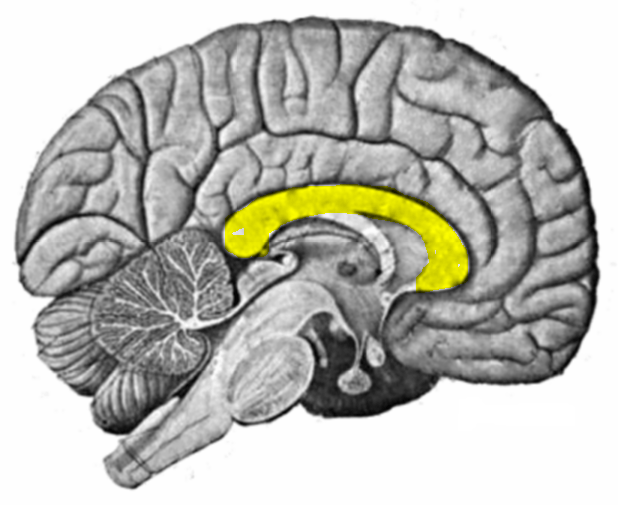
Name this part of the brain.

a)

Corpus Callosum

b)

Thalamus

c)

Cerebellum

d)

Pons

70.

Which lobe of the brain is responsible for processing visual information from the eyes and is also responsible for processing auditory information?

a)

Occipital Lobe

b)

Frontal Lobe

c)

Parietal Lobe

d)

Temporal Lobe

71.

A is

a)

white matter

b)

gray matter

72.

The _____________ is a bundle of white fibers that connects the two hemispheres of the brain, providing coordination between the two.

a)

corpus callosum

b)

cerebellum

c)

cerebrum

d)

paper clips

73.
what controls your sight ?
a)
occipital lobes
b)
temporal lobes
c)
parietal lobes
d)
brainstem
74.
Which letter on the illustration represents the frontal lobe
a)
A
b)
B
c)
C
d)
D
75.
Which letter on the illustration represents the temporal lobe
a)
A
b)
B
c)
C
d)
D
76.
As the result of a stroke, a man has lost his ability to plan, make decisions, and set goals. Which lobe has been damaged?
a)
FRONTAL LOBE
b)
PARIETAL LOBE
c)
OCCIPITAL LOBE
d)
THE BROCA'S AREA
77.
You actually do 'have eyes in the back of your head' because this region of the brain responsible for visual processing is right above the cerebellum!
a)
temporal lobe
b)
sensory cortex
c)
occipital lobe
d)
gyri
78.
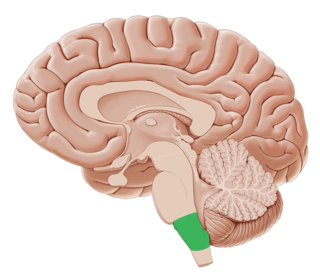
What is this?
a)
Pons
b)
Medulla Oblongata
c)
Cerebellum
d)
Hypothalamus
79.

Interneurons are located in the

a)

central nervous system

b)

peripheral nervous system

80.

Which of the following makes up the central nervous system?

a)

Brain only

b)

Spinal cord only

c)

Brain and spinal cord

d)

Brain, spinal cord, and all outside neurons

81.

tough outermost meninge that encloses the brain and spinal cord

a)

dura mater

b)

arachnoid

c)

pia mater

82.

Match the following

a)

Frontal Lobe

1.

Involved in reasoning and speaking

b)

Parietal Lobe

2.

Processes Sensations

c)

Temporal Lobe

3.

Hearing and Memory

d)

Occipital Lobe

4.

Visual Information

e)

Cerebrum

5.

Contains 4 lobes and is the largest part of the brain
83.
a)
Corpus Callosum
b)
Amygdala
c)
Thalamus
d)
Hypothalamus
84.
a)
Hypothalamus
b)
Cerebellum
c)
Hippocampus
d)
Thalamus
85.
a)
Hippocampus
b)
Hypothalamus
c)
Amygdala
d)
Thalamus
86.
Which of the following is NOT a part of the brainstem?
a)
Cerebellum
b)
Medulla oblongata
c)
Midbrain
d)
Pons
87.

Vital centers that regulate respiration and the heart are located in the

a)

motor cortex

b)

temporal lobe

c)

medulla oblongata

d)

basal nuclei

88.

Label the parts of the brain stem

89.

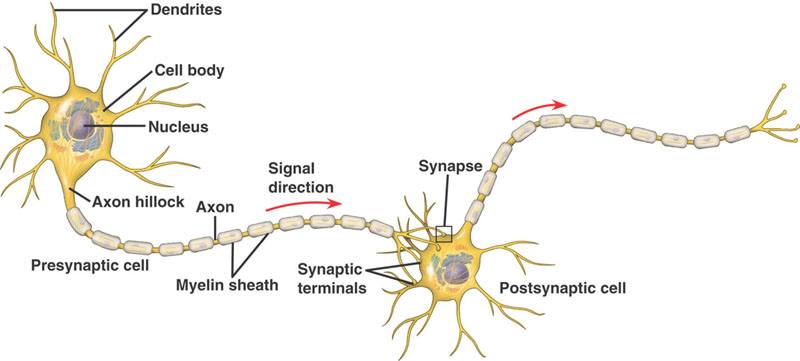
Label the parts of the neuron

90.

Impulses from the skin are received in the

a)

temporal lobe

b)

frontal lobe

c)

parietal lobe

d)

occipital lobe