wayground logo

Free Printable Worksheets

Font size

S
M
L
XL
Worksheets

End of Year Exam Points Makeup

Total questions: 100

Worksheet time: 1hrs 26mins

Name
Class
Date
1.

If jumping beans respond to a stimuli and have cells, then they must be living

a)

Observation

b)

Inference

c)

Hypothesis

2.

Which type of metabolism is responsible for the breaking of complex molecules to smaller molecules

a)

Anabolism

b)

Catabolism

c)

Cannibalism

d)

Inertia

3.

Which of the following is an example of homeostasis

a)

A human turning on a fan when it is hot

b)

A human putting on a coat when they are cold

c)

A human sweating when it is hot

4.

Which would be found in a plant cell but not animal cell

a)

Cytoplasm

b)

Nucleus

c)

Ribosomes

d)

Cell wall

5.

What could be an accurate explanation of the made up word, microdicytosaccharide

a)

a large single cell protein

b)

a small double cell sugar

c)

a small single sugar macromolecule

d)

a large double sugar macromolecule

6.

Organisms go through growth and development by

a)

undergoing homeostasis

b)

adding more cells and increasing in complexity

c)

catabolic reactions

d)

anabolic reactions

7.

Reproduction is

a)

The loss of organelles in a cell

b)

The reason why prokaryotes are smaller than eukaryotes

c)

Passing on genetic traits to offspring

8.
A tulip opens in the morning at sunrise and closes in the evening at sunset.
a)
All living things have cells
b)
All living things use energy
c)
All living things respond to their environment
d)
All living things grow
9.
Prokaryotic cells
a)
more advanced cells, are specialized, have 4 main parts-cell membrane, cytoplasm, nucleus, and organelles
b)
very simple cells, does not contain a nucleus or membrane bound organelles
c)
centrioles and more mitochondria
10.

A property that is seen in complex systems but cannot be observed by the simple parts that make up the system

a)

Divergent Property

b)

Emergent Property

c)

Dichotomous Property

d)

Monocot Property

11.

Subatomic particles with a negative charge

a)

Electrons

b)

Neutrons

c)

Protons

d)

Quarks

12.
What type of bond forms when 2 or more electrons are SHARED?
a)
Covalent bond
b)
Incomplete bond
c)
Ionic bond
d)
Metallic bond
13.
What type of bond forms between two or more atoms that are charged (+/-)?
a)
Covalent bond
b)
Incomplete bond
c)
Ionic bond
d)
Metallic bond
14.
Large bodies of water do not quickly fluctuate in temperature. Why?
a)
Water is a solvent.
b)
Water has a high heat capacity.
c)
Water acts as a buffer.
d)
Water is non-polar.
15.
The fact that ice floats on liquid water is due to the fact that water's solid is ___________ than it's liquid form
a)
less polar
b)
more polar
c)
less dense
d)
more dense
16.
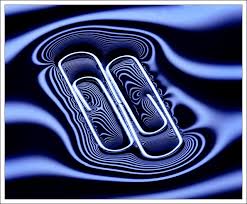
The tightness across the surface of water that enables paper clips to float is ____________.
a)
adhesion
b)
capillary action
c)
surface tension
d)
polarity
17.
What is adhesion?
a)
Water's ability to stick to itself
b)
Water's ability to stick to other substances
c)
The strength of the cohesion of all the water molecules combined
d)
Tape, glue and other adhesives
18.
The pH scale is a range from:
a)
1-7
b)
0-14
c)
1-5
d)
1-20
19.
A(n) _______ is a substance with a pH greater than 7.
a)
Base
b)
Acid
c)
Buffer
d)
Water
20.

A base is a substance

a)

That releases OH- ions when dissolved in water

b)

That releases H+ ions when dissolved in water

c)

Does not release any ions when dissolved in water

d)

None of the above

21.

What is the key role (function) of carbohydrates?

a)

energy storage

b)

immunity, muscles, structure for tissues, cell metabolism

c)

instant energy for cells and body functions

d)

genetic information (heredity)

22.

How how carbohydrates and lipids similar?

a)

both contain C, H, O, N, P and store energy

b)

both contain C, H, O, N and give energy

c)

both contain C, H, O, N, S and store energy

d)

both contain C, H, O and give energy

23.

What elements (monomers) make up a protein?

a)

C, H, O

b)

C, H, O, N, (S)

c)

C, H, O, N, P

24.

Match the protein with the correct picture.

a)
b)
c)
d)
25.

What is the key role (function) of a protein?

a)

instant energy for the cell/body

b)

hormones, buoyancy, forms cell membranes, insulation, energy storage

c)

growth, repair, and energy

d)

store and transmit genetic information/heredity

26.

Which is an organic molecule? (See Chapter 3 in your textbook)

a)

Ne

b)

CH4

c)

H2O

d)

NaCl

27.

Which is the correct term for compounds that do not mix with water? (see chapter 3 for reference)

a)

hydrophilic

b)

hydrophobic

c)

phospholipids

d)

protein

28.

To what does the term polypeptide specifically refer? (see chapter 3 for reference)

a)

amino acids linked by hydrolysis

b)

amino acids linked by dehydration synthesis

c)

organic monomers covalently bonded

d)

organic molecules linked by dehydration synthesis

29.

A nucleotide is the monomer of __________. It is made of which of the following chemical components? Look carefully at the figure below to determine the answer. (see chapter 3 for reference)

a)

nucleic acids; a nitrogenous base, a phosphate group, and a sugar

b)

proteins; a nitrogenous base, an amino acid, and a pentose sugar

c)

proteins; a nitrogenous base, a fatty acid, and an amino acid

d)

nucleic acids; a nitrogenous base, an amino acid, and a phosphate group

30.

Because carbon has 4 valence electrons....

a)

it can form up to 4 covalent bonds

b)

it can form ionic bonds

c)

it can form only double bonds

d)

it can form covalent bonds with H only

31.
___________ allow cells to recognize each other and act like ID tags. 
a)
Carbohydrates 
b)
Proteins
c)
Phospholipids 
d)
Cholesterol
32.
___________ strengthens and stabilizes the cell membrane.
a)
Carbohydrates 
b)
Proteins 
c)
Phospholipids 
d)
Cholesterol
33.
Osmosis is the movement of _____ across a membrane.
a)
food
b)
energy
c)
oxygen
d)
water
34.
This picture represents what type of cell transport?
a)
endocytosis
b)
exocytosis
c)
osmosis
d)
passive transport
35.
Which is true about active transport?
a)
It requires energy
b)
it does not require energy
c)
It moves substances down the concentration gradient
d)
it moves material from high to low concentration
36.
Molecules diffusing with the concentration gradient through a protein channel is...
a)
Facilitated Diffusion
b)
Simple Diffusion
c)
Active Transport
d)
Osmosis
37.
This cell organelle helps organisms maintain homeostasis by controlling what substances may enter or leave cells.
a)
vacuole
b)
nucleus
c)
cell membrane
d)
cell wall
38.
The dispersal of ink in a breaker of water is an example of 
a)
osmosis
b)
diffusion
c)
active transport
39.
The cell below is in a _________ solution.
a)
Hypotonic
b)
Hypertonic
c)
Isotonic
40.
The cell below is in a _____________ solution.
a)
Hypertonic
b)
Hypotonic
c)
Isotonic
41.
Most plants appear green because chlorophyll
a)
absorbs green light.
b)
absorbs violet light.
c)
reflects green light.
d)
does not absorb violet light.
42.
The reactants of photosynthesis are
a)
sugar and water.
b)
sugar and oxygen.
c)
carbon dioxide and water.
d)
carbon dioxide and oxygen.
43.
What are the products of photosynthesis?
a)
Carbon dioxide and water
b)
Carbon dioxide and oxygen
c)
Glucose and oxygen
d)
Glucose and water
44.
Which of the following is the correct equation for PHOTOSYNTHESIS?
a)
6CO2 + 6H2O --> 6O+ C6H12O6
b)
6CO+ C6H12O6 + 6H2O --> O
c)
6O2 + 6H2O --> 6CO+ C6H12O6
d)
C6H12O6 + 6O2 ---> 6H2O + 6CO2 
45.
Which gas is removed from the atmosphere during photosynthesis?
a)
hydrogen
b)
oxygen
c)
nitrogen
d)
carbon dioxide
46.
What is the function of NADPH and ATP?
a)
They absorb light
b)
They power the light-dependent reactions
c)
They are light-reflecting pigments
d)
They are short term energy carriers
47.
What is one of the reactants of cellular respiration?
a)
energy
b)
glucose
c)
carbon dioxide
d)
water
48.
Which of the following structure is where cellular respiration occurs in the cell?
a)
nucleus
b)
cytoplasm
c)
mitochondria
d)
vacuoles
49.
What is cellular respiration?
a)
the breakdown of glucose  to release ATP
b)
the breakdown of glucose to release NADH
c)
the breakdown of glucose to release FADH
d)
the breakdown of glucose to release carbon
50.
This means that oxygen is not needed
a)
anaerobic 
b)
aerobic
51.

The image below illustrates all the stages of the cell cycle. Which of the following images represents Telophase?

a)

D

b)

C

c)

B

d)

A

52.

The image below illustrates all the stages of the cell cycle. Which of the following images represents Anaphase?

a)

B

b)

C

c)

D

d)

E

53.

Why is it important for DNA replication to occur before Mitosis?

a)

So that the two identical daughter cells that appear during Cytokinesis will receive half the amount of DNA needed.

b)

Because, during Anaphase sister chromatids are pulled apart which results in the identical daughter cells having the same amount of DNA as the original cell.

c)

It's not important, a somatic cell automatically knows how much DNA it needs due to the directions given from the nucleus

d)

DNA Replication happens during M phase.

54.

Which of the following would result in cancer?

a)

Growth stops

b)

Growth occurs uncontrollably

c)

Growth continues for a few days and then stops

d)

Growth never occurs. Cell dies before mitosis

55.
The structure labeled "A" is
a)
2 chromosomes
b)
a chromosome
c)
sister chromatids
d)
the centromere
56.

Which is the best description of chromatids?

a)

Two separate but similar chromosomes

b)

Two identical copies of the DNA being held together in a single chromosome

c)

The protein disk that holds a chromosome together

d)

The unorganized, string-like DNA in a non-dividing cells

57.
When does DNA replication happen?
a)
S phase
b)
before cell division
c)
during interphase
d)
all of these are correct
58.
The part of the cell cycle when a cell is not dividing is called
a)
DNA replication
b)
S phase
c)
interphase
d)
mitosis
59.

What is the purpose the the cell cycle checkpoints?

a)

To repair damaged cells before they enter cell division.

b)

To remove damaged cells from an organism.

60.

When is apoptosis initiated?

a)

When DNA damage is repaired.

b)

When cells are removed from the cell cycle.

c)

When DNA damage cannot be repaired.

61.
In Andalusian fowls, black individuals (BB) and white individuals (bb) are homozygous. Heterozygous individuals are grey (Bb).  
Cross a black fowl with a white fowl. What is the phenotype ratio?
a)
4 black: 0 grey: 0 white
b)
2 black: 2 grey: 0 white
c)
0 black: 4 grey: 0 white
d)
0 black: 2 grey: 2 white
62.
What are the possible genotypes for this cross?
a)
TT = 25% Tt= 50% tt=25%
b)
all tall
c)
TT= 75% tt = 25%
d)
Tt = 100%
63.
What term describes what you see, or the physical appearance.
a)
Genotype
b)
Phenotype
c)
Homozygous
d)
Heterozygous
64.
A mismatched pair of alleles is called
a)
dominant 
b)
recessive
c)
heterozygous
d)
homozygous
65.
Pea plants can have green or yellow seeds. In a pea plant that is heterozygous for seed color, the allele for yellow seeds masks the effects of the allele of green seeds. Which of the following terms best describes the allele for yellow seeds?
a)
codominant
b)
recessive
c)
dominant
d)
sex-linked
66.
Two heterozygous parents produce offspring. What is the probability of the HOMOZYGOUS DOMINANT GENOTYPE appearing in the offspring?
a)
75%
b)
25%
c)
50%
d)
100%
67.
This type of inheritance pattern is a MIXTURE of both traits.
a)
incomplete dominance
b)
co-dominance
c)
complete dominance
d)
recessive pattern
68.
Colorblindness is a sex-linked disorder. Cross the parents to figure out which percentage of their offspring will be colorblind.
a)
25%
b)
0%
c)
75%
d)
50%
69.
This type of inheritance pattern shows BOTH traits in heterozygous offspring
a)
complete dominance
b)
incomplete dominance
c)
co-dominance
d)
dominant pattern
70.
A __________ is a segment of DNA that codes for a particular protein, which leads to a particular trait.
a)
Gene
b)
Allele
c)
Codon
d)
Nucleotide
71.

Which of the following is a base pair?

a)

Adenine - Cytosine

b)

Cytosine - Thymine

c)

Deoxyribose - Cytosine

d)

Cytosine - Guanine

72.

The weak bonds between base pairs is a ___

a)

Covalent Bond

b)

Polar Bond

c)

Non Polar Bond

d)

Hydrogen

73.
Why is DNA important?
a)
it is very small and very complicated
b)
it's in everything
c)
it serves as the blueprint for traits of all living things
d)
because we eat it every day for energy
74.

Which bases will pair with this side of DNA: ATG TGA CAG

a)
ATG TGA CAG
b)
TAC ACT GTC
c)
GTA AGT GAC
d)
CAT TCA CTG
75.
Which enzyme has the job of unzipping the double helix?
a)
Helicase
b)
Polymerase
c)
Ligase
d)
Primerase
76.

The picture below shows the steps of DNA replication beginning with step one and ending with step three.


​Because you are reusing the old, or parent, DNA strand DNA replication is said to be

a)

Semi- Conservative

b)

Semi-discontinuous

c)

Continuous

d)

Fully-Conserveative

77.

Which enzyme is responsible for adding the free nucleotides to the replicating DNA? ​

a)

DNA Helicase

b)

DNA Ligase

c)

DNA polyermase

d)

RNA Polymerase

78.

Enzymes: Enzyme that connects the DNA to the backbone (glues)

a)

Ligase

b)

Polymerase

c)

Helicase

d)

Primase

79.
Sometimes, DNA is called "semi-conservative." Why might this be?
a)
The old strand is "conserved" and used to make the new strands
b)
Uracil is "conserved" in that it is only used to make the new strands
c)
ATP is "conserved" via the usage of facilitated diffusion
d)
Ligase is "conserved" in that it is denatured by the process
80.
The bonds between the sugar and the phosphate groups are
a)
Ionic Bonds
b)
Hydrogen Bonds
c)
Covalent Bonds
d)
Van Der Waals
81.
The appendix is an example of a 
a)
homologous structure
b)
vestigial structure 
c)
analogous structure
d)
embryological stage
82.
A measure of how common a particular allele occurs in a population is known as the 
a)
gene pool
b)
allele frequency
c)
genotypic frequency
d)
phenotype
83.
Mutations are important because they bring about
a)
death of the organism in which they develop
b)
genetic variation needed for a population to evolve
c)
benefits for the individual, not for the population
d)
Hardey-Weinberg equilibrium within a population
84.
What is speciation?
a)
combining of two species to form one with different traits
b)
isolation that affects mating behaviors
c)
timing of mating that prevents normal sexual selection
d)
divergence of two or more species from an existing one
85.
Which two species are most related?
a)
B&C
b)
A&B
c)
A&C
d)
C&B
86.
Similar DNA sequences between organisms illustrate
a)
natural selection
b)
common ancestry
c)
population bottlenecks
87.
This scientist came up with the idea of natural selection.
a)
Robert Hooke
b)
Gregor Mendel
c)
Charles Darwin
d)
Thomas Mach
88.
Inherited trait that helps an organism survive is a(n) __________.
a)
Fossil
b)
Adaptation
c)
Ancestor
d)
Natural selection
89.
Convergent evolution is a result of 
a)
Similar selective pressures on distantly related organisms
b)
Different selective pressures on distantly related organisms
c)
Similar species evolving in the same habitat
d)
Similar species evolving in different habitats. 
90.
Which organism has the best biological fitness
a)
The alpha male lion ruling the pride and mating with 20 females and producing nonviable young. 
b)
A tiny mole rat has seven offspring before being killed at two years old
c)
A bull reproduces and has 12 offspring throughout his life span.  His progeny are unable to reproduce
d)
A horse mates with a donkey and has 20 mule offspring
91.
Examples of a producer
a)
frog
b)
algae
c)
worm
d)
mouse
92.
What is a producer?
a)
an organism that gets energy from eating other organisms
b)
an organisms that uses sunlight to make its own food
c)
an organism that gets energy from eating dead organisms, non-living material or waste
d)
an organism that uses chemical energy to make its own food
93.
What is a herbivore?
a)
an animal that gets energy from eating other animals
b)
an organism that gets energy from eating only plants
c)
an animal that gets energy by eating both plants and other animals
d)
an animal that eats only herbs
94.
An animal that gets energy from eating both plants and animals is a 
a)
herbivore
b)
carnivore
c)
omnivore
d)
autotroph
95.
The shrew provides energy for the _______?
a)
cricket
b)
grasshopper
c)
frog
d)
snake
96.
Where do all life forms get their energy?
a)
Earth's Core
b)
Water
c)
Plants
d)
The Sun
97.
Which best describes what a food chain shows you?
a)
Energy flow through an ecosystem
b)
Food flowing through an ecosystem
c)
Consumers going into other consumers
d)
Who eats who
98.
All of the living and nonliving things in an area that interact with each other are called a/an ______.
a)
community
b)
habitat
c)
population
d)
ecosystem
99.
An area where an organism finds food, shelter and water in a specific arrangement
a)
niche
b)
biosphere
c)
biome
d)
habitat
100.
The study of how living things interact with one another and with their environment.
a)
Biology
b)
Lithology
c)
Ecology
d)
Farmacology