
 Worksheets
BIOLOGY SA 1 (D)
Total questions: 81
Worksheet time: 53mins
Kidney Structure
The Loop of Henle is a crucial part of the kidney structure responsible for concentrating urine. It plays a vital role in reabsorbing water and electrolytes, helping maintain the body's fluid balance.
Tubular reabsorption is a complex process that occurs in the kidney tubules. It involves the reabsorption of essential substances such as glucose, amino acids, and water back into the bloodstream, ensuring that valuable nutrients are not lost in the urine.
The Glomerulus is a network of tiny blood vessels in the kidney that filters waste products and excess substances from the blood. It is composed of capillaries surrounded by a membrane that allows small molecules to pass through while retaining larger molecules like proteins.
Overall, the kidney structure is a sophisticated system that includes the Loop of Henle for urine concentration, tubular reabsorption for nutrient retention, and the Glomerulus for blood filtration. Understanding these components is essential for comprehending the kidney's vital functions in maintaining homeostasis.
What is involved in tubular reabsorption in the kidneys?
Reabsorbing waste products back into the bloodstream
Reabsorbing essential substances like glucose and amino acids back into the bloodstream
Filtering out excess water from the bloodstream
Producing urine in the nephrons
What is the main function of the Glomerulus in the kidney?
A. Absorbing nutrients from the blood
B. Filtering waste products and excess substances from the blood
C. Producing hormones for blood pressure regulation
D. Storing excess water in the body
Understanding these components is essential for comprehending the kidney's vital functions in maintaining (a)
What is the function of the Loop of Henle in the kidney?
Filtering blood
Concentrating urine
Producing hormones
Regulating blood pressure
How do the components of the kidney structure work together to maintain proper kidney function?
Which artery supplies the kidney with oxygenated blood?
Hepatic
Coronary
Renal
Carotid
Define homeostasis.
Homeostasis is the change that takes place in the body.
Homeostasis is chemical reactions that take place in the body.
Homeostasis is maintaining a constant internal environment.

Letter F represents which part of the nephron?
Bowmans capsule
Ascending loop of Henle
Distal convoluted tubule
Descending loop of Henle
Typically the body produces approximately ____ liters of urine a day:
.5
1.7
3
6
A fruity odor in the urine may indicate:
diabetes
infection
high protein diet
Which of the following regions is NOT found in the renal tubule?
Glomerulus
Bowman's capsule
Loop of Henle
Collecting Duct

The enlarged, funnel-like region of the renal tubule is called:
Glomerulus
Loop of Henle
Bowman's capsule
Collection duct
Which of the following is NOT a characteristic of urine?
Is yellow in color
Contains proteins
Contains urochrome
Is sterile
Hormones travel through your
blood
bone marrow
neurons
brain
This disease occurs when the Thryroid gland does not produce enough Thyroxine to meet the body's needs.
Gigantism
Hypoglycemia
Hypothyroidism
Diabetes

Identify the endocrine gland/part shown by letter A
Pineal
Hypothalamus
Pituitary
Parathyroid
Identify the endocrine gland/part shown by letter C
Pineal
Hypothalamus
Pituitary
Parathyroid
Identify the endocrine gland/part shown by letter D
Pancrease
Adrenal
Pituitary
Parathyroid

Identify the endocrine gland/part shown by letter D
Thyroid
Adrenal
Thymus
Parathyroid

This structure releases what hormones?
insulin and glucagon
calcitonin and estrogen
Parathyroid hormone and antidiuretic hormone
epinephrine and testosterone
Cells that have receptors for a particular hormone.
gland cells
neurons
hormones
target cells


Which of the following equations represents the overall chemical reaction for photosynthesis?
6O2+ 6H2O → C6H12O6+ 6O2
C6H12O6 + 6H2O→ 6O2+ 6O2
6CO2+ 6H2O→ C6H12O6+ 6O2
6O2 + 6H2O→ C6H12O6 + 6CO2
Temperatures that are too high can slow photosynthesis because
stomata stay open
enzymes are ruined
there is not enough CO2
there is too much water
Which of the following light color is absorbed by plants?
Red
Green
yellow
Light green
The organic molecule that is the cell's primary form of energy?
Glucose
ATP
ADP
GMP
Choose the statement that best describes light reaction.
It converts CO2 to sugar molecule
It converts light energy to chemical energy of ATP and NADPH
It takes place in the stroma
The place where the light reactions happen in the chloroplast..
Stroma
Grana
Inner Membrane
Thylakoid
Autotrophs (producers) can perform photosynthesis because they have -
Mitochondria
Ribosomes
A Nucleus
Chloroplasts
Photosynthesis is broken down into two parts - first the (a) create ATP and NADPH. Second the (b) uses carbon dioxide to make (c) .
Foods synthesized in the process of Photosynthesis by plants is stored as
Starch
Protein
Vitamins
Fats
What protects Stomata and helps it in opening and closing?
Guard Cells
Leaf
Stem
Carbon Dioxide
What is the unit of light?
proton
photon
photosystem

Plants A and B are destarched and each placed into a temperature-controlled box with artificial light. After 1 hour, only the leaf from plant A tests positive for starch; plant B tests negative.
Which points on the graph are most likely to reflect the temperatures that plants A and B were kept at?
Point 1: plant A, point 2: plant B
Point 1: plant B, point 2: plant A
Point 2: plant A, point 3: plant B
Point 3: plant A, point 2: plant B
The following are the steps in the starch test for a leaf. Which one lists the steps in order, from beginning to end?
Dip in hot water, boil in ethanol, place on white tile, then add iodine solution
Add iodine solution, place on white tile, boil in ethanot then dip in hot water
Dip in hot water, place on white tile, add iodine solution then boil in ethanol
Boil in ethanol, dip in hot water, add iodine solution then place on white tile
How do we destarch a plant?
Place a plant in a dark space for at least 24 hours
Place a plant in the sunlight for a few hours
Leave a houseplant outside overnight
Do not water the plant for a week
If I wanted to determine whether chlorophyll is required for photosynthesis, which would be required?
A bell jar
A variegated leaf
Potassium hydroxide
A piece of black paper
What is transpiration?
Excess water being released from the aerial parts of plants in the form of water vapor
Excess sugar being released from the leave
The way a plant makes its food
When the plant uses sugar for energy
Water transported from stems to leaves through what?
xylem
phloem
stems
roots
Which of the following indicates the pathway of water through a plant?
root hair cell --> xylem --> Mesophyll --> substomatal space --> stomata
substomatal space -- > stomata --> root hair cell --> xylem --> Mesophyll
xylem --> stomata --> root hair cell --> Mesophyll --> Substomatal space
Select all of the environmental factors that would increase transpiration.
Increased humidity
Increased wind speed
Increased temperature
Decreased surface area
Which is true?
99% of water taken by the plant evaporates through transpiration
9% of water taken by the plant evaporates through transpiration
Evaporation through transpiration accounts only for 1% of all the water the plant takes in
Evaporation through transpiration is minuscule
Which is true?
99% of water taken by the plant evaporates through transpiration
9% of water taken by the plant evaporates through transpiration
Evaporation through transpiration accounts only for 1% of all the water the plant takes in
Evaporation through transpiration is minuscule
Stomata opens during night and closes during day
True
False
Guttation is the loss of water through -
Hydathodes
Cuticle
Stomata
Lenticles
Adaptations in plant to reduce transpiration are -
No of stomata
Thickness of cuticle
Loss of leaves
All of the above
What is significance of transpiration
Creates suction force
Helps in distribution of water and nutrients
Cooling effect for plants
All of the above
The function of cobalt chloride paper is
To change colour when exposed to sand
To indicate moisture
To change colour according to the acidity or basicity of substance .
More root hairs will lead to
Less transpiration
More transpiration
Closure of stomata
An apparatus used to measure the rate of transpiration
Garreau's potometer
Darwin's potometer
Ganong's potometer
Adaptation to reduce transpiration
Broader leaves
Stunted growth
More stomata
Narrow leaves
How will you identify the experimental leaf as dicot?
taproot system
two cotyledons
parallel venation
reticulate venation
The kind of transpiration that takes place from the surface of leaves is
guttation
lenticular
cuticular
stomatal
The plants transpire more in
high humid conditions
low temperature
reduced pressure
calm day
This is not a precaution in the use of the potometer
The twig may not remain alive for long
The potometer should be water tight
The twig should be cut under water
The twig should be cut obliquely
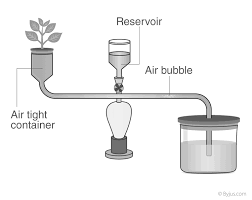
What happens to the movement of air bubble if apparatus is kept in front of a fan
Air bubble does not move
Air bubble moves very little
Air bubble does not change its position
Air bubble moves very fast
What is significance of transpiration
Creates suction force
Helps in distribution of water and nutrients
Cooling effect for plants
All of the above

Remember when you put the celery in the water? What happened to the water level by the next day?
The level dropped A LOT, because the celery sucked it up.
The level stayed the same, because the celery was dead.
The level dropped a little, because of evaporation.

The words that can be used to describe this cell are: (mark all that apply)
Hypertonic
Plasmolysed
Hypotonic
Turgid

What is this an image of?
A peas field
ATP Cells
Alien activity on Ground Zero
Stomata

Can you match the label to the function performed by it?
A
Where photosynthesis takes place
B
Where oxygen comes out of
C
Waxiness limits rate of transpiration

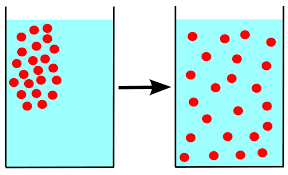
Which of the following process takes place when raisins are soaked in water for few hours?
Osmosis
Diffusion
Ascent of sap
Root pressure
Absorption of water by the plant cell by surface attraction is called:
diffusion
osmosis
imbibition
active transport
Which of the following does not help in ascent of sap
Capillarity
Adhesion
Cohesion
Gravity
Transpirational pull
The highest water potential is that of?
Honey
10% salt solution
50% sugar solution
Pure water
The state of a cell in which the cell wall is rigid and stretched by the increase in volume due to the absorption of water is called
Turgiyt
Capillarity
Turgidity
____ causes plasmolysis
diffusion
exosmosis
Water is carried upward in the xylem by way of the cohesive and adhesive forces of
capillarity
transpiration pull
osmosis
plants absorb water by their ………………………
roots
root hairs
stem
leaves
oozing out of water drops from injured parts of plant is called
bleeding
guttation
transpiration
The pressure exerted by the cell wall on the cell content
Turgidity
Wall Pressure
Turgor Pressure
Flaccidity
On a dry, sunny day, how does water vapour move through the stomata of a leaf?
Into the leaf by diffusion
Into the leaf by respiration
Out of the leaf by diffusion
Out of the leaf by respiration
Transport of substances against the concerntration gradient in a cell by using energy is:
Osmosis
Diffusion
Passive Transport
Active Transport

