
 Worksheets
GC: Q3 Final Review
Total questions: 105
Worksheet time: 2hrs 45mins
In a covalent bond, atoms (a) electrons.
gain
lose
A (a) covalent bond occurs when electrons are (b) (c) , creating (d) charged areas called (e) .
equally
The atom closer to the electrons in a polar molecule develops ______________.
a partially positive charge
a partially negative charge
no charge
a full positive charge
a full negative charge
_____________ is tendency of an atom to attract electrons to itself in a bond.
electrogravity
electromagnetism
electronegativity
electron transfer
Hydrogen forms a covalent bond with chlorine. Which atom in the resulting molecule will develop a negative dipole?
hydrogen
Chlorine
neither
both
Which of these symbols is used to represent a partial charge in a polar molecule?


Organize the following molecules as polar or nonpolar.
hydrogen
silicon dioxide, SiO2
boron trifluoride, BF3
ethene, C₂H₄
ethanol, C₂H₅OH
ammonia, NH3
ammonium, NH4+
sulfur dioxide, SO2
formaldehyde, CH₂O
Sulfur and oxygen combined to form sulfur dioxide. What is the electronegativity difference between the two atoms?
(a)
Which element will have the partial negative dipole in phosgene, COCl2?
carbon
chlorine
oxygen
it is a nonpolar.
Which of the bonds between the following elements are polar? (Select all that apply.)
fluorine and phosphorus
sulfur and bromine
oxygen and chlorine
silicon and sulfur
astatine and carbon
Match the following shapes to their Names

Trigonal Planar

Tetrahedral

Trigonal Pyrimidal

Linear

Bent
Which of the following shapes will have lone pairs on the central atom? (Select all that apply)
Trigonal Planar
Trigonal Pyramidal
Bent
Linear
A lone pair is defined as:
A pair of bonding electrons
One non-bonding electron
A pair of non-bonding electrons
A pair of electrons on the central atom
What does the VSEPR theory predict?
Bond Strength
Polarity
Molecular Shape
Electronegativity
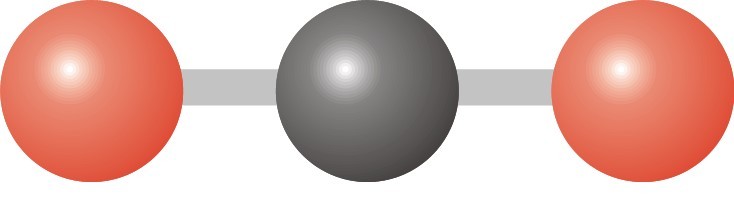
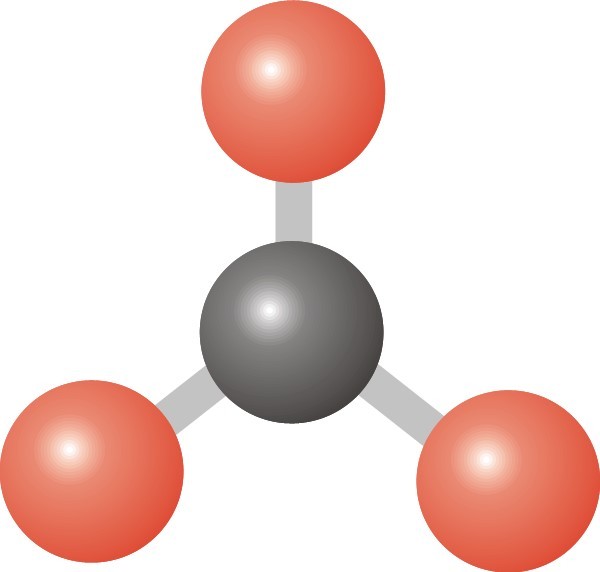
Which molecule could this be?
BF3
CH4
H2O
CO2
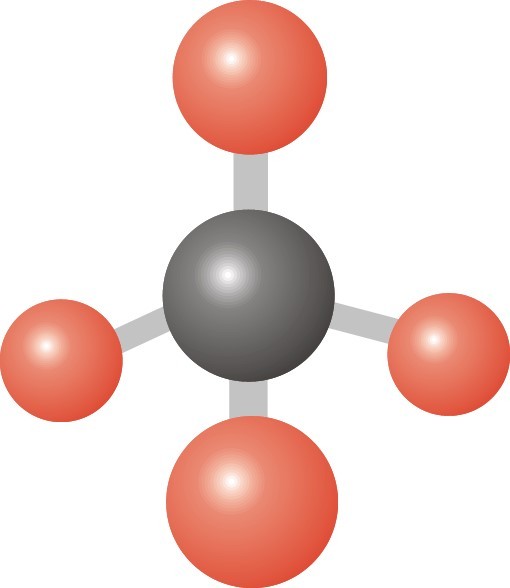
Which molecule could this be?
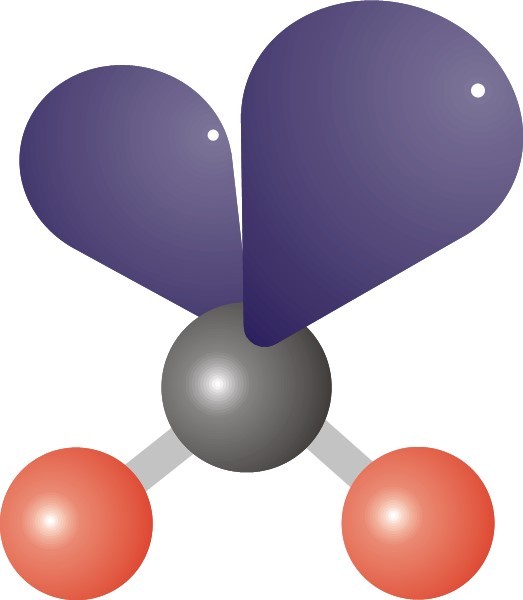
Which compound is represented by the given model?
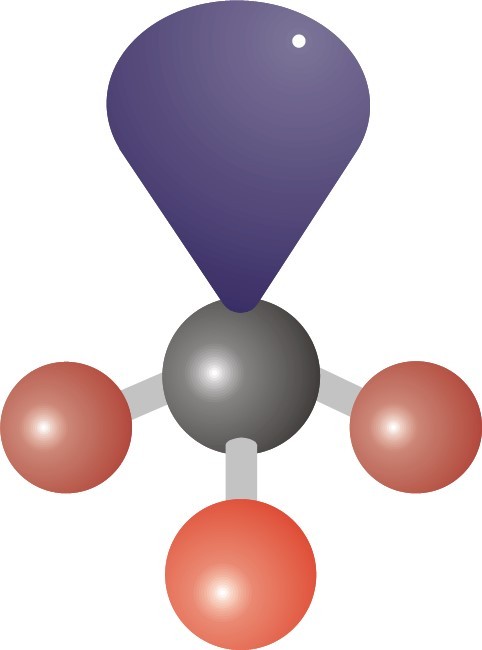
Which compound does the provided model match?
H2O
NH3
CO2
CH4
What would be the molecular geometry of PH3?
Trigonal Pyramidal
Trigonal Bipyramidal
Bent
Linear

What is the molecular shape of the structure shown here? (BCl3)
linear
trigonal planar
tetrahedral
trigonal pyramidal

What is the molecular shape represented by the Lewis structure for water (H2O)?
tetrahedral
trigonal planar
bent
trigonal pyramidal

What is the molecular shape of the structure shown here? (NH4+)
linear
trigonal planar
tetrahedral
trigonal pyramidal
Both Carbon Dioxide and water have (a) atoms bonded to the central atom. Carbon Dioxide (CO2) is a (b) molecule, while water (H2O) is a (c) molecule because water has (d) on the central atom.
two
Linear
Bent
Lone Pairs
Three
Double Bonds
Trigonal Planar
Think about how many electron domains are around the central atom. Place these structures in order from LEAST electron domains to MOST electron domains.
Linear
Trigonal Planar
Tetrahedral
Think about how many electron domains are around the central atom. Place these structures in order from LEAST electron domains to MOST electron domains.
Linear
Bent
Trigonal Pyramidal
Which Lewis Structure would be linear? Mark all that apply


Which Structure has a different shape than the others?


The VSEPR theory states that electrons will:
Try to move as far apart as possible
Form the fewest bonds possible
Have an equal number of bonds on all atoms
Have larger bond angles to accommodate larger elements

How many electron domains are around the central atom when determining molecular geometry in this structure?
1
2
3
4

When determining molecular geometry, how many electron domains are there around the central atom of this structure?
1
2
3
4
Place the given in the correct bond angle category.
H₂O
CH₂Cl₂
CH₂S
BF₃
CS₂
EDG: trigonal planar
MG: bent
MG: tetrahedral
EDG: linear

Which of the following is the correct Lewis structure for the fluorine molecule?


How many electrons does each bond line represent?
Which is the correct Lewis structure for ammonia, NH3?


Which is the correct molecular structure for carbon dioxide?


The given Lewis structure for CH2O is incorrect. Label each INCORRECT area so that the image could be redrawn correctly.
three lone pair
two lone pair
single bond
double bond
triple bond
one lone pair


Three pairs of electrons are shared in a (a) .
Which of the following will be attached to the central atom of the carbonate ion, CO32-? (Select all that apply.)
single bond
double bond
triple bond
lone pair
Which of the following compounds has only single bonds? (Select all that apply.)
N2
O2
H2
CH4
NH3 has how many lone pairs?
0
1
2
3
CCl4 has how many double bonds?
0
1
2
3
What kind of bond is between the carbon and nitrogen atoms in HCN?
Single
Double
Triple
A (a) atom cannot be a central atom because it fulfills the octet rule with (b) valence electrons and can only form (c) single bond.
(a) molecules are found in nature as pairs of two atoms of the same type covalently bonded together.
Monatomic
Polyatomic
Network
Place the chemicals into the category that best describes the types of bonds each chemical has.
CH₄
N₂O₄
P₄S₁₀
SiO₂
CaCl₂
Fe₂O₃
AlBr₃
PbF₄
Au₃N
CuZn
AlMn
AuAg
Each bond type is represented by FIVE properties. Organize these options into the correct types of bonds.
Electrons localized between atoms
Electrons transferred
Electrons free mobility
nonmetals only
metals and nonmetals
metals only
nonmetals and metalloids
always a poor conductor of electricity
a good conductor of electricity when dissolved in water
always a good conductor of electricity
ductile
low MP
forms crystalline solids
malleable
high MP and BP

(a) bonds are formed through (b) attraction after (c) transfer from one atom to another.
metallic
Which subatomic particle participates in chemical reactions?
electron
proton
neutron
ion
(a) bonds are formed by sharing (b) between two atoms.
ionic
metallic
A compound is made of two nonmetals. It is
ionic
metallic
covalent
A compound forms between a metal and a nonmetal. It is
ionic
metallic
covalent
A compound forms between a metalloid and a nonmetal. It is
ionic
metallic
covalent
A bond forms between a metal and a metal. What type of bond is it?
ionic
metallic
covalent
Ionic compounds are held together by (a)
intermolecular forces
magnetic forces
nuclear forces
A compound that is a poor conductor and has low melting and boiling points is most likely
ionic
metallic
covalent
Which chemical is held together by electrostatic forces?
NO2
CaSO4
Aluminum
P4O10
Which chemical has a very low melting point?
sodium chloride
copper (II) sulfate
sulfur dioxide
calcium
Which solid is a good conductor of heat or electricity?
sodium chloride
copper (II) sulfate
glucose
iron
Which compound would be a good conductor of electricity when in solution?
lithium
diphosphorus tetrachloride
silicon dioxide
sodium chloride
The respective coefficients for the following reaction are (a) . (Separate coefficients by commas and NO spaces).
Al2(SO4)3 + Ca(OH)2 → Al(OH)3 + CaSO4
Which of the following is NOT evidence of a chemical reaction?
Formation of a precipitate
Production of gas
Change in temperature
Change in state of matter
Liquid nitrogen and oxygen gas combine to form nitrogen monoxide gas.
N(g) + O(g) → NO(g)
N2(g) + O2(g) → N2O2(g)
N2(g) + O2(g) → 2NO(g)
2N(g) + O2(g) → 2NO(g)
Mass cannot be ____ nor _____.
made, changed
created, destroyed
rearranged, unmade
stagnant, unchanging
Balance the following equation: ____MgO(s) + ____H2O(l) → ____Mg(OH)2(s)
1,1,1
1,2,2
2,3,4
2,2,2
CH4 + O2 → CO2 + 2H2O
a solid that falls out of an aqueous solution
a reactant in a reaction
a clear substance
the mass of a product
The following is an example of a (a) reaction.
Sb + I2 →
The following is an example of a (a) reaction.
Li + H2O →
The following is an example of a (a) reaction.
AlCl3 →
The following is an example of a (a) reaction.
C6H12 + O2 →
The following is an example of a (a) reaction.
AlCl3 + Na2CO3 →
The following is an example of a (a) reaction.
HNO3 + Ba(OH)2 →
The following is an example of a (a) reaction.
Pb(NO3)2 + Al →
What type of reaction is described in the following scenario?
Aqueous solutions of ammonium chloride and lead(II) nitrate produce lead(II) chloride precipitate and aqueous ammonium nitrate.
combustion
decomposition
double displacement
single displacement
synthesis
What type of reaction is described in the following scenario?
Iron metal reacts with aqueous silver nitrate to produce aqueous iron(III) nitrate and silver metal.
combustion
decomposition
double displacement
single displacement
synthesis
What type of reaction is described in the following scenario?
Solid potassium nitride was heated yielding solid potassium and nitrogen gas.
combustion
decomposition
double displacement
single displacement
synthesis
The respective coefficients for the following reaction are (a) . (Separate coefficients by commas and NO spaces).
P4O10 + H2O → H3PO4
The respective coefficients for the following reaction are (a) . (Separate coefficients by commas and NO spaces).
SiCl4 + H2O → H4SiO4 + HCl
The respective coefficients for the following reaction are (a) . (Separate coefficients by commas and NO spaces).
Al + HCl → AlCl3 + H2
The respective coefficients for the following reaction are (a) . (Separate coefficients by commas and NO spaces).
Na2CO3 + HCl → NaCl + H2O + CO2
The respective coefficients for the following reaction are (a) . (Separate coefficients by commas and NO spaces).
C7H6O2 + O2 → CO2 + H2O
The respective coefficients for the following reaction are (a) . (Separate coefficients by commas and NO spaces).
Fe2(SO4)3 + KOH → K2SO4 + Fe(OH)3
The respective coefficients for the following reaction are (a) . (Separate coefficients by commas and NO spaces).
Ca3(PO4)2 + SiO2 → P4O10 + CaSiO3
The respective coefficients for the following reaction are (a) . (Separate coefficients by commas and NO spaces).
KClO3 → KCl + O2
The respective coefficients for the following reaction are (a) . (Separate coefficients by commas and NO spaces).
Al2(SO4)3 + Ca(OH)2 → Al(OH)3 + CaSO4
Covalent Bond
Formed between two nonmetals
Ionic Bond
Formed between metal and nonmetal
Lone Pair
2 electrons not shared by atoms in a covalent compound
Line
How 2 bonding electrons are shown in a dot diagram
Dots
How lone pair electrons are shown in a dot diagram
If an atom (a) electrons, it will become negative.
If an atom (b) electrons, it will become positive.

