
 Worksheets
YEAR8-CHEMISTRY-REVISION TERM3 EXAM
Total questions: 60
Worksheet time: 55mins
The chemical bond that forms when electrons are transferred is called:
Ionic
hydrogen
covalent
When an atom gains an electron it becomes
negatively charged
positively charged
neurtal
Ionic bonds happen when valence electrons are
shared
too heavy
transferred
Valence electrons are
neutral (no charge)
found in the outer most energy level of the atom
equal to the number of protons
How many valence electrons does Oxygen have?
0
16
6
8
What type of bond forms CaF2
covalent bond
ionic bond
metallic bond
all answers are correct
Which type of bond is creates MgFe?
covalent bond
ionic bond
metallic bond
all the bonds
What is the charge of an aluminum ion that has 13 protons and 10 electrons?
3+
3 -
no charge
In order for a chemical reaction to occur,
there must be an explosion or fire
bubbling or gas must be produced
a new substance must be formed
the substance must turn color
There are (a) Oxygen atoms in this chemical formula: H2SO4
What is the chemical name of SO2
monosulfur dioxide
disulfur monoxide
sulfur dioxide
disulfur oxide
What is the chemical name of the ionic compound formed from the attraction between K+1 and S2- ions?
Potassium Sulfide
Potassium disulfide
dipotassium monosulfide
dipotassium sulfide
Elements in Group 6 tend to form
1+ ions
2- ions
8- ions
6- ions
Atoms need to be bonded in order to attain the stability needed like that of _______.
alkali metals
alkaline earth metals
noble gases
semi metals

In the periodic table, the number of valence electrons in each element ___________ from left to right across each period.
Increases
Decreases
Stays the same

Within each _________ in the periodic table, elements have similar properties because they have the same number of valence electrons.
Color
Period (Row)
Neighborhood
Group (Column)

The columns in the periodic table are called ____________.
Periods
Noble Gases
Groups
Stable
Which type of bond is formed between a metal and a non-metal?
covalent bond
hydrogen bond
polar bond
ionic bond
What is the charge of a chloride ion that has 17 protons and 18 electrons?
1-
1+
2-
2+
What is the name of the compound with the formula H2SO4?
Hydrochloric Acid
Sulfuric Acid
Nitric Acid
Acetic Acid
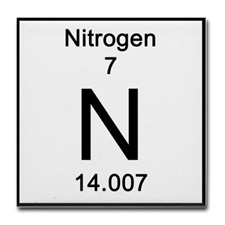


what is the electron arrangement of atom N?
2.
2.8
2.5
2.8.8

Ink can be separated by a method of -----------------------------------------------
distillation
filtration
chromatography
sedimentation
A substance is soluble if it can be dissolved.
In paper chromatography, the most soluble solute _____________________ .
does not move from the start point
stays closest to the start point
travels furthest away from the start point
can be found in the middle of the chromatogram
What will happen to the movement of particles when heat is applied ?
Move faster
Move slower
Nurul spray a perfume on her hand. The smell of the perfume can be detected also by her friend that stood beside her. What is the process involve ?
Photosynthesis
respiration
Diffusion
Name the process when solid turn to liquid
boiling
Melting
freezing
condensation
Which of the following is the process that involve the absorbing of heat
Boiling
freezing
condensation
Where are metals located on the periodic table?
Right side of periodic table
Left side of periodic table
zig-zag line of periodic table
none of the above
Chose all properties of metal:
Brittle
Shiny
Malleable
Good Conductors
Ductile
Chose all properties of
non-metal:
Brittle
Dull
Malleable
Good Conductors
Insulator
Which of these elements are a Non-Metal?
Copper
Gold
Oxygen
Some metals are d (a) , which means they can be drawn into a wire.
How do ionic bonds form?
Electron pairs are shared between atoms.
Metal atoms lose electrons, which are gained by non-metal atoms.
Protons are exchanged.
Metal atoms lose their outer shell electrons.
A covalent bond is:
A shared electron.
A shared pair of electrons.
The strong electrostatic force of attraction between oppositely charged ions.
The strong electrostatic forces of attraction between positive metal ions and delocalised electrons.
Malleability is a property of metals which means they can be:
Pulled into wires
Bent/hammered into shape
Good conductors of electricity
Good conductors of heat
Graphite is slippery because:
Layers can slide over one another
Weak intermolecular forces of attraction exist between the layers
Covalent bonds are weak
Atoms are different sizes
What do metals conduct well?
heat
electricity
circulation
music

