wayground logo

Free Printable Worksheets

Font size

S
M
L
XL
Worksheets

Physical Science Final Exam Review

Total questions: 119

Worksheet time: 4hrs 58mins

Name
Class
Date
1.

Billy runs 400 meters to Andy's house, turns around, and runs 400 meters back home. What is Billy's displacement?

a)

0 meters

b)

400 meters

c)

800 meters

d)

1600 meters

2.

Which of the following is correct?

a)

Initial Position = -5 m

Final Position = -5 m

Distance = 22 m

Displacement = 0 m

b)

Initial Position = -5 m

Final Position = -5 m

Distance = 0 m

Displacement = 22 m

c)

Initial Position = -5 m

Final Position = 6 m

Distance = 22 m

Displacement = 0 m

d)

Initial Position = -5 m

Final Position = 6 m

Distance = 0 m

Displacement = 22 m
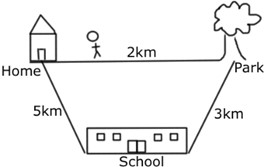
3.

Jerry walked from home to school, then from the school to the park. What is his total distance?

a)

2 km

b)

5 km

c)

8 km

d)

10 km

4.
Velocity is 
a)
speed
b)
direction
c)
speed with a direction
5.

Which is a vector?

a)

Displacement

b)

Distance

c)

Speed

6.

What is a difference between distance and displacement

a)

Distance is measured in seconds and displacement is measured in meters

b)

Distance is always shorter than displacement

c)

Displacement can be equal to zero if the object ends in the place it began in

7.
Which of the following is the closest match to the definition of motion?
a)
An objects change in position relative to a reference point
b)
The change in position of an object
c)
Constant speed
8.
If a car is traveling forward at 15 m/s, how fast will it be going in 1.2 seconds if the acceleration is -10 m/s2?
a)
27 m/s
b)
3 m/s
c)
-27 m/s
d)
-3 m/s
9.
The mass of an object ___________________________.
a)
changes, depending on where it is located
b)
changes randomly
c)
changes, depending on temperature
d)
does not change
10.
Suppose an astronaut were to visit a planet where the gravity is half that of Earth.  His MASS on that planet would be ______________.
a)
half his Earth mass
b)
the same as his Earth mass
c)
twice his Earth mass
d)
zero
11.

______ is explained as a push or pull motion

a)

Force

b)

Friction

c)

Gravity

d)

Weight

12.

______ is the attractive force between any two objects that depends on the objects mass and distance to each other.

a)

Weight

b)

Gravity

c)

Net Force

d)

Rolling Friction

13.
A substance that contains only one type of atom is a(n)
a)
compound
b)
element
c)
heterogeneous mixture
d)
homogeneous mixture
14.
Which of these is a pure substance?
a)
bread
b)
table salt
c)
garden soil
d)
sea water
15.
A mixture that appears to be evenly mixed throughout:
a)
an atom
b)
a compound
c)
a homogeneous mixture
d)
a heterogeneous mixture
16.

A mixture that does NOT appear to be evenly mixed throughout is ______.

a)

an atom

b)

a compound

c)

a homogeneous mixture

d)

a heterogeneous mixture

17.
Milk is a 
a)
solution
b)
suspension
c)
colloid
18.
Which are different types of mixtures
a)
suspension
b)
solution
c)
colloid
d)
all the above
19.

Which of these is a property of metals?

a)

It's malleable

b)

It's an insulator

c)

It's very brittle

20.

Silicon is a semiconductor and has properties of both metals and nonmetals. What type of element is Silicon?

a)

Metal

b)

Nonmetal

c)

Metalloid

21.

All of these properties describe metals except...

a)

malleable

b)

conductors

c)

brittle

d)

shiny

22.
a)

Metal

b)

Nonmetal

c)

Metalloid

23.
a)

Metal

b)

Nonmetal

c)

Metalloid

24.
a)

Metal

b)

Nonmetal

c)

Metalloid

25.
The term for how high or low a sound is:
a)
pitch
b)
volume
c)
sound
d)
medium
26.
What is something natural that Sound cannot travel through?
a)
Water
b)
Air
c)
Liquids
d)
outer Space
27.
What is changed in the second picture?
a)
Someone is talking louder in picture 2
b)
Someone is talking softer in picture 2
c)
Someone is talking lower pitch in picture 2
d)
Someone is talking higher pitch in picture 2
28.
What is changed in the second picture?
a)
Someone is talking louder in picture 2
b)
Someone is talking softer in picture 2
c)
Someone is talking lower pitch in picture 2
d)
Someone is talking higher pitch in picture 2
29.

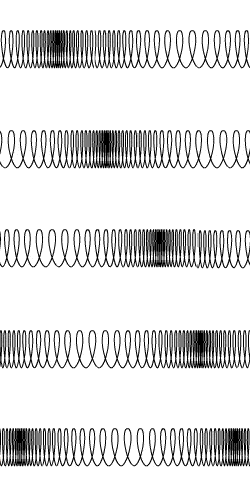
Sound waves travel as __________ waves.

a)

transverse

b)

electromagnetic

c)

longitudinal

d)

surface

30.

What type of wave is shown?

(a)  

31.

What part of the wave is labelled?

(a)  

32.

What part of the wave is labelled?

(a)  

33.

A wave in which the particles of the medium move at right angles to the direction in which the wave

travels is called a ___________________ ________________.

a)

Compression Wave

b)

Longitudinal Wave

c)

Slinky Wave

d)

Transverse Wave

34.

What part of the longitudinal wave is labelled as compression to compression?

(a)  
35.
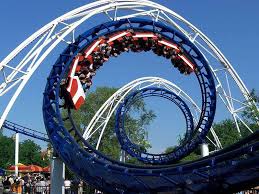
A roller coasters accelerates from an initial velocity of 6.0 m/s to a final velocity of 70 m/s over 4 seconds.  What's the acceleration?
a)
24 m/s2
b)
18 m/s2
c)
16 m/s2
d)
16 m/s
36.
  1. An object is in ____________if it changes position relative to a reference point.

a)

standing still

b)

motion

c)

not moving

d)

sleeping

37.

If a car travels 100 meters north and then 100 meters south, what is its displacement?

a)

200 meters

b)

100 meters north

c)

0 meters

d)

100 meters south

38.

A wave has a frequency of 5 hz and a wave length of 5 m. What is the wave speed (velocity)?

a)

25 m/s

b)

1 m/s

c)

10 m/s

d)

0 m/s

39.

A wave has a frequency of 3 hz and a wave length of 9 m. What is the wave speed (velocity)?

a)

27 m/s

b)

36 m/s

c)

21 m/s

d)

15 m/s

40.
What type of wave is this?
a)
Longitudinal
b)
Transverse
41.
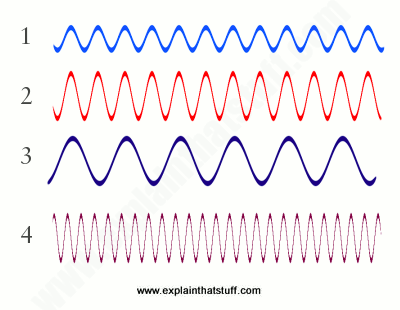
Which wave has the highest frequency?
a)
1
b)
2
c)
3
d)
4
42.
What is the material waves travel through?
a)
Period
b)
Frequency
c)
Medium
d)
Hertz
43.
What do all waves transfer?
a)
Light
b)
Sound
c)
Heat
d)
Energy
44.

What is the wavelength of a wave moving at 16 m/s with a frequency of 4 Hz?

a)

64 m

b)

8 m

c)

4 m

d)

2 m

45.
What state(s) of matter are present at D-E?
a)
Solid-liquid
b)
Liquid
c)
Liquid-gas
d)
Gas-Solid
46.
True or false: melting and freezing occur at the same temperature!
a)
True
b)
False
c)
I don't know
47.
A substance's heating curve is shown in the graph.  What is its boiling point?
a)
100 C
b)
60 C
c)
80 C
d)
20 C
48.

What state of matter/phase change is occurring during line segment D on the graph?

a)

Gas

b)

Condensation

c)

Liquid

d)

Freezing

e)

Solid

49.

Which statement below describes a machine's efficiency?

a)

A measure of how much energy is used compared to how much is 'lost' in a system.


b)

A measure of how fast a system is able to do work.


c)

A measure of how much money is spent on the running and maintenance of  a machine.


d)

A measure of how easy it is to learn how to work the machine.

50.

Why can mechanical efficiency never be 100%?

a)

No machine is strong enough.

b)

Machines are too big to allow for 100% efficiency.

c)

It can be 100%.

d)

Some energy is lost in the form of heat/sound due to friction.

51.
What does the Law of Conservation of Mass state?
a)
Matter cannot be gained or lost in a chemical reaction.
b)
Matter can only be lost in a chemical reaction.
c)
Matter can only be gained in a chemical reaction.
d)
Matter can be gained and lost in a chemical reaction. 
52.

Balance this equation

_Al +_HCl --> _H2 +_AlCl3

a)

2,6,3,2

b)

it's already balanced

c)

4,12,3,4

d)

2,1,4,5

53.
How many HCl molecules do you need to balance this equation? 
Mg +  __HCl --->  MgCl2 + H2
a)
1
b)
2
c)
3
d)
4
54.
What is the little number after an element in a chemical equation called.
Example: H2
a)
Coefficient 
b)
Subscript
c)
Atom
d)
Equation
55.

You have 100 grams of radioactive C-14. The half life of C-14 is 5730 years.

How many grams are left after 1 half life?

a)

100 grams

b)

25 grams

c)

2 grams

d)

50 grams

56.

If 10 mg of iodine 131 is given to a patient, how much is left after 24 days? The half-life of iodine-131 is 8 days.

a)

1.25mg

b)

1.25g

c)

10g

d)

10mg

57.
A neutralization reaction will (almost) always produce...
a)
water & salt
b)
water
c)
salt
d)
water & carbon
58.
The reactants of a neutralization reaction are acids and bases
a)
True
b)
False
59.

A substance is found to have the following characteristics:


Very bitter taste

Feels slippery to the touch

Produces OH- ions when dissolved in water


In what category would the substance be classified?

a)

acid

b)

base

c)

enzyme

d)

fatty acid

60.

HNO2

a)

a base

b)

a salt

c)

an acid

d)

an ionic compound

61.

KOH is ...

a)

an acid

b)

a base

c)

a salt

d)

an ionic compound

62.
Which of the following statements is correct?
a)
Blue litmus paper turns red when placed in a base.
b)
Red litmus paper turns blue when placed in a base.
c)
Blue litmus paper stays blue when placed in an acid.
d)
Red litmus paper stays red when placed in a base.
63.

Bases have a pH of

a)

7

b)

Less than 7

c)

More than 7

64.

What type of reaction is Fe + Cl2 → FeCl3

a)

Synthesis

b)

Decomposition

c)

Single Replacement

d)

Combustion

e)

None of these

65.

What type of reaction is C2H2 + O2 → CO2 + H2O

a)

Synthesis

b)

Decomposition

c)

Single Replacement

d)

Combustion

e)

None of these

66.

What type of reaction is Ag2O → Ag + O2

a)

Synthesis

b)

Decomposition

c)

Single Replacement

d)

Combustion

e)

None of these

67.

What type of reaction is Zn + HCl → H2 + ZnCl2

a)

Synthesis

b)

Decomposition

c)

Single Replacement

d)

Combustion

e)

None of these

68.
The following is what type of reaction:
PbCl2 + AgNO3 → Pb(NO3)2 + AgCl
a)
Synthesis
b)
Decomposition
c)
Single Replacement
d)
Double Replacement
69.

Valence electrons are found

a)

in the innermost energy level of an atom

b)

in the middle energy levels of an atom

c)

in the outermost energy levels of an atom
70.
Covalent bonds are between...
a)
Metal and Non-metal
b)
Non-metal and Non-metal
c)
Metal and Metal
71.
Ionic bonds are between...
a)
Metal and Non-metal
b)
Non-metal and Non-metal
c)
Metal and Metal
72.
How are ionic bonds formed?
a)
Transfer of electrons
b)
Sharing of electrons
73.
How are covalent bonds formed?
a)
Sharing of electrons
b)
Transfer of electrons
74.
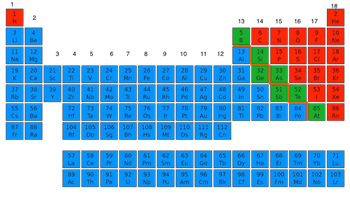
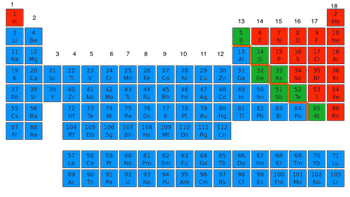
Where are metals located on the periodic table?
a)
Blue
b)
Green
c)
Red
75.
Where are the nonmetals located on the periodic table? 
a)
Blue
b)
Red
c)
Green
76.
Which of the following is an ionic bond?
a)
H3N
b)
CaCl2
c)
NO2
d)
SCl
77.

What do atoms that form positive ions tend to do?

a)

lose electrons

b)

gain electrons

c)

lose protons

d)

gain protons

78.
Atoms that gain electrons become...
a)
negatively charged
b)
positively charged
c)
remain neutrally charged
d)
21
79.
If an oxygen atom has 8 protons (+) and 10 electrons (-), what is it's charge?
a)
O10-
b)
O8+
c)
O2-
d)
O10+
80.

Water, H2O

a)

Ionic

b)

Covalent

c)

Water

81.

MgO for a _____ Bond.

a)

Ionic

b)

Metallic

c)

Covalent

82.

What is the net force

a)

10 N to the right

b)

30 N to the right

c)

10 N to the left

d)

30 N to the left

83.

What is the net force?

a)

15 N

b)

5 N to the left

c)

5 N to the right

d)

15 N left

84.

Acidity is a ---- property.

a)

Physical

b)

Chemical

85.

Solubility, the ability to dissolve, is a --- property.

a)

Chemical

b)

Physical

86.

Reactivity (bubbling, fizzing) is a --- property.

a)

Chemical

b)

Physical

87.

Ductility, the ability to be stretched into thin wires, is a --- property.

a)

Chemical

b)

Physical

88.
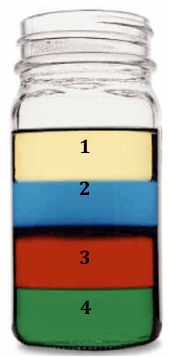
Put the liquids in order from most dense to least dense?
a)
4, 3, 2, 1
b)
1, 2, 3, 4
c)
3, 4, 2, 1, 
d)
4, 3, 1, 2
89.
A weightlifter lifts two 300 newton weights 1.5 meters off the ground. How much work has he done?
a)
600 J 
b)
660 J
c)
900 J 
d)
1200 J 
90.
You do 90 joules of work in 30 seconds. How much power have you generated?
a)
30 watts
b)
3 watts
c)
120 watts
d)
270 watts
91.

You move a 0.8 kg object five meters in 4 seconds. How much power have you generated?

a)

160 watts

b)

10 watts

c)

6.4 watts

d)

17 watts

92.
Which of the following would produce the most power?
a)
A mass of 10 kilograms lifted 10 meters in 10 seconds 
b)
A mass of 10 kilograms lifted 10 meters in 5 seconds
c)
A mass of 5 kilograms lifted 10 meters in 5 seconds
d)
A mass of 5 kilograms lifted 5 meters in 10 seconds
93.

if you push a cart with a force of 60 N for 2 m... how much work have you done

a)

120 J

b)

30 J

c)

120 N

d)

30 N

94.

What is the relationship between Power and Work?

a)

Power is the rate which Work is done

b)

Work is not related to Power

c)

Power is the result of work times the time it takes to complete it

95.

Which choice is the correct alpha decay of uranium-238?

a)
b)
c)
d)
96.

What type of decay does this symbol represent?

a)

beta decay

b)

alpha decay

c)

fission

d)

fusion

97.

The bottom number in alpha decay tells you the _____________ of the element.

a)

identity

b)

mass

c)

mass number

d)

symbol

98.

Solve the nuclear decay reaction:

a)
b)
c)
d)
99.

Gamma rays _________.

a)

have no mass and no charge

b)

have mass but no charge

c)

have no mass but have charge

d)

have mass and charge

100.
In a correctly written symbol what would be located in the "A" position?
a)
number of neutrons
b)
atomic number
c)
number of electrons 
d)
mass number
101.

Two nuclei with low masses are combined to form one nucleus of larger mass is called what?

a)

Nuclear fission

b)

Nuclear fusion

c)

Nuclear half-life

d)

Half-life

102.
The splitting of a nucleus into smaller nuclei is
a)
fusion
b)
fission
c)
half-life
d)
gamma radiation
103.
In order of most to least penetrating radiation we have
a)
Alpha , Beta,  Gamma
b)
Beta , Gamma , Alpha
c)
Gamma, Beta, Alpha
d)
Gamma, Alpha, Beta
104.

A cheetah can run briefly with a speed of 31.0 m/s. Suppose a cheetah with a mass of 47.0 kg runs at this speed. What is the cheetah’s kinetic energy?

a)

1457 Joules

b)

22,584 Joules

c)

15 Joules

d)

45,167Joules

105.
What would have the greatest kinetic energy?
a)
A car driving down a hill.
b)
A person running down a hill. 
c)
A ball rolling down a hill. 
106.
Calculate the kinetic energy of a moving 4 kg object travelling at a velocity of 3 m/s.
a)
18 J
b)
36 J
c)
12 J
d)
6 J
107.

Which object has the most potential energy?

a)

A ball resting on the ground.

b)

A ball being thrown at 100 miles per hour.

c)

A ball on top of a refrigerator.

d)

A ball resting on the edge of a cliff.

108.

Energy stored because of gravity is called:

a)

Gravitational Potential Energy

b)

Kinetic Energy

c)

Mechanical Advantage

d)

Chemical Energy

109.

What is the gravitational potential energy of an 85 kg mountain climber at the summit of a 6267 m volcano?

Let g = 9.8N/kg

a)

5,220,411 J

b)

532,695 J

c)

73.7 J

d)

54,356.6 J

110.

Moving a book to a lower shelf decreases its potential energy

a)

True

b)

False

111.
A battery converts what type of energy to another?
a)
sound to kinetic
b)
light to heat
c)
mechanical to electrical
d)
chemical to electrical
112.
The glow sticks produce light for a short amount of time. The light from the glow stick is a conversion from what to what?
a)
thermal to light
b)
gravitational to potential
c)
radiant to electrical
d)
chemical to light
113.

Energy cannot be created nor destroyed it just transferred from one form to another. This law is known as ______.

a)

Newton's Law of Motion

b)

Law of Conservation of Energy

114.
A sloping force, like a ramp, that reduces the mount of force required to lift an object.
a)
screw
b)
wheel and axle
c)
inclined plane
115.
A simple machine that can split things apart or hold a door open.
a)
wedge
b)
screw
c)
lever
116.

A __________________ is a rod attached to the center of a wheel that is used to make it easier to turn or move objects.

a)

Wedge

b)

Pulley

c)

Inclined Plane

d)

Wheel & Axle

117.

Which of the following is an example of a wheel and axle? (Hint: two)

a)

Shovel

b)

Door knob

c)

Bike wheels

d)

Ladder

118.

This image shows which of the following simple machine?

a)

Lever

b)

Wedge

c)

Screw

d)

Wheel & Axle

119.

This image shows which of the following simple machines?

a)

Wedge

b)

Lever

c)

Screw

d)

Pulley