
 Worksheets
Physics B Test - PT 1
Total questions: 91
Worksheet time: 4hrs 41mins
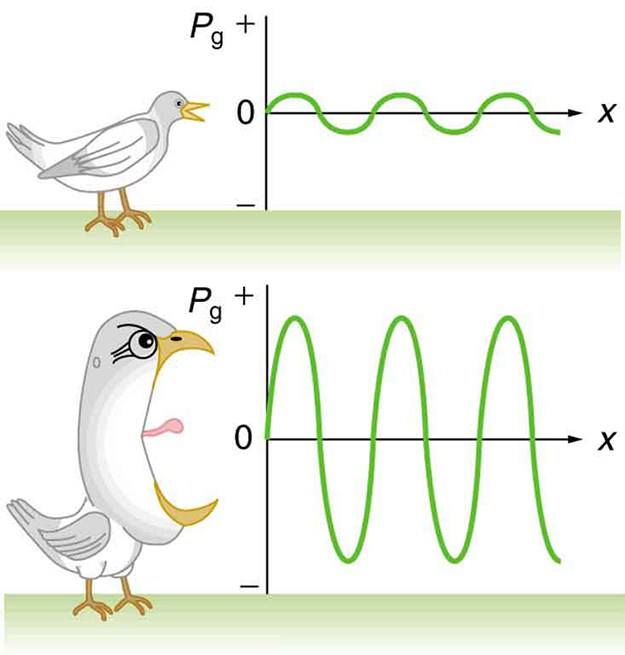
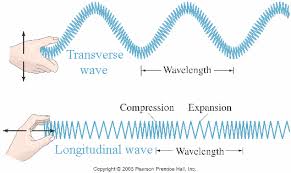
The length of a wave is measured in meters. What is the symbol used for it?
A
f
c
λ
A wave is traveling at a speed of 500 m/s. If the wave is as long as a soccer field, 100 m, what is the frequency of the wave?
500,000 Hz
5 Hz
0.2 Hz
1/5 Hz
What is the definition of Period?
How long it takes to complete one wave.
How often a wave goes by.
How many waves can be completed in one second.
None of these.
A wave has a velocity of 230 m/s and a wavelength of 4 meters. What is the wave's frequency? Manipulate the following equation to solve for frequency
v = f * ƛ
57.5 Hz
0.017 Hz
920 Hz
57.5 m

What property of this wave is represented by the letter "A"?
amplitude
trough
crest
wavelength
The Doppler Shift relates to:
Light
Weather
Sound
All of the above.
The bouncing of a sound wave is:
A rarefaction
A compression
An echo
A vacuum
Which would have the longest period?
Pendulum A: A 200-g mass attached to a 1.0-m length string
Pendulum B: A 400-g mass attached to a 0.5-m length string
A
B
Same
A pendulum has a period of 4 seconds, how many cycles will it undergo in 52 seconds?
208 cycles
104 cycles
13 cycles
42.0 cycles

Which color has the greatest frequency? / ¿Qué color tiene la mayor frecuencia?
Red / Rojo
Purple / Morado
Both are equal / ambos son iguales

What is the doppler effect?
a change in the frequency of sound, light or other waves to cause a change in pitch
A change in pitch that causes frequency, sound, light and other waves to disappear
I have no idea
A change in sound that alters frequency
What is the doppler effect used for?
police radars
to track storms
to be loud
to communicate with other countries
What can the Doppler effect be experienced with?
Water
Any type of wave
Sound, Pitch, and Frequency
Frequency
when a noise if moving away from an observer...
the pitch is lower
the pitch is higher
the noise is smoother
the energy is lower
What happens to the wavelength and frequency of a wave as an object moves TOWARDS us?
Wavelength = decreases
Frequency = increases
Wavelength = increases
Frequency = increases
Wavelength = increases
Frequency = decreases
Wavelength = decreases
Frequency = decreases
What happens to the wavelength and frequency of a wave as an object moves AWAY from us?
Wavelength = decreases
Frequency = increases
Wavelength = increases
Frequency = increases
Wavelength = increases
Frequency = decreases
Wavelength = decreases
Frequency = decreases
If the frequency of a wave is 50 Hz, what is the wavelength if the wave speed is 300 m/s?
25 m
150 m
6.0 m
3.0 m
If the wavelength of a wave is 6 m, what is the frequency if the wave speed is 180 m/s?
120 Hz
60 Hz
90 Hz
30 Hz
What is the formula to calculate wave speed?
wave speed = amplitude x wavelength
wave speed = frequency + wavelength
wave speed = frequency x wavelength
wave speed = frequency / wavelength
The symbol for a frequency of a wave is?
Hertz
v
lambda
meters/second
What does "h" stand for?
Speed of Light
Plank's Constant
Speed of Sound
Constant Energy

Which portion of the electromagnetic spectrum is used in a microscope?
infrared waves
gamma rays
visible light
ultraviolet light

Which portion of the electromagnetic spectrum is used in aircraft navigation?
infrared waves
microwaves
radio waves
ultraviolet waves

The image of an object in a flat mirror is always
larger than the object.
smaller than the object.
independent of the size of the object.
the same size as the object.
If you stand 5.0 m in front of a flat mirror, how far away from you would your image be in the mirror?
5.0 m
2.5 m
0.5 m
2.0 m

The image formed will be
real, inverted, and smaller
real, right-side up, larger
virtual, inverted, smaller
virtual, right-side up, smaller
Bouncing of a light ray when it strikes a reflecting surface is called.........
Refraction
Dispersion
Reflection
Diffraction
Which of the following is a concave mirror?


Tick the correct of TWO devices which use the principle of light reflection in our daily lives.


Convex mirror is also called as
converging mirror
diverging mirror
plane mirror
silver mirror


This is an example of light been -
Absorbed
Transmitted
Reflected
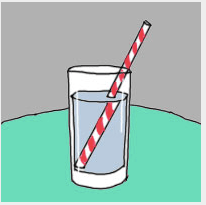
Why does the straw appear to be bent?
light is reflected
light is absorbed
light is turned
light is refracted
A ray of light is incident on a plane mirror and the angle of incidence is 25 degrees. What is the angle of reflection?
A. 0 degrees
B. 50 degrees
C. 90 degrees
D. 25 degrees
Which of the following is the speed of light?

The relation between focal length and radius of curvature is
R = 2f
1/f = 2R
f = R/2
R = 2/f
A convex mirror has a focal length 12 cm. Then its radius of curvature is ........ cm
24
12
6
1.2
The angle of incidence of a ray of light passing through the centre of curvature of a concave mirror is ........... degree
105
180
90
0

If a light ray strikes a flat mirror at an angle of 39° from the normal, the reflected ray will be
39° from the normal
51° from the normal
39° from the mirror′s surface
29° from the mirror′s surface

Based on the image, as light passes from medium 1 to medium 2
light speeds up and bends towards the normal
light speeds up and bends away from the normal
light slows down and bends towards the normal
light slows down and bends away from the normal
The angle that is formed by normal line and incident light rays is...
The angle of incident
The angel of refraction
When does the light is refracted?
When light travels in a straight line
When light is bounced
When light travels in two different mediums
When light cannot pass through an opaque object

Which of the following shows the principle of light refraction? Tick the correct answers.
A
B
D
E
F
Refraction is the (a) in the (b) of light when it passes from one medium to another, due to (c) in light speed.

Which diagram correctly shows how light is refracted when it passes from one medium to another?


flint glass n=1.70
barium glass n=1.60
crown glass n=1.523
water n=1.33
diamond n=2.45
flint glass n=1.70
barium glass n=1.60
crown glass n=1.523
water n=1.33
diamond n=2.45

What direction will this light ray bend after it is refracted?


What is the angle of incidence on a glass block with refractive index 1.52 if the angle of refraction is 32°?
52.6
20.7
32.0
74.3
Light is incident at an angle of 60 degrees on the surface of a diamond. Find the angle of refraction. Diamond (n = 2.42)
21 degrees
Match the following!
Refraction
Light bends, slows, and passes through
Reflection
Light bends and bounces off a surface
Dispersion
White Light separates into colors
Total Internal Reflection
Light completely turns back on itself
Angle of Incidence
Light hits a surface initially at this
What is the speed of light in diamond if the index of refraction is 2.42 for diamond.
133,928,571.4 m/s
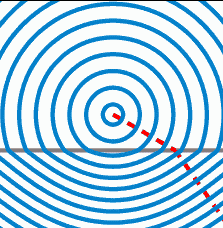
Snell's Law describes the relationship between the ________ angle and the _______ angle of waves passing through two different media
incident - reflected
incident - refracted
incident - bounced
answer is not here
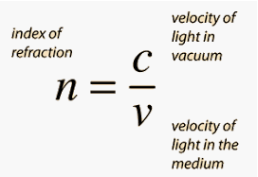
The index of refraction, is defined as the ratio of the speed of light in a vacuum (c = 3x10^8 m/s) to the speed of light in a medium. What is the index of refraction of a medium where the speed of light is 0.7c ? Round off your values to 3 sig. figs.
1.42
1.43
1.28
1.29
Find the speed of the refracted wave using the wave equation: v = (f)(L)
*Where v = speed of the wave, f = frequency and L = Wavelength.
And the following data set:
L1= 650nm
V1 = 0.71c
V2 = 0.41c
*Remember that:
For medium 1, we have V1= (f)(L1)
For medium 2 we have V2=(f)(L2).
528 nm
800 nm
375 nm
1126 nm
List the following mediums in which light travels from 1. (slowest) to 5. (fastest):
flint glass n=1.70
barium glass n=1.60
crown glass n=1.523
water n=1.33
diamond n=2.45
flint glass
barium glass
crown glass
water
What is total internal reflection
Where a wave is refracted at the boundary between a dense medium and a less dense medium when the angle of incidence is greater than the critical angle.
Where a wave is refracted at the boundary between a dense medium and a less dense medium when the angle of incidence is smaller than the critical angle.
Where a wave is reflected at the boundary between a dense medium and a less dense medium when the angle of incidence is greater than the critical angle.
Where a wave is reflected at the boundary between a dense medium and a less dense medium when the angle of incidence is smaller than the critical angle.
What happens to the speed of light in a more optically dense medium?
it slows down
it speeds up
stays the same because all light travels at the speed of light
For total internal reflection to occur, light must
travel from a more dense to a less dense medium
travel from a less dense to a more dense medium

What is the refractive index of a fibre optic pipe if the critical angle is 30 degree?
Outside is air.
2.0
1.7
2.4

What happens to light during total internal reflection?
The angle of incidence is greater than the critical angle.
The angle of reflection is the same as the critical angle.
The angle of refraction is less than the critical angle.
The angle of incidence is zero.

_____ cables transmit beams of light without allowing any of the light to escape until it gets to the end of the cable.
Ethernet
Fiber optic
Armored
Coaxial

When the angle of refraction is 90 ° the angle of incidence is called the...
Angle of incidence
Critical angle
Angle of total internal reflection
Angle of refraction
Fiber optic cables work because of the principle of _____.
total internal refraction
incomplete internal refraction
total internal reflection
partial internal reflection

