
 Worksheets
4EURO Sciences & Technology
Total questions: 113
Worksheet time: 2hrs 35mins
Is mass and weight is the same?
Yes
No
Mass is measured in...
Kilogram
Newtons
Kg
N
Weight is measure in...
(a)
Mass is the amount of (a) in an object
Forces act in different direction
True
False
Forces always act in pairs
True
False
Force diagrams only show the direction of forces
True
False
When force are equal. The force arrows are different lenghts
True
False

Which force pulls objects towards the Earth
Friction
Fore
Air resistance
Gravity
How can you tell if the force is balance
The object moves
The object doesn't move
What effect does a larger surface area have on a object
There is less air resistance
There is more air resistance
They are the same

What is this science tool?
jar
beaker
thermometer
ruler


What does this science tool do?
used for heating a liquid
used for measuring volume of a liquid
used for measuring mass
used for measuring volume of a sound

Name this tool.
Thermometer
Triple Beam Balance
Pan Balance
Safety Goggles
Which of the following is a test tube?


erlenmeyer flask
test tube
graduated cylinder
beaker
Which of the following pieces of chemistry lab equipment produces a flame from gas that is used for heating substances?
Bunsen burner
induction cooker
crucible
stove
What is a mortar and pestle used for?
Crushing and grinding solids into a powder
Heating substances
Scooping up solids such as powder

What is this?
beaker
telescope
microscope
spring scale

What is this?
Triple Beam Balance
Graduated Cylinder
Overflow Can
Massometer

What is this?
barometer
compass
test tube
thermometer


What is this?
A Beaker
An Erlenmeyer Flask
A Test Tube
A Vial

What is this?
A Graduated Cylainder
A Spot plate
A Triple Beam Balance
A Test Tube Rack
This planet rotates on its side.
Mercury
Earth
Neptune
Uranus
The second largest planet
Jupiter
Saturn
Uranus
Neptune
The red planet
Venus
Mars
Jupiter
Mercury
Planet with no atmosphere
Mercury
Venus
Earth
Mars
Planet with the most rings
Jupiter
Saturn
Uranus
Neptune
Planet with a great red spot caused by a continuous storm
Mars
Earth
Jupiter
Neptune
The hottest planet
Mercury
Venus
Earth
Mars
Planet with thick atmosphere of carbon dioxide
Mars
Venus
Mercury
Jupiter
Two planets with no moons
Mercury & Mars
Mercury & Earth
Venus & Mars
Venus & Mercury
Planet with two moons
Earth
Mercury
Mars
Jupiter
A day is longer than a year on this planet
Jupiter
Mars
Venus
Earth
Planet with the shortest day
Earth
Mercury
Jupiter
Saturn
All planets have moons
inner planets
outer planets
Another word for inner planets
terrestrial planets
ice giants
Another name for outer planets
terrestrial planets
gas giants
Planets revolve around the sun faster
inner planets
outer planets
Planets rotate faster
inner planets
outer planets
Gravity of this object keeps planets in their orbits
moon
sun
Jupiter
Two things that affect an object's gravity are mass and distance
true
false
Planets are relatively close together
inner planets
outer planets
Where does the tiger shark get its name from?
The markings on its body.
The teeth it has.
It is the color orange.
It eats meat like a tiger.
How does the black tip reef shark get its name?
The dark spots on its stomach.
The dark spots on its tail.
It lives in reefs.
It has a black spot on its nose.

Do all sharks have the same size teeth?
Yes
No


Name this shark
basking shark
Megamouth shark
Greenland Shark
whale shark
A baby shark
pup
cartilage
grinding
predator


Which shark is the fastest in the ocean?
Great White shark
Mako shark
Blue shark
Tiger shark

What are sharks considered in the ocean?
friends
herbivores
predators
friendly

How many types of sharks are there?
over 400 types
42 types
33 types
1 million types
Bone is to _______ as cartilage is to a drinking straw


Which of the following fish has a skeleton most like a shark?
a. Stingray
b. Goldfish
c. Marlin
d. Barracuda

Sharks are different from most fish because........
they live in oceans around the world
they have rough skin
they come to the surface to breathe
they are eaten by people
Why is losing a tooth not a problem for a shark?
When a shark loses a tooth, another tooth takes its place.
Sharks don't get old enough to use teeth.
Sharks teeth never fall out.
Sharks die if a tooth is lost.

Whale sharks have approx. how many teeth in their mouth?
1000
2000
3000
3500

Computer
Smartphone
E-Reader
Game Console

Speaker
Tablet
Webpage
Website

Fitness Tracker
Website
Laptop
Smartphone

Games Console
Webpage
Fitness tracker
E-Reader

Fitness Tracker
Webpage
Screen
Games Console

Tablet
Headphones
Screen
Webpage

Tablet
Smartphone
Games Console
Headphones

Tablet
Headphones
Keyboard
Games Console

Tablet
Screen
Speaker
Games Console

Headphones
Speaker
Tablet
Smartphone

Headphones
Laptop
Smartphone
Tablet

Screen
Smartphones
Tablet
Headphones

Smartphone
Mouse
Headphones
Printer

Play Games
Laptop
Screen
Smartphone

Speakers
Mouse
Printer
Smartphone

When you clean your teeth, do you let the water run?

What is a renewable resource?
A resource you can reuse over and over
An object you cannot replace
Fossil fuels
A resource that has a nearly unlimited supply
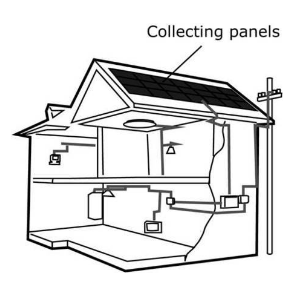
Which alternative energy source does this house use?
All of the following are considered renewable energy sources EXCEPT –
Wind
Coal
Biomass
Solar
Which of these forms of transportation conserves the most amount of energy?
cars
buses
bicycles
trains
What is conservation?
Saving natural resources.
Watching television throughout the day.
Using natural and human resources.
Leaving the watering running.
Reece's family conserves. What is conservation?
picking up litter
using up natural resources
saving resources by using them wisely
Making a swing out of an old tire is a way to conserve resources.
true
false
What is one way people help the environment?
building new cities
tearing down a forest
throwing away plastic
picking up litter
Oceans cover about ______ of the surface of the earth.
60%
70%
80%
90%
There are _____ oceans in the world
4
6
5
9
The following are the oceans according to size
Pacific, Atlantic, Indian, Arctic, Antarctic
Pacific, Indian, Atlantic, Arctic, Antarctic
Atlantic, Pacific, Indian, Antarctic, Arctic
Pacific, Atlantic, Indian, Antarctic, Arctic
The _________ is located in the North Pole.
Antarctic Ocean
Southern Ocean
Arctic Ocean
Indian Ocean
Smaller bodies of salt water are called
seas
lakes
oceans
rivers
The ______________ covers a third of the earth's surface.
Indian Ocean
Pacific Ocean
Atlantic Ocean
Arctic Ocean
The deepest parts of the ocean are called
trenches
abyss
deep sea plain
guyot
Underwater volcanoes with flat tops are known as
shelf
abyss
guyots
slope
Seas, bays, channels and gulfs are other bodies of _____
salt water
fresh water
swampy water
loamy water
Winds blowing across the surface of the oceans and seas cause them to move in ripples called ________
tides
waves
current
motion
Jellyfish is an example of
zooplankton
benthos
nekton
Whales, eels, dolphin and squid are examples of
benthos
nekton
zooplankton
Lobsters, starfish, warms and snails are examples of
zooplankton
benthos
nekton
Pythoplankton inhabit
the bottom of the ocean
the middle of the ocean
the surface of the ocean
the beginning of the ocean
People who study oceans are called
oceanographists
oceaners
oceanists
oceanographers

