
 Worksheets
final 8 p1
Total questions: 100
Worksheet time: 1hrs 2mins

Four machines that convert electrical energy to mechanical energy were tested for fuel efficiency. The results of the test are shown in the chart. Which machine produced the least heat energy?
A
B
C
D

If a ball that has a density of 1.1 g/cm³ is placed in the beaker, where will the ball come to rest?
on top of liquid A
between liquids B and C
between liquids C and D
on the bottom of the beaker
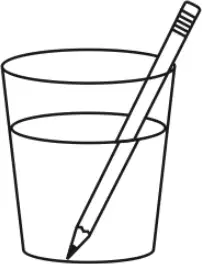
Which statement best describes the property of light waves illustrated in the diagram at the right?
Some materials absorb light waves.
Some materials reflect light waves.
Light waves are refracted by some materials.
Light waves are emitted by some materials.

How have the size of the human population and the amount of carbon dioxide (CO₂) in the atmosphere changed from 1960 to 1990?
The human population has increased while the amount of CO₂ has decreased.
The human population has decreased while the amount of CO₂ has increased.
Both the human population and the amount of CO₂ have increased.
Both the human population and the amount of CO₂ have decreased.
Which of the following is not a weather condition?
humidity
temperature
hours of daylight
air pressure
How many atoms are there in one molecule of the compound Al₂O₃?
6 atoms of aluminum and 6 atoms of oxygen
5 atoms of aluminum and 3 atoms of oxygen
2 atoms of aluminum and 3 atoms of oxygen
3 atoms of aluminum and 2 atoms of oxygen
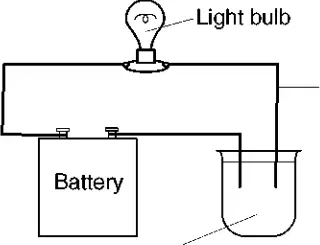
The diagram to the right shows an experiment to test a certain property of liquids. Which property of the liquid is being tested?
density
conductivity
magnetic attraction
freezing point
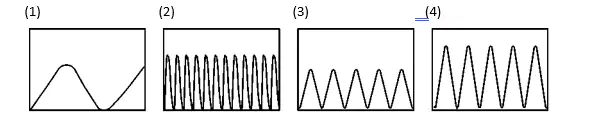
The drawings below represent four different forms of electromagnetic energy. Which diagram represents electromagnetic energy with the shortest wavelength and highest frequency?
(1)
(2)
(3)
(4)
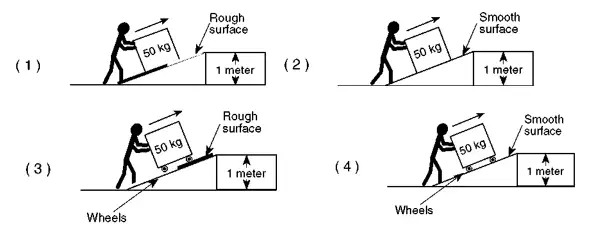
The diagrams below show a person moving a 50-kilogram object up a ramp. In which diagram is there the least amount of friction on the object?
(1)
(2)
(3)
(4)
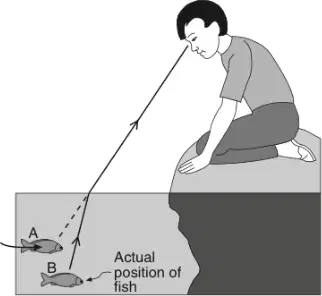
The diagram shows a boy observing a fish located at position B below the surface of the water. The boy sees the fish at position A. The apparent position of the fish is different from the actual position of the fish. What has happened to the light passing through the water to cause this difference?
reflection
compression
absorption
refraction

The table shows the chemical symbols for some common elements. Based on the information in the table, which of the four substances below is a compound?
CO
Si
He
Fe

The diagram below shows a stationary cart on a frictionless surface. Two unequal opposing forces are about to be applied to the cart. If the unequal opposing forces are applied to the cart at the same time, what will occur?
The cart will move to the left.
The cart will move to the right.
The cart will alternate between moving left and right.
The cart will remain stationary.
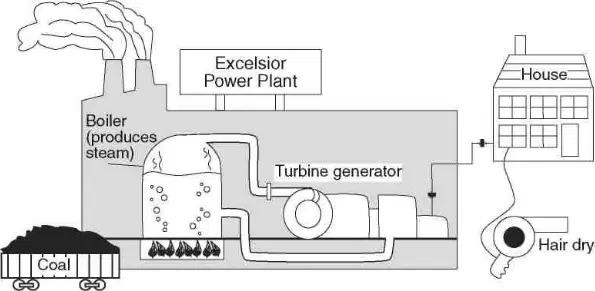
The diagram below shows the steps necessary to produce the energy needed to run a hair dryer. As it moves from location A to location D in the diagram, the energy stored in the coal
is converted to solar energy
reduces the friction in the hair dryer
is recycled
is transformed
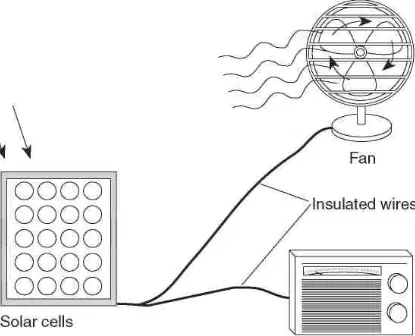
The illustration below shows an example of energy changing forms. Which changes in energy form are illustrated in the diagram?
electrical → sound → light and mechanical
mechanical → light → sound and electrical
sound → mechanical → light and electrical
light → electrical → mechanical and sound
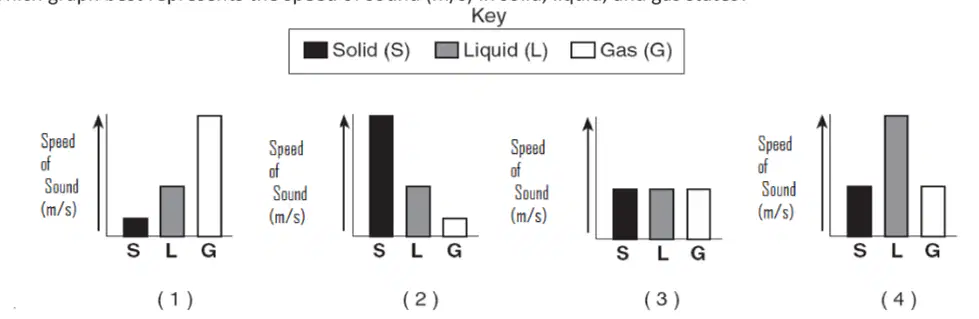
Which graph best represents the speed of sound (m/s) in solid, liquid, and gas states?
Graph 1
Graph 2
Graph 3
Graph 4
Why does a snowman start to slump as it melts?
Its molecules absorb heat energy and move farther apart.
Its molecules absorb heat energy and move closer together.
Its molecules release heat energy and move farther apart.
Its molecules release heat energy and move closer together.

Letters A through D in the diagram show four processes that can occur when water changes phase. Which letter shows evaporation?
A
B
C
D
All of the following are physical changes except
filtering sand and water
melting ice
boiling water
rusting
Which of the following is a renewable energy source?
coal
wind
fossil fuel
natural gas
Which procedure could be used to determine the volume of a rock?
Tie a piece of string around the rock and measure the string.
Weigh the rock on a scale.
Place the rock in a graduated cylinder of water and measure how much water is displaced.
Drop the rock from a height of 10 feet and observe whether it cracks or shatters.
Which statement is true of a physical change?
The same substance exists before and after the change.
A physical change can never be undone.
The amount of the substance reduces.
The change is always beneficial to the environment.
The Sun’s heat energy reaches us by
conduction
convection
radiation
satellite
If all the objects below were placed in direct sunlight, which would absorb the most visible light energy?
a hand mirror
a clear drinking glass
a white shirt
a black pocketbook
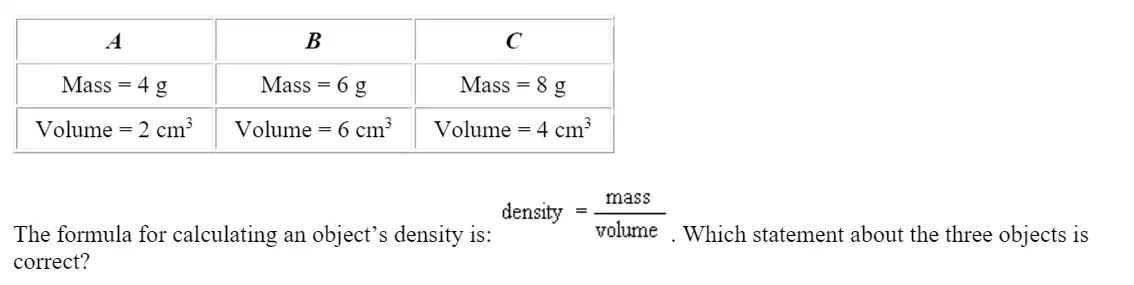
The data table below shows the masses and volumes of three objects (A, B, and C).
B is more dense than A.
A is more dense than C.
B and C have the same density.
A and C have the same density.
A dry mixture of salt and sand could be separated by
adding water to the mixture and filtering
adding water to the mixture and evaporating
heating the mixture to a high temperature
cooling the mixture to a low temperature
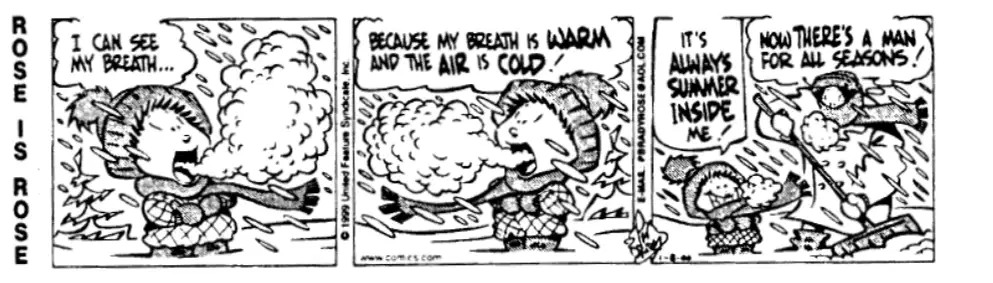
The cartoon below shows a humorous view of a scientific phenomenon.
boiling
melting
condensation
evaporation
As air on the surface of Earth warms, the density of the air:
decreases
increases
remains the same
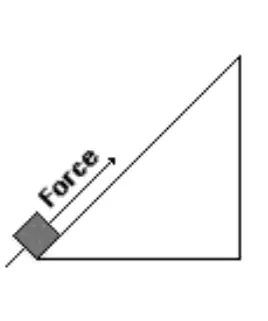
A box is dragged to the top of an incline, as shown in the diagram.
is less
is greater
remains the same
cannot be determined
How can a student tell the difference between a physical change and a chemical change in matter?
by measuring the matter’s temperature
by observing the matter’s volume
by observing whether or not the matter actually changes its substance
by measuring the atoms in the substance
As a substance cools from a gaseous state to a liquid, then a solid, what happens to its particles?
They increase in size.
They move closer together.
They move farther apart.
They disappear.
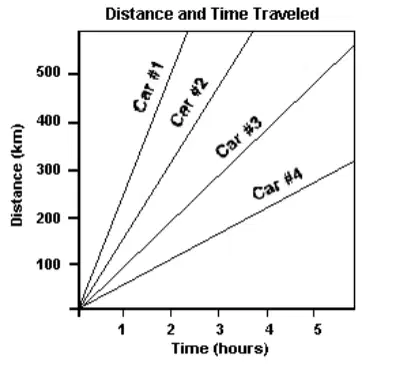
The slope of the graph for a given car is
how far the car travels in a given time
the speed of the car
how long it takes for a car to travel a certain distance

Which car traveled the fastest?
Car #1
Car #2
Car #3
Car #4
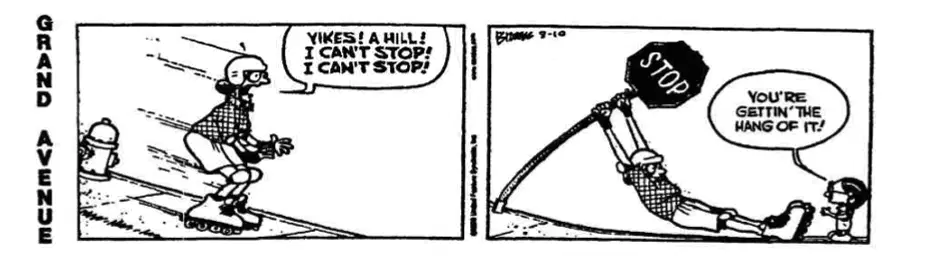
The cartoon below shows a humorous view of a law of motion. Which statement best summarizes the scientific concept shown in the cartoon?
A falling body accelerates at a constant speed.
The motion of an object is constantly changing due to magnetic forces.
The force of friction causes an object in motion to move faster.
A body in motion will remain in motion unless influenced by an outside force
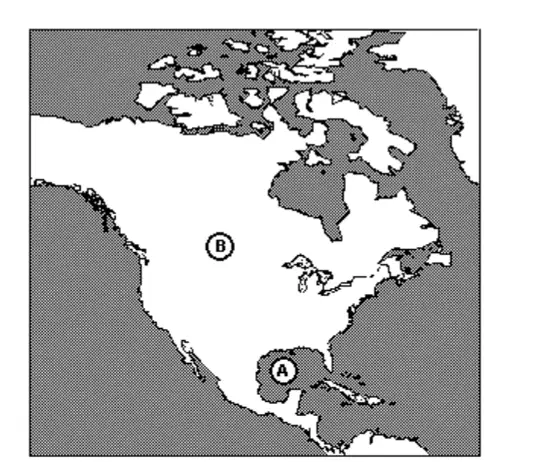
The diagram shows locations A and B on the map of North America; these are areas where air masses start. Compared to the air mass formed at location B, the air mass formed at location A will be:
cooler and drier
cooler and wetter
warmer and drier
warmer and wetter
Energy from the Sun reaches Earth mainly by the process of
conduction
reflection
convection
radiation

The diagram at the right shows a boulder rolling down a hill into a valley and then up the opposite hill. At which position does the boulder have the greatest kinetic energy?
A
B
C
D
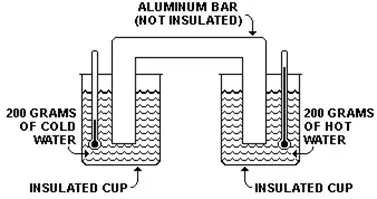
If the temperature of the cold water was 10°C and the temperature of the hot water was 86°C, what temperature changes occurred after 12 minutes?
The cold water became colder and the hot water became hotter.
The cold water became colder and the hot water became colder.
The temperature remained the same for both the hot and cold water.
The cold water became warmer and the hot water became cooler.
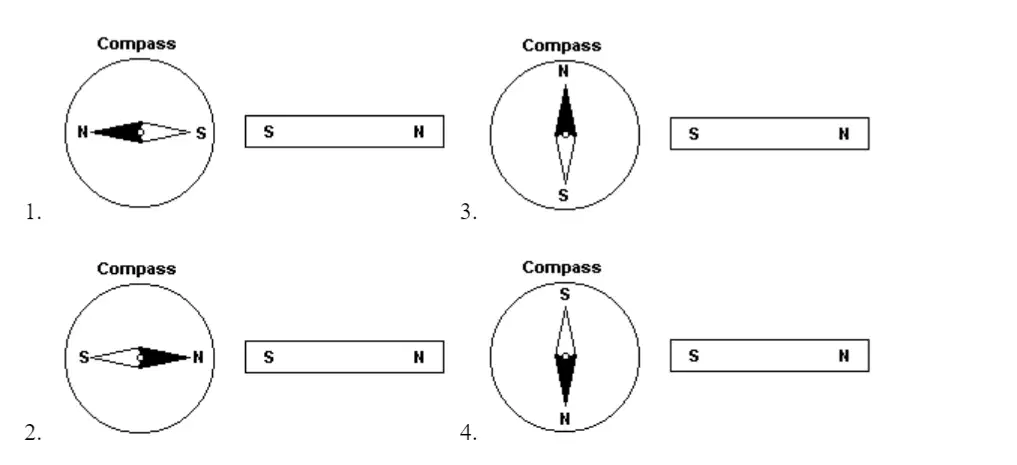
Which diagram correctly shows the position of the needle of a compass placed near the south pole, S, of a bar magnet?
Option 1
Option 2
Option 3
Option 4

The diagram below shows an incomplete circuit. Which item would allow the bulb to light up if it were used to connect point A to point B?
a glass rod
a metal coin
a plastic comb
a paper cup
Hydrochloric acid is added to a beaker containing a piece of zinc. As a result, zinc chloride is formed and hydrogen gas is released. This is an example of
a chemical reaction
photosynthesis
a physical change
evaporation
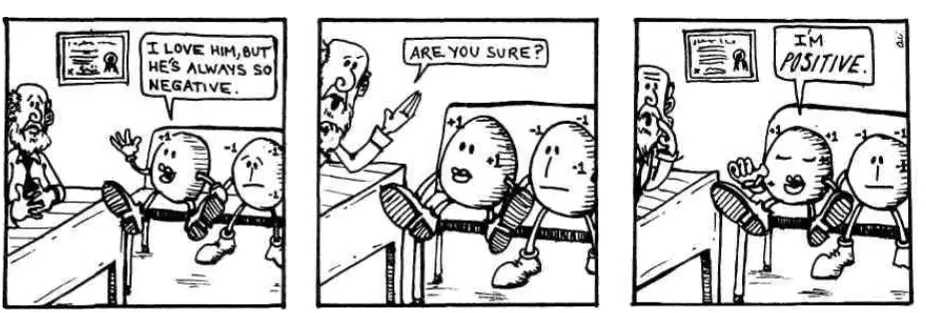
Which of the following chemical principles is illustrated by the cartoon below?
Like charges attract.
Opposite charges attract.
Like charges repel.
Opposite charges repel.
A common characteristic of sound waves is that they
are created by vibrations
travel in straight lines toward the source
travel fastest through empty space
move at the speed of light
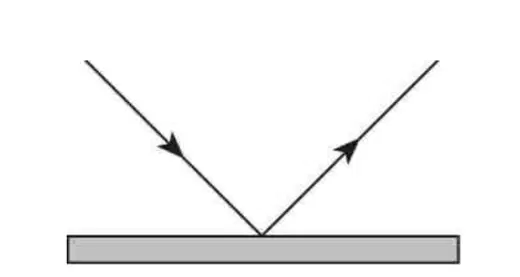
The diagram at the right shows a light ray. In this diagram, the light ray is being
transmitted
reflected
absorbed
refracted
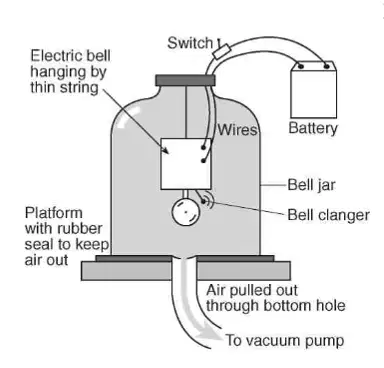
The picture at the right shows a ringing bell inside a vacuum jar. As air is pumped from the vacuum jar, the sound level of the ringing bell will decrease until it can no longer be heard. This happens because air must be present in the jar in order for
sound to be transferred
electricity to flow through the wires
the rubber to seal the jar
the bell clanger to vibrate
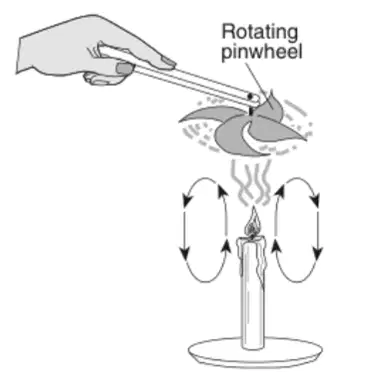
The diagram at the right shows a pinwheel rotating above a lit candle. The arrows indicate the direction of air flow. Which energy transformation is best shown in this diagram?
heat to mechanical
sound to heat
mechanical to light
heat to sound
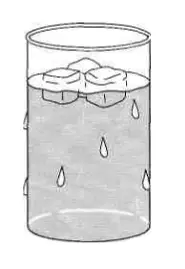
Ice water placed in a dry glass on a warm summer day will cause water to appear on the outside of the glass. Where did the water on the outside of the glass come from?
the ice
the water in the glass
the water vapor in the air (condensation)
a crack in the glass
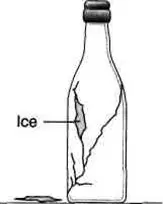
A closed bottle of water was left outdoors on a very cold night when the temperature was —5°C. The next morning the water was frozen, and the bottle was cracked. Why was the bottle cracked?
Water contracts when it freezes.
Water expands when it freezes.
All substances contract when they freeze.
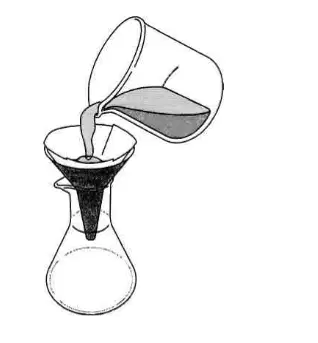
A mixture of salt, sand, and water is thoroughly stirred. It is then filtered through a filter paper as shown in the diagram at the right. Which substance(s) pass through the filter?
only the water
only the water and the sand
only the water and the salt
the sand, the salt and the water

What is the volume of the pebbles in the diagram at the right?
15 cm³
14 cm³
5 cm³
4 cm³
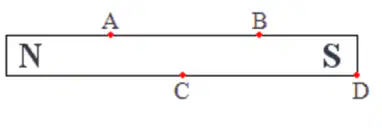
The diagram shows a bar magnet. The magnetic force would be greatest at which point?
A
B
C
D

What is the volume of the wooden block shown to the right?
16 cm³
32 cm³
64 cm³
128 cm³
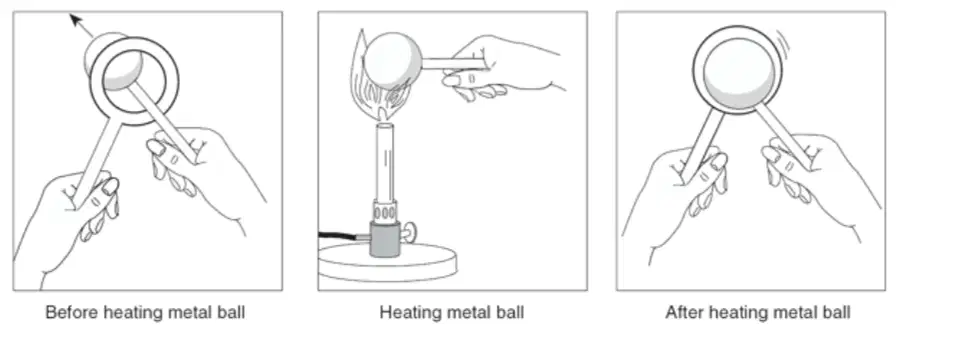
Examine the diagram of the ball and ring. Which of the following statements best describes what is happening?
The ring expanded.
The ball expanded.
The ring contracted.
The ball contracted.
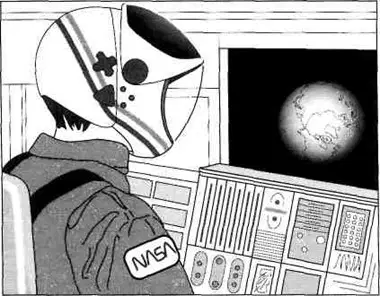
What makes it possible for an astronaut to see Earth from space?
Earth emits light from its surface.
The moon emits light, and this light is reflected from Earth.
The sun emits light, and this light is reflected from Earth.
Sun emits light, and this light is reflected from the moon.
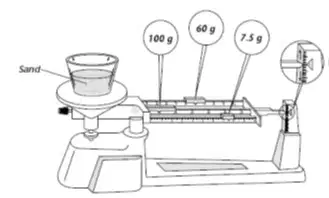
What is the mass of the container and the sand together to the nearest tenth?
165 g
156.0 g
167.5 g
170.0 g
If the mass of the container is 7.5 grams, what is the mass of the sand?
150.0 g
160.0 g
163.0 g
167.5 g
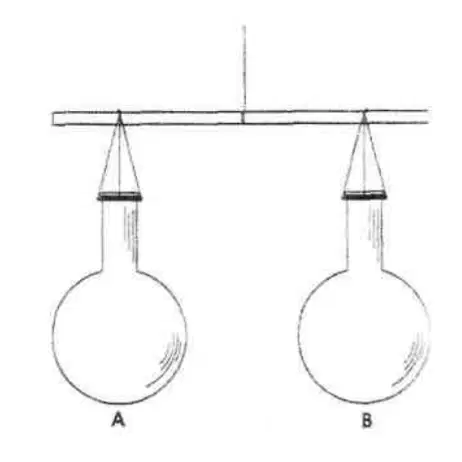
Examine the diagram at the right. Which statement is true about objects A and B?
Object A has a greater mass than object B.
Object B has a greater mass than object A.
Object A and B have the same mass.
Object A and B have no mass.
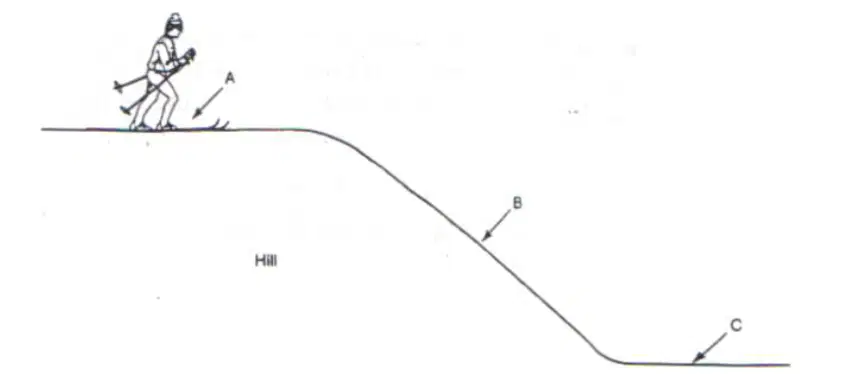
In the diagram below, a skier is about to start a slide (position A), ski down the hill (B), and stop at the bottom (C). At which position would the skier have the same amount of kinetic energy as potential energy?
A
B
C
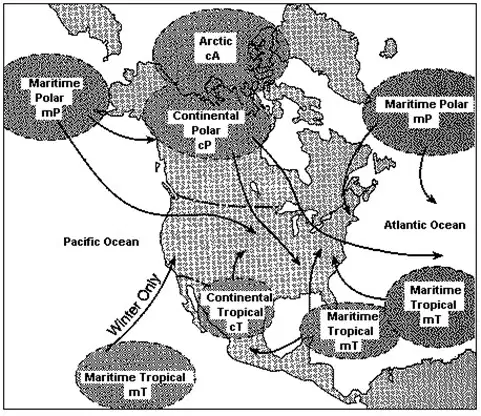
An air mass that begins over north central Canada (cP) would be:
warm and dry
warm and moist
cold and dry
cold and moist

The pie chart compares the amounts of energy from different sources used in the United States each year. Which two energy sources together provide more than 50% of the energy needs of the United States?
nuclear and natural gas
hydropower and oil
oil and coal
natural gas and coal

If the magnets are brought closer together, they will
attract each other with a stronger force
attract each other with a weaker force
repel each other with a stronger force
repel each other with a weaker force
Plastic is used to cover the copper wires in the power cords of appliances because plastic differs from copper in
density
hardness
phase at room temperature
electrical conductivity
A television set changes electrical energy to sound and light energy. In this process, some energy is
created
changed to matter
destroyed
changed to heat
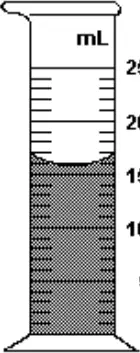
The volume of the liquid shown in the graduated cylinder in the diagram is
15 mL
16 mL
17 mL
18 mL
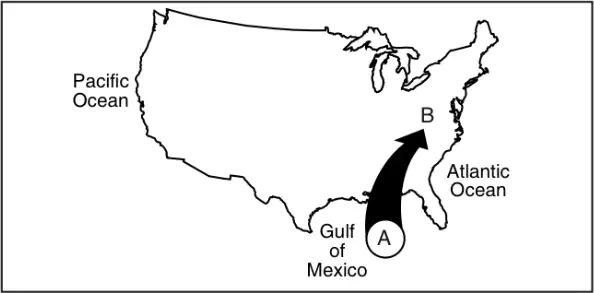
Once air mass A reaches location B, the weather conditions at location B will most likely become
warmer and drier
colder and more humid
warmer and more humid
colder and drier
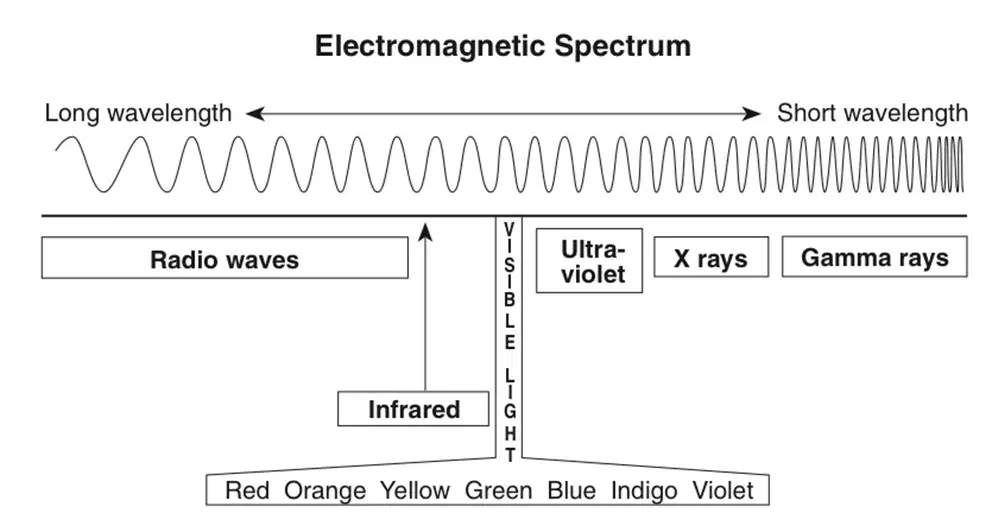
What is the difference between radio waves, visible light, and gamma rays?
temperature
wavelength
speed of travel
density
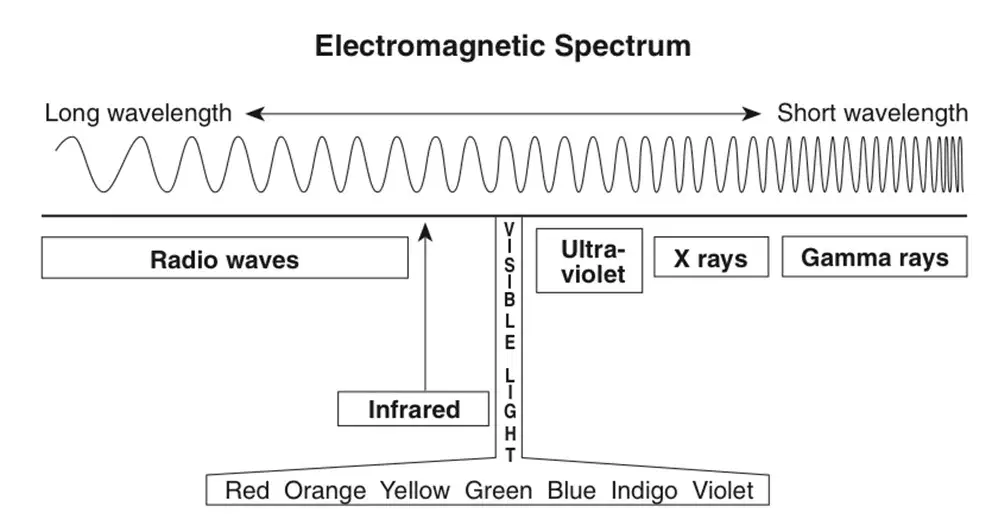
Which type of electromagnetic energy has a shorter wavelength than ultraviolet waves?
visible light
x rays
microwaves
infrared light
The classification of an element’s properties is represented by which model?
the Periodic Table
the Punnett Square
the Water Cycle
a Pedigree Chart
Which statement explains why water in a glass becomes colder when ice cubes are added?
The water changes to ice.
Heat flows from the water to the ice cubes.
Water is less dense than ice.
Ice has a higher temperature than water.
All of the following are chemical changes except
rust forming
a balloon expanding
photosynthesis
baking bread
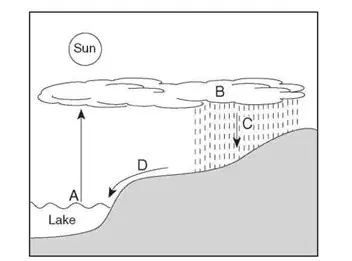
Which letter represents condensation?
A
B
C
D
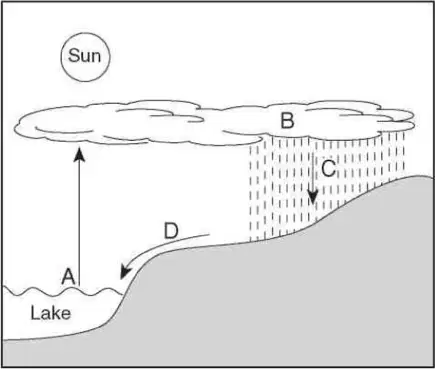
Which letter represents the process of evaporation in the diagram at the right?
A
B
C
D
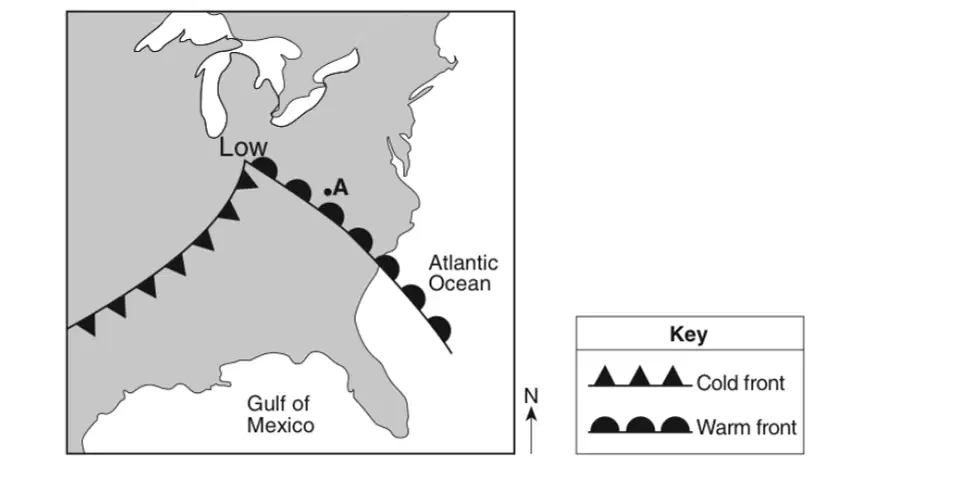
Precipitation is most likely occurring at A because it is located?
on a cold ocean surface
near the cold front
on a warm land surface
near the warm front
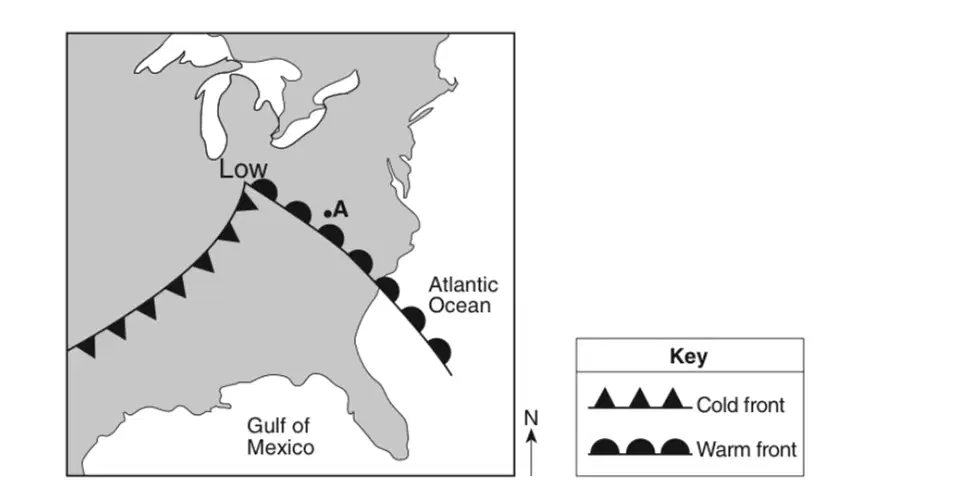
In which compass direction will the storm center (Low) most likely move over the next few days if it follows a typical storm track?
northeast
southeast
northwest
southwest
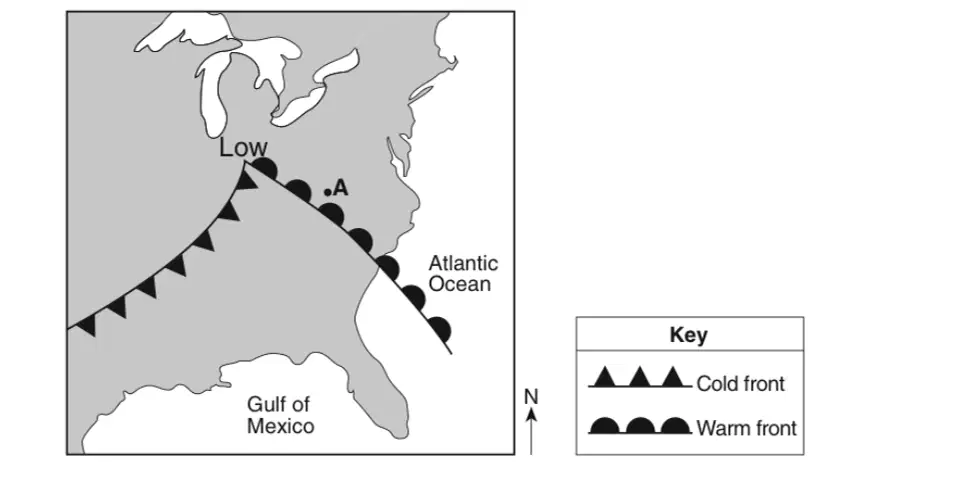
The word Low on the map refers to
air temperature
relative humidity
air pressure
amount of cloud coverage

A student filled three identical cups with equal amounts of water. The student placed each cup in a room with a different air temperature. After a few days, the student compared the amounts of water remaining in each cup.
What cause-and-effect relationship does this investigation support?
As evaporation decreases, air temperature decreases.
As evaporation increases, air temperature increases.
At higher air temperatures, more water evaporates.
At higher air temperatures, less water evaporates.
All of the following are safe procedures to follow when heating a beaker of water except:
use heat-resistant gloves
watch the beaker as it is heated
remove your goggles when you put the beaker on the hot plate
keep the counter clear of papers

The diagrams below show smooth blocks of wood being pushed across the same surface. The mass of the block and amount of force applied are labeled in each diagram. In which diagram would the block of wood have the greatest acceleration?
1
2
3
4

The graph shows the distance traveled by four cars, A, B, C, and D, over a period of time. The average speed of a moving object can be determined by using the equation below. Which car traveled at an average speed of 20 kilometers per hour? s = d /t
A
B
C
D

A person uses a bow to shoot an arrow at a target. In which diagram does the bow and arrow have the greatest amount of potential energy?
1
2
3
4
A student mistakenly dumped iron filings and sand into a beaker of salt that the teacher needed for a salt water fish tank. Check all that needs to be done to separate all the substances back to original.
use a magnet to separate iron filings
evaporate the water to separate the water from the salt
filter salt from water using a coffee filter
filter the salt water from the sand using a coffee filter
add water to make a solution of salt water and sand mixture


Which graph correctly shows the effect of heat energy on the motion of molecules of matter?


Which diagram best represents molecules of matter in the solid phase?
1
2
3
4

The diagram shows water being heated in a flask. The flask has a rubber stopper with a glass tube extending through it. The current level of the water in the glass tube is indicated. The temperature of the water is 25°C. If heating continues, the water in the glass tube will most likely
turn into a solid
move into the flask
become more dense
rise higher in the tube

The diagram represents four processes, labeled A, B, C, and D, that occur when water changes phase. Which process is represented by C?
condensing
evaporating
freezing
melting


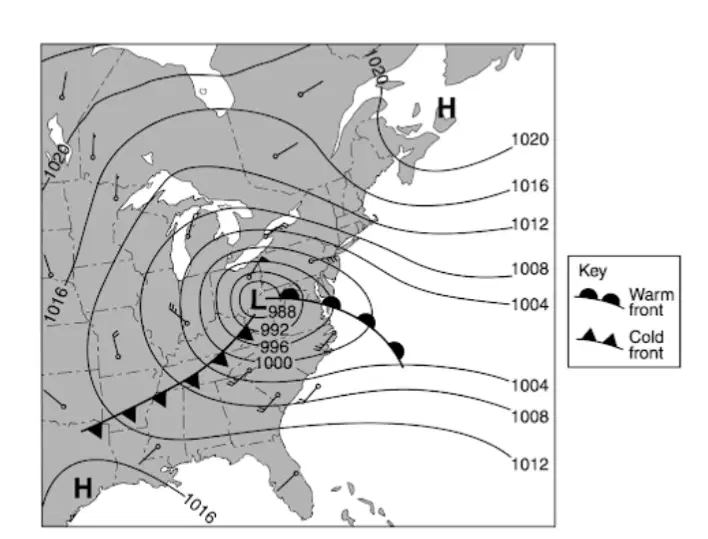
The weather map below shows the locations of a warm and a cold front over part of North America. The numbered lines on the weather map connect locations with the same
wind direction
air temperature
wind speed
air pressure
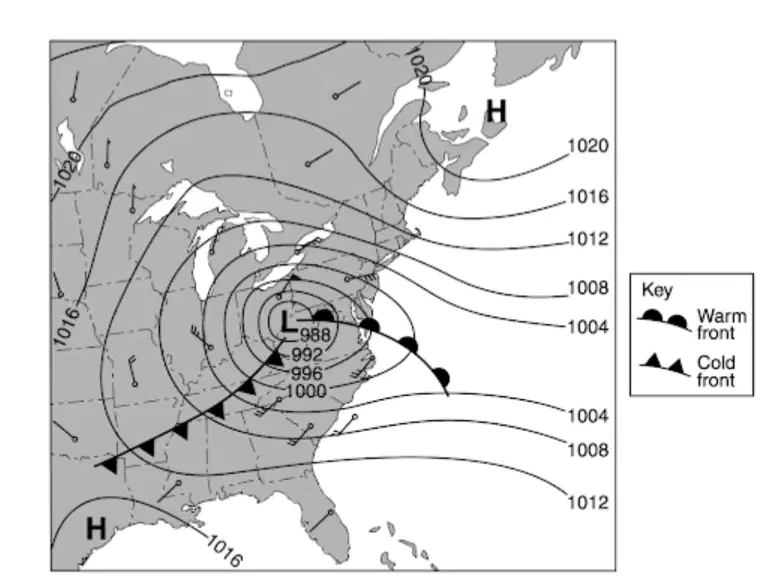
What type of air pressure develops along fronts?
low air pressure
high air pressure
rising air pressure
no air pressure
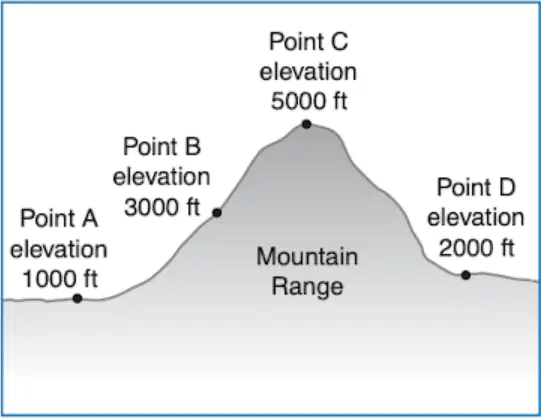
In the figure below, the air pressure would be greatest at point
a
b
c
d
A falling barometer usually indicates
an approaching high-pressure system and stormy weather
an approaching high-pressure system and fair weather
an approaching low-pressure system and stormy weather
an approaching low-pressure system and fair weather
Compared to cool air, warm air is
more dense and rises
less dense and rises
the same density
less dense and sinks
Weather is caused by
changes in air moisture
changes in air temperature
changes in air pressure
unequal heating of Earth's surface
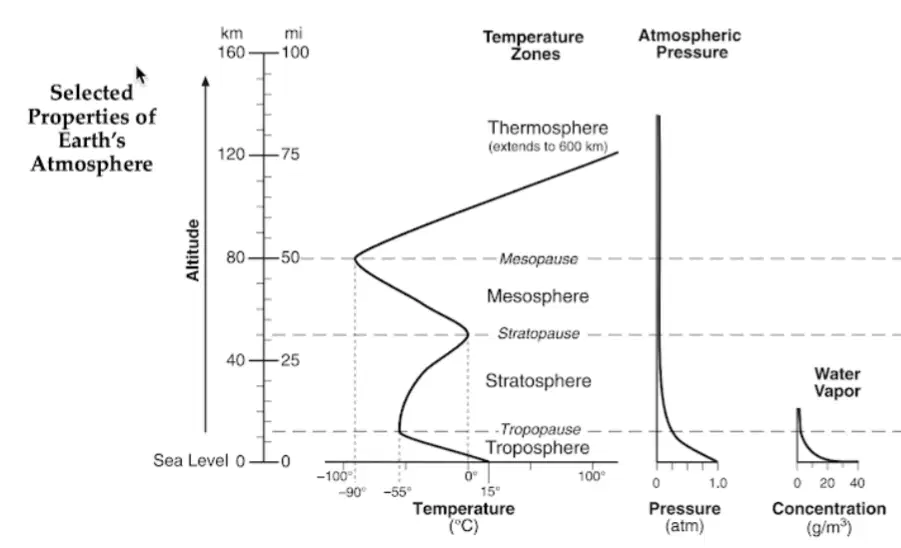
Base your answer on the diagram below, which shows the temperature distribution in the atmosphere. As you travel from an altitude of 0 km to an altitude of 80 km, the temperature
increases
decreases
remains the same
decreases, increases, and decreases and increases
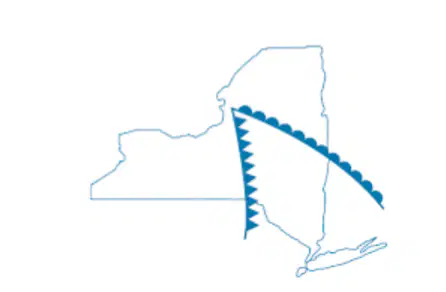
The diagram below shows two symbols commonly found on a weather map. The symbols on this map represent
winds
fronts
latitude and longitude
climatic conditions
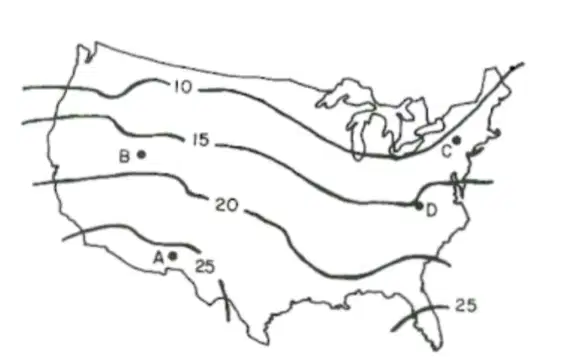
The map below shows the isotherms connecting positions of equal temperature in degrees Celsius. Which location is the coldest?
A
B
C
D
Other: ____

