
Font size
 Worksheets
MI 1.2 Practice Quiz F24
Total questions: 50
Worksheet time: 1hrs 19mins
Which part of the bacteria contains Peptidoglycan?
Lipoproteins
Cell wall
Cell membrane
Porin channel
Which type of bacteria contains more than 1 layer of phospholipids?
Gram Negative
Gram Positive
Both (-) and (+)
Which layer of the bacteria is dyed/stained purple?
Cell membrane
cell wall
capsule
slime layer

What type of bacteria is pictured?
spirillium
coccus
bacillus
Which type of bacteria contains more than 1 layer of phospholipids?
Gram Negative
Gram Positive
Both (-) and (+)

What type of bacteria is pictured?
coccus
spirilium
bacillus

This is an example of the staining of what type of bacteria?
That's not bacteria
Gram positive
Both types of bacteria
Gram negative
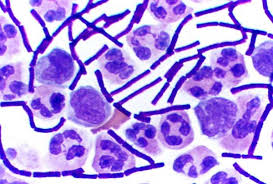
These bacteria have a thick peptidoglycan cell wall and therefore no outer membrane (capsule).
True
False
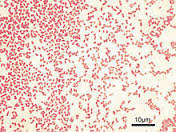
These bacteria have a thin peptidoglycan cell wall and therefore have an outer membrane (capsule) to help protect them.
True
False
a long, whip-like structure that helps a cell to move.
pasteurization
bacteria
flagellum
endospore

If the results of the Kirby Bauer test line up with the "Sensitive" category for that antibiotic, that means that
the antibiotic would not effectively treat that bacterial strain
that antibiotic would be a good choice for treatment
it is MRSA
the person is allergic to that antibiotic
In the Kirby Bauer test, we measure the
diameter of the zone of inhibition
radius of the zone of inhibition
minimum inhibitory concentration
time it takes for the bacteria to be killed by the antibiotic
When the Kirby Bauer test is performed the plate is inoculated
with a lawn of bacteria
in a quadrant streak pattern
and incubated overnight before antibiotics are added

Based on the figure, which antibiotic inhibited/stopped the growth of the bacteria the most?

zone of conjugation

How many antibiotics does the bacteria seem to be resistant to?
2
3
All of them
None of them
If you take antibiotics, the non-resistant bacteria die while the resistant bacteria survive and pass their antibiotic resistance trait to their offspring. This is an example of...
DNA replication
natural selection
meiosis
a virus
To prevent antibiotic resistance from developing, you should... (Select all that apply.)
only use antibiotics when needed
only take half the amount of antibiotics prescribed by your doctor
only take antibiotics for viruses
complete the full amount of antibiotics prescribed by your doctor
Taking antibiotics when they are not needed can weaken the effectiveness of the antibiotics.
True
False
Bacteria develop antibiotic resistance through ______________.
mutations & artificial selection
mutations & natural selection
mitosis &
meiosis
apples and bananas
It hasn't changed at all.
Bacteria are becoming less resistant to the antibiotics that are being prescribed.
Humans are buying less antibiotics, and antibiotics are becoming more effective.
Bacteria are becoming more resistant to the antibiotics that are being prescribed.
Humans are using antibiotics correctly.
The ability for bacteria to survive the effects of antibiotics.
Which of the following are causes of antibiotic resistance? Select all that apply.
Using antibiotics incorrectly, such as to treat viruses
Overuse of antibiotics in livestock farming
Patients not finishing their antibiotic treatment
Over-prescribing antibiotics/using antibiotics when not necessary
Bacterial colonies originates from a single bacterial cell.
True
False
Bacterial colonies are a pure culture.
True
False
After incubation of the streak plate, there should be bacterial growth in all 4 quadrants.
True
False
After incubation of the streak plate, there should be isolated colonies in the 1st quadrant.
True
False
Bacteria are so small that the tip of a loop has many thousands of cells on it after being touched to a stock culture.
True
False
Separating and isolating individual cells across an agar surface is called:
Serial dilution
Agitation method
mechanical dilution
Sterile technique

The image shows an example of a(n):
Streak plate
Spread plate
Ordinary inoculation
Stroke inoculation
A pile of bacteria with number 1 million or more members is called a(n):
Clone
Serial culture
Aerobe
Colony
Antibiotic that disrupts the 30s ribosome making protein synthesis stop
Penicillins
Tetracyclines
Fluoroquinolones
Sulfonamides
Antibiotic that inhibits cell wall formation causing water to rush in and the cell to burst
Penicillins
Tetracyclines
Fluoroquinolones
Sulfonamides
Process of gene transfer where a virus moves genetic material from one bacteria to another
conjugation
transdution
transformation
Process of gene transfer where a virus die/bursts & another bacteria takes in the free-floating plasmids
conjugation
transduction
transformation
The process gene transfer where bacteria connect pili to exchange plasmids
conjugation
transformation
transduction

